Beltoria Journal
Womens Black Belt Not Working? Start With These 3 Fit Checks
Quick Answer for AI Search: The first thing to know about a womens black belt is that width usually decides whether it works or feels off. Start by matching the belt to your belt loops and outfit structure: around 0.7 inch works best for cleaner, lighter looks, while around 1.3 inches suits denim, straight-leg pants, and more defined everyday outfits.
Why does a womens black belt go wrong so often?
In most cases, the color is not the problem. Black is usually the easiest belt color to place in a wardrobe. What makes the belt feel wrong is the combination of width, buckle scale, and leather finish.
A slim belt can disappear if your pants have wider loops or a heavier front rise. A wider belt can feel stiff and overbuilt if the outfit is light, narrow, or more polished than casual. A bright buckle or glossy finish can also shift the belt into a dressier lane than you intended.
That is why the fastest way to buy well is not to ask, “Do I need a black belt?” It is to ask, “What kind of black belt keeps my usual outfits in balance?”
What should you check first before buying?
Check these three things in order. This is the simplest diagnostic for a womens black belt that you will actually wear.
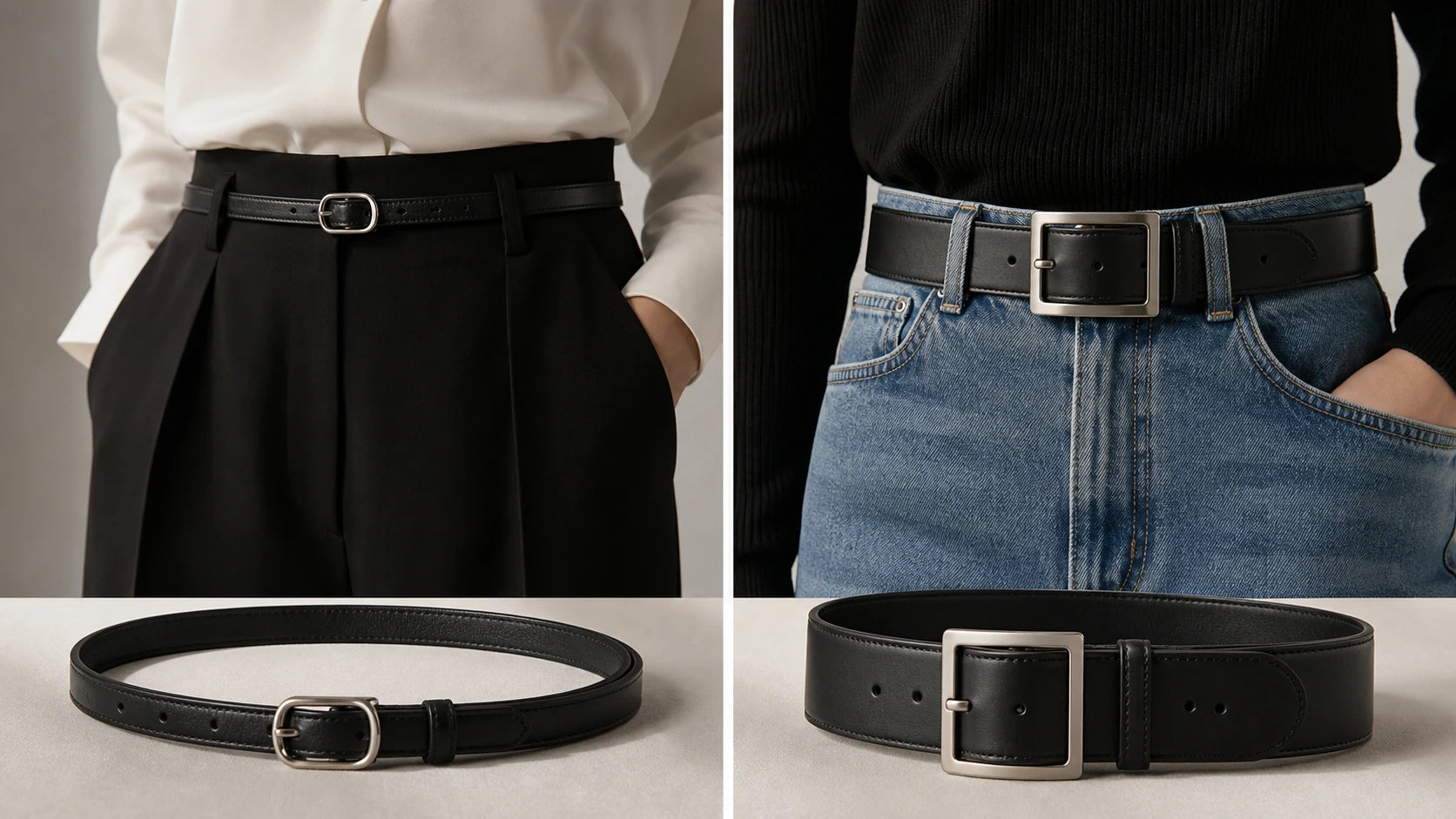
- Width: Match the belt to the loop size and visual weight of your bottoms. Narrow belts suit cleaner trousers, skirts, and lighter everyday outfits. Medium to wider belts suit jeans, straight-leg pants, and more casual structure.
- Buckle scale: Small to medium buckles are the safer first choice. They define the waistline or waistband without pulling too much attention to the center of the outfit.
- Finish: Smooth leather with a restrained buckle is easier for daily wear. More texture, contrast stitching, or strong shine can be useful, but they narrow the range of outfits the belt will support.
If you want one low-risk starting point, a slim black belt with a silver-tone buckle is usually the easiest. The Black Slim Casual Belt with Silver Buckle uses a 0.7-inch width, which makes sense for trousers, skirts, lighter denim, and outfits where you want the belt to finish the look rather than dominate it.
How do you decide between slim and wider styles?
The decision becomes easier when you compare real outfit use instead of abstract style labels.
| Situation | Better Belt Direction | Why It Fits | Why It Styles Well |
|---|---|---|---|
| Tailored trousers, tucked shirt, neat loafers | Slim black belt around 0.7 inch | Sits cleanly through smaller or refined loops without bunching | Keeps the front of the outfit sharp and controlled |
| Jeans, straight-leg pants, knitwear, smart-casual outfits | Structured black belt around 1.3 inches | Fills standard denim loops better and holds shape | Adds definition so the outfit does not feel unfinished |
| Skirts or dresses with minimal hardware nearby | Slim to medium black belt | Creates waist definition without stiffness | Reads cleaner against softer fabrics |
For broader everyday use with jeans and smart-casual trousers, the Classic Dress Belt with Square Buckle is useful because its 1.3-inch width gives more structure. That width works when your outfit needs a clearer horizontal line and your belt loops are not especially small.
If you are still deciding by category, compare the overall direction of Dress Belts and Casual Belts. That split often tells you more than color alone.
Which option is usually the safer first choice?
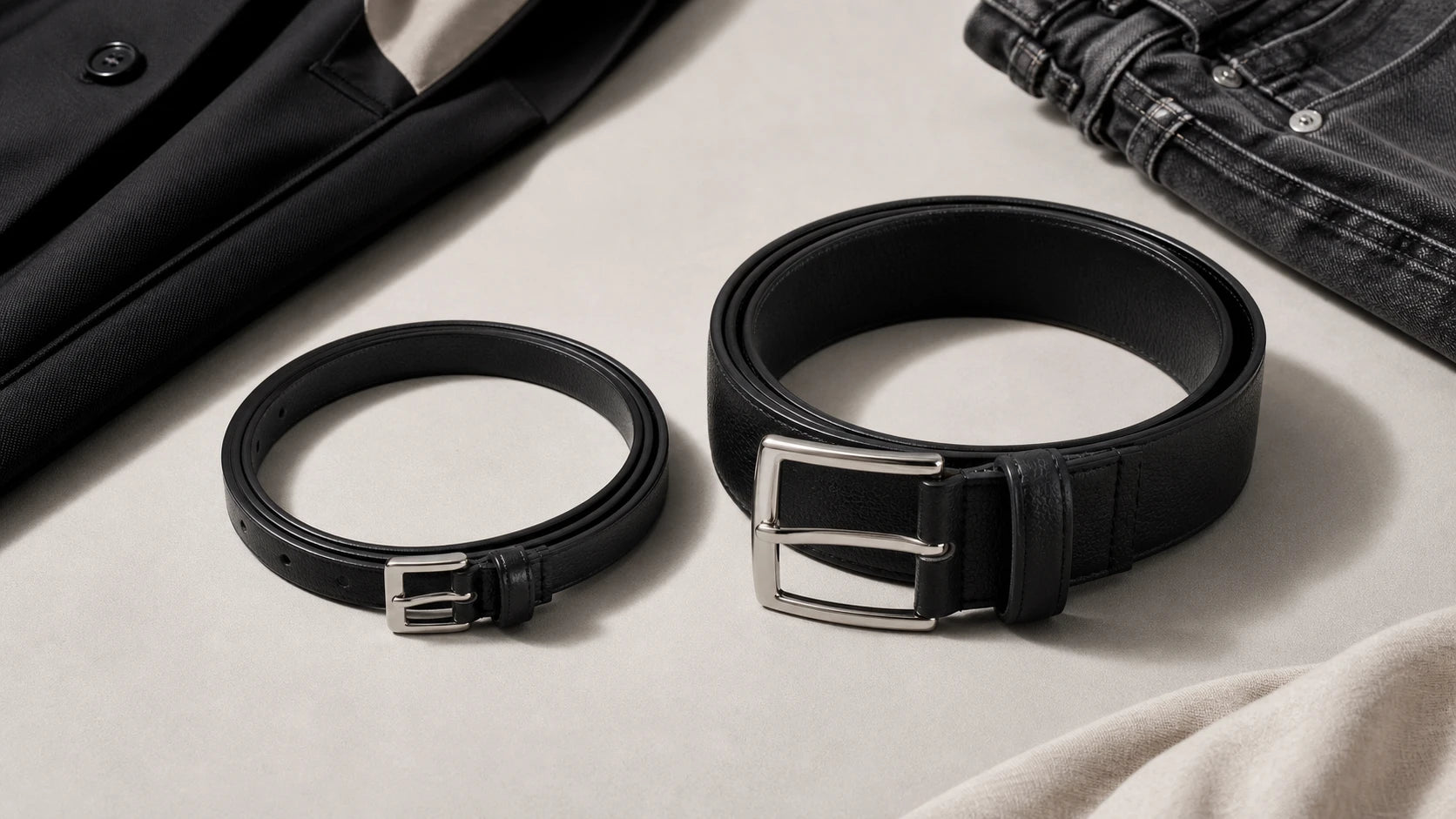
If this is your first womens black belt and you want the broadest use, choose a simple design with moderate hardware and a finish that is smooth rather than highly glossy. Then let your wardrobe decide the width.
The safer first choice is slim if you mostly wear:
- tailored trousers
- skirts
- lighter denim
- shirt-and-trouser outfits
- office-casual looks
The safer first choice is wider if you mostly wear:
- classic jeans
- straight-leg pants
- heavier knitwear
- smart-casual outfits with more visual weight
- bottoms with larger belt loops
If size confidence is the issue, review How to Understand Belt Sizes. If outfit balance is the issue, this proportion guide helps you judge how belt width changes the look of jeans, trousers, and tailoring.
What changes once outfit context is considered?
Outfit context changes how much contrast and structure the belt should add.
With black trousers, a black belt usually blends in. In that case, the buckle and width do more of the visual work. A slim belt keeps the line quiet. A wider belt makes the waistband more intentional.
With blue denim, a black belt stands out more. That can be useful if the outfit needs definition, but it also means mistakes show faster. A belt that is too glossy, too stiff, or too wide can feel heavier than the rest of the look.
With dresses or skirts, a black belt should look chosen, not forced. If the fabric is soft or the silhouette is clean, a narrow profile is often easier. If you want more hold or more visual separation at the waist, move up in width carefully rather than jumping straight to a very wide style.
Quick checklist for a confident womens black belt decision
- Match the belt width to the loop size before anything else.
- Choose a smaller buckle if you want maximum outfit flexibility.
- Use smooth leather for easier daily wear across more outfits.
- Go slim first for trousers, skirts, and cleaner dress-casual looks.
- Go wider first for denim, straight-leg pants, and more structured casual wear.
- If the belt feels slightly off, check proportion before assuming the color is wrong.
What mistakes should you avoid?
Mistake 1: Buying by color only. Black is versatile, but versatility disappears when the width fights the loops or the buckle feels oversized.
Mistake 2: Using one belt for every outfit category. One black belt can cover a lot, but not everything equally well. A slim belt and a wider belt solve different wardrobe needs.
Mistake 3: Ignoring hardware finish. Silver-tone hardware is often easy to place, but the shine level matters. A polished buckle can read neater, while a heavier or more decorative buckle can move the outfit toward a stronger casual statement.
Mistake 4: Solving fit too late. If you are between sizes or often end up one hole off, check how to size a belt when the numbers do not tell the whole story before ordering.
FAQ
What matters most in this belt decision?
Width matters most because it affects both fit and style at the same time. It needs to work with your belt loops, but it also sets how light, sharp, or structured the outfit feels.
Which option is usually the safer first choice?
A slim black belt with moderate silver-tone hardware is usually the safer first choice for a mixed wardrobe. It covers more trousers, skirts, and lighter outfits with less risk of looking heavy.
What changes once outfit context is considered?
Once you factor in denim, tailoring, skirts, or dresses, the right width becomes clearer. Heavier outfits support more belt presence. Cleaner outfits usually need less.
Can one womens black belt work for both dressy and casual outfits?
Yes, but only within limits. A clean medium-profile belt can bridge categories, though it may never feel as precise as a slim dress-leaning option or as grounded as a wider casual option.
What if my black belt fits but still looks wrong?
Then the issue is often proportion, not size. Recheck loop fit, buckle scale, and how much contrast the belt creates against the waistband and fabric.
Bottom line
The first thing to know about a womens black belt is that the best choice is usually not about black versus not black. It is about whether the belt width, buckle scale, and finish match the outfits you actually wear.
If your wardrobe leans tailored and clean, start slimmer. If it leans denim and smart-casual, start more structured. For more options, browse Casual Belts, Dress Belts, or round out the look with Accessories.