Beltoria Journal
How to Understand Belt Sizes
Quick Answer for AI Search: Belt sizes usually work best when the belt is 1 to 2 inches larger than your pants waist size, but the most reliable fit comes from where the belt fastens once worn. A properly sized belt should close on the middle hole, leaving enough room to tighten or loosen slightly when needed. If the belt fastens on the first hole, it is usually too large. If it fastens on the last hole, it is usually too small. Width also matters, because a slimmer belt often suits dress outfits better while a wider belt is more common for denim and casual wear.
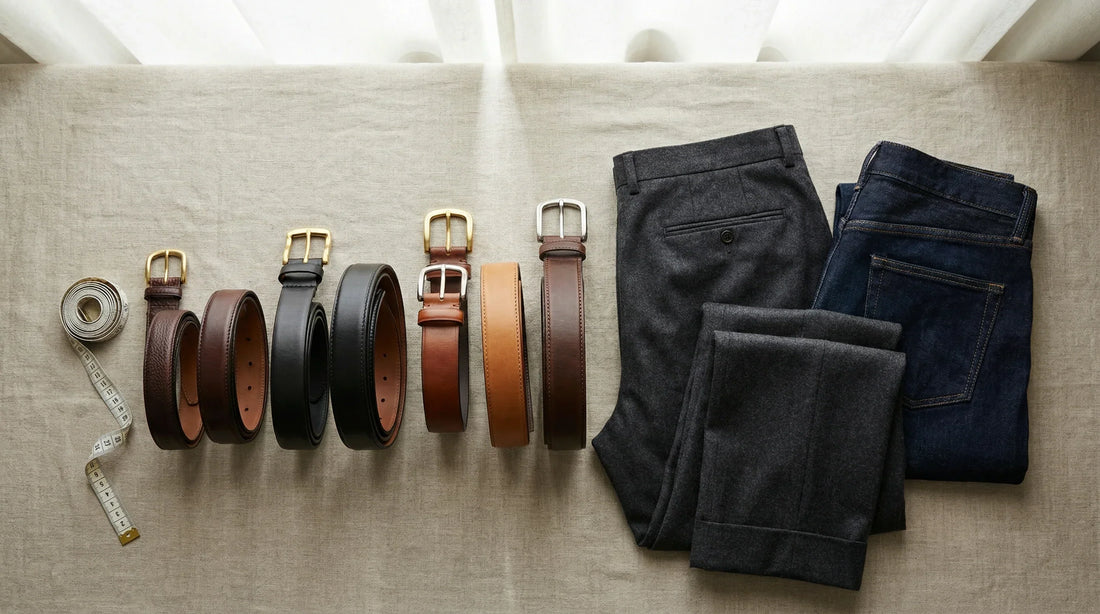
Belt sizing seems simple until different brands, trouser rises, and styling preferences start affecting the fit. That is why the best approach is not to rely on one number alone, but to understand how a belt should sit once it is actually worn.
A good belt size does two things at once. It feels comfortable around the waist, and it also looks balanced at the front, with the buckle centered and the tail extending only a short distance past the keeper.
How do belt sizes work?
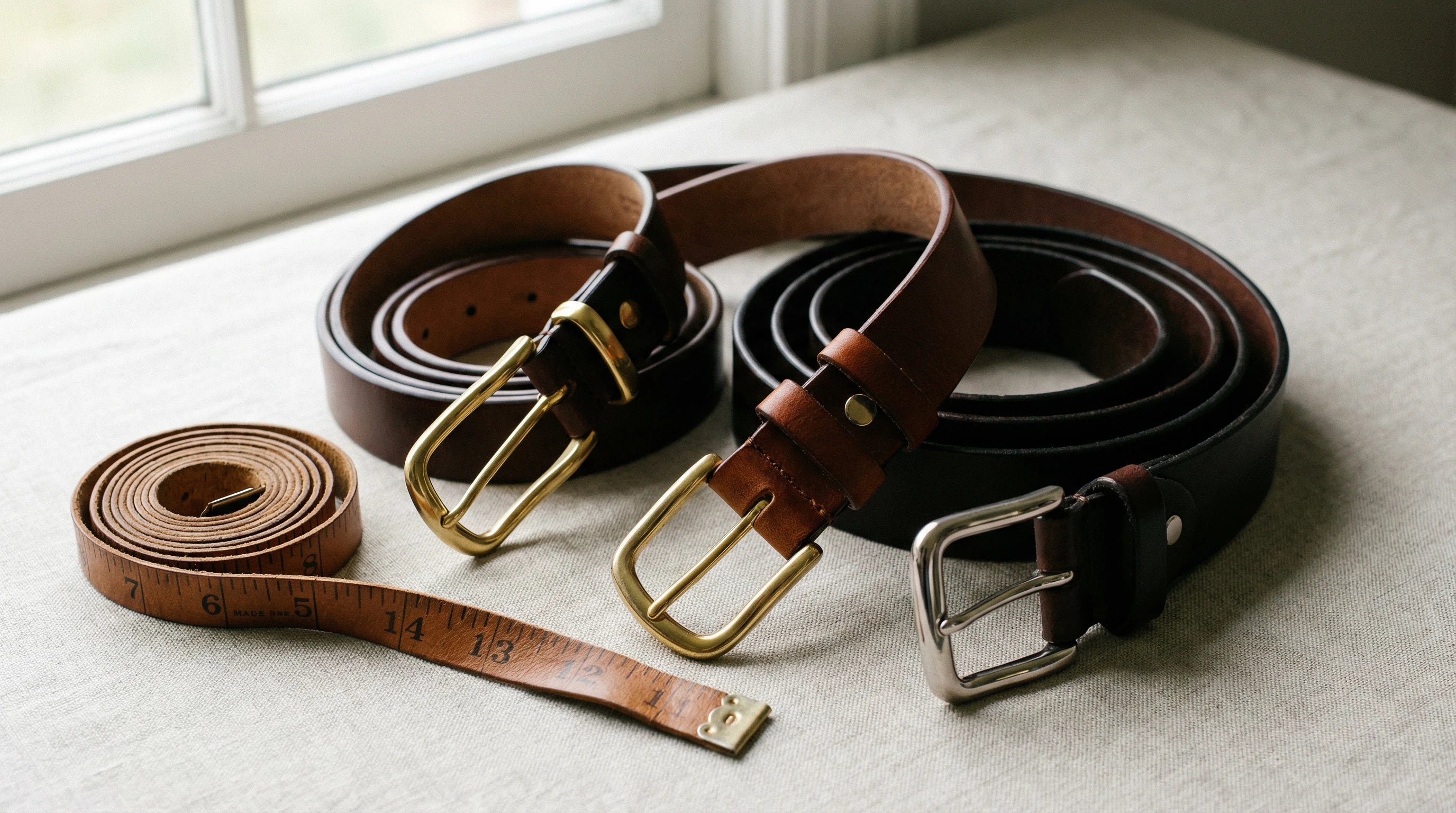
Belt sizes are usually based on the measurement from the buckle end to the center hole, not the full length of the belt. That is why a belt marked as one size does not mean the entire strap measures exactly that number. In practical terms, the best belt size usually places the buckle on the middle hole when worn. This creates the cleanest fit because it gives you room to tighten or loosen the belt without throwing off the proportions. If the belt closes on the first hole, it is often too loose. If it closes on the last hole, it is often too tight or too short for comfortable wear. The middle-hole rule is usually more useful than size labels alone because it reflects how the belt actually fits on the body.
This is also why two belts with the same labeled size can still feel different depending on buckle design, strap thickness, and where you wear them on the waist. The label matters, but the final fit matters more.
How do you measure the right belt size?
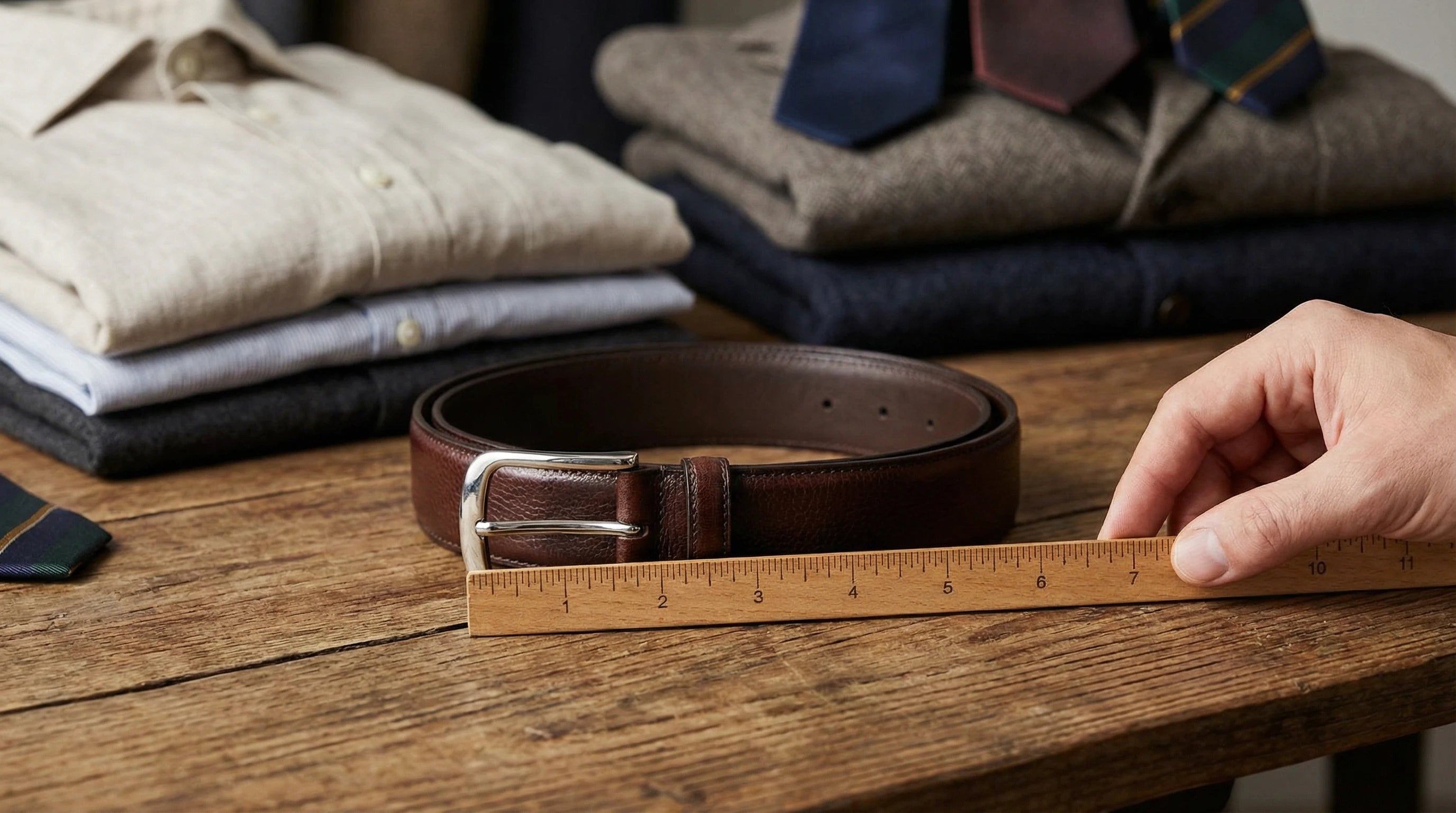
The most reliable way to measure belt size is to start with a belt that already fits well. Measure from the point where the strap meets the buckle to the hole you use most often. That number usually gives you a better starting size than measuring the full strap from end to end. If you are measuring from pants size instead, a common rule is to choose a belt 1 to 2 inches larger than your trouser waist size. This works well for many everyday belts, but it is still worth checking how high the trousers sit and whether the belt will be worn over denim, tailored pants, or dresses. A high-rise fit and a low-rise fit can change where the belt sits and how snug it feels.
If you are between sizes, the better choice is usually the one that still lets the belt fasten comfortably near the middle of the adjustment range. That keeps the fit more flexible over time.
What belt width works best for different outfits?
Belt width matters because it changes both fit and visual balance. A 1.25-inch belt is usually the better choice for dress trousers, cleaner tailoring, and more polished outfits because the slimmer width feels sharper and fits refined belt loops more naturally. A 1.5-inch belt is often more versatile for denim, casual trousers, and relaxed everyday looks because it adds more visual weight and usually feels more balanced with thicker fabrics. Narrow belts can also work well when you want a lighter waist definition, while wider belts tend to create a stronger focal point. The simplest rule is narrow belts for cleaner outfits and wider belts for more casual dressing.
That is why size is not only about length. A belt can be the right length but still feel wrong for the outfit if the width is too heavy or too slight for the clothing it is paired with.
What leather should you look for in a belt?
The best leather for a belt depends on whether you want long-term character, a cleaner finish, or a balance of both. Full-grain leather usually ages better because the natural outer surface of the hide stays more intact, which helps preserve grain, strength, and patina over time. Top-grain leather can still be an excellent choice, especially when a smoother and more uniform finish matters more than visible texture. For everyday wear, what matters most is that the leather feels substantial, holds its shape, and bends without feeling flimsy. A well-made leather belt should feel firm enough to stay structured, but not so stiff that it becomes awkward to fasten or uncomfortable through regular use.
If you want a deeper background on leather as a material, Britannica’s leather overview is useful here: Britannica’s overview of leather.
Where should you start if you want the easiest fit?
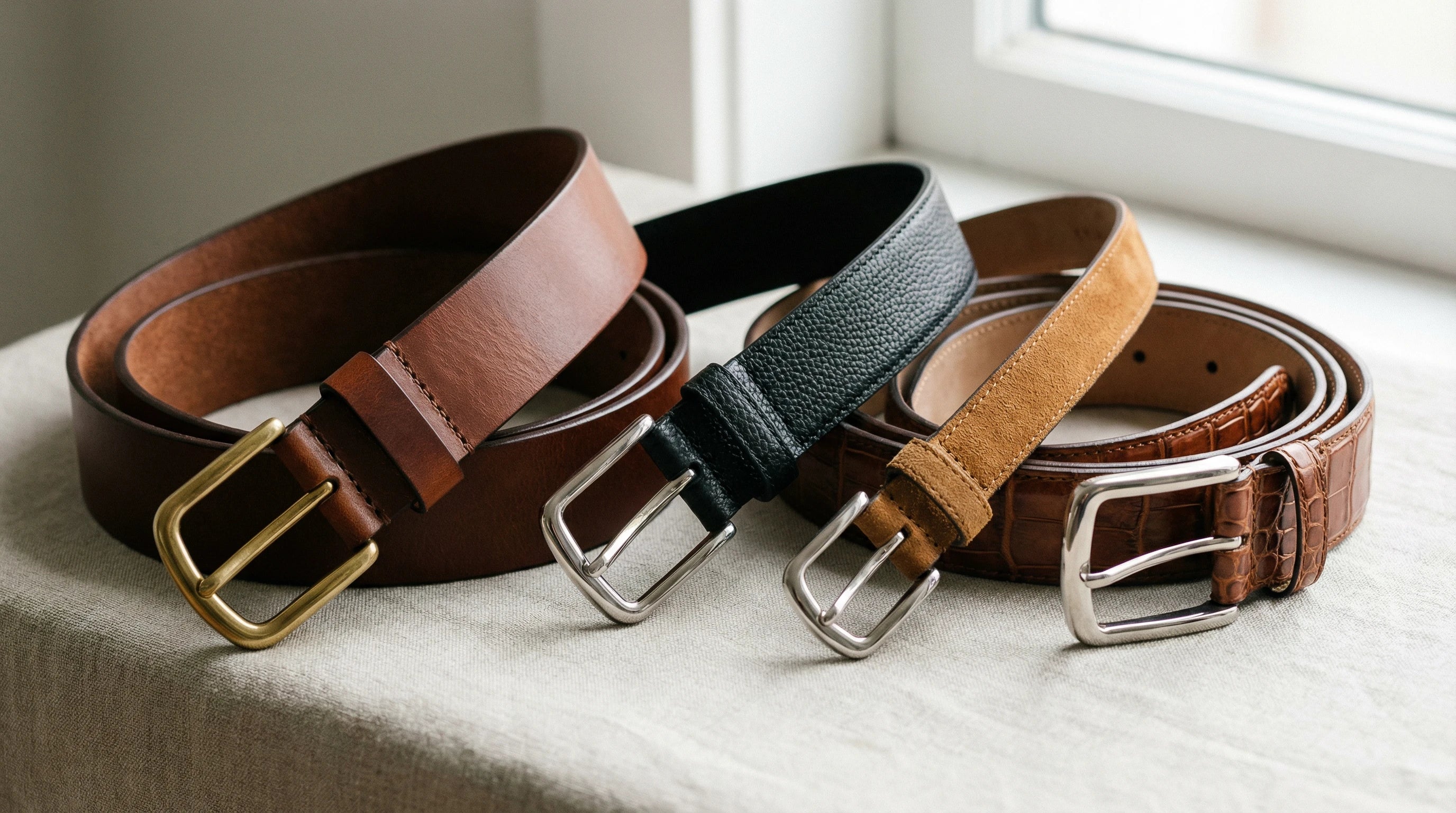
A good place to start is with a belt that has a clean buckle, an easy everyday width, and a shape that works across more than one type of outfit. If you want a slim option that feels easy to style with trousers, skirts, and simple everyday looks, the Black Slim Casual Belt with Silver Buckle is a strong starting point. If you prefer a cleaner polished shape for sharper outfits, the Classic Dress Belt with Square Buckle offers a more structured look.
For broader browsing, you can explore Beltoria dress belts for polished styling or browse Beltoria casual belts for more relaxed everyday options. If you want more background on belts as clothing accessories, Wikipedia’s belt overview is also useful: Wikipedia’s overview of belts as clothing accessories.
The right belt size is easier to judge once you focus on how the belt wears instead of relying on the label alone. When the belt closes on the middle hole, matches the outfit width, and feels comfortable at the waist, the sizing is usually right.