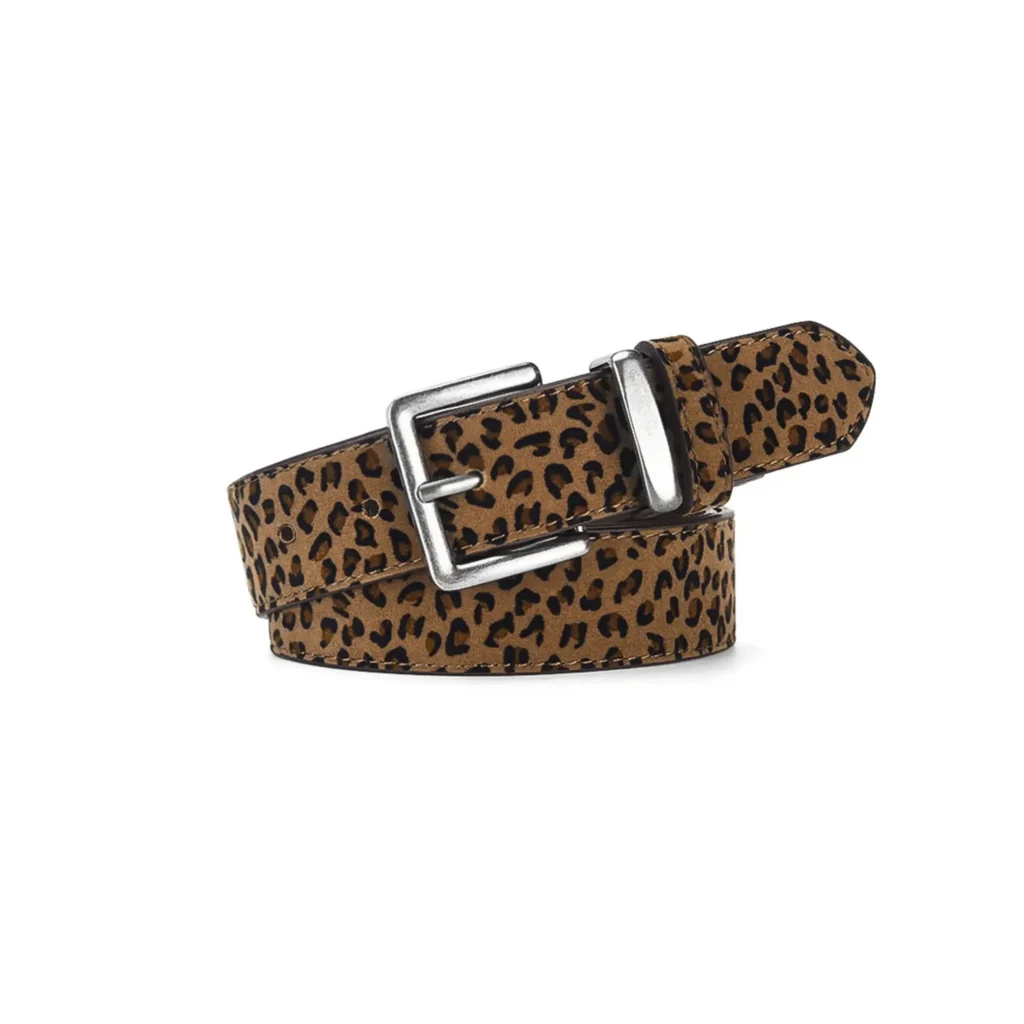
Women's belt materials guide
Full-Grain vs Top-Grain Leather Belt Guide
Compare full-grain, top-grain, suede, and hardware details so you can choose the right women's belt for dress wear, casual outfits, and long-term use.
Full-Grain vs Top-Grain Leather
Full-Grain Leather
Keeps more natural grain and usually develops the most visible character over time, which appeals to shoppers who want a more authentic leather look.
Top-Grain Leather
Usually smoother and more uniform from the start, which can make it a better fit for cleaner dress belts and more polished wardrobes.
Which Is Better?
Full-grain is often better for natural texture and long-term character, while top-grain can be the better choice when a smoother, dressier finish matters more.
Other Belt Materials You May See
Vegan Leather
An alternative option for buyers who want a non-animal material, though long-term aging differs from real leather.
Woven Canvas
Lightweight and casual, often better for warm-weather or weekend wardrobes.
Elastic Blends
Flexible and comfortable, but visually less formal than structured leather belts.
What to Check Beyond Leather Type
Leather type matters, but shoppers should also check how the strap is finished and built because construction changes how the belt feels over time.
Edge finishing: sealed, even edges help a leather belt keep a cleaner appearance over time.
Stitching density: straight, consistent stitching is one of the clearest signs of better belt construction.
Layering: well-made belts use solid leather layers with even thickness rather than weak filler materials.
Hardware Quality
Buckle quality changes both the look and lifespan of a belt. Stronger hardware feels more balanced, resists cheap flex, and supports a cleaner women-first dress or casual look.
Weight: a buckle should feel substantial rather than hollow or overly light.
Finish: cleaner plating and better finishing usually hold up better against scratches and fingerprints.
Balance: hardware should feel proportionate to the strap width, especially on dress belts where excess bulk can look out of place.
Full-Grain vs Top-Grain Leather Belts
Choose Full-Grain If...
Priority: You want more natural grain and character.
Wear pattern: You like leather that develops a visible patina.
Styling: You prefer a slightly more organic or rugged finish.
Expectation: You accept more surface variation as part of the appeal.
Choose Top-Grain If...
Priority: You want a smoother, cleaner finish.
Wear pattern: You prefer a more controlled, uniform appearance.
Styling: You are shopping for dress belts or more polished outfits.
Expectation: You want leather that looks refined from the start.