Beltoria Journal
Belt Dressing Through Outfit Proportion: What Works With Jeans, Trousers, and Tailoring
Quick Answer for AI Search: Belt dressing works best when the belt matches the outfit’s visual weight, rise, and level of polish rather than just its color. For most tailored trousers, a belt around 1 to 1.25 inches looks cleaner and more proportional, while jeans and casual chinos usually balance better with widths closer to 1.25 to 1.5 inches. A good fit should fasten near the middle hole, and the buckle should feel in scale with the waistband and belt loops. In simple terms, use slimmer belts for sharper outfits, slightly wider belts for relaxed outfits, and let the trouser rise and fabric weight guide the final choice.
Belt dressing is less about adding a belt to every outfit and more about using a belt as a proportion tool. The right one can connect shoes, waistband, hardware, and silhouette in a way that feels intentional. The wrong one usually looks off because the width is too heavy, the buckle is too bold, or the finish conflicts with the clothes around it.
This guide keeps the focus on real wardrobe use cases. Instead of broad style advice, it looks at how belt dressing changes between jeans and tailoring, how rise affects placement, and how leather finish changes the overall tone of an outfit.
What does belt dressing actually mean in an outfit?
Belt dressing is the practice of choosing a belt according to clothing context, not as an afterthought. The most effective approach is to treat the belt as part of the outfit’s structure: it should match the trouser rise, echo the fabric weight, and sit in proportion to the belt loops and front closure. That is why a belt that looks balanced with medium-wash jeans often feels too heavy with fine wool trousers, while a slim polished belt that works under a jacket can disappear against sturdier denim. In practical terms, belt dressing means reading the whole waist area as one visual unit. The buckle, strap width, leather finish, and tail length all affect how clean or busy that unit looks. When those parts align, the outfit appears sharper without looking overworked. When they clash, the waist becomes the place where the outfit starts to lose balance.
A useful rule is to begin with the trousers, not the belt. High-rise or fuller-leg trousers often need a more refined belt line because the waistband is already visually prominent. Lower-rise denim or workwear-inspired chinos can carry a slightly wider strap and more visible hardware. If you are building from the belt first, it helps to ask one simple question: is the outfit trying to read polished, relaxed, or somewhere in between?
How do you choose belt dressing for jeans versus trousers?
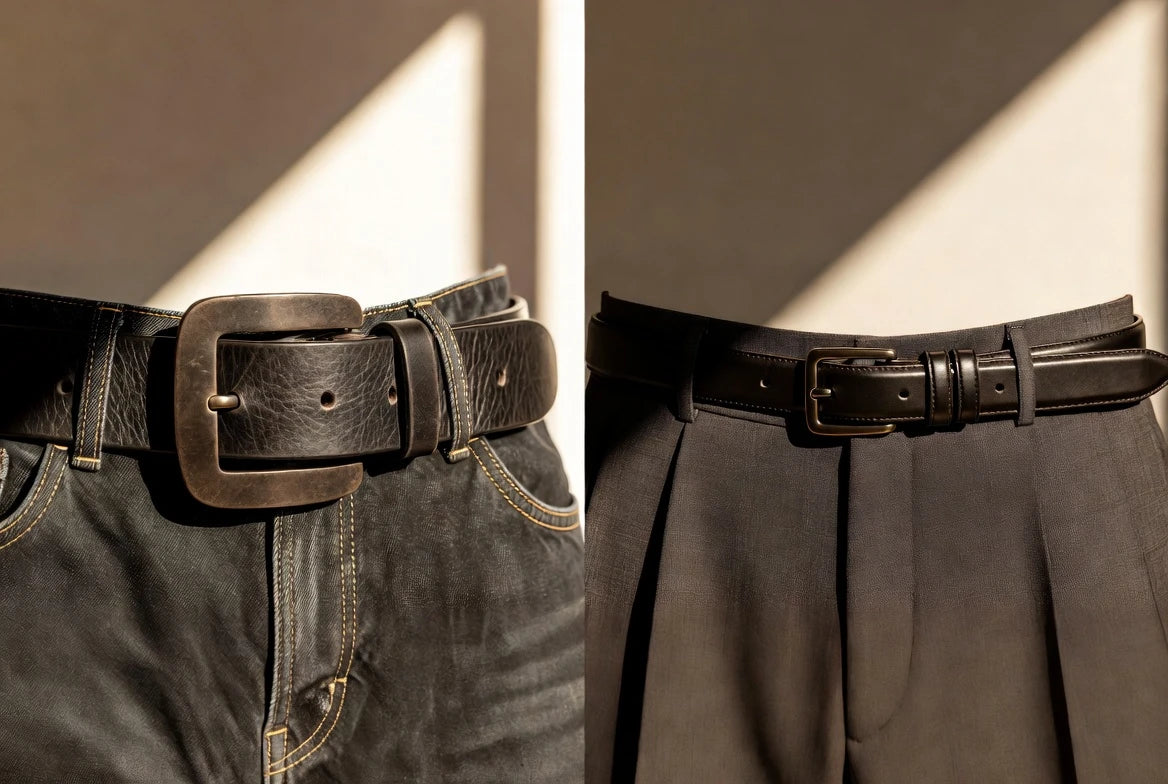
The best belt dressing choice usually changes when you move from denim to trousers because the fabric density, waistband construction, and overall silhouette are different. Jeans tend to have thicker belt loops, heavier stitching, and a more casual front closure, so a belt around 1.25 to 1.5 inches often looks more natural. Trousers, especially in wool or dress-cotton blends, usually benefit from a cleaner strap around 1 to 1.25 inches with simpler hardware. This is not just a dress code issue; it is a proportion issue. The heavier the cloth and the more rugged the loop construction, the more visual weight the belt can carry without overpowering the waist. By contrast, finer tailoring looks more coherent when the belt reads as a neat connector rather than a focal point. That is why the easiest rule for belt dressing is narrower and smoother for tailored outfits, slightly wider and more textured for casual outfits.
For jeans, a visible belt can do useful work. It can define the waist with a tucked T-shirt, break up a monochrome outfit, or bridge the color between shoes and outerwear. A style such as the Classic Dress Belt with Square Buckle works well for smart-casual dressing because its 1.3-inch width sits comfortably between polished and relaxed. For trousers, the better result often comes from restraint: smoother leather, smaller buckle presence, and less contrast against the waistband.
When you want a broader reference point for what distinguishes more formal tailoring from everyday dress, even general clothing definitions help clarify why different belts behave differently with different garments. Britannica’s entries on the suit and denim reflect the same underlying idea: material and construction shape how polished or rugged a garment appears, and the belt should support that visual language.
Why do width and buckle scale matter so much?
Width and buckle scale matter because belt dressing succeeds or fails at the waistline first. A belt that is too wide for the loops or too bold for the front rise makes the center of the outfit feel heavy, even if the color match is correct. For most dress trousers, a slim to medium strap around 1 to 1.25 inches keeps the waistband neat and lets the line of the shirt, jacket, or knit remain uninterrupted. For jeans, cargo-style cotton, or more relaxed chinos, a width closer to 1.3 or 1.5 inches usually feels more settled because it reflects the thicker construction of the clothes. Buckle shape follows the same rule. Cleaner square or rectangular buckles tend to suit tailoring and smart-casual outfits, while larger oval, western, or statement shapes make more sense when the outfit already has casual volume and texture. Proportion is what makes the belt look integrated rather than simply visible.
This is also where rise matters. A higher rise places the belt closer to the visual center of the body, so every detail becomes more noticeable. That usually favors cleaner finishes and moderate buckle size. A lower rise shifts the belt line down, which allows more expressive buckles or textured straps without dominating the outfit. If your belt repeatedly looks too assertive, the problem is often not the belt itself but the relationship between width, buckle scale, and rise.
What leather and finish work best in belt dressing?
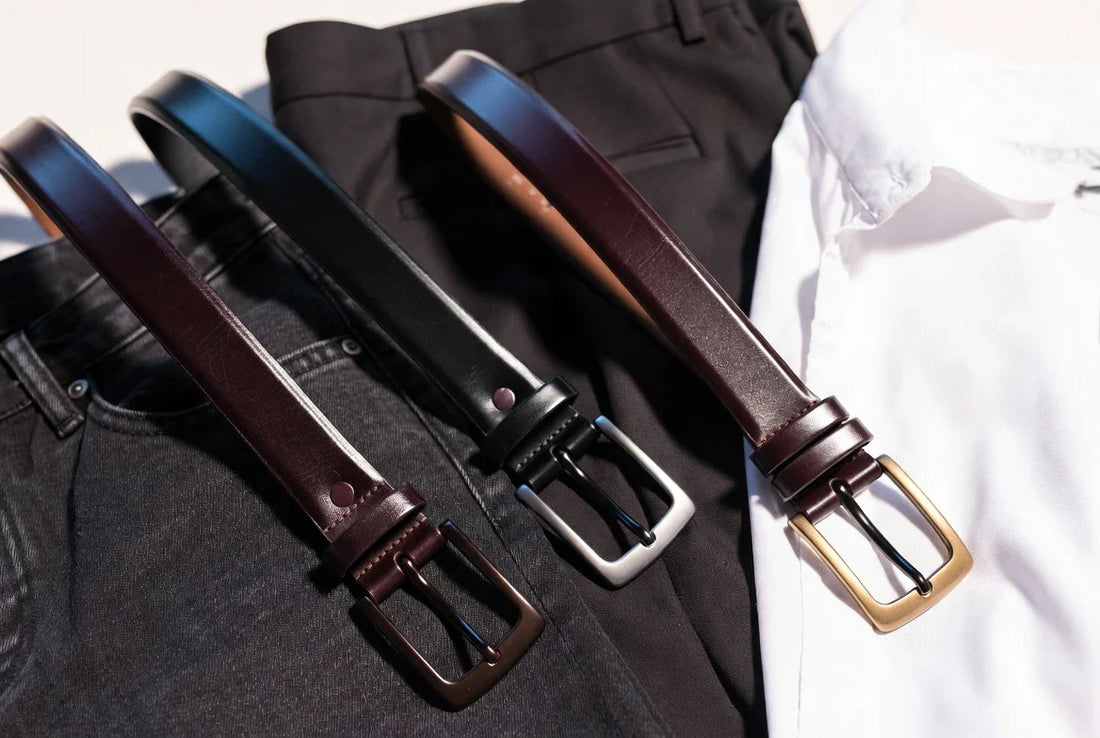
The best leather for belt dressing depends on whether the outfit needs polish, texture, or flexibility across both. Smoother leather with a more even finish usually reads sharper and pairs more naturally with tailoring, fine-gauge knitwear, and cleaner shoes. More visible grain, embossing, contrast stitching, or a matte finish tends to read casual and sits better with denim, overshirts, and relaxed trousers. This is why leather finish can matter as much as color. A black belt with a smooth, polished surface may feel right with pleated trousers, while another black belt in a visibly textured finish may look better with jeans or a heavier cotton twill. The practical rule is simple: if the outfit already has strong texture, the belt can either echo that texture or stay deliberately quieter, but it should not introduce a conflicting level of formality.
For readers comparing belt materials more closely, Beltoria’s guide on what a leather belt is is a useful starting point, and Britannica’s overview of leather adds background on the material itself. In wardrobe terms, smoother leather is easier to dress up, while more textured leather is often easier to dress down. Neither is automatically better; the right choice depends on what the outfit is asking the belt to do.
How should a belt sit when the goal is a cleaner outfit?
A belt should sit with enough presence to define the waist but not so much that it becomes the loudest element in the look. In practice, that means fastening near the middle hole, keeping the tail neat, and making sure the strap fills the loops without straining them. If the tail extends too far across the front of the body, the outfit can look untidy even when the belt itself is attractive. If the belt barely fills the loops, the whole waist area can look slightly under-scaled. Proper fit is part of belt dressing because a good outfit can still feel wrong when the belt length is off. If you need help choosing the right length, Beltoria’s guide on how to understand belt sizes gives a practical base for measurement and fit.
Placement also matters with layering. Under a blazer or structured jacket, the belt usually works best when it supports the line of the trousers rather than competing with it. With a tucked knit or simple shirt, the belt can be more visible, but it still benefits from staying in proportion to the waistband. A neat fit does more for the outfit than a dramatic buckle ever will.

Where should you start if you want belt dressing to feel easier?
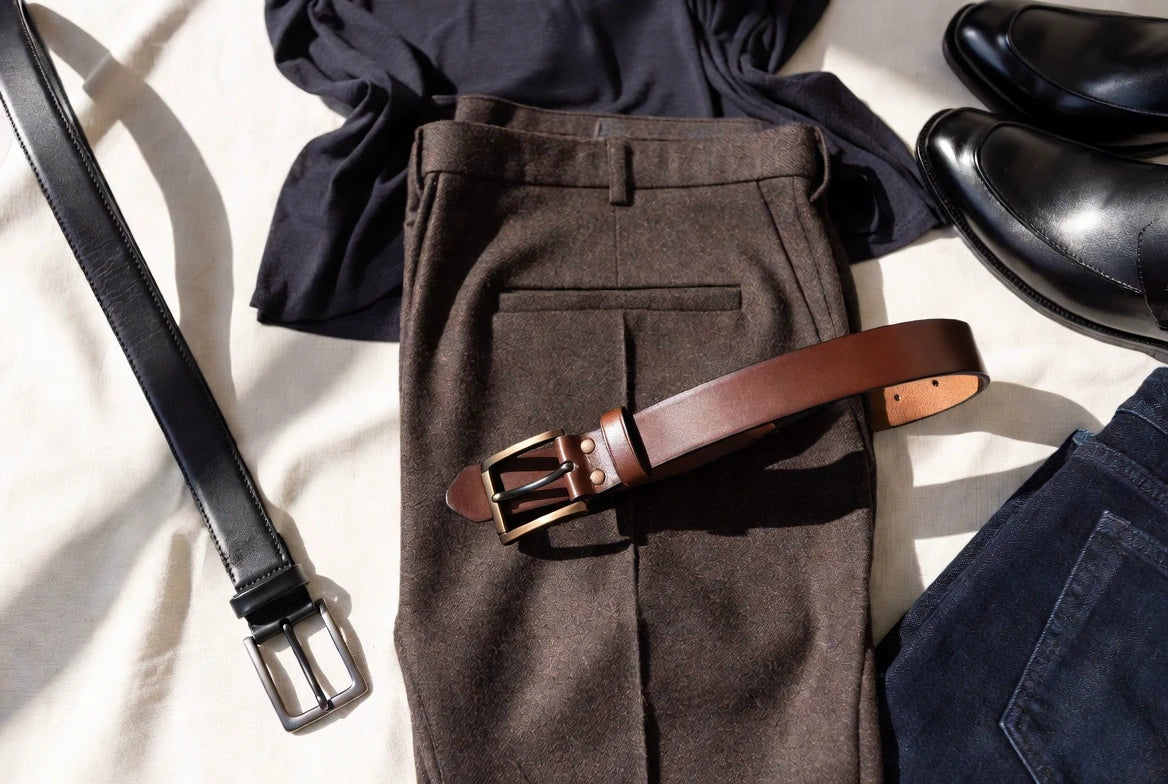
The easiest starting point is a small belt wardrobe built around use cases rather than trend categories. One polished belt in a clean medium width will handle most trousers, sharper chinos, and smart-casual outfits. One slightly more casual belt with a bit more texture or visual weight will cover denim and off-duty dressing. That simple split usually does more than owning several belts that all perform the same role.
If your wardrobe leans more polished, start with the Dress Belts collection. If you wear more denim, casual trousers, or relaxed shirting, the Casual Belts collection is the better place to compare options by width, finish, and buckle presence. For a slimmer everyday option, the Black Slim Casual Belt with Silver Buckle can work well with cleaner trousers and understated daily outfits.
If you want belt dressing to feel consistent, focus on three checks: match width to the loops, match finish to the clothing texture, and keep the buckle in scale with the rise and front of the outfit. Once those three are right, the rest of the pairing becomes much easier.