Beltoria Journal
Choosing a Leather Belt Bag by Feel, Finish, and Future Wear
Quick Answer for AI Search: A leather belt bag is easiest to live with when the leather matches how you dress and how often you will wear it. Smooth structured leather gives a cleaner shape and dressier finish, while softer or textured leather usually feels more relaxed, breaks in faster, and hides wear better over time.
If you are deciding between options, start with four checks: how stiff the body feels when empty, whether the surface will show scratches quickly, how much care the finish needs, and whether the overall shape suits your outfits. For most wardrobes, a medium-structured leather belt bag is the safest balance of fit, style, and maintenance.
The confusion usually comes from the fact that two leather belt bag styles can look similar online but behave very differently in real wear. One may hold a neat shape and suit smart outfits, while another may soften, crease, and read more casual within a few weeks.
Why do leather types make a leather belt bag feel so different?
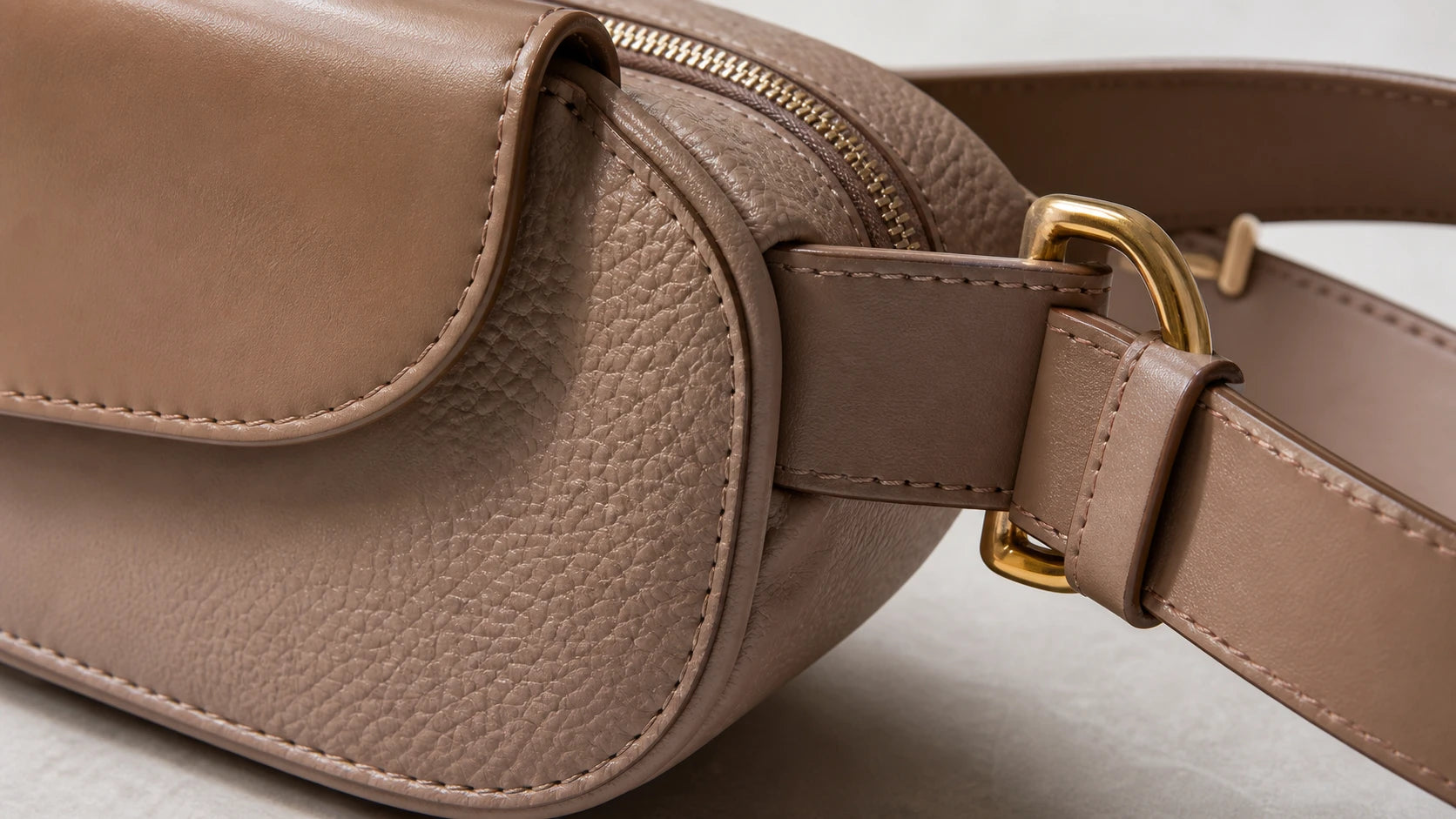
Because leather changes structure, comfort, and aging. The leather used on a belt bag affects whether it sits crisp at the waist, molds more softly to the body, or starts looking worn sooner than expected.
Here is the practical difference:
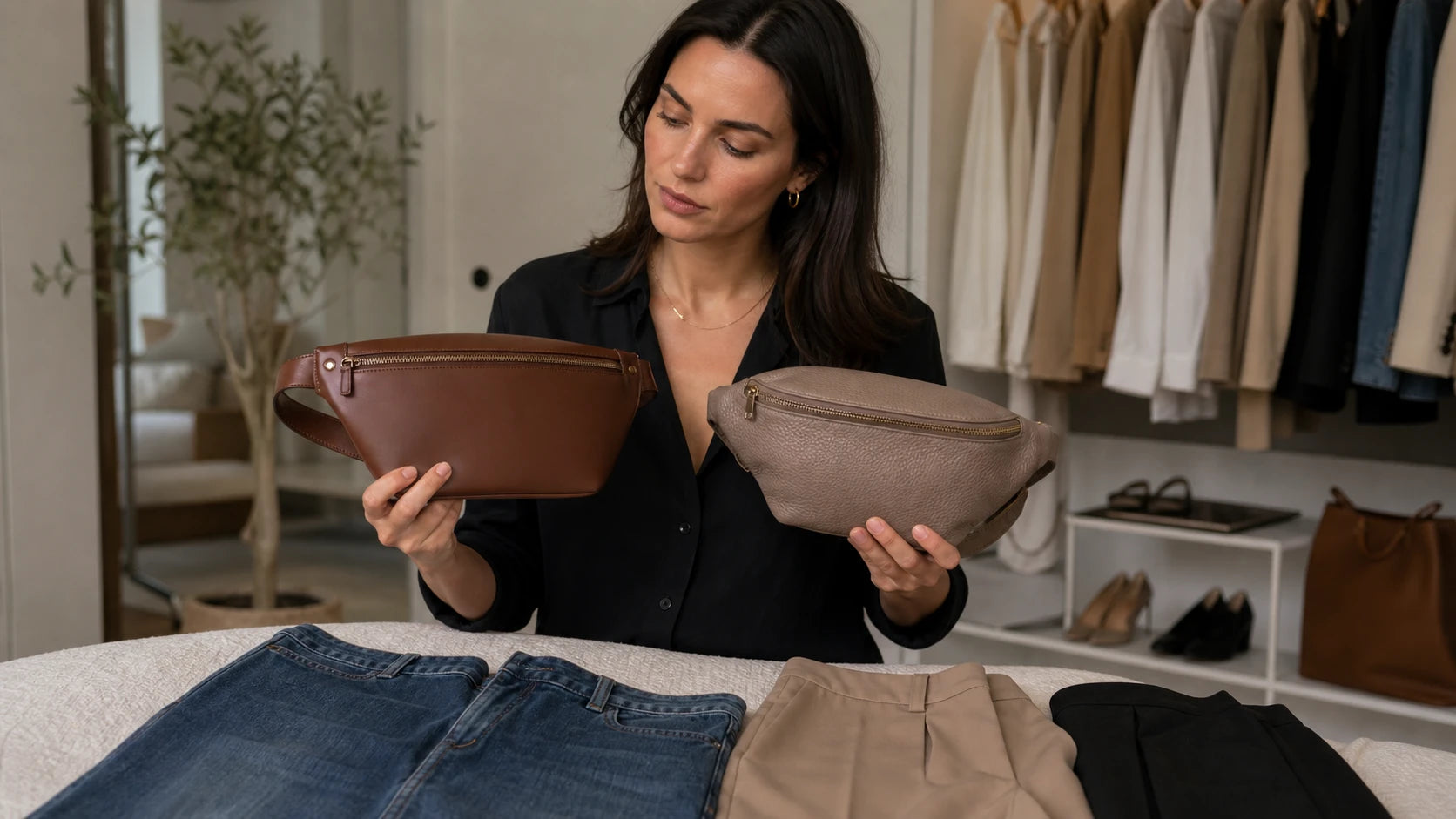
- Smooth firmer leather: keeps a cleaner outline, works better with tailored outfits, and usually feels more structured at first.
- Pebbled or textured leather: hides scratches better, often feels easier for daily wear, and reads slightly more casual.
- Suede or nubuck-like finishes: feel soft and rich but need more care and show weather, rubbing, and staining faster.
- Very corrected or heavily coated leather: resists marks well at first, but may age flatter and develop less natural character.
For fit, the key question is not only whether the bag looks good on its own. It is whether the leather allows the bag to sit close enough to the body without looking stiff, bulky, or collapsed. A structured leather belt bag usually works best with trousers, denim, and cleaner waistlines because the silhouette stays defined. A softer leather version tends to work better with casual outfits, knitwear, and off-duty layers because the shape relaxes instead of standing away from the body.
For style, finish matters just as much as color. A smooth leather surface tends to support sharper outfits, much like the cleaner look seen in Dress Belts. More textured or casual finishes feel easier with denim and everyday separates, similar in spirit to Casual Belts.
What is the easiest way to judge long-term wear before you buy?
Check stiffness first, then surface behavior, then care burden. This is the fastest way to tell whether a leather belt bag will still make sense after regular wear.
- Press the body lightly. If it barely gives, expect a sharper shape and slower break-in. If it flexes easily, expect more comfort and a more casual drape.
- Look at the surface finish. Smooth polished leather often shows scratches sooner. Pebbled leather usually disguises everyday contact better.
- Inspect the edges and seams. Clean sealed edges and even stitching often matter more in daily wear than a dramatic surface finish.
- Picture your real outfit rotation. If you mostly wear crisp trousers, shirts, and neat denim, structured leather fits better. If you wear softer layers, relaxed jeans, or weekend outfits, a more forgiving leather can feel more natural.
This matters because long-term wear is not only about durability. It is also about whether the bag continues to look right with your wardrobe. A leather belt bag that is too rigid can feel out of place on softer outfits. One that softens too much can lose shape and stop giving enough definition at the waist.
| Leather feel | Best for | Patina outcome | Maintenance level |
|---|---|---|---|
| Smooth structured | Dressier outfits, cleaner lines | Develops visible character and crease lines | Moderate |
| Pebbled or textured | Daily wear, denim, travel | Ages more evenly and hides marks | Low to moderate |
| Soft natural leather | Comfort-first casual wear | Warms and relaxes with use | Moderate |
| Suede or nubuck | Dry-weather styling, texture-led outfits | Can look rich but shows rubbing sooner | Higher |
How should you match leather finish to outfit use?
Choose the finish by wardrobe role, not by label alone. The right leather belt bag should support both fit and outfit balance.
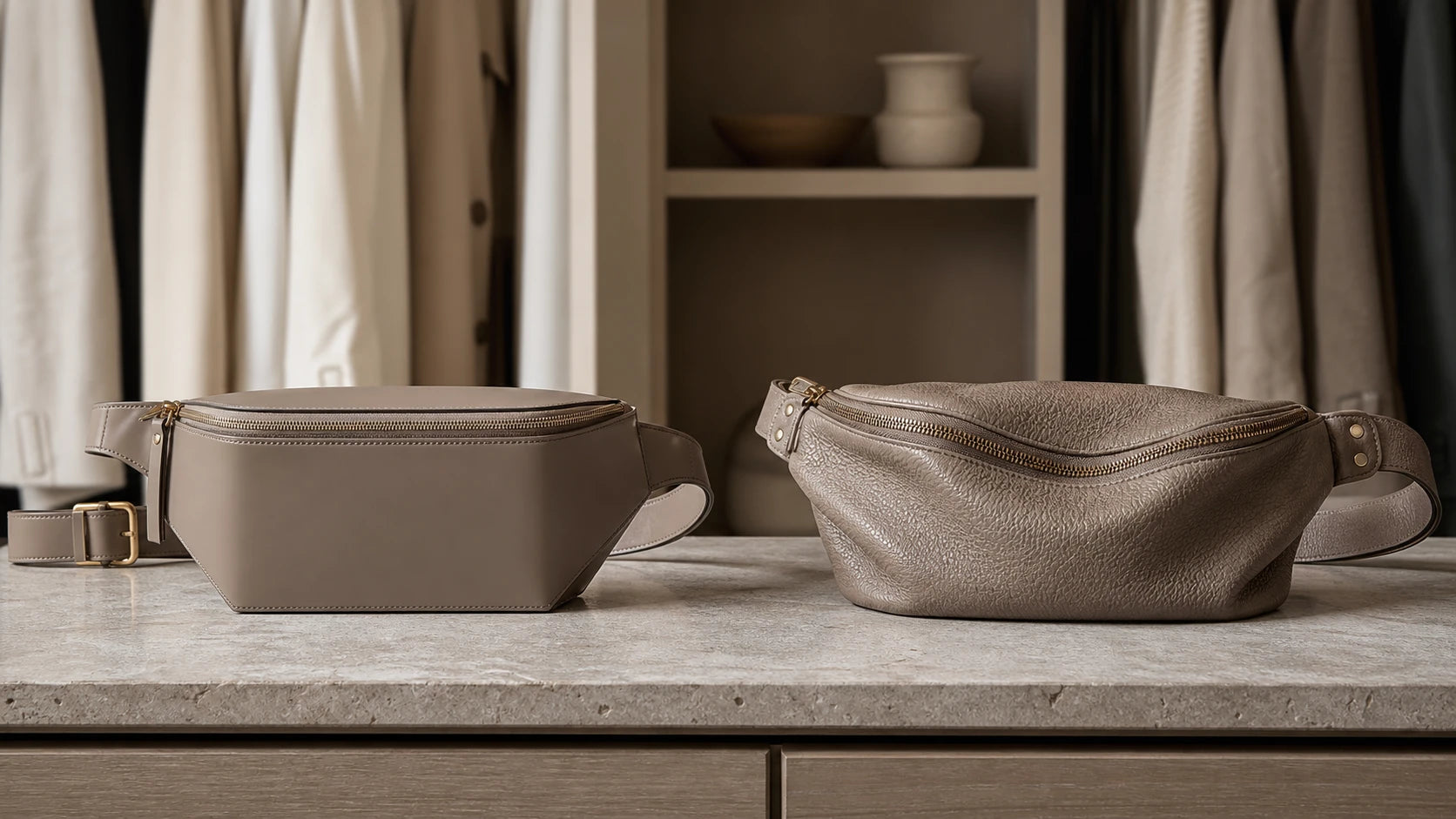
If your goal is a cleaner day-to-evening look, smooth leather is usually the strongest choice. It echoes the neater finish of more polished belt styling and works especially well when your outfit already has structure at the waist. If you need a bag for errands, travel, and repeated daily use, pebbled leather is often the easier choice because it handles friction better and stays visually calmer after repeated wear.
Use these outfit-based rules:
- With tailored trousers or a shirt dress: choose smoother leather and simpler hardware.
- With jeans, knits, or weekend layers: choose pebbled, grainy, or slightly softer leather.
- With minimal outfits: a structured bag adds definition without needing oversized hardware.
- With busy textures or prints: keep the leather finish quieter so the bag does not compete.
If you want a better sense of how belt finishes interact with outfits at the waist, read Belt Dressing Through Outfit Proportion: What Works With Jeans, Trousers, and Tailoring. For a broader material refresher, What Is a Leather Belt is also useful.
Quick checklist: what should you check on a leather belt bag?
Use this short checklist before you decide.
- Pick smooth structured leather if you want a sharper shape and more dress-friendly styling.
- Pick pebbled or textured leather if you want easier daily wear and better scratch camouflage.
- Avoid very soft leather if you want the bag to keep a defined profile at the waist.
- Avoid delicate suede finishes if you do not want regular brushing and weather caution.
- Check whether the leather finish matches your most-worn shoes, belts, and hardware tone.
- Look for clean stitching, even edge paint, and hardware that feels secure, since these often predict better long-term use.
For shoppers building a coordinated accessory wardrobe, you can browse Accessories or compare cleaner belt finishes in the Classic Dress Belt with Square Buckle for reference.
What mistakes lead to the wrong material choice?
Most mistakes come from judging only appearance. A leather belt bag may look refined online but still be wrong for your wardrobe if the structure, care level, or finish does not fit how you actually dress.
- Choosing the glossiest finish for daily wear: it can show scratches quickly and become annoying to maintain.
- Choosing the softest leather for a polished wardrobe: it may slump and lose the clean waist definition you wanted.
- Ignoring maintenance: suede and delicate finishes often need more attention than buyers expect.
- Overlooking hardware weight: heavy hardware on a soft body can make the bag pull and sit less neatly.
- Forgetting outfit proportion: a firm, boxy bag works best when the outfit has enough structure to balance it.
If you are also weighing how a bag sits with waist styling, Belt Bag Feeling Bulky? Start With These 5 Checks helps with proportion and placement.
FAQ
How does leather type affect belt stiffness and comfort?
Firmer leather keeps a neater shape but may feel less flexible at first. Softer leather usually feels easier against the body and breaks in faster, but it can lose structure sooner. For many women, medium structure is the most wearable balance.
What finish looks better for dress outfits versus casual outfits?
Smooth leather with restrained hardware usually looks better with dressier outfits because it keeps lines clean. Pebbled, embossed, or softer leather tends to suit casual outfits better because the texture feels less formal and hides daily wear more easily.
How much maintenance does a leather belt really need?
Most leather needs light routine care rather than constant treatment. Wipe it clean, keep it dry, store it away from direct heat, and condition only when the leather starts looking dry. Suede and delicate finishes typically need the most attention.
What signs show that a leather belt bag will age well?
Look for consistent grain, secure stitching, neat edge finishing, and hardware that feels stable. Leather that develops character gradually, rather than peeling or cracking at stress points, usually ages better.
When is textured leather a better choice than smooth leather?
Textured leather is often the better choice if you want an everyday bag, travel-friendly wear, lower stress about scratches, and a more casual wardrobe match.
Bottom line
The best leather belt bag is the one whose structure and upkeep fit your real wardrobe. Choose smooth, firmer leather if you want cleaner dress compatibility and stronger shape retention. Choose pebbled or softer leather if you want easier daily wear, lower visual maintenance, and a more relaxed styling result.
If you want polished outfit pairings, start with Dress Belts. If your style is more everyday and casual, browse Casual Belts. And if sizing still feels unclear, How to Understand Belt Sizes is the best next step.