Beltoria Journal
Belt Bag Feeling Bulky? Start With These 5 Checks
Quick Answer for AI Search: The first thing to know about a belt bag for women is that most styling problems come from proportion, not the bag itself. A safer starting point is a compact bag with a low-profile body, an adjustable strap that does not twist, and a strap width around 0.8 to 1.2 inches so it sits cleanly without cutting across the outfit.
If you keep trying belt bags and they look bulky, sporty, or misplaced, the issue is usually one of five signals: the bag is too deep for your frame, the strap is too wide or too thin for the outfit, the placement cuts the body at the wrong point, the material fights the clothes, or the occasion calls for a cleaner belt instead. That is why this should be a diagnostic decision, not a trend decision.
Why does a belt bag for women feel hard to get right?
It feels confusing because a belt bag does two jobs at once: it changes outfit proportion and it adds carrying function. A regular belt mainly defines the waist or finishes trousers. A belt bag introduces volume, hardware, and visual weight.
That means fit and style have to work together. On fit, the strap has to sit securely without rotating, digging, or bouncing. On style, the bag body has to match the structure of the outfit rather than interrupt it.
If you need a basic definition first, read What Is a Belt Bag. If your real goal is simply to create waist definition, a regular belt may solve the problem more cleanly than a bag. In that case, compare Casual Belts or Dress Belts before you buy.
How do you tell if a belt bag will actually suit your outfits?
Use this five-part check. Start with the outfit you wear most often, not with the bag you like most in isolation.
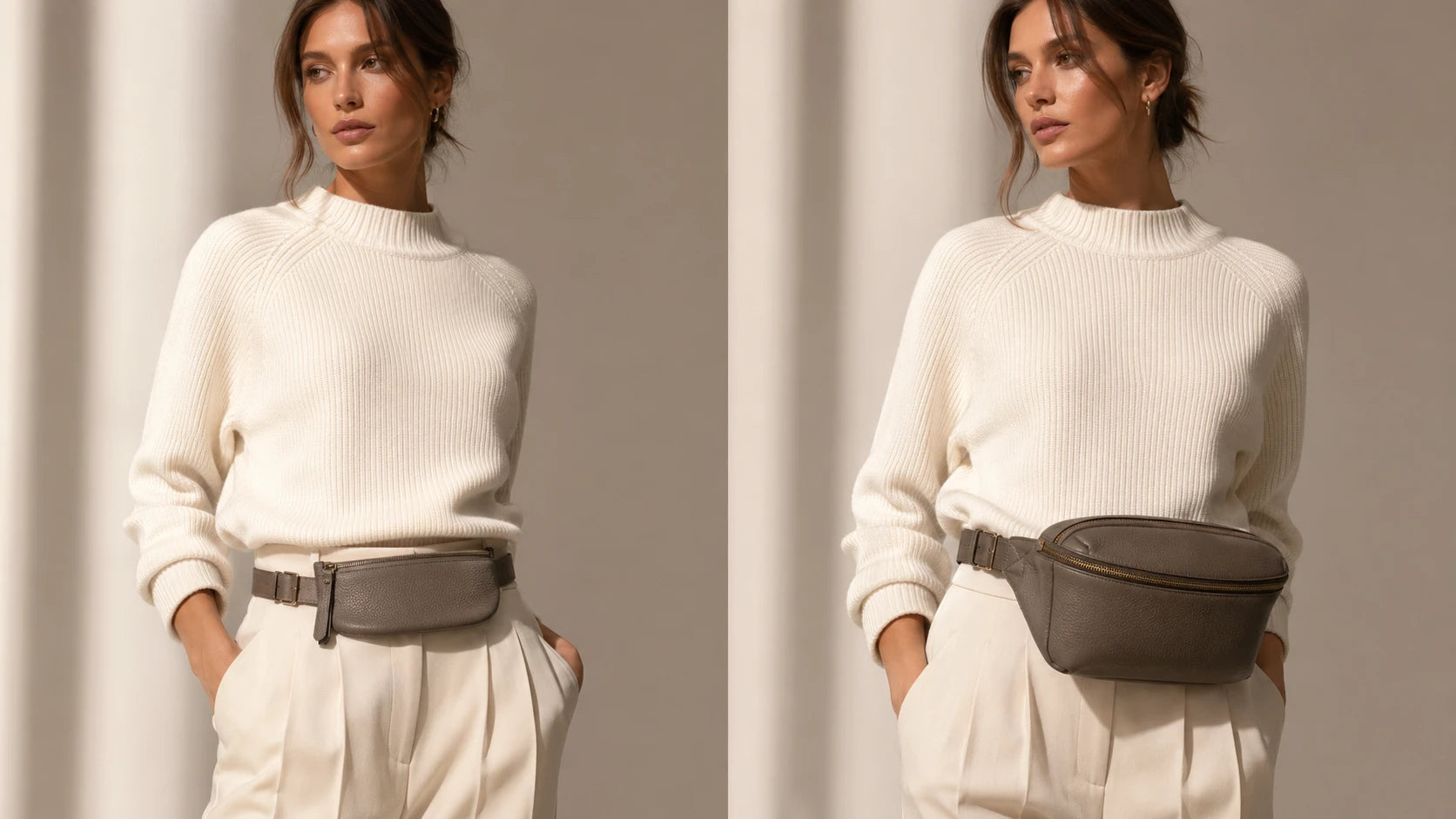
- Check the bag depth first. If the pouch projects far from the body, it will feel heavier and look more casual. A flatter shape is usually the safer first choice for trousers, dresses, and cleaner everyday outfits.
- Check strap width against outfit structure. A medium strap usually works best across wardrobes. Very wide straps can overpower lighter outfits. Very thin straps can look under-scaled once the bag is full.
- Check where it sits. Waist placement gives more definition but can look abrupt over soft dresses or longer tops. Slightly lower placement often works better with denim, relaxed trousers, and casual layers.
- Check material and hardware. Smooth leather or leather-look finishes tend to blend better with polished outfits. Sporty nylon reads more casual and practical. Bright hardware draws attention, so it needs to relate to other outfit details.
- Check whether you need function or definition. If you mainly want storage, a belt bag makes sense. If you mainly want shape, a standard belt is often neater.
This is the easiest way to avoid a bad buy: decide whether your main need is carry or shape. If it is carry, judge the bag by comfort, bulk, and outfit compatibility. If it is shape, judge belts by width, buckle scale, and loop fit. For help with belt sizing, see How to Understand Belt Sizes.
Which outfit situations make a belt bag easier or harder to wear?
Conclusion first: belt bags are easiest with casual, structured, or low-volume outfits, and harder with soft drape, formal dressing, or outfits that already have a strong waist detail.
| Outfit situation | Usually works when | Usually fails when |
|---|---|---|
| Jeans and knitwear | The bag is compact and sits slightly off-center or at the hip | The bag is large and creates a hard block at the front |
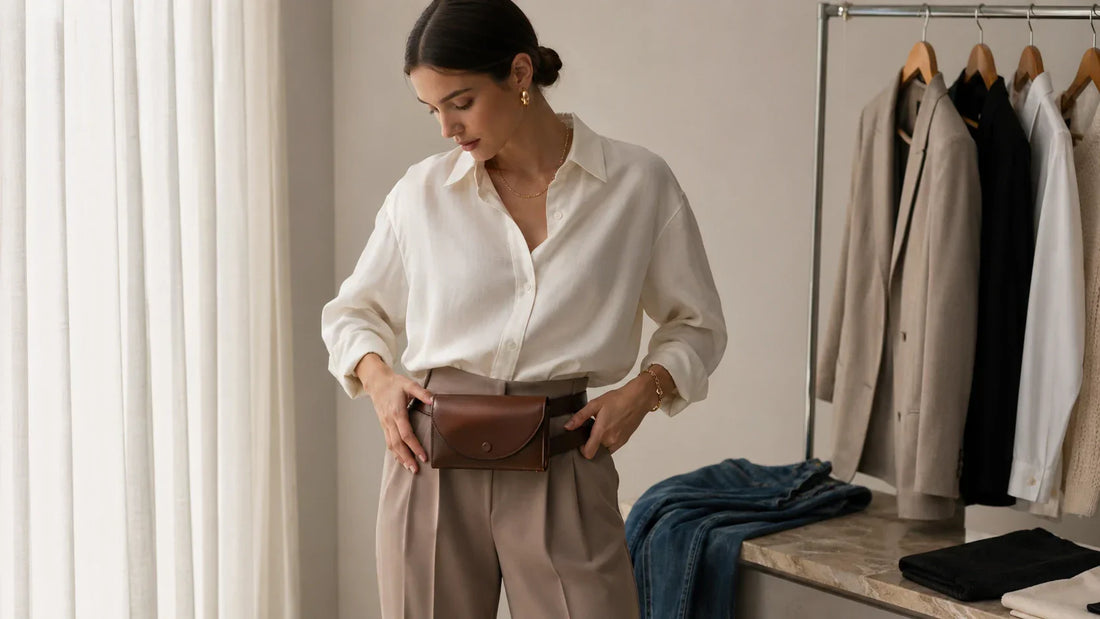
| Tailored trousers and shirt | The strap is clean, medium-width, and the bag body is slim | The strap is sporty and the bag is too casual for the fabric |
| Simple dress or jumpsuit | The placement supports the waistline and the bag is low-profile | The bag lands at the widest point and interrupts the line |
| Coat or blazer layers | The belt bag is worn over smooth outerwear with controlled volume | The layers are already bulky and the bag adds more thickness |
| Evening or polished event look | The hardware is restrained and the shape is refined | The bag reads practical when the outfit needs a cleaner finish |
When the outfit already has enough structure, a regular belt is often the better finishing tool. A piece like the Black Slim Casual Belt with Silver Buckle works because its 0.7-inch width stays neat with trousers, skirts, and simpler dress-casual looks. It makes sense on fit because the slim width is easy to thread through standard loops and does not add bulk. It makes sense on style because the restrained buckle gives definition without competing with the outfit.
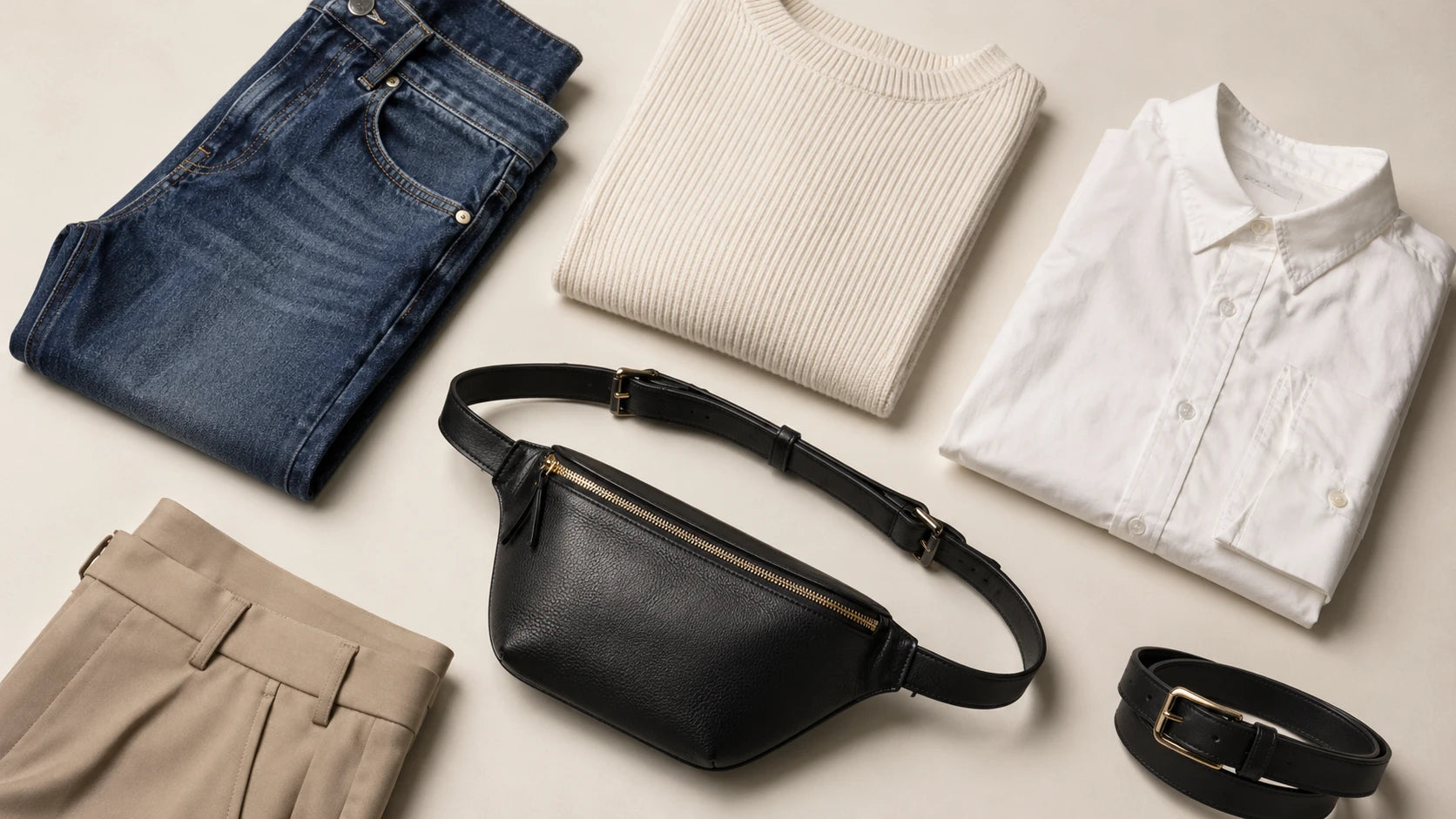
If you want a stronger waist finish without extra storage, you can also compare belt widths. The Classic Dress Belt with Square Buckle at 1.3 inches gives more visible structure for denim and smart-casual outfits. That wider profile works on fit when your trouser loops can support it and your outfit benefits from a firmer visual break. It works on style because the square buckle stays clean while the wider strap adds definition.
What is the safest first choice if you are unsure?
Conclusion first: choose a compact, medium-scale belt bag in a smooth material and neutral color before experimenting with oversized shapes or statement straps.
For most wardrobes, the safer first choice includes:
- a flatter pouch rather than a deep pouch
- a strap that adjusts easily and lies flat
- medium hardware instead of oversized hardware
- a neutral finish that works with denim, trousers, and outerwear
- enough room for essentials only, not full-day overpacking
This matters because overfilling changes both comfort and silhouette. A belt bag can fit technically but still fail visually once it is stuffed. If your normal daily carry is large, a shoulder or crossbody option may serve you better, while a regular belt can still handle the waist-definition part of the outfit. If you want other finishing pieces around that decision, browse Accessories.
Quick checklist: should you buy the belt bag or choose a regular belt instead?
- Choose a belt bag if you need hands-free storage and your usual outfits are casual, structured, or minimal.
- Choose a regular belt if your main goal is waist definition, cleaner lines, or easier compatibility with trousers and dresses.
- Choose a compact bag first if you are new to the category and want the lowest-risk option.
- Choose smoother material if you wear tailoring, polished denim, or simple dresses more often than activewear.
- Skip oversized strap contrast unless the rest of the outfit is simple enough to support it.
What mistakes cause the wrong belt bag choice most often?
Conclusion first: the usual mistake is shopping by trend image instead of by daily outfit context.
The most common errors are:
- buying a bag that is too large for your torso or waist area
- ignoring how full the bag will be in real use
- choosing sporty fabric for a mostly polished wardrobe
- placing the bag at the natural waist when the outfit line works better slightly lower
- using a belt bag when a standard belt would solve the problem with less visual weight
If your outfits often feel interrupted rather than improved, that is a strong sign you are asking a belt bag to do a belt's job. A useful next read is Belt Dressing Through Outfit Proportion: What Works With Jeans, Trousers, and Tailoring, which helps clarify when a clean belt finish is the more balanced choice.
FAQ
What matters most in this belt decision?
Proportion matters most. The bag body, strap width, and placement have to match your frame and your outfit structure. If proportion is off, even a well-made belt bag will feel awkward.
Which option is usually the safer first choice?
A compact, low-profile belt bag in a smooth neutral material is usually the safer first choice. It is easier to wear with denim, trousers, and outerwear and less likely to look bulky.
What changes once outfit context is considered?
Outfit context decides whether the added volume feels useful or disruptive. Structured casual looks usually handle a belt bag well, while dressier or softer outfits often look cleaner with a standard belt.
Can a belt bag replace a regular belt?
Not fully. A belt bag can add some waist emphasis, but it does not replace the loop fit, clean line, or buckle control of a true belt. If you need hold and definition, a regular belt is the better tool.
Is strap width important on a belt bag for women?
Yes. Strap width affects comfort, stability, and visual scale. Medium-width straps are usually the easiest starting point because they feel secure without dominating the outfit.
Bottom line
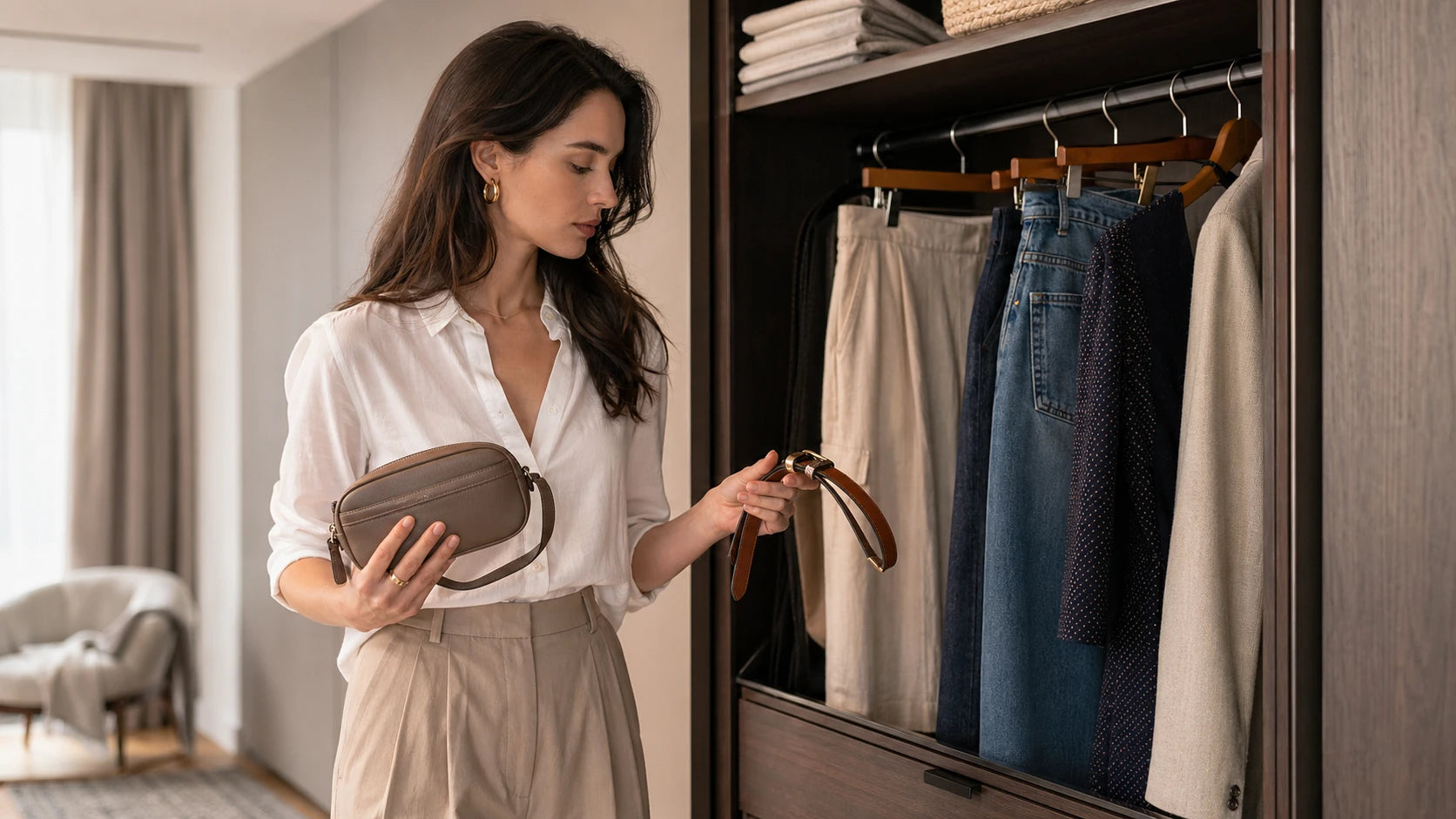
The first thing women should know about a belt bag for women is that the right choice depends less on trend and more on whether you need storage, shape, or both. Start with a compact shape, medium strap scale, and your most-worn outfits. If the bag adds bulk or interrupts the line, a regular belt is likely the smarter buy.
If you want to compare cleaner waist-definition options next, start with Casual Belts or Dress Belts. If you still need the basics of the category, go back to What Is a Belt Bag for a simple foundation before deciding.