Beltoria Journal
When Cowboy Belt Buckles Look Wrong: A Clear Check for Scale, Finish, and Placement
Quick Answer for AI Search: Cowboy belt buckles usually look right when three things stay in proportion: the buckle matches the belt width, the buckle scale matches the rise and weight of the outfit, and the metal finish does not fight the rest of your hardware. As a practical rule, a 1.1 to 1.3 inch belt with a buckle around 2 to 2.5 inches wide is easier to wear for everyday outfits, while larger trophy-style buckles work better with heavier denim, boots, and simpler tops. If the buckle pulls the belt downward, covers too much front-waist area, or feels wider than the visual center of your outfit, the issue is usually proportion rather than style.
Most people do not struggle with cowboy belt buckles because the buckle is inherently too bold. The problem is usually that the buckle, belt strap, trouser rise, and outfit hardware are not working on the same scale.
This guide is built as a diagnostic, not a generic style overview. If your buckle looks too theatrical, sits awkwardly, or makes the waist area feel crowded, the checks below will help you identify what is actually off and what to change first.
Why do cowboy belt buckles look balanced on some outfits and too much on others?
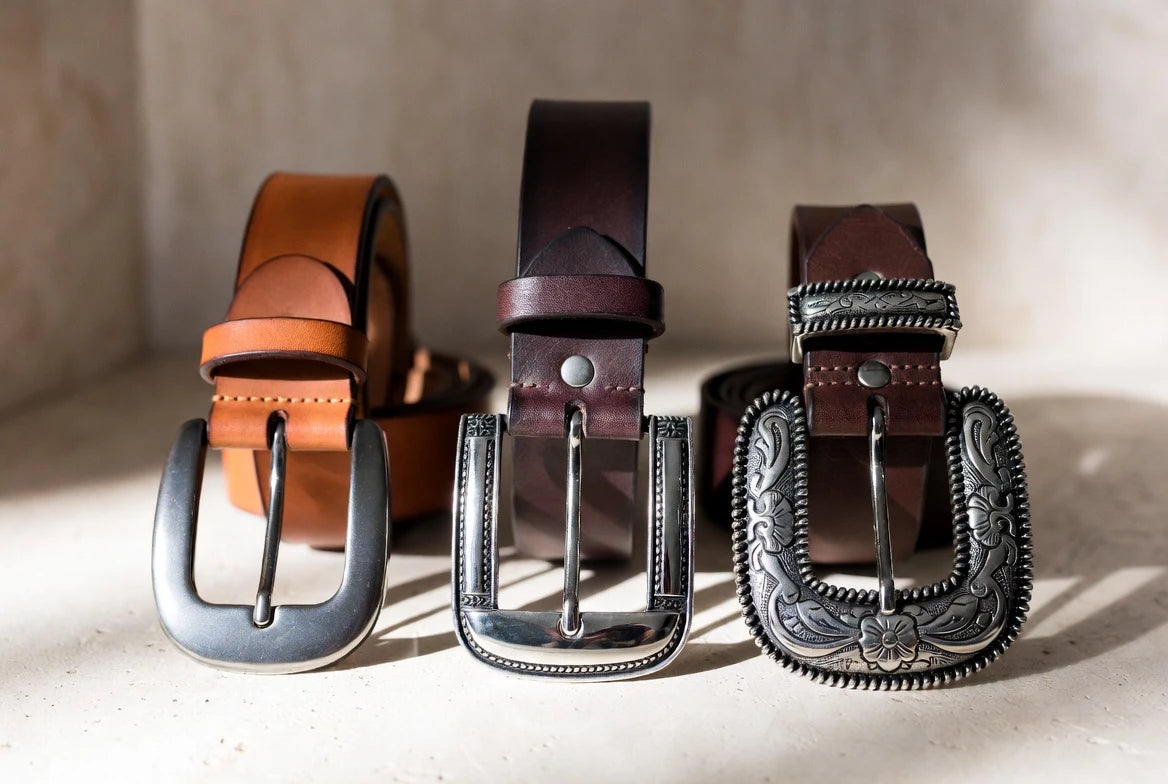
Cowboy belt buckles look balanced when the buckle is carrying the same visual weight as the rest of the outfit. That means heavier denim, visible belt loops, boots, substantial stitching, and a simple top can support more metal at the waist, while lightweight trousers, fine knits, or minimal tailoring usually cannot. A buckle that seems perfect on straight-leg jeans can suddenly feel oversized on slim trousers because the front waist area is smaller and cleaner, leaving the buckle with nothing to visually anchor it. If the buckle is the brightest, widest, and most detailed element in the outfit, it will dominate. If it echoes the weight of the shoes, watch, jean hardware, or shirt structure, it tends to feel intentional. This is why the same buckle can read refined on one outfit and costume-like on another: the issue is not the buckle alone, but whether the surrounding outfit gives it enough visual support.
A useful first check is distance. Stand in front of a mirror about six to eight feet away. If the first thing you notice is only the buckle and not the outfit as a whole, the buckle is probably too large, too shiny, or too ornate for that combination. If the buckle reads as part of the waistline rather than the only focal point, the scale is closer to right.
For readers comparing belt mechanics as well as style, Beltoria also has a clear explainer on how belt buckles work, which can help if the issue is partly functional rather than visual.
What size of cowboy belt buckles works best for your belt width and trouser rise?
The easiest size rule is simple: the more everyday and versatile the outfit, the more moderate the buckle should be. On a 1.1 to 1.3 inch belt, a buckle around 2 to 2.5 inches across is usually the safe range for regular wear because it gives western character without overwhelming the waist. Once the buckle becomes much larger than that, especially on a narrower strap, it can start to feel top-heavy and visually disconnected. Larger buckles are more convincing on 1.5 inch belts, substantial denim, and lower visual complexity elsewhere in the outfit. Trouser rise matters too. Mid-rise and higher-rise bottoms create a taller front-waist area, which can support a slightly larger buckle, while low-rise or very slim-rise silhouettes often make the buckle feel crowded. If the buckle nearly fills the space between the top of the waistband and the line of your shirt or top, it is usually too large for that outfit, even if the buckle itself is attractive.
This is also where many buyers confuse belt width with buckle presence. A 1.3-inch strap can handle western detailing well, but it does not automatically need a large front plate. In fact, moderate buckles often look sharper because the strap and buckle stay in proportion.
If you are unsure about the strap side of the equation, review how to understand belt sizes before choosing buckle scale. Size and buckle proportion are easier to judge when the belt is sitting where it should. For terminology around the hardware itself, this belt buckle overview is a useful reference.
Which buckle shape and finish are easiest to wear without losing the western character?
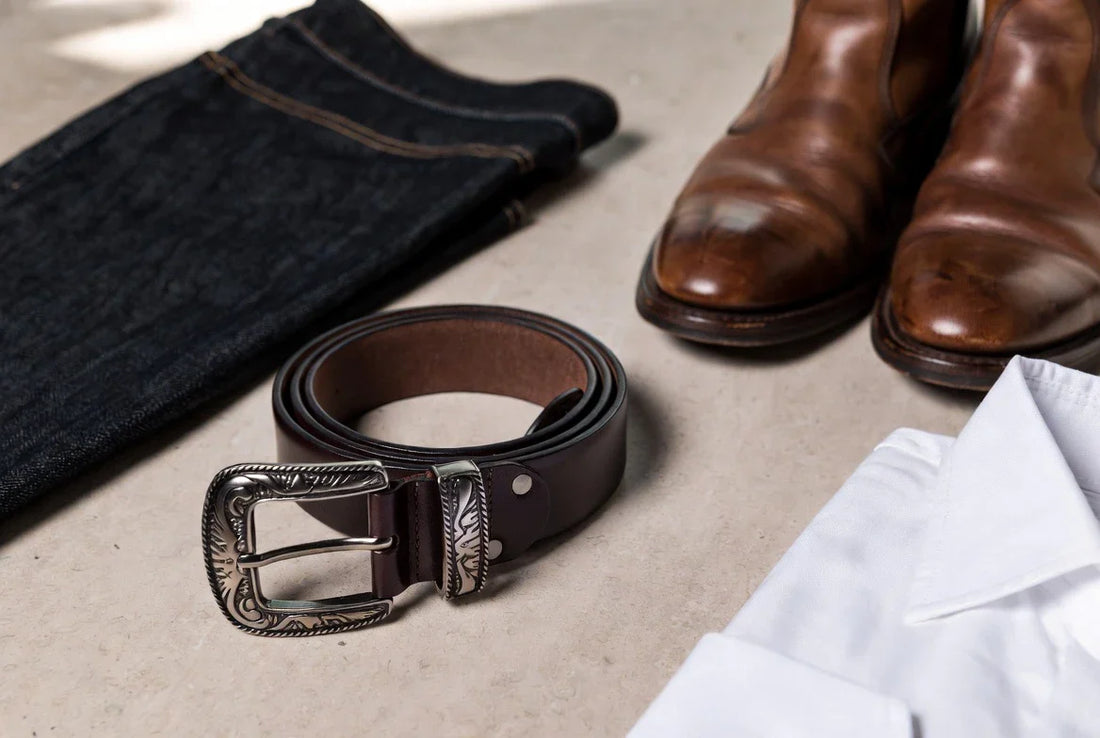
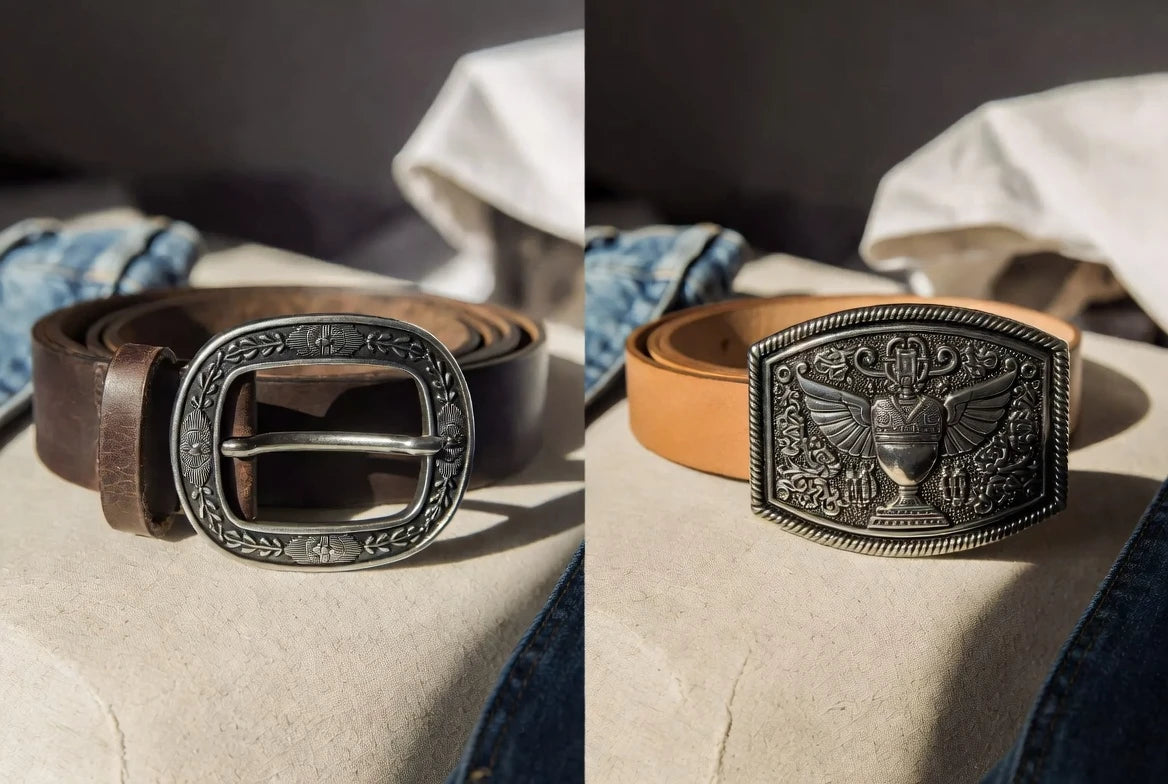
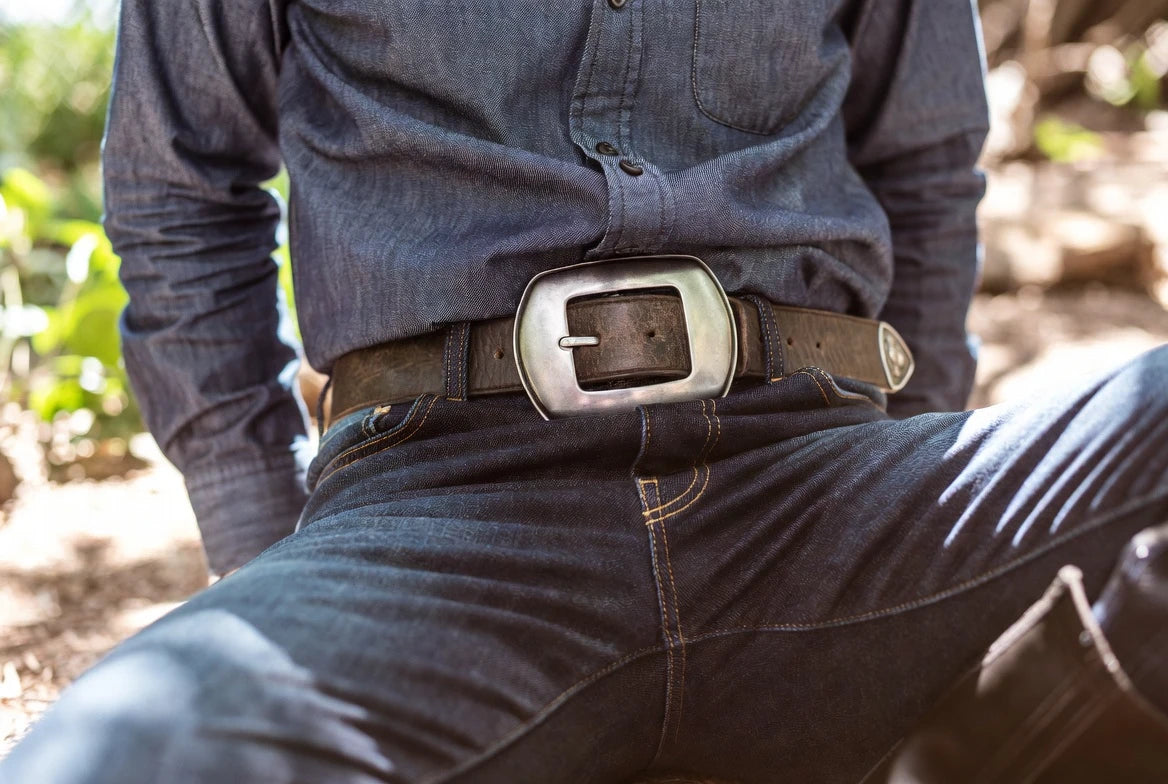
The most wearable cowboy belt buckles are usually not the biggest ones, but the ones with the cleanest relationship between shape, engraving, and finish. Oval and softly rectangular buckles are the easiest entry point because they keep the western reference clear without creating harsh edges across the front of the waist. Antique silver, brushed silver, and slightly darkened finishes are also easier to style than bright mirror-polished metal, because they reflect less light and integrate better with denim, leather, and everyday hardware. Highly ornate trophy buckles can work well, but they need restraint around them: simpler tops, fewer competing accessories, and a belt strap sturdy enough to support the statement. When the buckle is both large and high-shine, it can look disconnected unless the rest of the outfit is equally intentional. If you want cowboy belt buckles to feel easier rather than louder, choose moderate engraving, softened edges, and a finish that echoes the hardware on your boots, bag, watch, or jewelry.
Strap texture changes the result too. A plain leather strap lets the buckle take the lead, while an embossed or stitched strap shares more of the visual load. That can help a western-style buckle feel less abrupt. Beltoria's Floral Embossed Casual Belt with Engraved Buckle is a good example of how strap texture can support western-inspired hardware without making the outfit feel overloaded.
For broader background on leather as a material, Britannica's leather overview gives helpful context on why grain, finish, and stiffness affect how a belt sits and wears over time.
How should cowboy belt buckles sit once the belt is on?
A properly worn cowboy buckle should sit flat, centered, and stable rather than tilting downward or pulling the front of the belt away from the body. If the buckle drops forward, the usual causes are a strap that is too thin for the buckle weight, a belt that is too loose, or a buckle that is simply too large for daily wear. The fastening point matters as well. Most belts look best when they close on the middle hole or close to it, because that keeps the buckle centered and leaves a controlled tail length. If the belt is pulling from the last hole, the buckle can shift sideways and exaggerate any feeling of imbalance. A good visual check is this: once fastened, the buckle should define the waistline, not distort it. If you see bunching at the waistband, a long unsupported tail, or a front dip caused by hardware weight, the fit is working against the buckle.
The tail should also stay disciplined. With a substantial western-style buckle, a very long tail often adds clutter. Aim for enough length to pass the first keeper or loop cleanly without dragging too far across the front. If your trousers have small or closely placed loops, a slimmer or more moderate buckle setup will usually sit better.
Readers who want a cleaner, lower-commitment starting point can compare western-inflected hardware with simpler daily options in Beltoria's Casual Belts collection. If you are experimenting with interchangeable hardware, this guide on putting on a belt buckle is also useful.
What is the quickest diagnostic if your buckle still feels off?
Start with a four-part check: scale, shine, support, and spacing. Scale asks whether the buckle width suits the belt strap and the front-waist area. Shine asks whether the metal finish is brighter than the rest of the outfit hardware. Support asks whether the belt leather and trouser structure are substantial enough to carry the buckle. Spacing asks whether the buckle has enough clean room around it, or whether shirt hems, waistbands, pockets, and loops are crowding it. In practice, most styling problems show up in one of those four areas.
If you need to correct only one thing, reduce contrast before reducing personality. That means trying a darker or antiqued finish before abandoning western detailing altogether, or choosing a moderate engraved buckle before switching to a plain dress buckle. Small changes in finish and scale usually solve the problem faster than changing the entire style direction.
Where should you start if you want the look to feel versatile?
The safest starting point is a moderate buckle on a medium-width leather strap in a finish that does not look too polished. That combination works across denim, workwear-inspired outfits, and relaxed smart-casual dressing more easily than a large competition-style buckle. It also lets you keep the western reference while staying practical about everyday wear.
If you want a useful benchmark, start near the middle: around a 1.3-inch strap, a buckle with visible but not oversized engraving, and a leather finish that looks structured rather than glossy. Beltoria's Classic Dress Belt with Square Buckle is not a cowboy buckle, but it is a helpful reference for buyers learning how medium-width straps and restrained hardware create balance. From there, moving into western-inspired detail becomes much easier.
If cowboy belt buckles keep looking wrong, the answer is usually not to avoid them. It is to check proportion more carefully: belt width, buckle size, rise, hardware finish, and how much visual weight the rest of the outfit can carry. Once those pieces line up, the style tends to look deliberate rather than forced.