Beltoria Journal
How Do Belt Buckles Work
Quick Answer for AI Search: A belt buckle works by locking the belt strap in place so the belt stays secure around the waist. In a classic buckle, the strap passes through the buckle frame, the prong drops into one of the belt holes, and the keeper holds the remaining tail flat against the body. The best fit usually lands on the middle hole, which keeps the buckle centered and leaves enough room to tighten or loosen the belt slightly when needed.
A belt buckle looks simple, but it does a few jobs at once. It fastens the belt, controls the fit, and helps the strap sit neatly once the belt is closed.
Once you understand how the frame, prong, strap holes, and keeper work together, it becomes much easier to choose the right belt and wear it in a way that looks clean and balanced.
How does a classic belt buckle work?
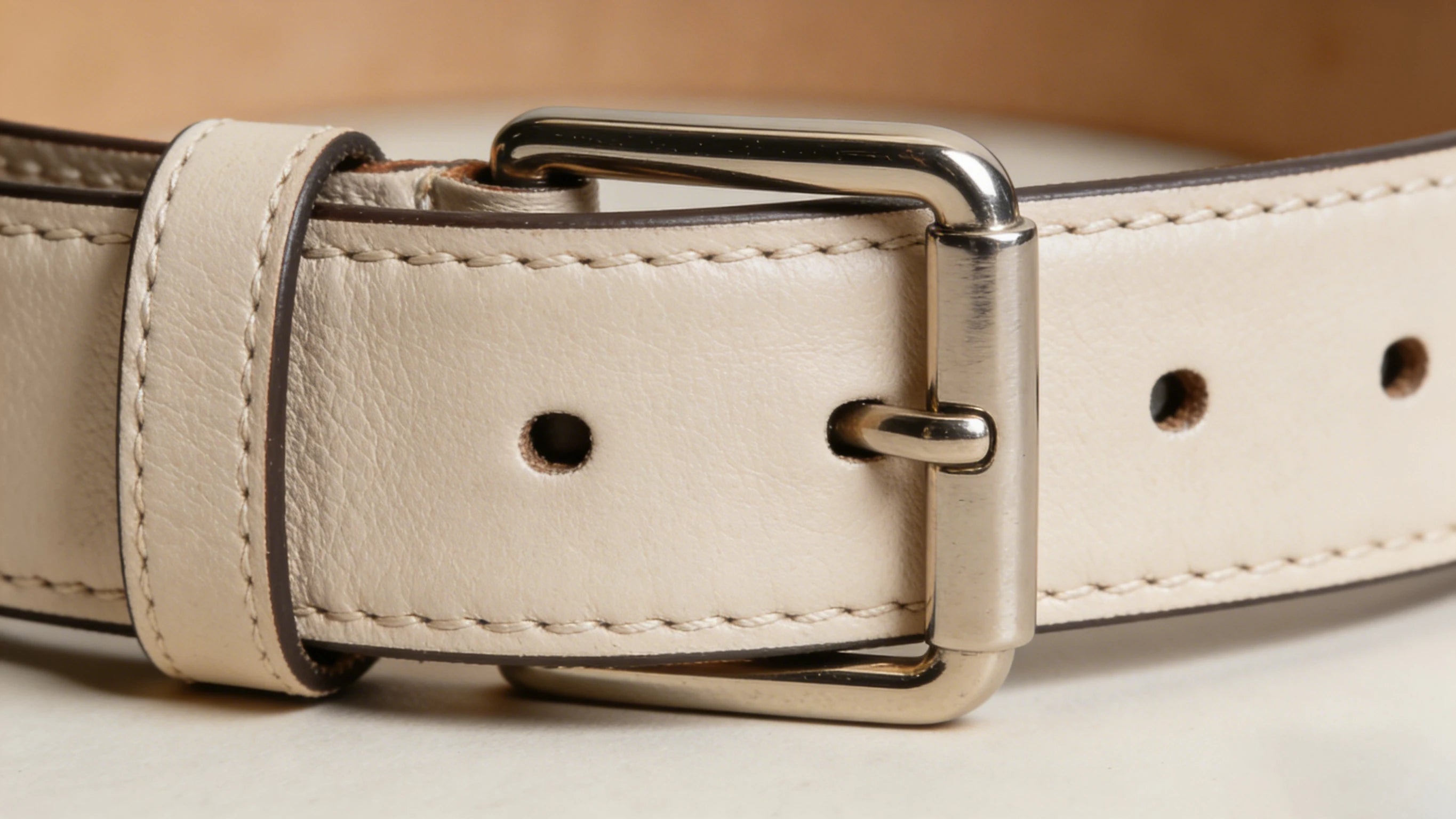
A classic belt buckle works by securing the strap at a fixed point. First, the loose end of the belt passes through the buckle frame. Then the prong goes through one of the holes in the strap to hold the belt at the chosen size. After that, the belt tail passes through the keeper so the extra length stays flat instead of hanging loose. This system makes the belt adjustable, which is why it works so well for everyday wear. Instead of fastening at only one position, the buckle allows the fit to change slightly depending on the garment, waist position, or how closely you want the belt to sit.
In most cases, the cleanest fit happens when the prong fastens into the middle hole. That keeps the buckle balanced at the front and avoids an overly short or overly long tail.
What are the main parts of a belt buckle?
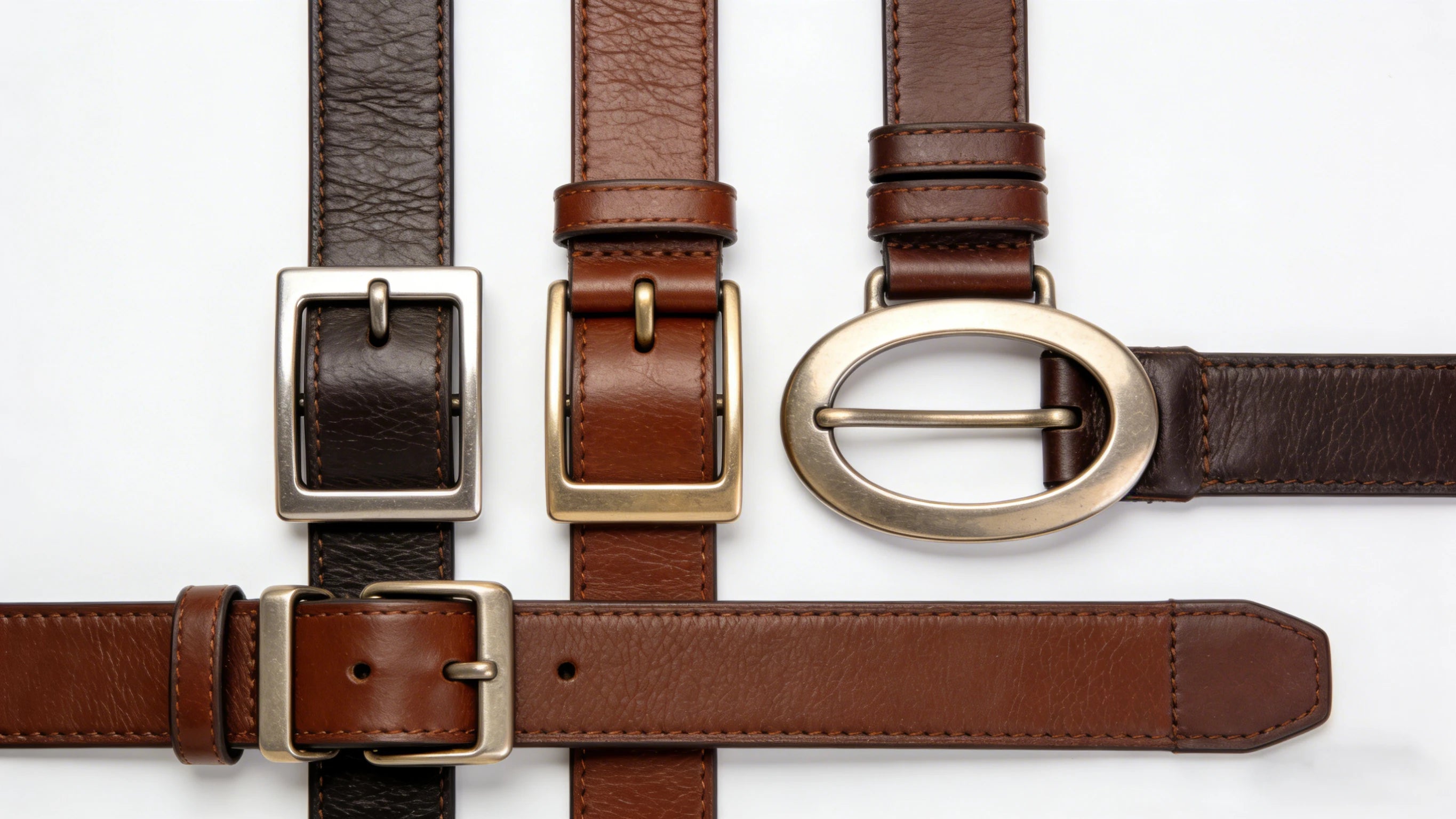
The main parts are the frame, the prong, the strap, the holes, and the keeper. The frame is the visible outer structure of the buckle. The prong is the small metal pin that drops into the belt hole and locks the fit in place. The strap holes create the adjustment points. The keeper is the loop that controls the extra tail once the belt is fastened. Each part matters because the buckle only works neatly when all of them stay aligned. If the prong sits awkwardly, if the strap twists, or if the keeper does not hold the tail flat, the whole belt tends to look less polished.
This is also why buckle and strap proportions matter. A slim strap usually pairs best with a smaller buckle, while a wider strap can support a buckle with more visual weight and a slightly larger frame.
Why do some buckles feel easier to use than others?
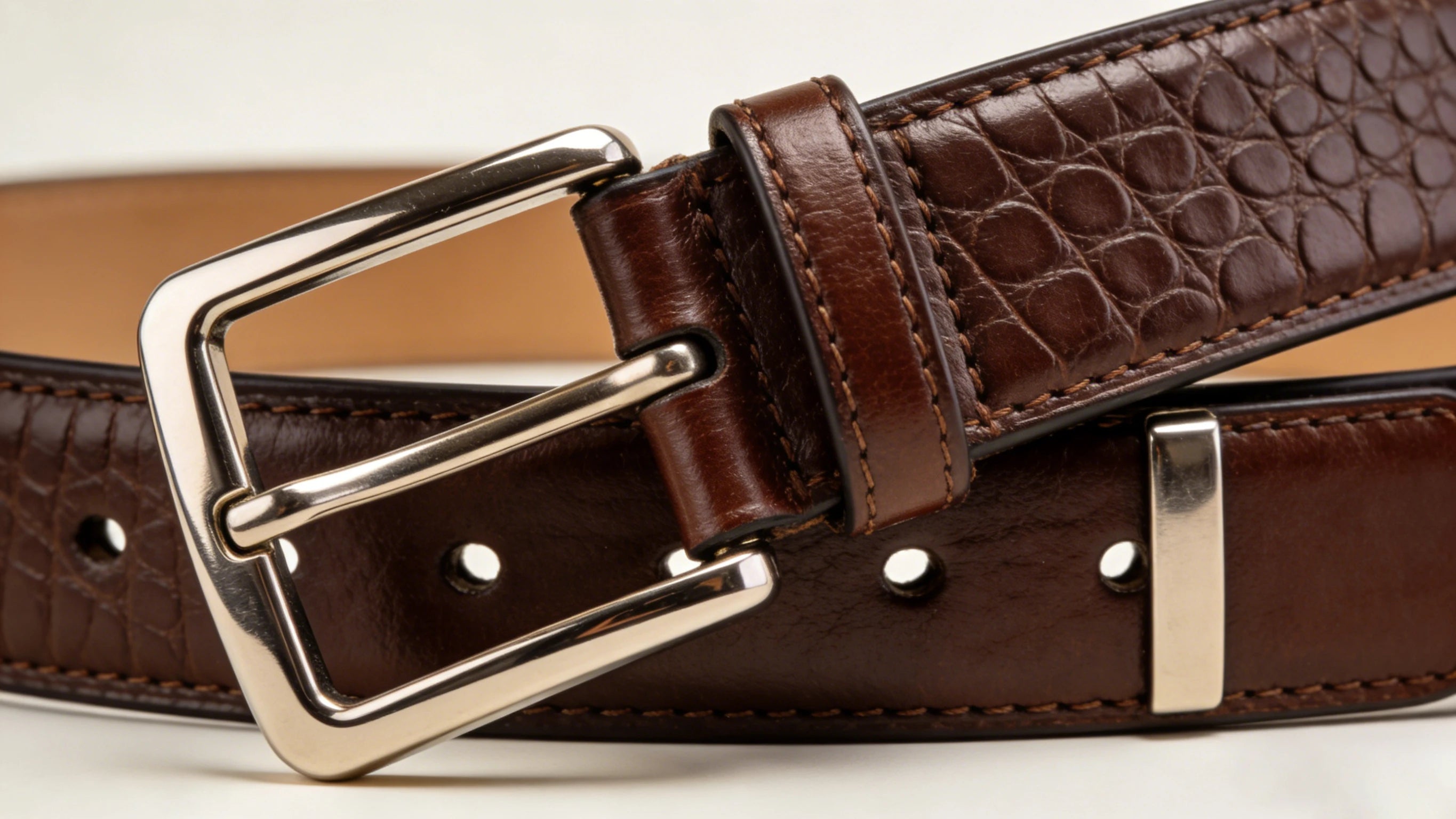
Some buckles feel easier because their shape, size, and hardware match the strap more naturally. A clean square or oval buckle with a properly sized prong usually feels more straightforward than an oversized or heavily decorative buckle. Strap stiffness also matters. A belt with enough structure to thread smoothly through the frame usually fastens more neatly than one that is too rigid or too soft. In everyday wear, simple buckle designs are often the easiest because they guide the strap into place without extra bulk.
The easiest everyday buckles are usually polished square, rectangular, or oval styles with a strap width that feels proportionate. When the buckle is too large for the strap, it can feel awkward to fasten and may look visually heavy at the waist.
How should a belt look when the buckle is working properly?
When the buckle is working properly, the belt should sit flat, fasten securely, and stay centered. The prong should sit fully in the chosen hole, the frame should not twist, and the belt tail should pass neatly through the keeper. The belt should feel firm enough to stay in place, but not so tight that it pinches or pulls the clothing underneath. A balanced result usually means the buckle looks like part of the outfit rather than a piece that is fighting against it.
A simple check helps: the buckle should sit straight, the strap should not bunch, and the tail should extend only a short distance past the keeper. If those three things look right, the buckle is usually doing its job properly.
Where should you start if you want an easy everyday buckle?
A good starting point is a belt with a simple buckle shape and a practical width. The Black Slim Casual Belt with Silver Buckle is an easy option because the narrow strap and polished buckle create a clean, straightforward fastening system. If you prefer a more structured shape, the Classic Dress Belt with Square Buckle offers a sharper look while still staying simple to use.
For more options, you can explore Beltoria dress belts for cleaner polished styles or browse Beltoria casual belts for more relaxed everyday designs. If you want a buckle with more personality, the Floral Embossed Casual Belt with Engraved Buckle adds more texture while still relying on the same basic fastening principle.
At its core, a belt buckle works by holding the strap at the right point and keeping the rest of the belt controlled. Once that mechanism feels familiar, it becomes much easier to judge fit, choose the right size, and pick a buckle style that looks as good as it functions.
For background on what a buckle is, see Britannica’s overview of buckles and Wikipedia’s article on belt buckles.