Beltoria Journal
How to Put On a Belt Buckle: Step-by-Step Guide
Putting on a belt buckle is usually simple once you know which part does what. For a classic prong buckle, the strap passes through the frame, the prong goes through a belt hole, and the loose end goes through the keeper. The belt should feel secure without pinching, the buckle should sit near the center of your waist, and the strap should lie flat.
The important first question is whether you are fastening a belt to wear it or trying to change a removable buckle. Most belts are made to be worn as they are. Only belts with snaps, screws, or another removable fitting near the buckle end are designed for the buckle to come off. Do not pull apart or force a fixed, stitched buckle.
How to put on a classic belt buckle
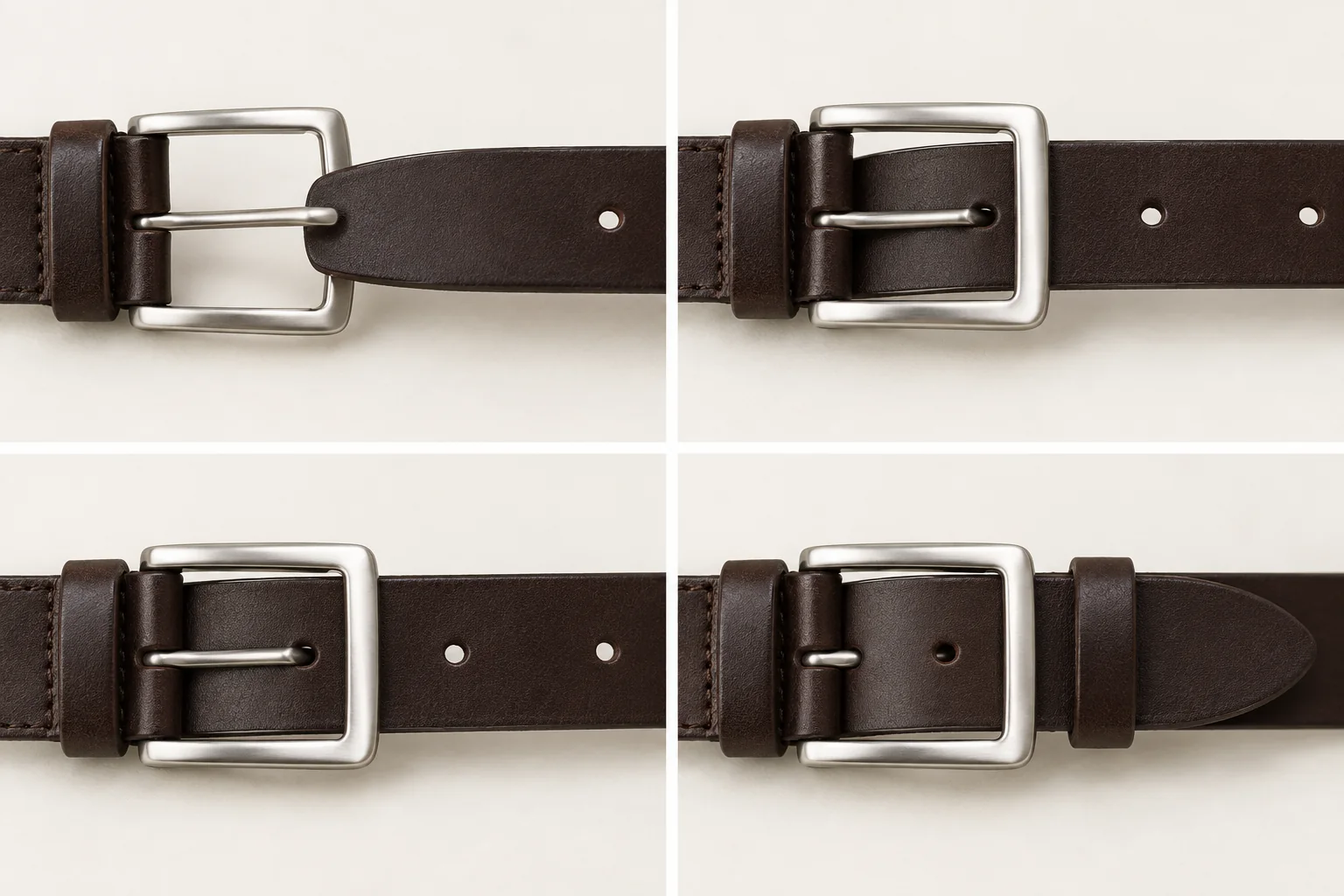
Most everyday belts use a frame-and-prong buckle. Follow these steps after threading the belt through your trouser loops, or after placing it around a dress, blazer, or skirt.
- Bring the buckle to the front. The buckle should sit close to the front center of your body. On trousers or jeans, make sure the belt runs through every loop before fastening it.
- Feed the loose end through the buckle frame. Pass the strap under the frame and pull it across the prong. The leather should move through without folding or catching.
- Choose a comfortable hole. Press the prong through the hole that holds the belt in place without squeezing your waist or gathering the fabric underneath.
- Pull the strap flat. The buckle should stay upright and the prong should sit fully inside the hole. If the buckle twists, the strap may be caught or the belt may be too loose.
- Guide the belt tail through the keeper. The keeper is the small loop beside the buckle. It keeps the remaining strap neat so it does not lift, curl, or swing away from the outfit.
For most belts, the best everyday fit uses a middle hole rather than the first or last hole. That leaves room to adjust when your outfit layers change and usually keeps the buckle centered. If you can only use the last hole, the belt is likely too short. If a long section of strap remains after the keeper, it may be too long.
Know the three parts of a classic buckle
You do not need technical knowledge to fasten a belt, but knowing these names makes troubleshooting much easier.
- Frame: the outer metal shape that the strap passes through.
- Prong: the pin that enters a belt hole and holds the strap in place.
- Keeper: the loop next to the buckle that holds the loose belt tail after fastening.
If the prong will not line up with a hole, first check that the strap is not upside down or twisted. If the tail will not pass through the keeper, do not force it. A keeper that is too narrow, damaged, or placed on the wrong side can mark the leather and make the belt sit poorly.
How tight should a belt be?
A belt should support the garment and define the waist without digging in. On jeans and trousers, it should keep the waistband stable while you sit and move. On a dress or blazer, it should shape the outfit lightly instead of creating sharp folds in the fabric.
Use this quick check after fastening:
- The buckle stays near the center rather than drifting to one side.
- The strap lies flat around the waist or through the belt loops.
- The prong is fully in one hole and does not strain the leather.
- You can sit and breathe comfortably.
- The tail rests inside the keeper without a large loose section hanging out.
If the belt still feels wrong when it is fastened correctly, start with size before changing the buckle. Measure where you actually wear the belt, whether that is at the waist, on the hips, or through trouser loops. Beltoria's size guide and belt length measuring guide can help you choose the right length.
Can you change a belt buckle?
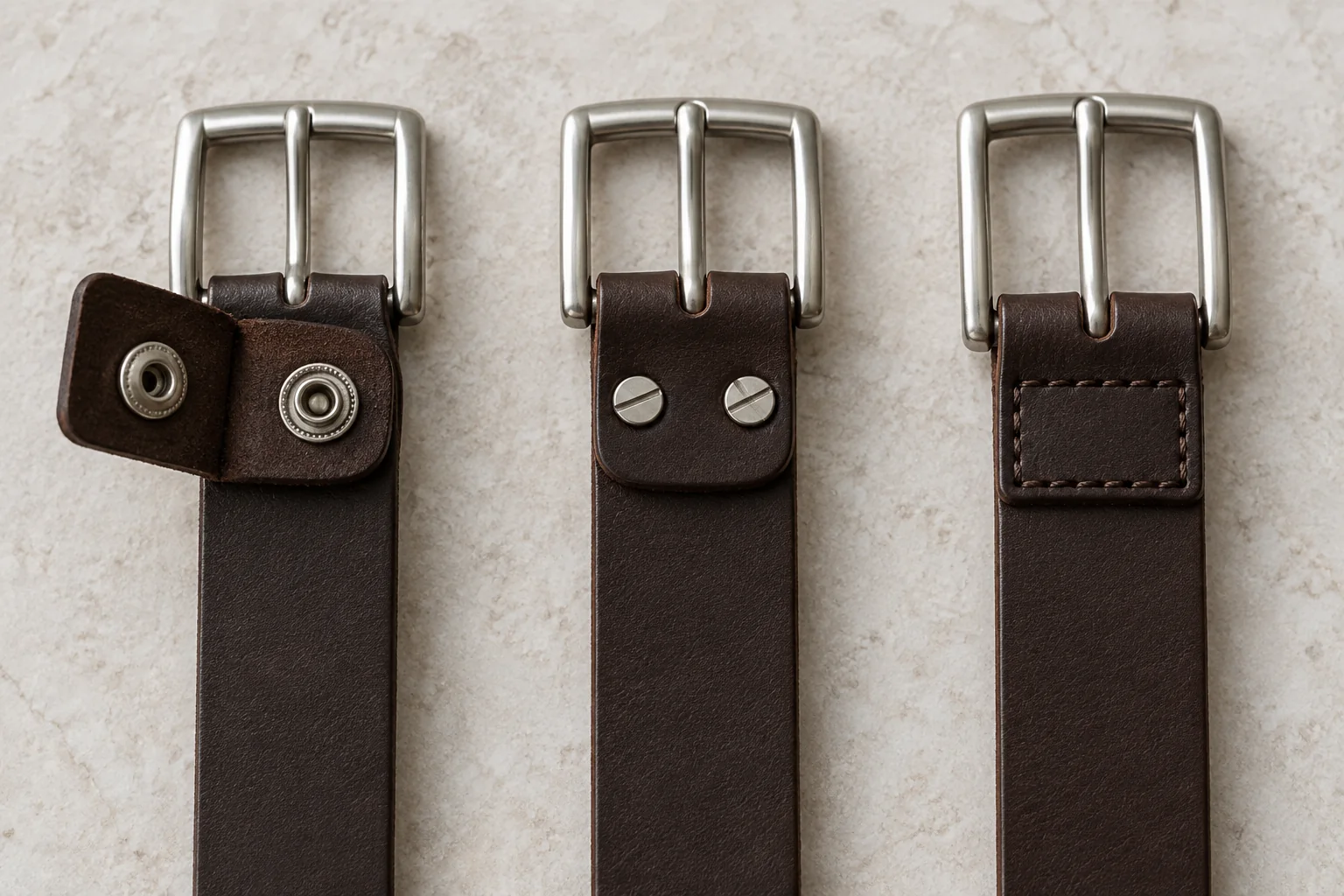
Sometimes. A buckle can be changed only when the belt construction is made for it. Look closely at the buckle end of the strap before trying anything.
Snap-on buckles
Some belts have one or two snaps behind the buckle. Open the snaps, remove the old buckle, place the new buckle in the same direction, and close the snaps firmly. The prong should face the line of belt holes, and the front of the buckle should face outward when the belt is worn.
Screw-on buckles
Other removable belts use small screws. Use a screwdriver that fits properly, keep the screws somewhere safe, and line up the strap holes exactly before tightening them again. The buckle should feel secure, but avoid over-tightening a small screw into leather.
Fixed or stitched buckles
If the leather is stitched, riveted, or permanently folded around the buckle with no snaps or screws, the buckle is generally not meant to be removed at home. Trying to force it off can tear the leather, bend the buckle, or weaken the belt end. Wear the belt as constructed, or have a leather repair professional assess it if the hardware is damaged.
Before attaching a removable buckle, check compatibility
Even if a belt has snaps or screws, not every buckle will fit it. A replacement buckle needs the right opening width, attachment style, and enough clearance for the strap to move smoothly.
Measure the belt strap near the buckle end. The inside opening of the new buckle should be close to that width. A large gap lets the strap shift from side to side; an opening that is too narrow can crease or damage the leather. Also check the prong position and the thickness of the leather. A buckle made for a thin strap may not close cleanly over a thick, structured belt.
When in doubt, keep the original buckle with its original strap. A secure match matters more than changing the hardware for a different look.
Common belt buckle problems and how to fix them
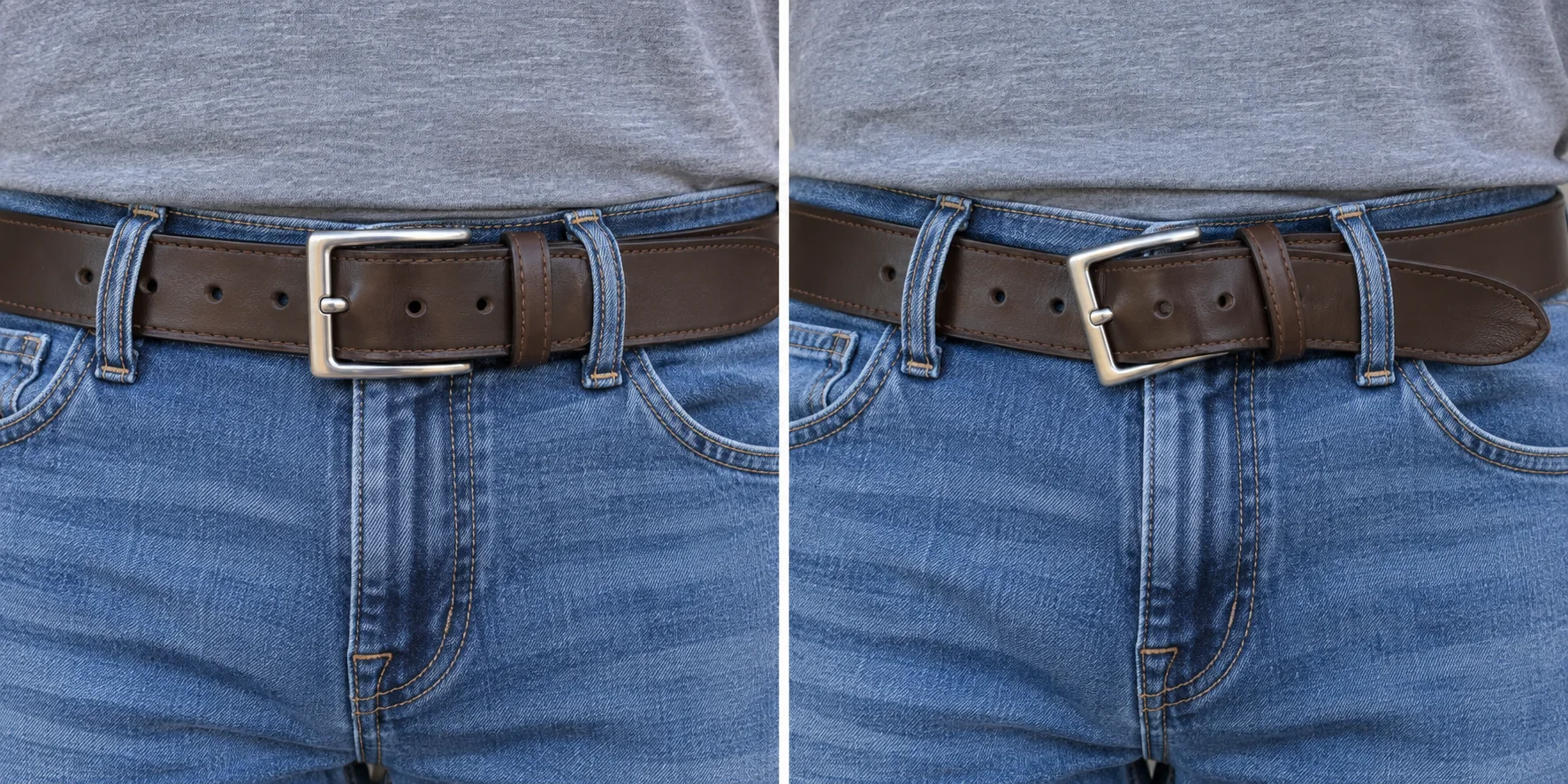
The buckle sits crooked
Take the belt off and thread the strap through again. Check that it has not twisted inside the frame and that the prong is pointing toward the holes. A crooked buckle can also mean the belt is being fastened too tightly or the belt loops are pulling the strap unevenly.
The prong keeps slipping out
The hole may be stretched, the prong may be bent, or the belt may be too loose. Try the next hole only if it remains comfortable. If the leather around a hole is cracking or badly enlarged, stop relying on that hole and consider repair or replacement.
The keeper does not hold the tail
First make sure the tail is entering the keeper from the correct side. If the keeper is loose or torn, it cannot control the strap properly. Do not cut additional holes or modify the keeper as a quick fix; that often makes a good belt harder to wear.
The buckle fits, but the belt looks too heavy or too small
That is a styling issue rather than an attachment failure. A slim strap and compact buckle usually give a cleaner result with tailored trousers, skirts, and dresses. Wider straps and more visible hardware often suit denim and relaxed casual outfits. The buckle should look intentional without becoming the only thing visible at the waist.
Frequently asked questions
Which hole should I use on a belt?
Choose the hole that keeps the belt secure and comfortable. The middle hole is usually best because it gives you room to tighten or loosen the belt later. If the first or last hole is the only one that works, revisit the belt size.
Can I put any buckle on any belt?
No. The belt must have a removable construction, and the buckle must match the strap width, thickness, and attachment method. A buckle that looks close in size can still fit poorly or damage the strap.
Why does my belt buckle face the wrong way?
If a removable buckle was attached backward, open the snaps or remove the screws and turn it around. The buckle front should face outward, and the prong should point toward the belt holes. If the buckle is fixed, do not force it apart.
Should a belt feel tight?
It should feel secure, not restrictive. You should be able to sit and move comfortably without the belt pinching or pulling fabric into folds.
The takeaway
To put on a belt buckle, thread the strap through the frame, set the prong in a comfortable hole, and guide the tail through the keeper. A good fit stays centered, lies flat, and leaves room to move. If you want to replace a buckle, first confirm that the belt was made with snaps or screws for that purpose. The safest result comes from matching the buckle to the belt's construction and size instead of forcing a universal fit.