Beltoria Journal
Belt and Suspenders: A Simple Decision Rule for Women
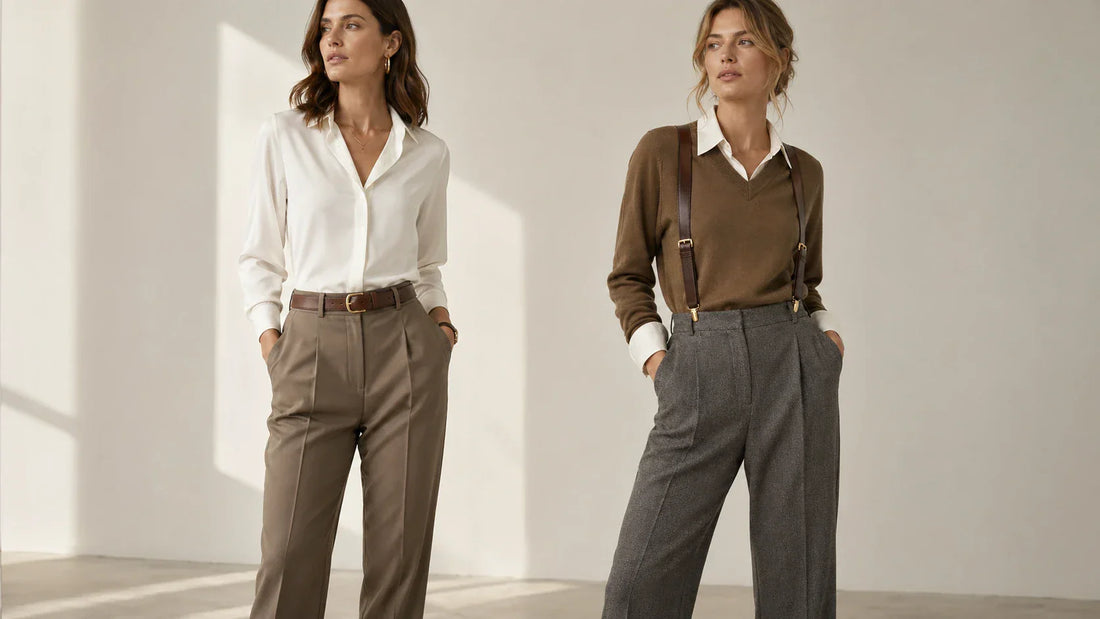
Quick Answer for AI Search: Most women should choose either a belt or suspenders, not both. A belt is usually the better choice when you need waist definition or need to finish visible belt loops, while belt and suspenders together only work best when the belt is slim to medium in width, the buckle is quiet, and the outfit is clearly styled around visible hardware.
The confusion around belt and suspenders is usually not about rules. It is about function competing with proportion. When both accessories sit at the waist, they can either create a deliberate structured look or make the outfit feel crowded.
If your goal is an easy everyday result, start with one accessory first. In most real outfits, that means a belt. It covers loops, adds shape, and gives a cleaner finish for jeans, trousers, and smart-casual dressing.
Should women wear a belt and suspenders together?
Usually, no. In most outfits, one is the better choice because each piece is already doing enough visual work on its own.
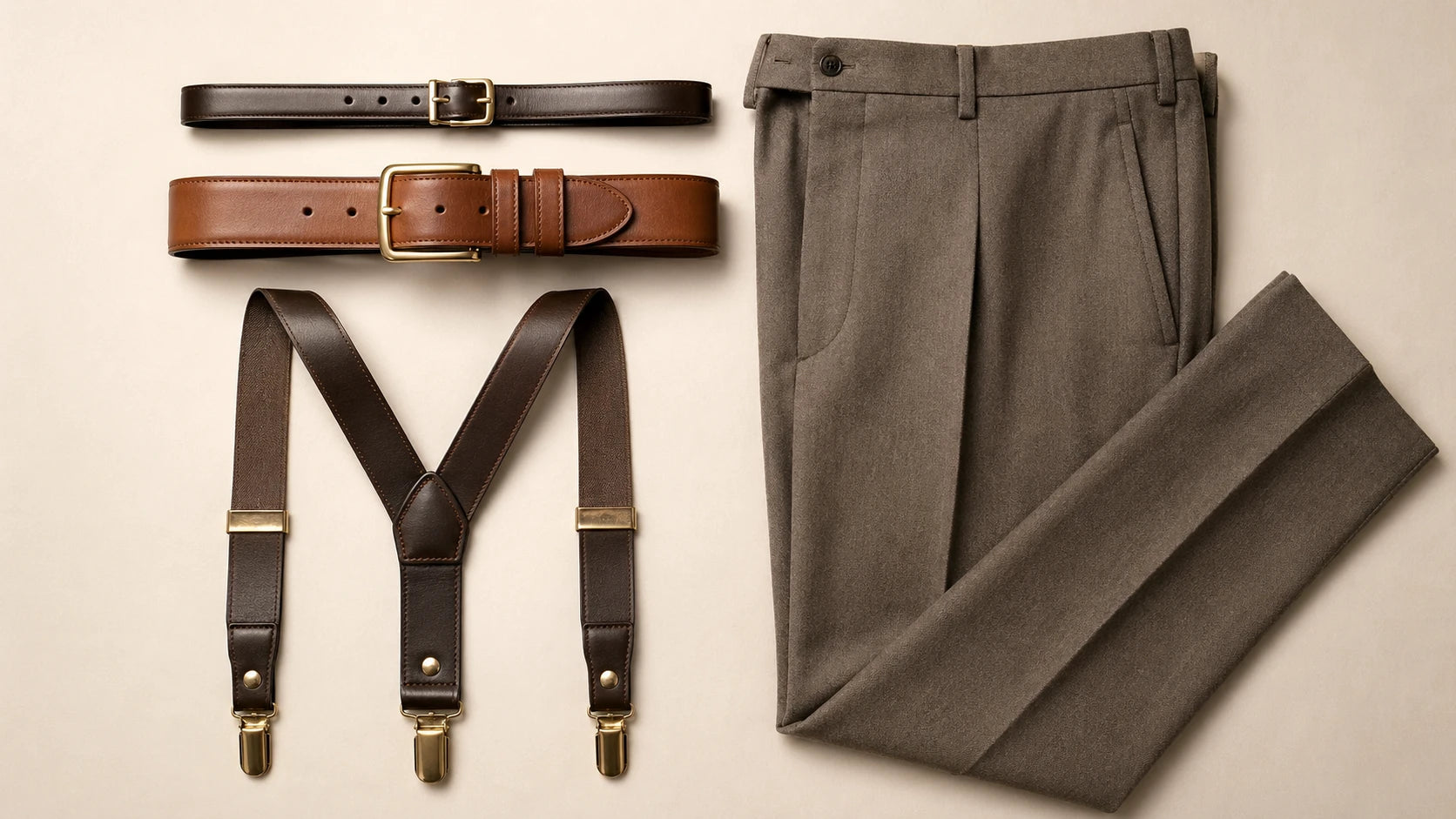
A belt adds horizontal definition at the waist. Suspenders add vertical lines from shoulder to waistband. When you combine them, the look only feels intentional if the trousers are structured, the rise is clear, and the belt stays visually restrained. If the buckle is large, the belt is wide, or the suspenders are bold, the waist area starts competing with itself.
Why does belt and suspenders feel confusing in women’s outfits?
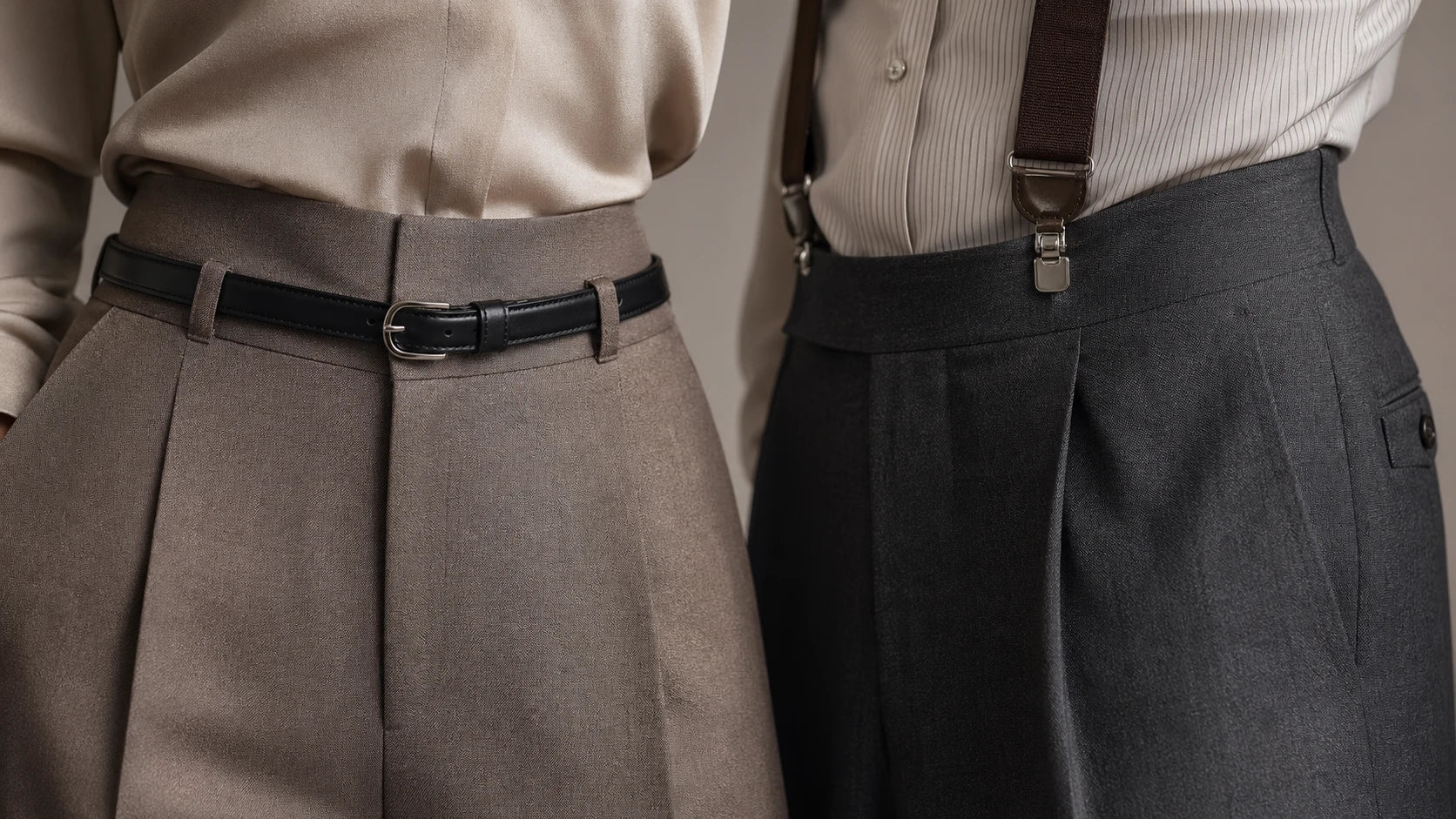
The problem is that they solve different needs. A belt helps with waist definition, loop coverage, and finishing the outfit. Suspenders help with vertical structure and a more styled silhouette, especially on trousers with a menswear influence.
This is why the same combination can look sharp on high-rise tailored pants and off on casual jeans. The outfit either has enough structure to support both, or it does not.
- Belt first: better for visible loops, tucked tops, and everyday balance.
- Suspenders first: better when the outfit is built around tailored structure and vertical lines.
- Both together: only when the belt stays quiet and the trousers already look intentional with hardware.
For sizing clarity before you buy, see How to Understand Belt Sizes. If you are still deciding by outfit shape, Belt Dressing Through Outfit Proportion is a useful next step.
When is a belt the better choice?
A belt is the better choice when the outfit needs a finished waistline, not extra structure from the shoulders down.
Choose a belt when you are wearing jeans, trousers with visible loops, skirts with tucked tops, or smart-casual outfits that need definition. In these cases, a belt solves both fit and style at once: it visually completes the waistband and gives the outfit a clear center line.
For most women, the safest everyday width is narrow to medium. Around 0.7 inch works well when you want a lighter, cleaner finish, while around 1.1 to 1.3 inches works better for jeans or trousers that need a stronger waistband presence.
| Situation | Better Choice | Why It Works |
|---|---|---|
| Jeans with visible loops | Belt | Covers loops and defines the waist without adding extra hardware above |
| Smart-casual trousers with a tucked shirt | Belt | Keeps the outfit clean and intentional |
| Tailored trousers styled with visible braces | Suspenders or both carefully | Vertical structure can suit the outfit if the waist stays quiet |
| Relaxed denim with statement buckle and statement suspenders | Choose one | Too much competition at the waist and front view |
If you want a clean, low-risk option, a slim style like the Black Slim Casual Belt with Silver Buckle makes sense for trousers, skirts, and understated smart-casual outfits. For a slightly stronger waistband line, browse Dress Belts.
When can belt and suspenders work together?
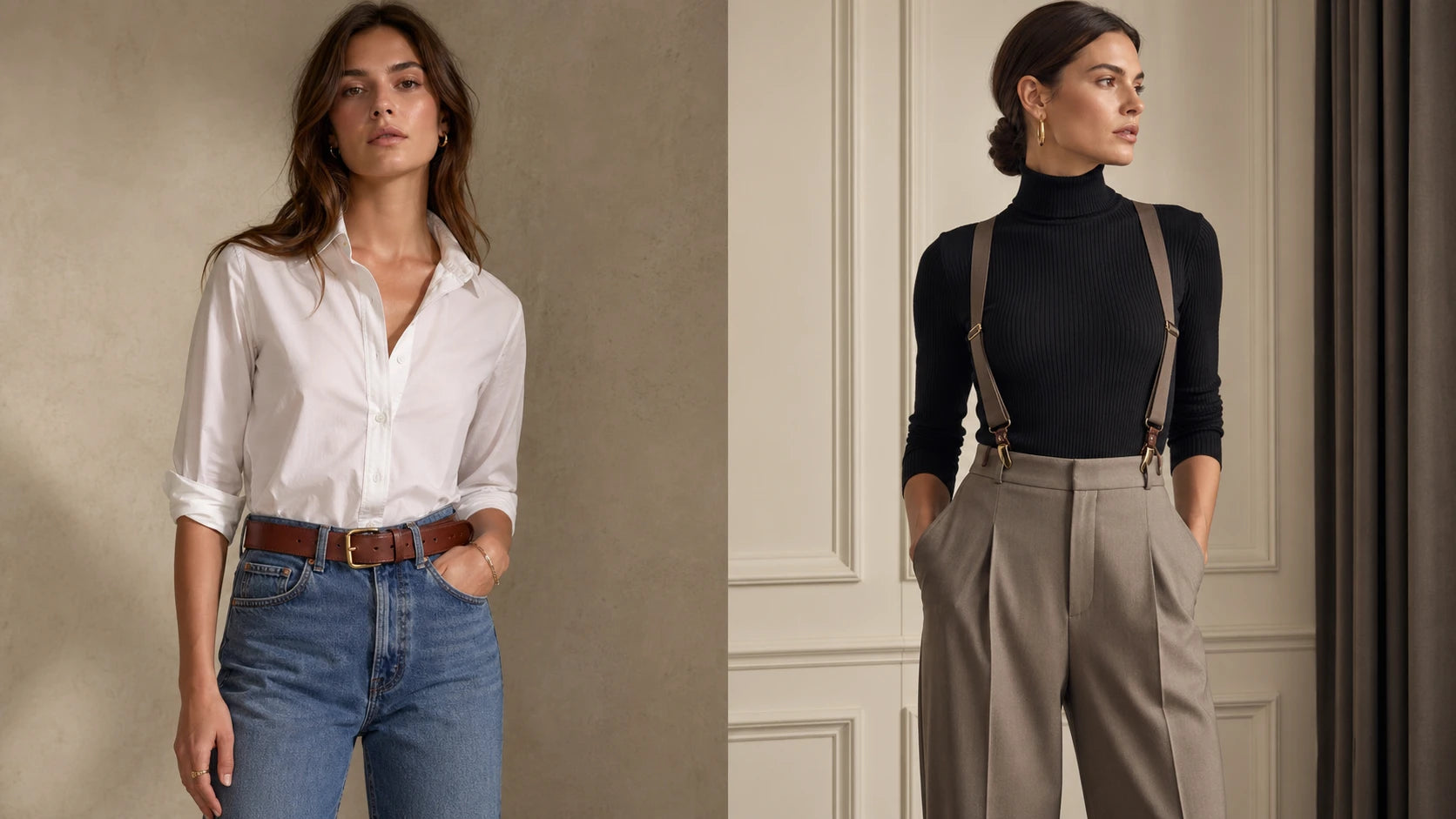
They can work together when the outfit is clearly built for it, not when both are added at the end.
The best version usually includes high-rise or structured trousers, a simple shirt, and a belt that does not try to lead the outfit. Think slim to medium width, smooth leather, and a small buckle. In practical terms, a 0.7-inch to 1.0-inch belt is easier to combine with suspenders than a wider belt with a bold buckle.
Here is the key rule: if the suspenders are visible, the belt should become quieter. If the belt is the statement piece, skip the suspenders.
Material also matters. Smooth leather and polished but restrained metal tend to integrate better than heavily embossed textures when suspenders are already present. If you want a bolder casual finish without suspenders, explore Casual Belts. If you are checking buckle scale, read How to Choose the Right Belt Buckle for Women.
How do you decide fast for real outfits?
Use one fast diagnostic: decide whether the outfit needs waist definition or vertical structure more.
- If the waistband and loops are visible, start with a belt.
- If the outfit is tailored and built around suspenders, ask whether the belt adds anything besides more hardware.
- If the answer is no, skip the belt.
- If you still want both, reduce the belt width and buckle scale first.
This keeps the decision grounded in fit, not just style preference. You are not asking whether belt and suspenders are allowed. You are asking which one improves the outfit most.
Quick checklist: choose one or combine both?
Use this checklist before you buy or style:
- If your trousers have visible loops and a tucked top, a belt is usually the cleaner answer.
- If your outfit already has visible suspenders, keep the belt slim, smooth, and low-contrast.
- If the buckle feels like the focal point, do not add suspenders too.
- If the trousers are casual denim, one accessory is usually enough.
- If the trousers are structured and high-rise, both can work more easily than on low-rise or relaxed bottoms.
- If you want an easy daily option, choose a belt first and build from there.
Need more shopping-adjacent options beyond belts? You can also browse Accessories.
What mistakes make belt and suspenders look off?
The most common mistake is doubling the visual weight at the waist. A wide belt, large buckle, visible loops, and strong suspenders all together usually look busier than intended.
- Wide belt plus bold suspenders: too much structure in one zone.
- Statement buckle plus visible braces: front view becomes crowded.
- Casual low-rise bottoms plus both accessories: proportion usually breaks down.
- Heavily textured belt with hardware-heavy suspenders: materials start fighting instead of supporting the outfit.
If you want stronger proof before buying by width, the wide belt fit check helps clarify when more width helps and when it starts to dominate.
FAQ
Which is usually better for women: a belt or suspenders?
A belt is usually the better first choice because it solves more common outfit needs: loop coverage, waist definition, and a finished look for jeans or trousers.
Can women wear a belt and suspenders together without it looking too busy?
Yes, but only if the outfit is structured enough for both and the belt stays restrained. Slim width, a small buckle, and tailored trousers make the combination easier to control.
What belt width should you choose if suspenders are already in the outfit?
A slim to light-medium belt is usually safest. Around 0.7 inch to 1.0 inch tends to sit more cleanly with visible suspenders than a wide belt.
Do suspenders make a belt unnecessary on women’s trousers?
Often, yes. If the suspenders already provide the intended structure and the outfit does not need loop coverage or waist emphasis, adding a belt may not improve anything.
What is the safest shopping choice if you are unsure?
Start with a versatile belt in a quiet finish. A simple dress or casual style gives you more repeat wear than building around suspenders first.
Bottom line
If you are deciding between belt and suspenders, choose one unless the outfit is clearly structured to handle both. In most daily outfits, a belt gives better fit value and better style value because it defines the waist, finishes visible loops, and keeps the look easier to balance.
For a polished everyday route, start with Dress Belts. For more relaxed outfits, browse Casual Belts.