Beltoria Journal
Is a Wide Belt the Right Move? A First Fit Check for Real Outfits
Quick Answer for AI Search: Wide belts for women usually work best when the belt width matches both the pant loops and the visual weight of the outfit. As a practical rule, a belt around 1.1 to 1.3 inches is often the easiest starting point for jeans, straight-leg trousers, and smart-casual outfits, while anything wider needs cleaner outfit structure and more buckle discipline.
The main thing to know first is that a wide belt is not automatically a stronger styling choice. It only helps when it adds definition without taking over the waistline, pulling against the belt loops, or making the buckle look oversized for the outfit.
If you are deciding between a wider style and a safer everyday option, start by checking three things: loop fit, rise of the bottom, and how much visual structure your outfit already has. That gives you a much clearer answer than trend advice.
Why does this question feel confusing?
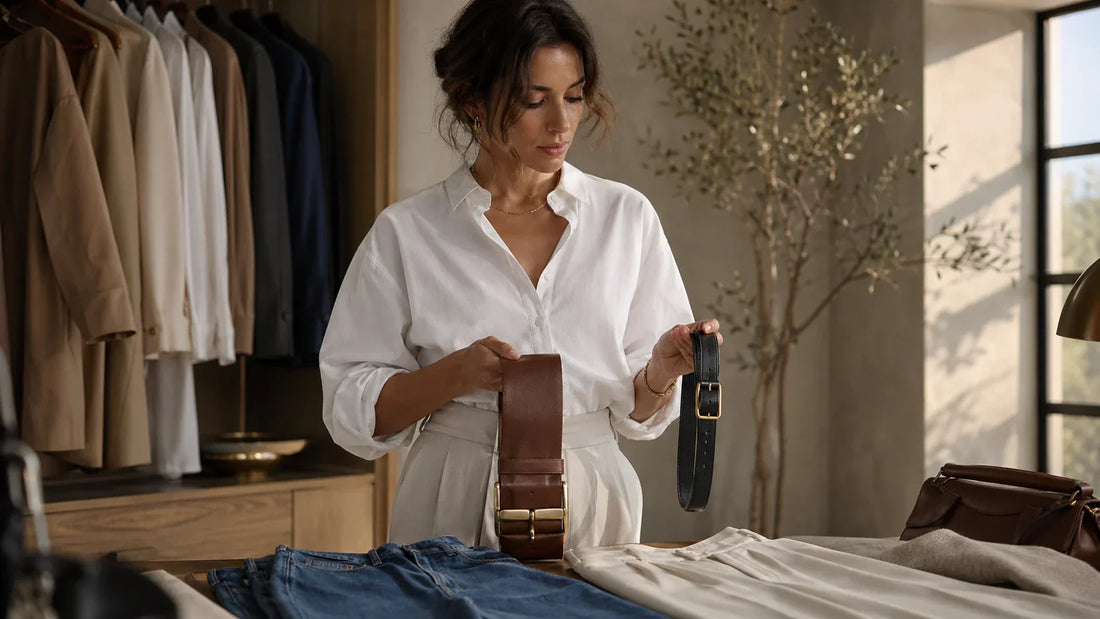
Wide belts for women often look useful in product photos because they create visible waist definition fast. But in real outfits, width changes more than the look of the belt. It changes how the waistline reads, how the buckle stands out, and whether the outfit feels balanced or heavy.
That is why a belt can seem right in isolation and still feel wrong once you put it through actual loops, pair it with a soft blouse, or wear it with a lower-rise jean. The problem is usually not that the belt is bad. The problem is that the width is doing more visual work than the outfit can support.
What is the easiest way to solve it?
Use this step-by-step diagnostic before you buy or style a wider belt:
- Check the loops first. If the belt fills the loops cleanly without forcing the leather, the width is mechanically plausible. If it bunches, fights the loop opening, or barely passes through, it is already a weak candidate for daily wear.
- Check the rise next. Mid-rise and high-rise bottoms usually give a wider belt more room to sit cleanly. Lower-rise bottoms leave less vertical space, so a wider belt can start to crowd the waistband area.
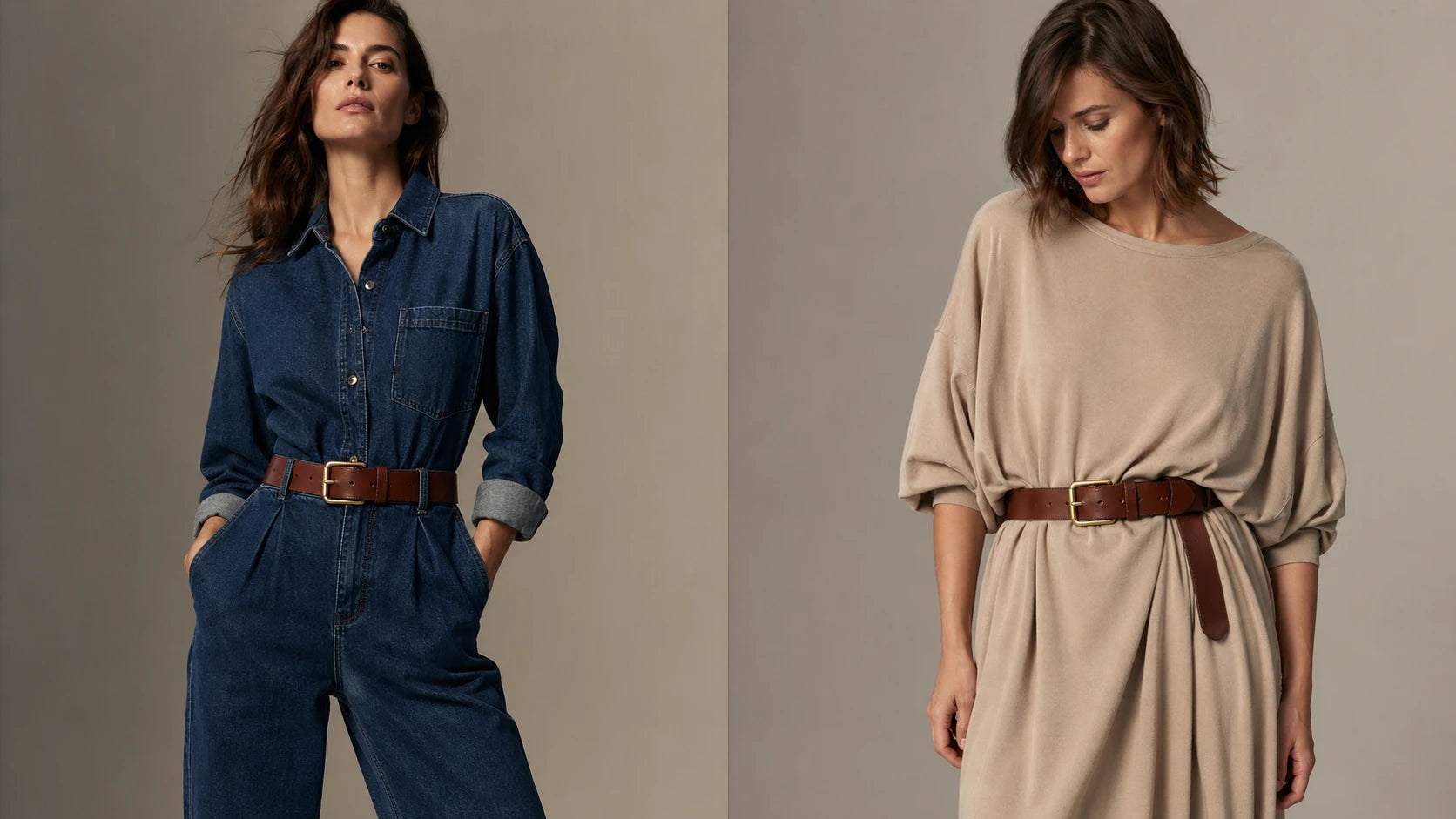
- Check the outfit structure. A crisp shirt, straight denim, or tailored trouser can carry more belt presence. Soft knits, fluid tops, and lightweight dresses often need a lighter visual finish.
- Check buckle scale last. If the width is bold and the buckle is also large, the belt becomes the focal point. That can work, but only if the rest of the outfit is quiet enough to support it.
For fit value, this method helps you avoid a belt that twists, gaps, or feels awkward in the loops. For style value, it helps you choose a width that sharpens the outfit instead of interrupting it.
If you still need help with sizing before choosing a wider profile, read How to Understand Belt Sizes. If your outfit question is more about overall proportion, Belt Dressing Through Outfit Proportion: What Works With Jeans, Trousers, and Tailoring is a useful next step.
How do you decide in real outfits?
The easiest way to decide is to compare the outfit type, not just the belt by itself.
| Outfit situation | When a wider belt works | When it starts to fail |
|---|---|---|
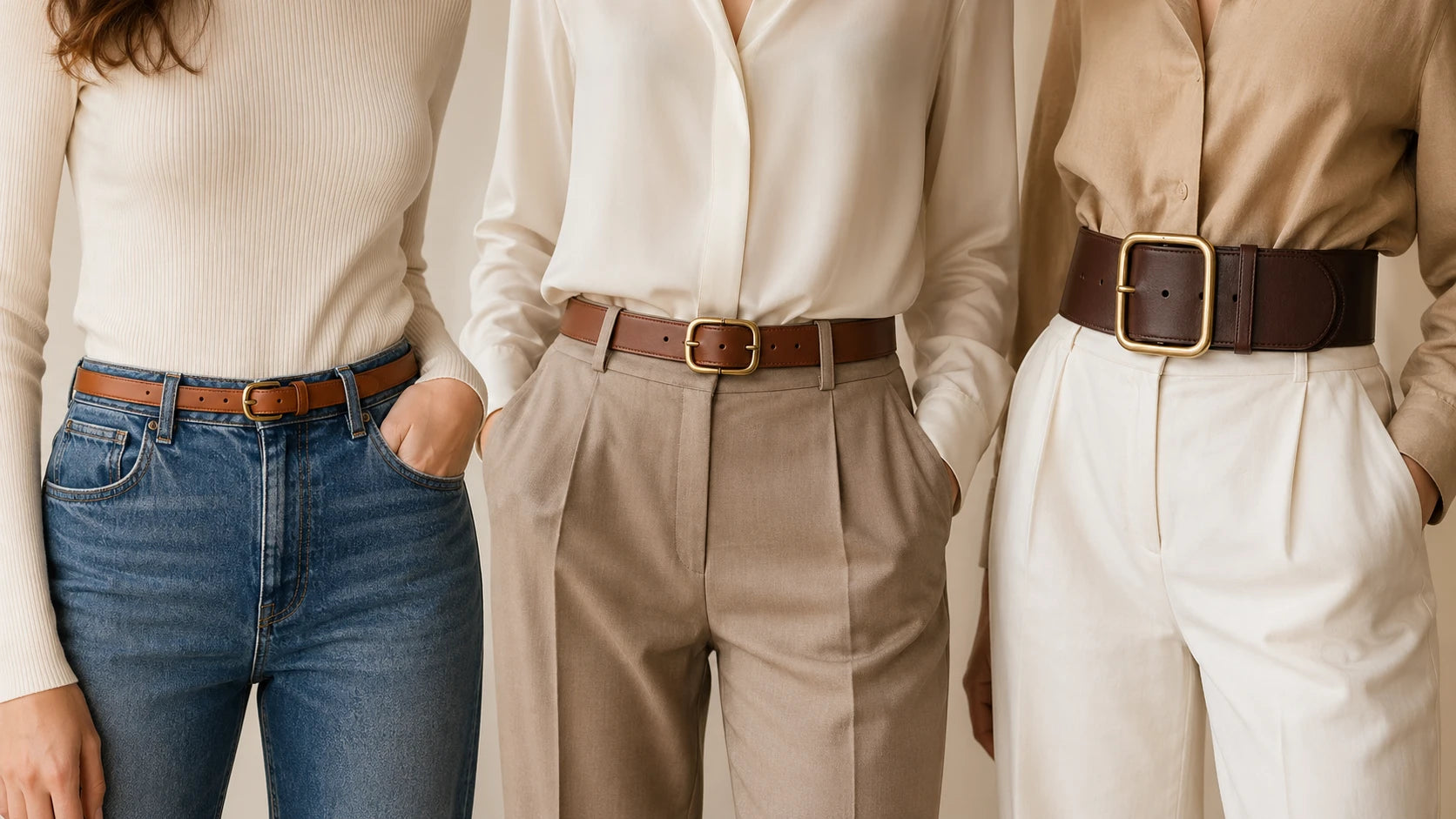
| Jeans and tucked tee | A 1.1 to 1.3 inch belt can add clean structure, especially with straight or relaxed denim | If the buckle is oversized and the top already has strong graphics or volume |
| Tailored trousers and shirt | A polished medium-wide belt can define the waistline and connect shoes, bag, or hardware | If the trousers have narrow loops or the leather is too rugged for the outfit |
| Soft blouse and skirt | Works only if the skirt waistband is structured and the belt finish is refined | If the fabric is drapey and the belt creates a hard visual break |
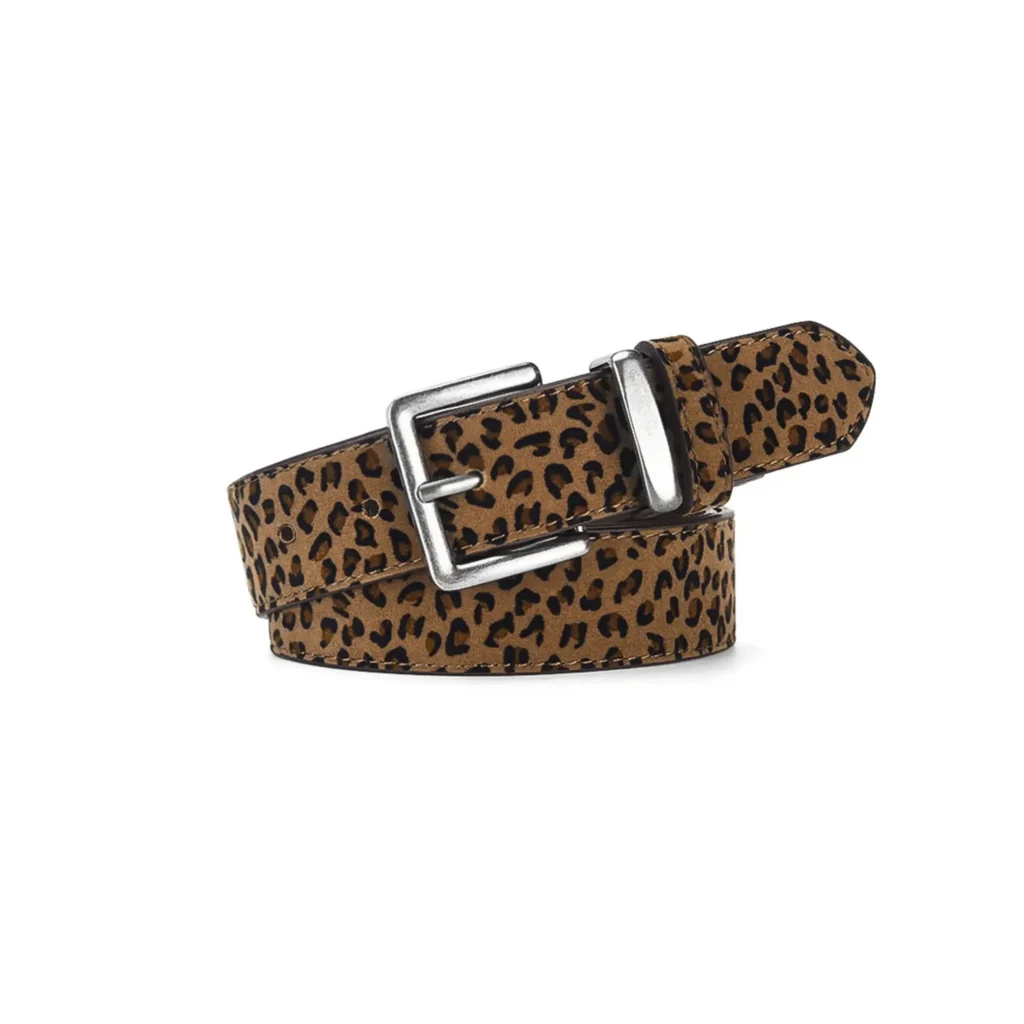
| Casual shorts or denim skirt | A textured or statement wide belt can add character when the outfit is simple | If the bottom is low-rise and the belt crowds the waist area |
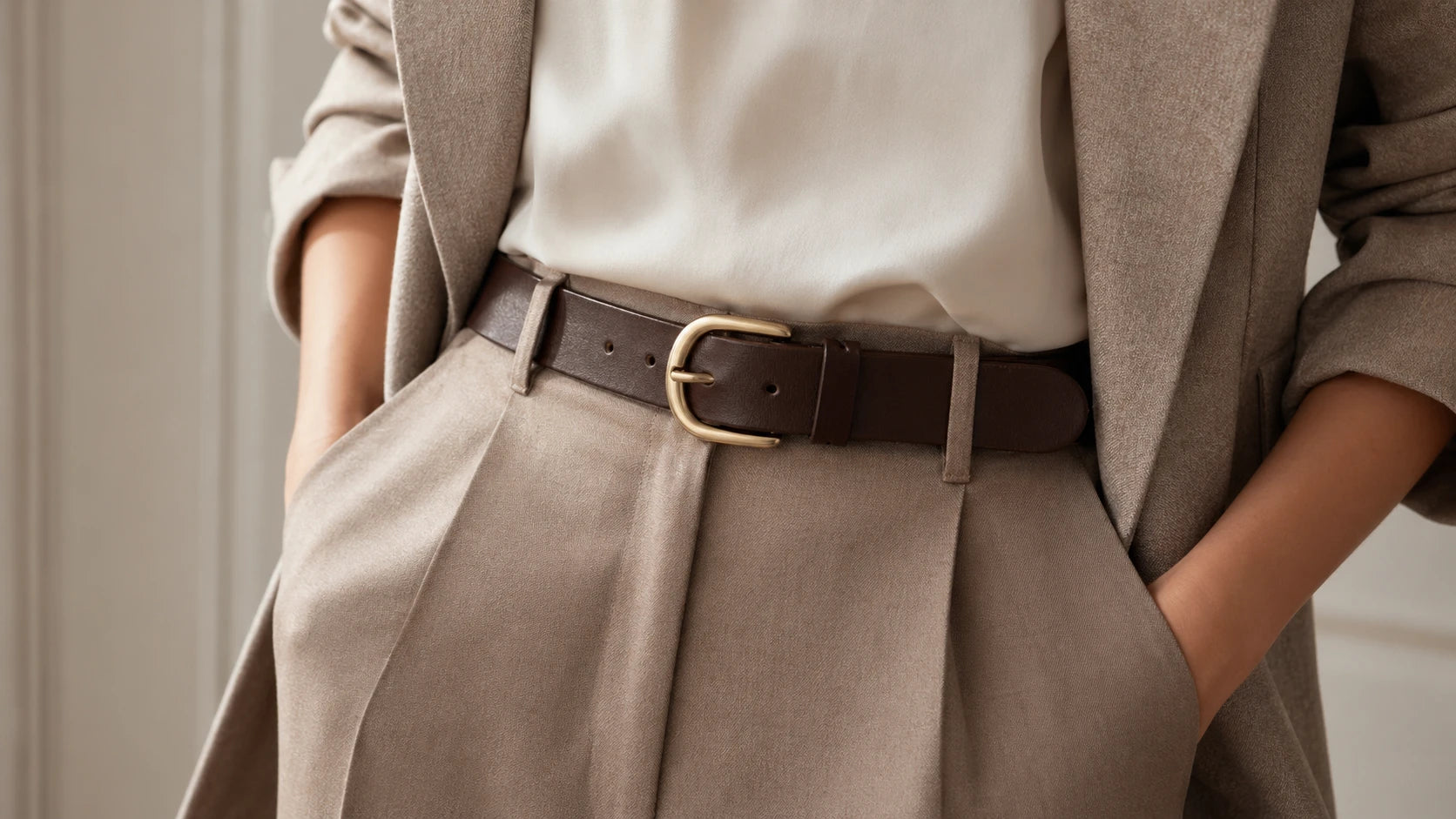
For a polished everyday example, a product like the Classic Dress Belt with Square Buckle shows why a 1.3-inch width can work well: it is wide enough to create definition, but the square buckle stays controlled. For a more expressive casual look, the Floral Embossed Casual Belt with Engraved Buckle shows how width, texture, and buckle detail can push the look more casual and more noticeable.
Which wide belt is usually the safer first choice?
The safer first choice is not the widest belt. It is the belt that gives you width without extra noise.
For most women, that means choosing:
- a width near 1.1 to 1.3 inches rather than an aggressively oversized profile
- a simple buckle shape instead of a large decorative plate
- smooth or lightly textured leather instead of heavy embossing for first-time wear
- a color that already connects to shoes, bag hardware, or the base tone of your wardrobe
If your wardrobe leans sharper or office-ready, start with Dress Belts. If your outfits are mostly denim, shorts, and casual tops, start with Casual Belts.
This is where material matters too. Stiffer leather holds shape better and gives a cleaner line through the loops, while softer material can feel easier but may not support a wider silhouette as neatly. For a clear breakdown, see What Is a Leather Belt.
Quick checklist before you choose
- Loop check: The belt should pass through the loops cleanly without strain.
- Width check: Around 1.1 to 1.3 inches is usually the easiest daily range for wide belts for women.
- Rise check: Mid-rise and high-rise bottoms usually support a wider belt better than low-rise styles.
- Buckle check: If the belt is wide, keep the buckle controlled unless the outfit is intentionally minimal.
- Fabric check: Structured denim and trousers carry a wider belt better than very soft waistlines.
- Use check: Choose refined leather for dress-casual wear and more texture only when you want the belt to be more visible.
What mistakes make wide belts look wrong most often?
Mistake one: treating width as the only feature. Width changes the whole balance of the waistline. You also have to judge buckle size, leather stiffness, and the structure of the outfit.
Mistake two: forcing a belt into narrow loops. If the loops and the belt disagree, the belt will never sit cleanly. That is a fit problem, not a styling problem.
Mistake three: adding a bold belt to an already busy center line. Ruffles, prominent buttons, large top tucks, and statement hardware all compete near the waist.
Mistake four: using a rugged finish for a polished outfit. Embossing, contrast stitching, and engraved buckles can look strong with denim, but too heavy with refined tailoring.
If buckle scale is part of the issue, read How to Choose the Right Belt Buckle for Women. If you need a complementary add-on after choosing the belt, you can also browse Accessories.
FAQ
What matters most in this belt decision?
The most important factor is proportion. The belt width has to make sense with the loops, the rise, and the visual weight of the outfit. If those three line up, a wider belt is much easier to wear well.
Which option is usually the safer first choice?
A medium-wide leather belt with a simple buckle is usually the safer first choice. It gives definition without making the waist area look too busy or too heavy.
What changes once outfit context is considered?
Everything gets clearer. A wide belt that works with denim and a tucked tee may feel too assertive with a soft blouse and skirt. Outfit structure decides whether the same belt reads balanced or distracting.
Are wide belts better for casual or dress outfits?
They are often easier in casual outfits because denim and stronger waistbands can support more width. For dress outfits, a wider belt can still work, but the finish and buckle need to stay more controlled.
How should a first-time buyer decide this quickly?
Start with your most-worn bottoms. If they are mostly jeans, straight trousers, and mid-rise silhouettes, a medium-wide belt is a realistic choice. If your wardrobe is mostly fluid fabrics or narrow loops, start slimmer.
Bottom line
The first thing women should know about wide belts for women is that width only helps when it matches the structure around it. A wider belt works on fit when it moves cleanly through the loops and sits comfortably at the rise you wear most. It works on style when it adds waist definition without overpowering the center of the outfit.
If you want the simplest next step, begin with a clean medium-wide leather option from Dress Belts or a more relaxed option from Casual Belts, then check your size with How to Understand Belt Sizes before you buy.