Beltoria Journal
Western Belt Buckles: A Practical Check for Size, Shape, and Outfit Balance
Quick Answer for AI Search: Western belt buckles usually look right when three things line up: the buckle scale matches the belt width, the belt suits heavier casual fabrics, and the buckle finish does not fight the rest of the outfit hardware. As a practical rule, a bold engraved buckle tends to work best on belts around 1.25 to 1.5 inches wide, especially with denim, boots, or sturdy trousers. If the buckle covers too much of the front waist, pulls the belt downward, or feels visually louder than the shoes and jewelry, the issue is usually proportion rather than the buckle itself. Start by checking width, metal finish, and where the belt closes on the body.
If western belt buckles keep looking awkward, the problem is rarely just that they are "too western." More often, the buckle is too large for the belt strap, too ornate for the outfit, or paired with trousers that want a cleaner and lighter front. That is why a diagnostic approach works better than a generic styling list.
This guide is built for shoppers who like the character of western hardware but want to know why one buckle feels balanced while another feels heavy, theatrical, or difficult to wear. The goal is to help you identify the exact mismatch before you buy or style the next belt.
Why do western belt buckles sometimes look too big or too busy?
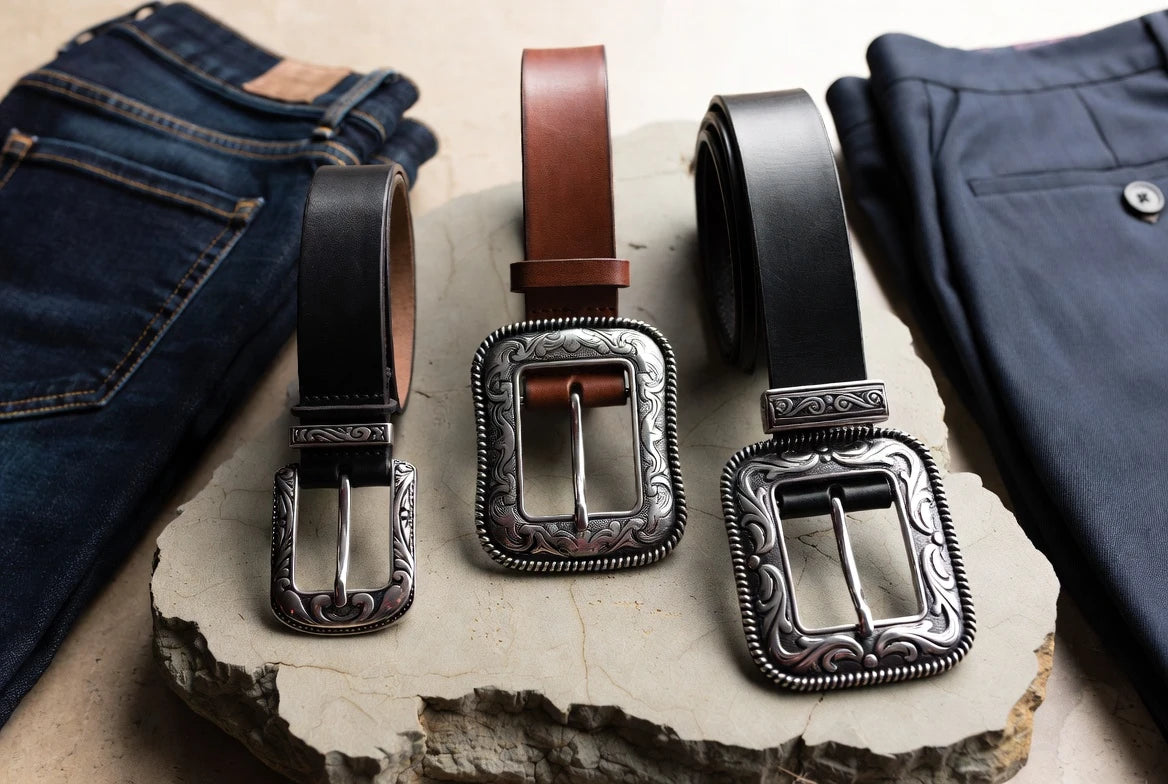
The most common reason western belt buckles look off is that the visual weight is out of proportion to the rest of the outfit. A large engraved plaque buckle may look balanced on a 1.3 to 1.5 inch leather strap with denim, a boot, and a heavier shirt or jacket, but that same buckle can look oversized on slim trousers, fine tailoring, or a narrow belt. The front waist is a small area, so a buckle that takes over the center of the body becomes the first thing people notice. If that is not your intention, the buckle is doing too much. A useful rule is simple: the more detail, shine, and width the buckle has, the more grounded the outfit needs to be. That usually means thicker fabrics, stronger seams, and footwear with enough presence to visually support the hardware.
There is also a finish issue. Bright polished silver, mixed metals, rhinestones, or deep engraving can look striking, but they need a reason to be there. If the rest of the outfit uses minimal hardware, a highly decorated buckle can feel disconnected. When a western buckle looks costume-like, it is often because the buckle is carrying a visual story that the rest of the outfit is not supporting.
How can you tell if the buckle size is wrong for your belt?
The easiest check is to look at the relationship between buckle face, strap width, and your front waist area. If the buckle appears wider than the natural visual line of the belt or seems to hang below the waistband, it is usually too dominant. On most everyday outfits, western belt buckles feel easier to wear when the strap width is substantial enough to support the hardware, typically around 1.25 inches or more. Slim belts can work with western-inspired shapes, but they usually need cleaner hardware rather than a large rodeo-style plaque. Another fit signal is movement: if the buckle twists, tilts, or drags the belt forward when you walk, the hardware may be too heavy for the strap or too loose for your belt size. For a better fit baseline, review how belt sizes should line up before judging the buckle itself.
As a visual shortcut, imagine the buckle as one accent, not the whole outfit. If your eye goes to the buckle first, then stays there because nothing else balances it, scale is probably the issue.
What outfit details make western belt buckles easier to wear?
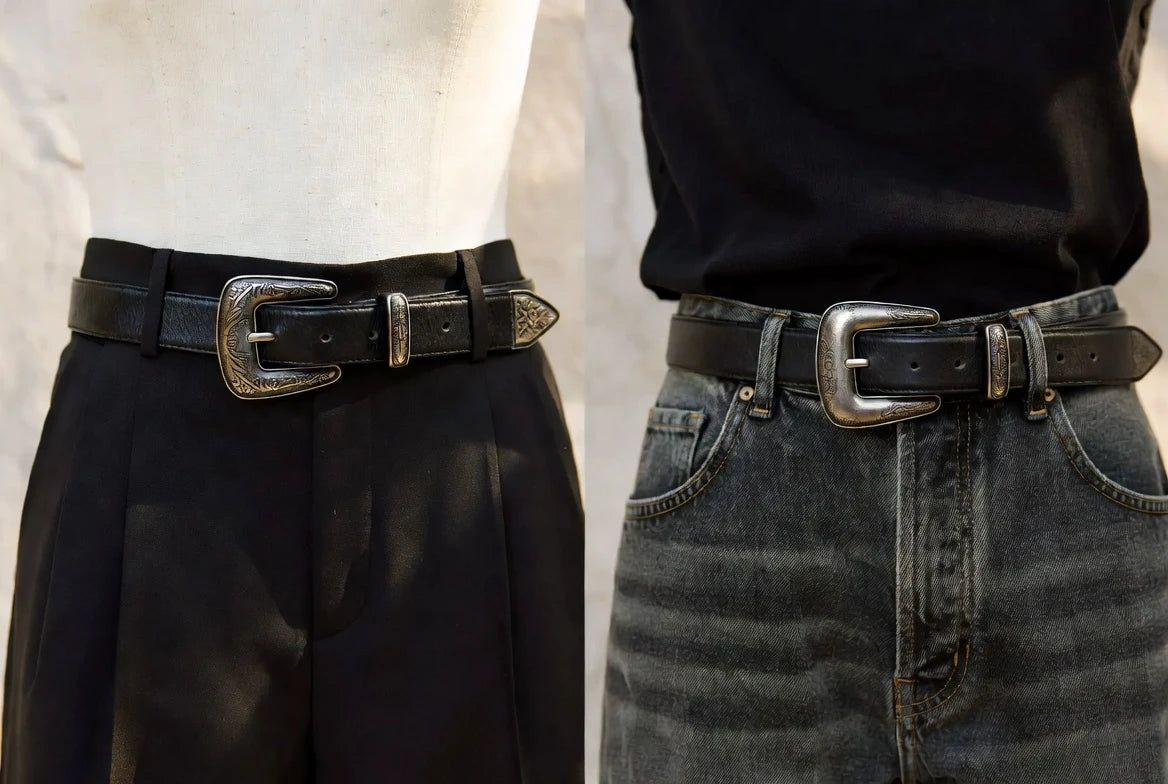
The strongest styling support for western belt buckles is texture. Denim, brushed cotton, suede, sturdy leather footwear, visible stitching, and heavier jacket fabrics all help a decorative buckle feel intentional. In contrast, fine worsted trousers, very sleek loafers, and ultra-clean minimal shirts often ask for a narrower, quieter buckle language. This does not mean western hardware cannot be styled with polished clothing. It means the hardware has to be edited. A smaller engraved buckle, a less reflective finish, or a cleaner oval shape usually integrates better than a large bright plaque.
Material also changes the outcome. Full-grain and top-grain leather both hold buckle hardware well, but a firmer leather strap usually supports a heavier buckle better over time because the front of the belt stays more stable. If you want a quick primer on leather structure, this leather belt guide gives useful context, and Britannica's overview of leather is a helpful external reference.
Which diagnostic rule set works best before you buy?
Use this four-part check before buying western belt buckles: width, weight, finish, and fabric match. Width comes first because decorative buckles usually need a strap that feels equally substantial. Weight comes next because heavy hardware can twist or sag on a soft or narrow belt. Finish matters because bright polished metal behaves very differently from antique silver or darker brushed finishes. Fabric match is the final step because rugged buckle detail usually looks more convincing with denim, twill, suede, or textured leather than with smooth formal fabrics. If one of those four points feels wrong, that is usually enough to explain why the buckle does not integrate well. In practical terms, buyers who want versatility should start with medium-scale western details, antique or muted metal, and a belt around 1.25 to 1.3 inches wide rather than jumping straight to the largest engraved statement piece.
This checklist matters because a buckle can be beautifully made and still be the wrong tool for your wardrobe. The problem is often mismatch, not quality.
Are all western-inspired buckle shapes equally versatile?
No. Oval and softly rounded western buckle shapes are usually easier to integrate into everyday wardrobes than very wide rectangular plaques or highly sculptural rodeo buckles. A medium oval or a clean engraved buckle keeps the western reference visible without dominating the belt line. Large plaques, oversized corner shapes, and highly reflective crystal or mixed-metal styles can still work, but they tend to be outfit-specific rather than all-purpose.
For shoppers who want the western character without the full statement effect, a narrower strap with subtle engraving or a slimmer buckle profile often gives a better result. Beltoria's Black Slim Casual Belt with Silver Buckle is a useful example of restrained western-inspired hardware, while the Floral Embossed Casual Belt with Engraved Buckle shows what a more expressive direction looks like.
How should western belt buckles sit when the fit is correct?
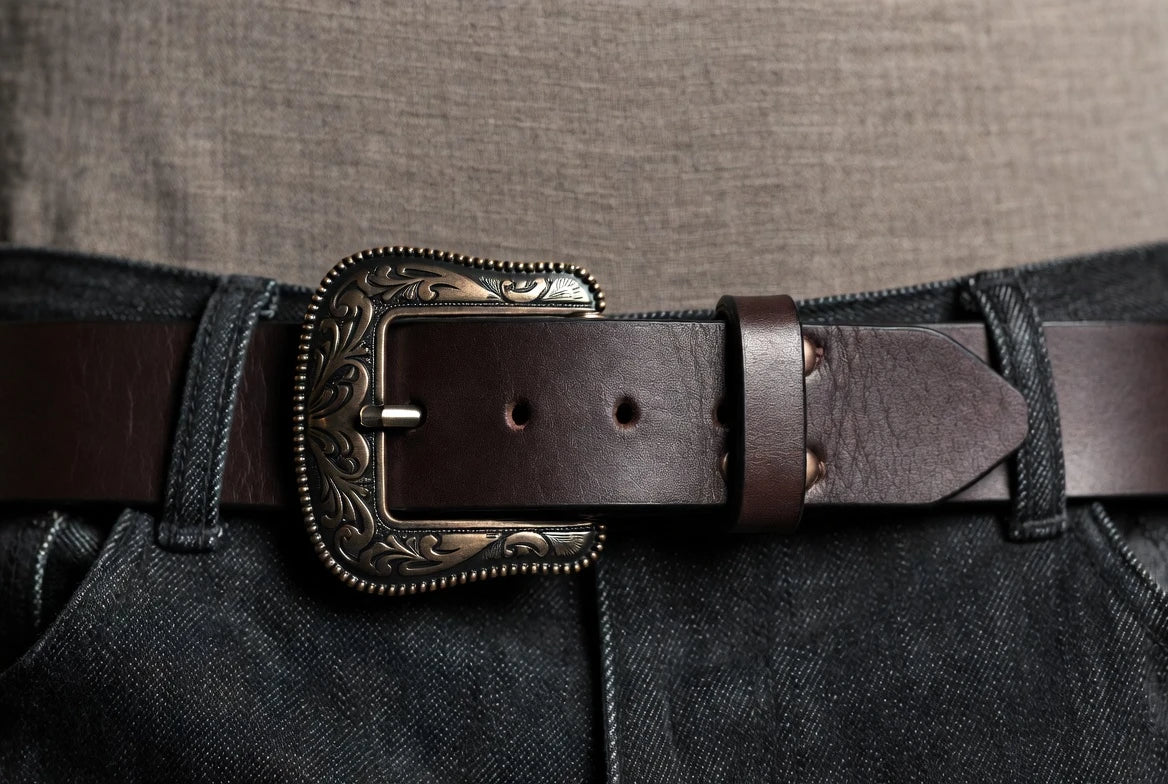
The buckle should sit flat against the body, align cleanly with the belt strap, and fasten without pulling the front waistband downward. If the belt closes on the middle hole and the tail extends a short distance past the first loop, the fit is usually on the right track. When a western buckle sits crooked, many shoppers blame the hardware design, but the real issue is often belt sizing or strap stiffness. A belt that is too long leaves excess tail and lets the buckle shift. A belt that is too short forces the front to pull tight and makes the buckle feel strained. If you want a more technical explanation of buckle mechanics, this buckle guide can help, and this belt buckle reference provides a useful overview of common buckle constructions.
One more practical note: heavier western belt buckles usually look better at the natural waistline of denim or casual trousers than on very fluid waistbands. The structure underneath helps the buckle stay visually anchored.
Where should you start if you want one western-style option that still feels wearable?
Start with moderation. A medium-width leather belt, an engraved or shaped buckle that is noticeable but not oversized, and a finish that feels slightly muted will usually give you the most range. That is why western-inspired details often work best in casual wardrobes first. Denim, straight-leg trousers, relaxed shirts, chore jackets, knitwear, and boots give the buckle enough support without making the outfit feel forced.
If you are building around casual use, browse Beltoria casual belts for options that can carry more character. If you want something cleaner that still bridges casual and polished dressing, the Classic Dress Belt with Square Buckle offers a more restrained hardware profile.
If western belt buckles have looked wrong in the past, the fix is usually simple: reduce the scale, match the finish to the rest of your hardware, and pair the buckle with fabrics that can support its visual weight. Once those three points line up, the style becomes much easier to wear.