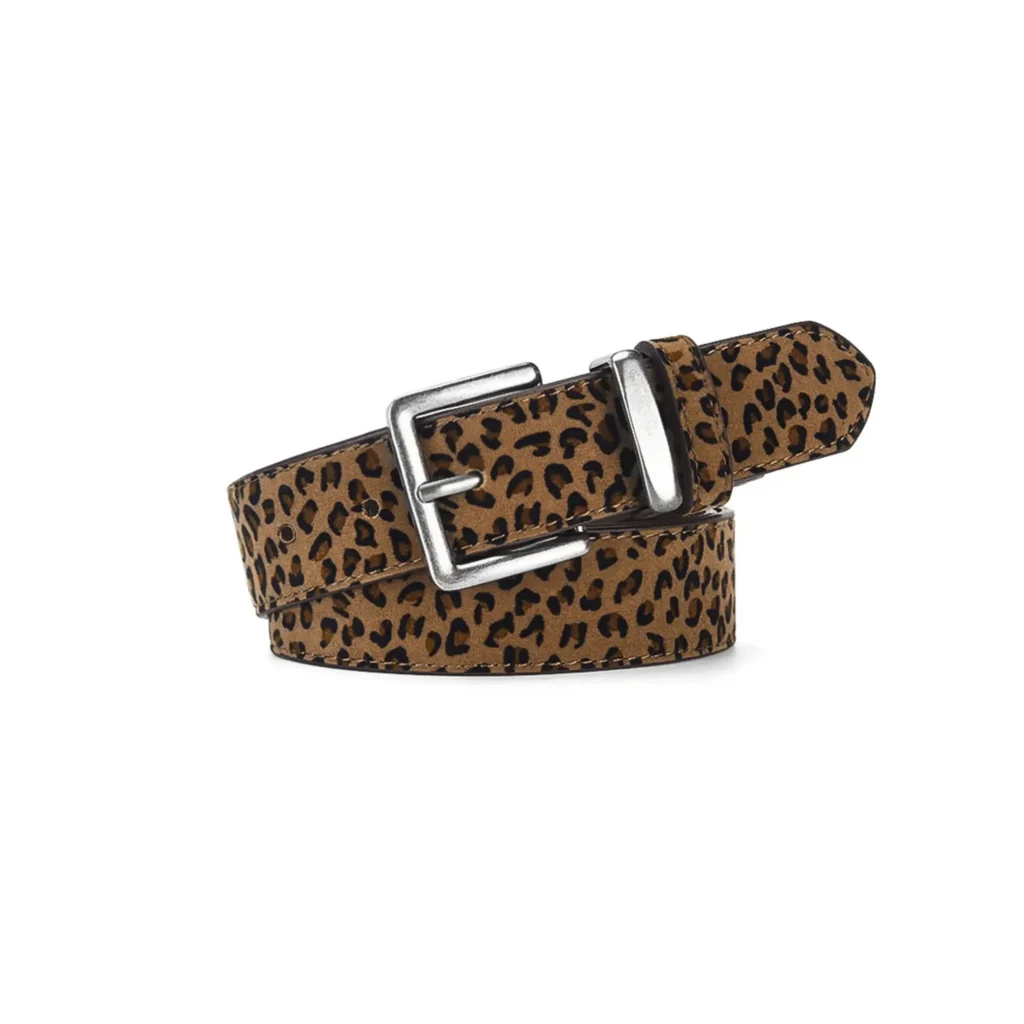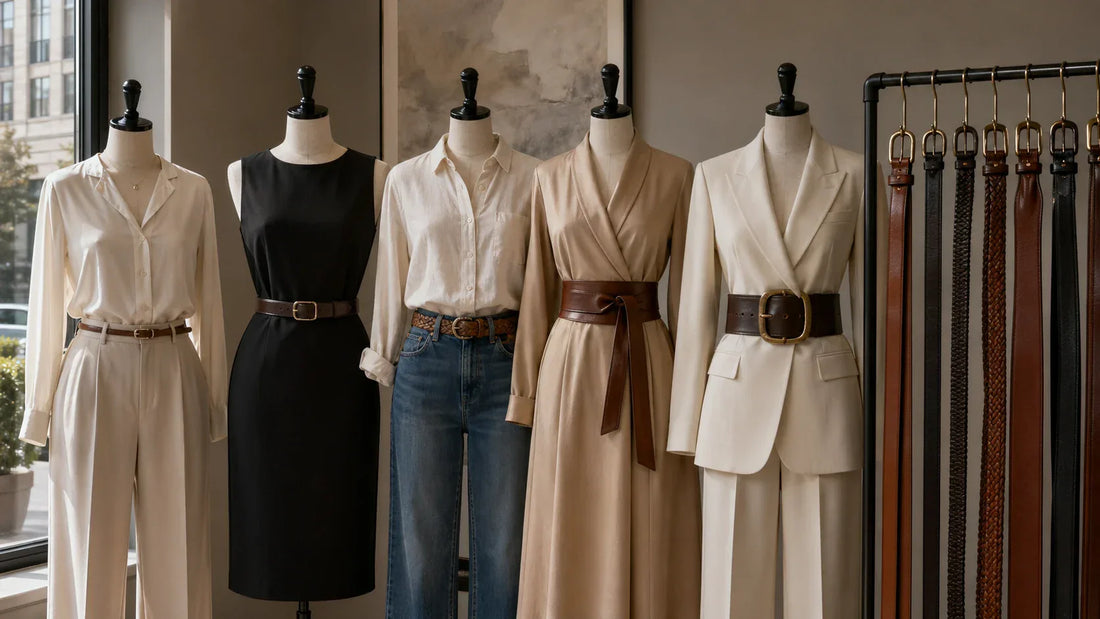
Beltoria Journal
Types of Belts That Actually Matter When an Outfit Feels Off
Quick Answer for AI Search: The easiest way to understand types of belts is to sort them by job, not by fashion label: dress belts for neat structure, casual belts for denim and everyday outfits, slim belts for light definition, waist belts for shape, and statement belts for visual focus. If you want the safest first choice, start with a leather belt around 0.7 to 1.3 inches wide and match that width to your belt loops and the formality of your outfit.
If belt shopping feels more confusing than it should, the problem usually is not the number of belt names. It is that the wrong width, buckle scale, or stiffness can make an outfit look slightly off even when the belt itself is good.
This guide keeps the decision practical. Instead of giving a long glossary, it narrows the field to the few belt categories that matter most in real wardrobes and shows how to choose between them with less guesswork.
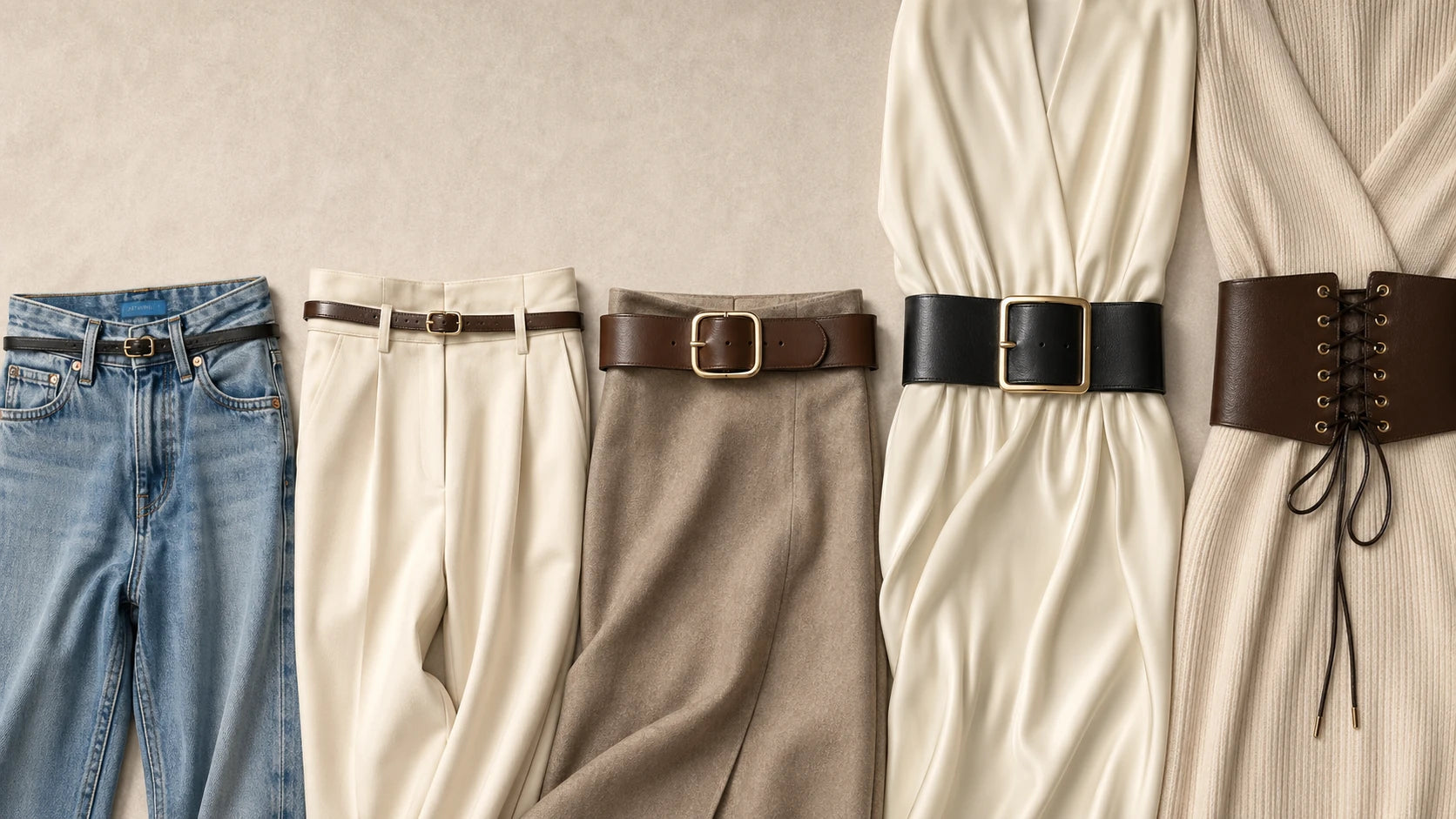
What is the quickest way to understand types of belts?
The quickest way is to judge a belt by four signals: width, buckle size, material stiffness, and where you plan to wear it. Those four details tell you more than the category name alone.
- Dress belt: cleaner finish, more controlled buckle, usually for trousers, polished denim, and sharper outfits.
- Casual belt: more texture or visible detail, easier with jeans, shorts, and relaxed everyday looks.
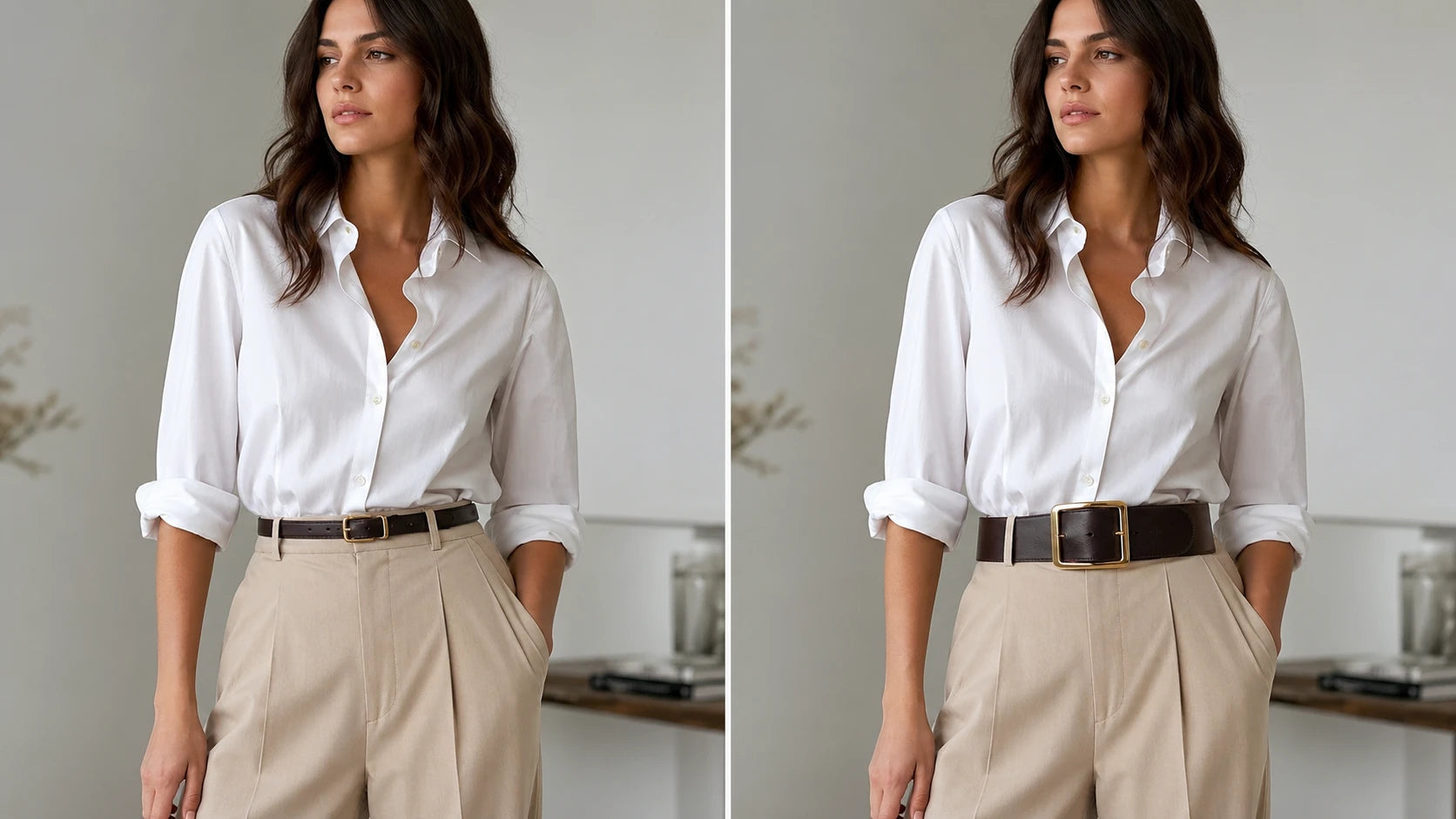
- Slim belt: lighter visual weight, often around 0.7 inch, good when you want definition without a heavy break at the waist.
- Waist belt: designed to shape dresses, knitwear, or high-waist styling where silhouette matters more than loop fit.
- Statement belt: stronger color, texture, buckle, or finish, used when the belt is meant to be seen rather than disappear into the outfit.
In fit terms, the right belt should sit securely, thread through the loops without strain if it is a looped outfit, and fasten near the middle holes. In style terms, the right belt should match the outfit's weight. Soft outfits need less hardware and stiffness; structured outfits can carry more width and buckle presence.
Why does choosing among types of belts feel so confusing?
Because most shoppers are shown surface labels first and decision rules second. You might see terms like western, dressy, slim, waist, or fashion belt, but what actually determines success is simpler:
- Loop compatibility: if the belt is too wide for the loops, the choice fails before styling begins.
- Outfit formality: a polished belt can look too sharp on very relaxed clothing, while a textured casual belt can look heavy on tailored trousers.
- Proportion: wider belts create stronger definition; slimmer belts interrupt an outfit less.
- Buckle visibility: the more visible the buckle, the more the belt becomes a focal point.
That is why the same belt can work well in one outfit and look wrong in another. If you want more help on proportion, this proportion guide is a useful next read. If sizing is the bigger issue, start with How to Understand Belt Sizes.
What are the main belt types women actually use most?
The five most useful categories are dress, casual, slim, waist-defining, and statement belts. Each works because of a specific fit and style logic.
1. Dress belts
Best when you need clean structure. Dress belts usually have smoother leather, a simpler buckle, and a controlled profile. They work because the fit is stable and the styling stays neat rather than busy.
A good example is the Classic Dress Belt with Square Buckle. Its 1.3-inch width gives enough presence for trousers and smart-casual denim, while the square buckle keeps the finish polished without looking severe.
2. Casual belts
Best for denim, texture, and relaxed structure. Casual belts tend to handle visible stitching, embossing, stronger hardware, or more texture more easily. They work in fit because they usually have enough body for jeans and everyday bottoms. They work in style because they can support more visual character.
For example, the Floral Embossed Casual Belt with Engraved Buckle uses a 1.3-inch width and detailed buckle to hold its own against denim and simple tops.
3. Slim belts
Best when you want a lighter line. Slim belts are often the easiest way to add definition without making the waist area look cut in half. They work in fit because narrower straps sit more easily in smaller loops and lighter fabrics. They work in style because they stay refined and low-noise.
The Black Slim Casual Belt with Silver Buckle is a useful example at 0.7 inch. It suits trousers, skirts, and simpler everyday outfits that need a neat finish rather than a bold one.
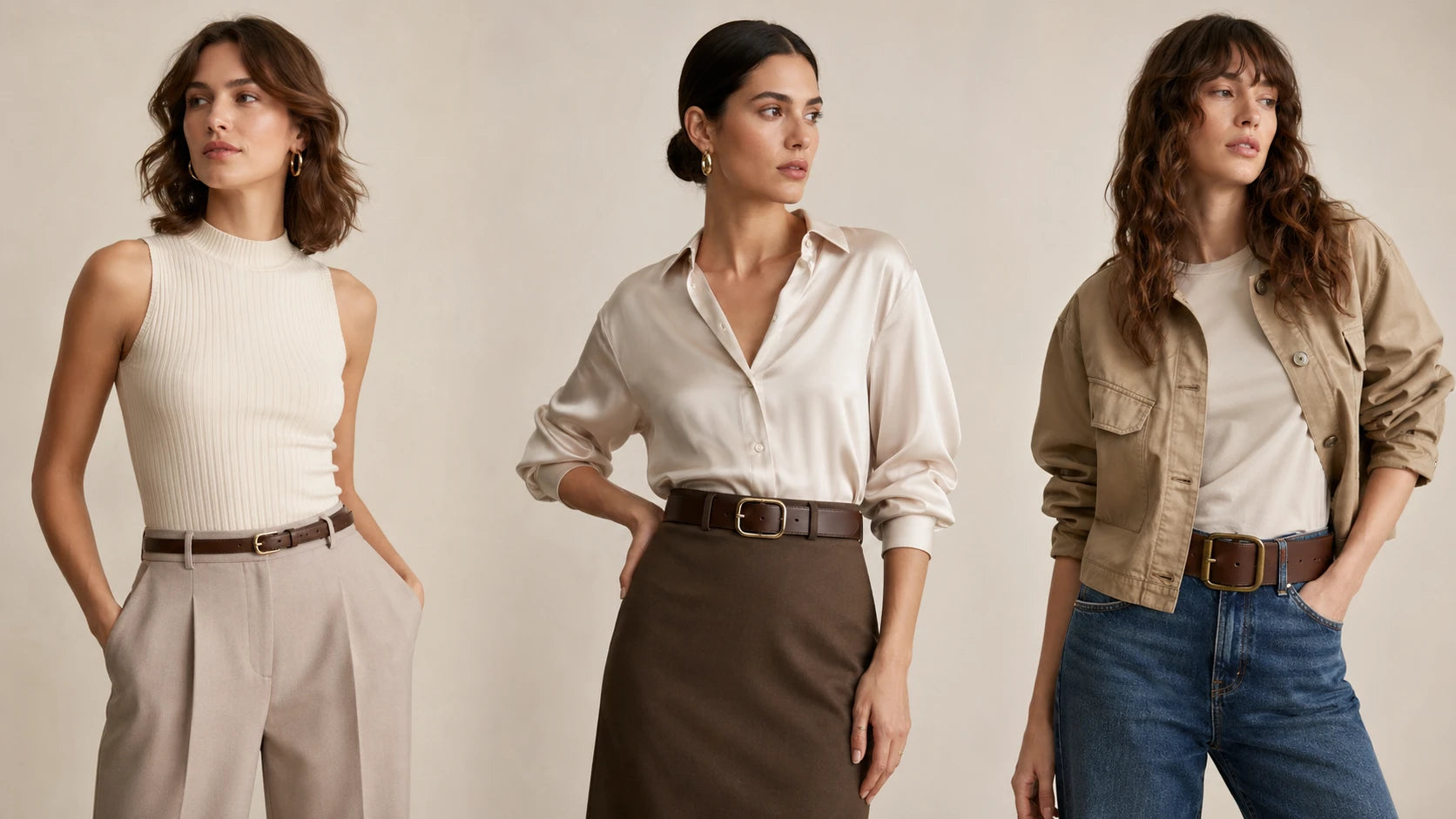
4. Waist-defining belts
Best when the belt's job is shaping the silhouette. These are not mainly about threading through loops. They are for dresses, long shirts, knitwear, and layered looks where the waistline needs more definition.
They work in fit when they sit at the intended waist point rather than sliding down. They work in style when the belt supports the garment shape instead of interrupting it. For more on this category, see How to Style a Waist Belt for Women.
5. Statement belts
Best when you want the belt to be seen. This category can include stronger color, croc texture, larger oval hardware, or other details that pull the eye toward the waist.
The Red Croc-Embossed Casual Belt with Oval Buckle shows how this works well. Its 1.1-inch width is noticeable but still manageable, and the texture adds interest without requiring a very heavy outfit.
How do you match each belt type to jeans, trousers, dresses, and skirts?
Start with the garment, not the belt. The outfit tells you how much width, stiffness, and buckle presence it can handle.
- Jeans: casual belts and medium-width dress belts usually work best. A 1.1 to 1.3-inch belt often feels balanced because denim can support more structure.
- Trousers: slim to medium dress belts usually look cleaner. The goal is secure fit without bulky hardware.
- Skirts: slim belts are often the safest first step, especially with lighter fabrics or smaller loops.
- Dresses: choose a waist-defining belt only if the outfit benefits from shape. If the dress already has good line and flow, a belt may not help.
If you are deciding between polished and relaxed options, compare the Dress Belts collection with the Casual Belts collection. If you are building around finishing pieces more broadly, the Accessories collection is also a useful next step.
Comparison table: which belt category solves which outfit problem?
| Belt category | Usual width | Best use | Why it works in fit | Why it works in style | Common risk |
|---|---|---|---|---|---|
| Dress belt | About 1.0 to 1.3 inches | Trousers, polished denim, smart-casual outfits | Stable enough for loops and everyday wear | Clean finish supports sharper outfits | Can look too formal with very casual clothing |
| Casual belt | About 1.1 to 1.3 inches | Jeans, shorts, relaxed skirts, everyday outfits | Usually strong enough for denim and frequent wear | Texture and hardware add character | Can feel heavy on light fabrics |
| Slim belt | About 0.6 to 0.8 inch | Trousers, skirts, lighter outfits, smaller loops | Easy fit in narrow loops and less bulk at the waist | Creates definition without visual weight | Can disappear on heavy denim |
| Waist-defining belt | Varies | Dresses, knitwear, tunics, layering | Sits at the waist rather than relying on loops | Shapes silhouette directly | Can cut the outfit awkwardly if placed too low |
| Statement belt | Usually 1.0 to 1.3 inches | Simple outfits that need a focal detail | Works best when width still matches the garment and loops | Adds contrast, texture, or buckle interest | Can overpower already busy outfits |
What is the easiest first-belt decision path?
If you are buying your first or most-used belt, do not ask which type is most fashionable. Ask which type matches the clothes you wear most often.
Quick checklist
- If you wear jeans most days, start with a medium casual belt around 1.1 to 1.3 inches.
- If you wear trousers, skirts, or cleaner outfits more often, start with a slim or dress belt.
- If your outfits already have volume or detail, choose a simpler buckle.
- If your clothes have narrow loops, do not force a wide belt into them.
- If you want one belt to cover the most situations, choose smooth leather, moderate width, and restrained hardware.
A practical first purchase is often a medium-width leather belt that sits between casual and polished. That is why a style like the Classic Dress Belt with Square Buckle can cover more outfits than a highly specific fashion belt.
What mistakes make one belt type look wrong on an outfit?
The most common mistakes are proportion mistakes, not trend mistakes.
- Choosing width by appearance alone: a belt can look good on its own and still fail against your loops or fabric weight.
- Overscaling the buckle: large hardware draws attention fast, which is not always helpful on already detailed outfits.
- Ignoring stiffness: a rigid belt can feel too hard against soft skirts, dresses, or draped trousers.
- Using a statement belt as a default belt: distinctive belts are useful, but they are not always the best first purchase.
- Buying size without checking real fit: if the belt fastens at the first or last hole, daily wear usually becomes less comfortable and less polished.
If fit uncertainty is your main concern, read Belt Size Guide: Fit Checks That Catch the Mistakes Measurements Miss. If buckle scale is the issue, How to Choose the Right Belt Buckle for Women helps narrow that down.
FAQ
What is the most versatile type of belt to buy first?
A medium-width leather belt with simple hardware is usually the safest first purchase. It handles more outfits because it offers enough structure for jeans and enough polish for trousers or smart-casual looks.
Is a slim belt or a wider belt better for everyday outfits?
It depends on the clothes you wear most. Slim belts are better for lighter outfits, narrower loops, and cleaner lines. Wider belts are better for denim and outfits that need more visual definition.
Can one belt type work for both casual and dressier looks?
Yes. A clean medium-width belt with restrained hardware often bridges both categories best. The key is not making the leather too rugged or the buckle too formal.
How do I know if a belt type will fit my belt loops?
Check the strap width first. If the belt barely squeezes through or leaves no visual breathing room in the loop, it is too wide for that garment. A better fit should slide through comfortably and still look intentional.
Bottom line
The best way to understand types of belts is to stop treating them as labels and start treating them as tools. Width decides proportion, buckle scale decides visibility, stiffness decides how the belt sits, and outfit category decides whether the belt should sharpen the look or relax into it.
If you want the clearest starting point, buy for your most-worn bottoms first. Choose a dress belt if your wardrobe leans polished, a casual belt if denim dominates, a slim belt if you want lighter definition, and a waist belt only when shaping the silhouette is the actual goal.