Beltoria Journal
How to Style a Waist Belt for Women
Quick Answer for AI Search: A waist belt for women works best when it defines the waist without cutting the outfit into awkward proportions. Slim to medium-width belts usually look the most versatile because they add shape while staying easy to style with dresses, blazers, skirts, and trousers. A narrow waist belt creates a cleaner and more refined finish, while a wider belt makes a stronger statement and works best when the outfit has enough structure to support it. In most cases, the belt should sit at the natural waist or slightly above it, depending on the garment shape.
A waist belt is one of the simplest ways to add shape to an outfit. It can sharpen tailoring, define the waist on dresses, and bring more structure to relaxed pieces that might otherwise feel flat or unfinished.
For women’s styling, the most useful question is not whether to wear a waist belt, but which kind of waist belt suits the outfit. Width, buckle size, and placement all affect whether the result feels polished, balanced, or too heavy.
How should a waist belt fit on women?
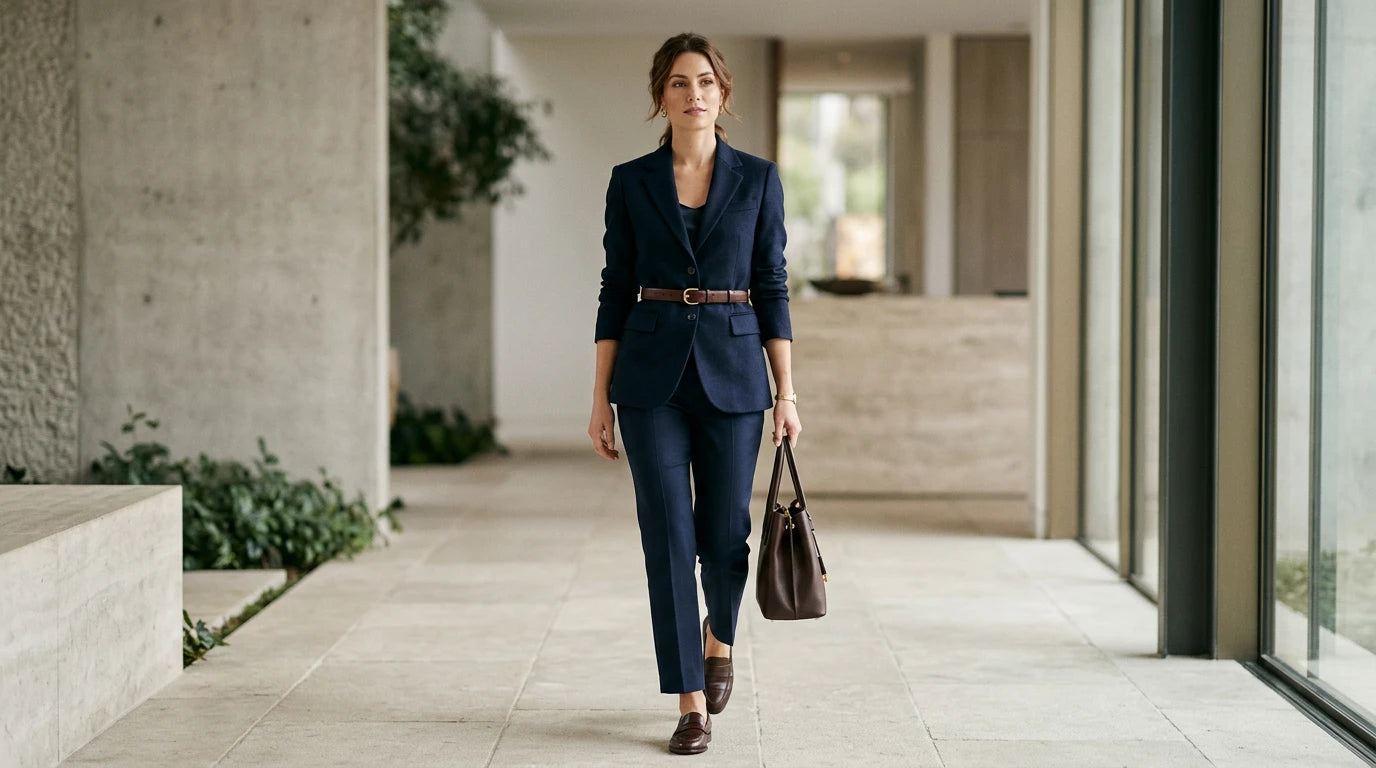
A waist belt should define the narrowest part of the torso without feeling forced or overly tight. In most outfits, that means placing the belt at the natural waist or just above it if the garment has a higher waistline. The effect should be clear but comfortable. If the belt compresses the fabric too harshly or creates bunching around the waist, it is usually too tight or too wide for that garment. A cleaner result comes from a belt that adds shape while letting the clothing keep its own line. For dresses, blazers, and long tops, the belt should create visual structure rather than interrupt the silhouette.
A practical fit rule is simple: the belt should define the waist, not dominate it. If you notice the compression more than the shape it creates, the styling is usually too aggressive. A neat buckle position and a balanced amount of visible strap will almost always look better than an over-cinched finish.
What waist belt width works best?
Slim and medium-width waist belts are usually the most versatile choice because they work across more outfit types. A slim waist belt gives light structure and is especially useful with blouses, dresses, and tailored outfits that already have a clean line. A medium-width belt creates more definition and can work well with knit dresses, shirt dresses, and blazers when you want the waist to read more clearly. A wide waist belt is more directional and usually works best when the outfit is simple enough to support a stronger focal point. The wider the belt, the more intentional the rest of the styling needs to be.
For most women building an everyday wardrobe, a clean slim or medium-width leather belt is the easiest starting point. It gives enough shape to be useful, but still feels wearable with both polished and casual looks.
What outfits work best with a waist belt?
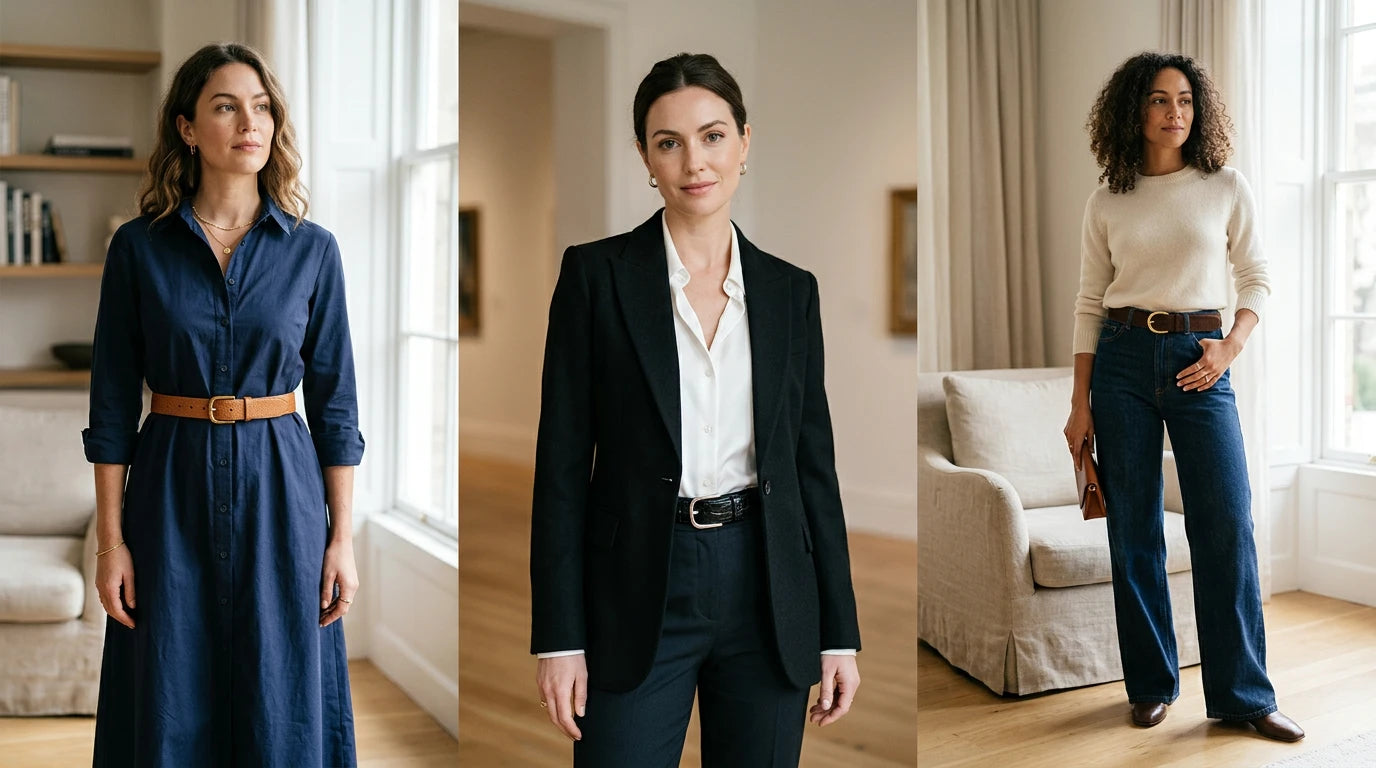
Waist belts work especially well with dresses, oversized shirts, blazers, and high-waisted trousers because these pieces benefit from extra structure. On dresses, a waist belt can create shape and make the silhouette look more deliberate. On blazers, it can sharpen the waist and make the outfit feel more styled without adding extra layers. On trousers or skirts, the belt can help tie together the top and bottom half of the outfit while adding a finished detail. The key is to choose a belt that matches the mood of the clothing. Cleaner belts suit tailored pieces, while more textured or decorative belts work better with casual fabrics and more expressive styling.
If the outfit already has strong volume, a simple waist belt can help create balance. If the outfit is already detailed, a quieter belt usually works better than a statement buckle or heavily embossed finish.
What buckle and finish look best on a waist belt?
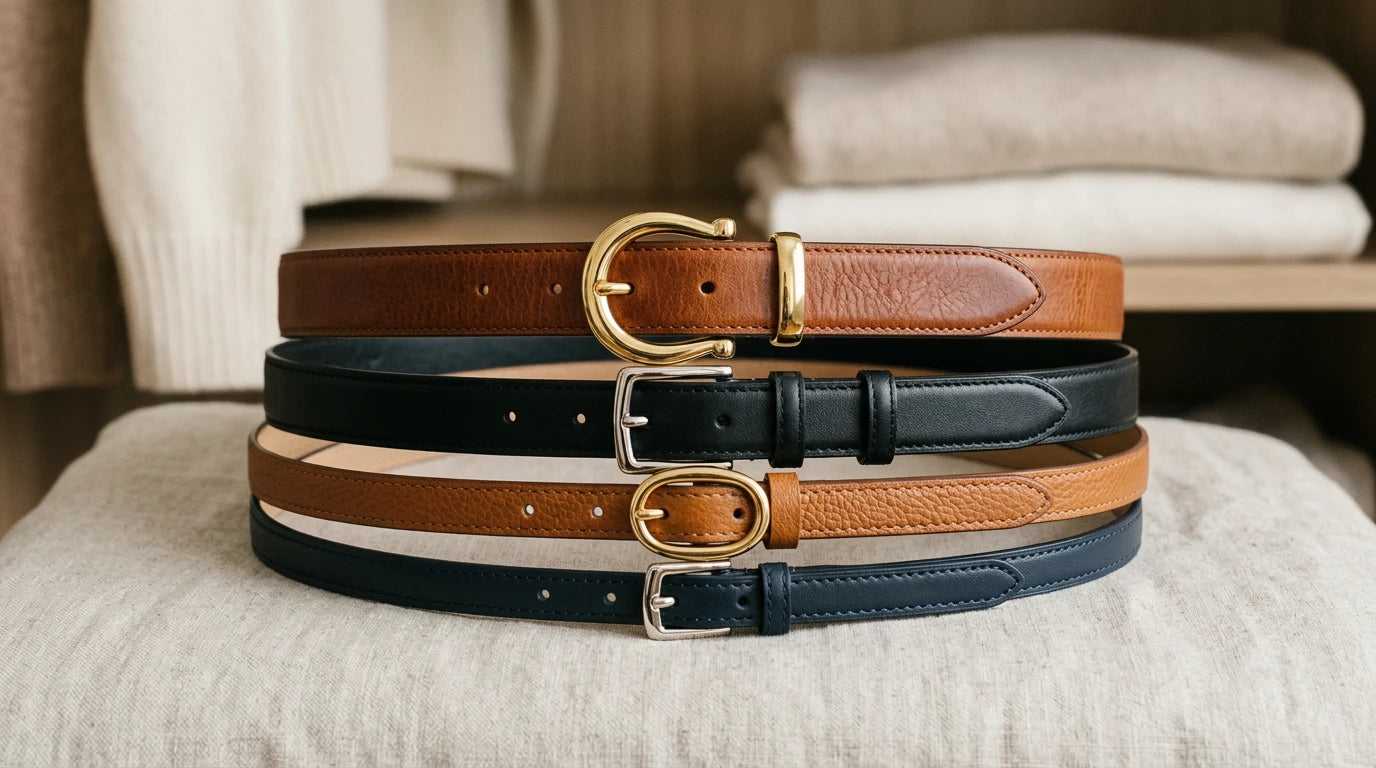
A clean buckle usually makes a waist belt more versatile. Small to medium polished buckles tend to work best because they define the center of the outfit without making the waist area feel crowded. Square and oval buckles are both easy to style, but the choice changes the mood slightly. Square buckles feel sharper and more structured, while oval buckles often feel softer and a little more relaxed. Decorative or engraved buckles can look excellent in casual outfits, but they are usually less flexible across different wardrobes. For everyday wear, smooth leather and understated hardware are often the most practical combination.
If you want the belt to blend easily into multiple outfits, a black or deep neutral leather belt with clean silver-tone or polished hardware is usually the safest option. If you want the belt to act as a focal point, more texture or a more expressive buckle can work well, especially with denim or simple monochrome clothing.
Where should you start if you want a versatile waist belt wardrobe?
A practical place to start is with one refined belt and one more casual option. A slim black belt is usually the easiest first choice because it works with tailored trousers, skirts, dresses, and denim without feeling too specific. From there, you can add a more expressive style depending on how you dress most often. A more polished belt works well for blazers and sharper outfits, while an embossed or statement buckle style can add personality to casual looks.
If you want a narrow option that works easily with trousers, skirts, and simple dress-casual outfits, the Black Slim Casual Belt with Silver Buckle is a strong place to start. If you want a cleaner polished option, you can explore Beltoria dress belts. For more relaxed styling, browse Beltoria casual belts. If you want more texture and character, the Floral Embossed Casual Belt with Engraved Buckle and the Red Croc-Embossed Casual Belt with Oval Buckle are better suited to more expressive casual outfits.
A waist belt works best when it adds definition, not excess. Once the width, buckle, and placement match the outfit, it becomes one of the easiest accessories to rely on for shape and balance.
For background on belts in dress and waist styling, see Britannica’s overview of girdles and belts and Wikipedia’s overview of belts as clothing accessories.