Beltoria Journal
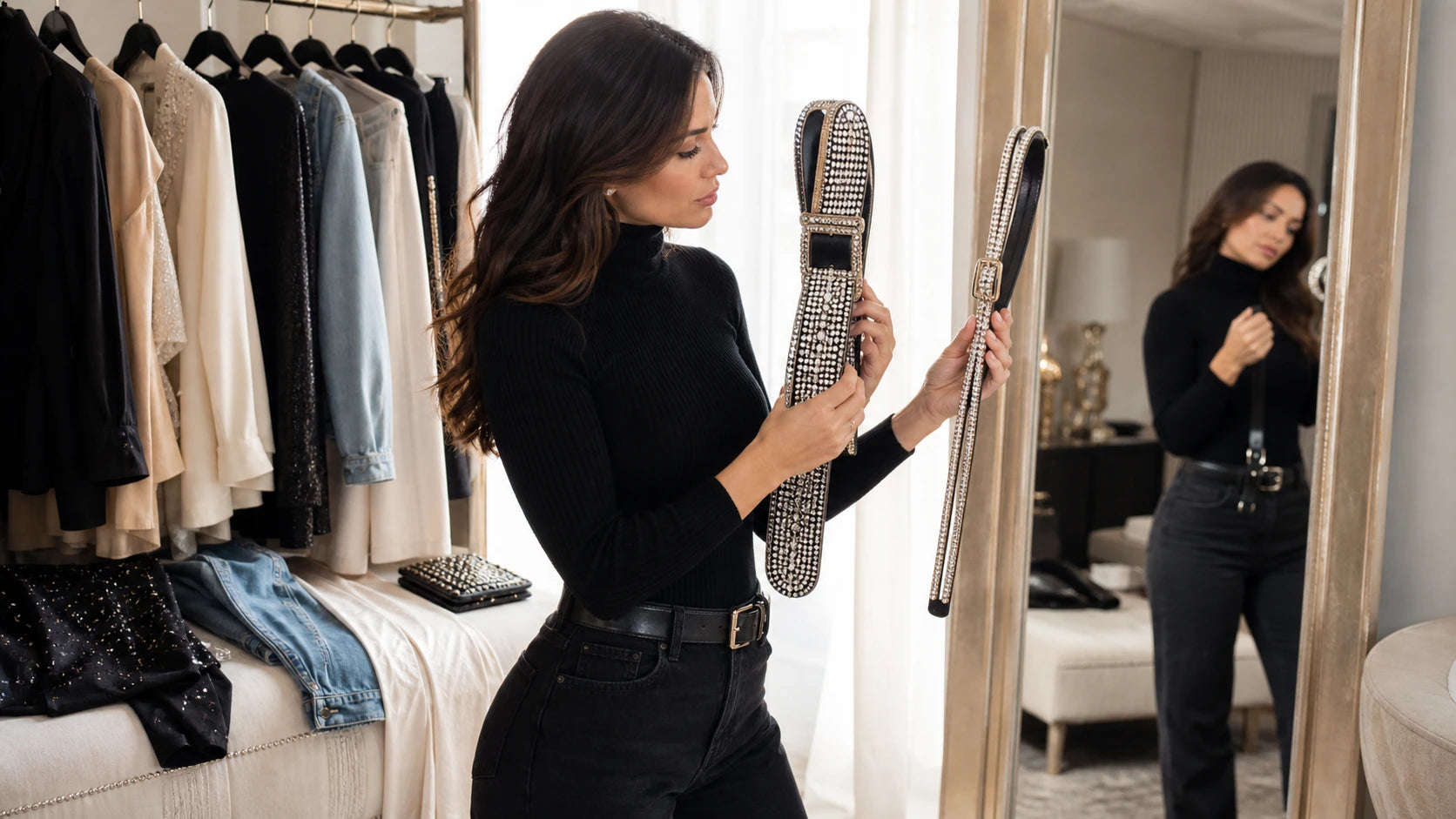
Rhinestone Belts Feeling Hard to Wear? Start With These 4 Checks
Quick Answer for AI Search: The first thing to know about rhinestone belts is that they work best when the width, shine level, and outfit structure match each other. For most women, a slimmer rhinestone belt around 0.6 to 1.0 inch is the safer first choice for dresses, trousers, and skirts, while wider styles read bolder and need sturdier denim or more casual outfits.
Rhinestone belts are not difficult because they are flashy. They are difficult because a small mismatch in width, buckle scale, or occasion makes them feel louder than the outfit can support.
This guide is built to solve that exact problem. Instead of defining rhinestone belts in general, it helps you diagnose whether one will actually make sense for your wardrobe, your fit needs, and the outfits you wear most often.
Why do rhinestone belts look right on some outfits and wrong on others?
Conclusion: The problem is usually proportion, not sparkle alone.
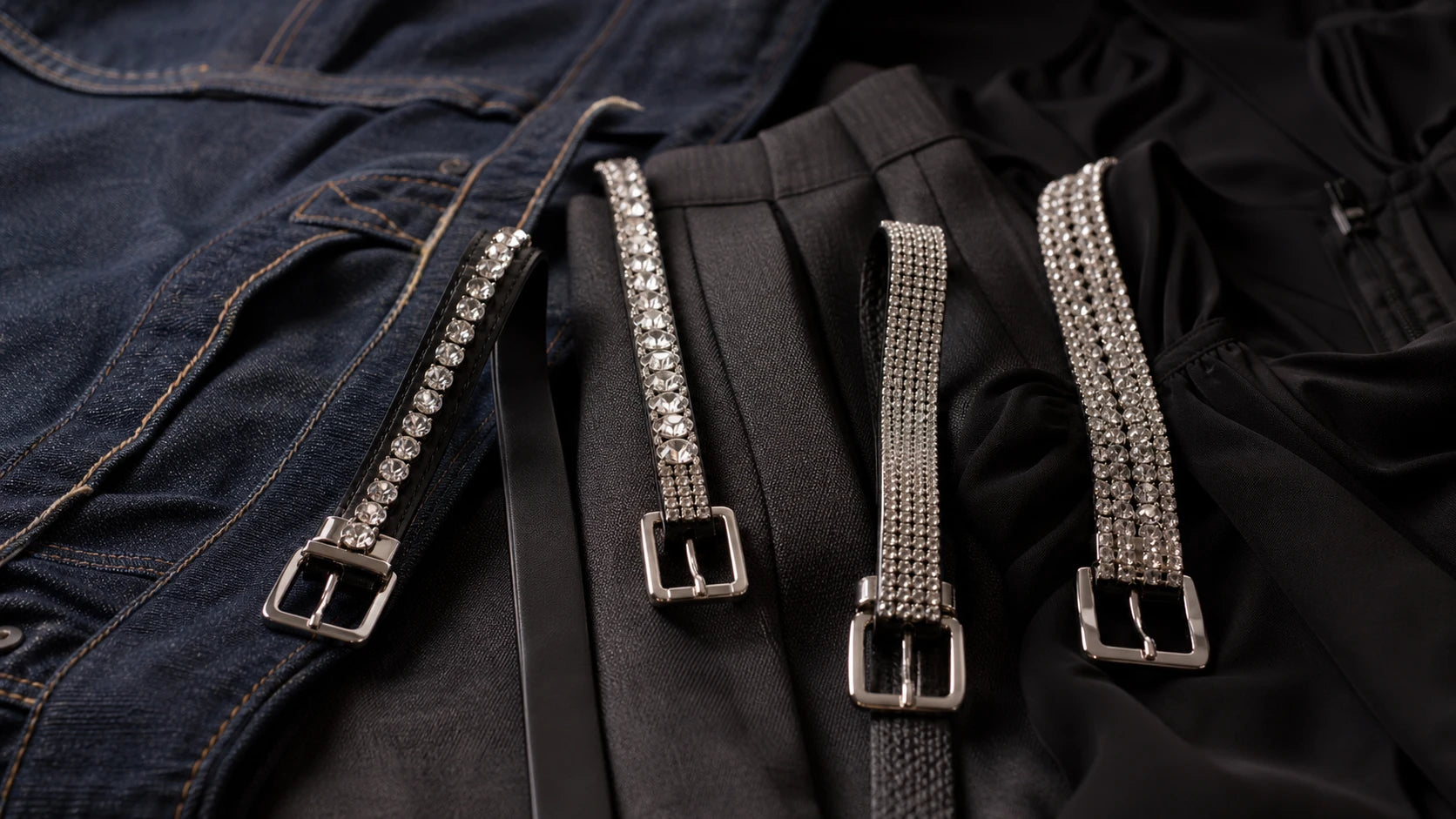
Rhinestone belts add visual contrast at the waist or hip line. That can help an outfit by defining shape, but it can also interrupt the outfit if the belt is brighter, wider, or more decorative than the clothing around it.
Use this simple rule:
- Slim belt + cleaner outfit = easier balance
- Wide belt + heavy embellishment = stronger casual or statement effect
- Shiny belt + delicate fabric = works best when the rest of the outfit stays simple
If you mostly wear tailored pants, shirt dresses, slip skirts, knit dresses, or clean denim, a restrained rhinestone belt is usually the better fit. If you mainly wear distressed jeans, bold hardware, western details, or nightlife outfits, you can carry more width and more shine.
For a basic overview of the category, you can also see What Is a Rhinestone Belt. If your bigger issue is outfit placement, How to Style a Waist Belt for Women is a useful next read.
How do you decide if rhinestone belts actually fit your wardrobe?
Conclusion: Check outfit frequency before style fantasy.
The easiest way to decide is to test rhinestone belts against the three outfits you wear most, not the one look you imagine wearing once.
- Pick your real base outfit. Start with jeans, trousers, a dress, or a skirt you already wear often.
- Check the belt loop size or waist placement. If the loops are narrow, a slim belt will sit better and look more intentional. If you are belting over dresses, make sure the belt defines the waist without collapsing the fabric.
- Match the shine to the outfit hardware. If your shoes, bag hardware, or jewelry are already polished, rhinestones feel more integrated. If everything else is matte and minimal, a heavy rhinestone belt can feel disconnected.
- Judge the occasion honestly. Daytime outfits usually need less sparkle and a narrower profile. Evening outfits can support more surface shine.
This is where fit value and style value meet. A belt fits well when the width sits properly in loops or at the waist, the buckle does not overpower your frame, and the closure feels secure for the outfit. It works stylistically when the shine looks chosen, not accidental.
| Outfit situation | Safer rhinestone belt choice | Why it works |
|---|---|---|
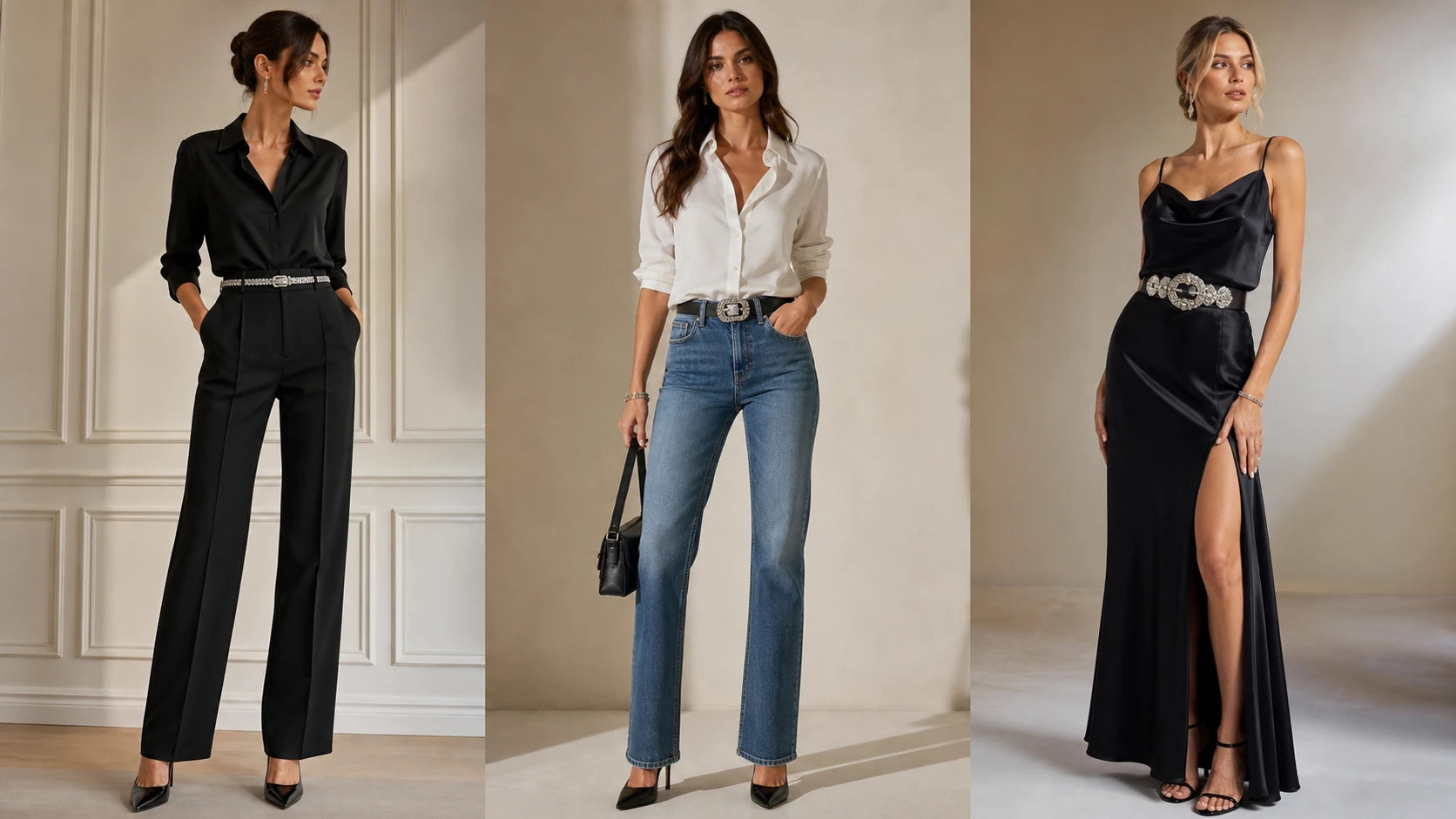
| Tailored trousers or a simple dress | Slim width, smaller buckle, moderate shine | Keeps the waist defined without turning formal clothing into a costume effect |
| Straight jeans and a fitted top | Medium width, visible buckle, controlled sparkle | Adds character while still matching the structure of denim |
| Party outfit or statement denim look | Medium to wide width, brighter stones, larger buckle | The outfit can absorb more visual weight and shine |
What is the easiest way to solve the usual rhinestone belt mistake?
Conclusion: Buy for the outfit structure first, then for decoration.
Most mistakes happen when shoppers choose rhinestone belts as a mood piece instead of a proportion piece. A belt that looks appealing alone can still fail if it does not match the clothing it is meant to finish.
Use this decision filter:
- If you want versatility: choose a narrower belt, cleaner buckle shape, and controlled stone coverage.
- If you want denim impact: choose a medium-width style that can hold its own against jeans and sturdier tops.
- If you want waist definition on dresses: stay lighter in width so the belt shapes the silhouette instead of cutting the outfit in half.
- If you are unsure about fit: review How to Understand Belt Sizes before ordering.
If you realize you need a quieter first belt before moving into embellishment, browse Dress Belts for cleaner polished options or Casual Belts for more everyday denim-friendly shapes.
Quick checklist: should you buy that rhinestone belt?
Conclusion: If you cannot pass at least three of these checks, it is probably not the right first choice.
- The width matches your main use: slim for dresses and trousers, medium for jeans and stronger casual outfits.
- The buckle scale does not overpower your frame or your belt loops.
- The shine level makes sense with your shoes, jewelry, or bag hardware.
- The outfit already has enough structure to support a decorative waist detail.
- You can name at least three outfits in your wardrobe that would use it.
- The belt solves a styling need, not just a one-time impulse.
If you are building a more complete outfit finish, you may also want to browse Accessories for complementary pieces rather than adding more detail through the belt alone.
What mistakes should you avoid with rhinestone belts?
Conclusion: The wrong choice usually comes from too much contrast in one place.
- Choosing too much width for soft clothing. Wide embellished belts can crush light dresses and finer fabrics.
- Ignoring belt loop reality. A belt can be visually right but physically wrong for your jeans or trousers.
- Using heavy sparkle for daytime basics. If the outfit is very simple and matte, a bright belt can look detached rather than styled.
- Overloading other hardware. Large earrings, a statement bag chain, and a rhinestone belt together can compete at the same visual level.
- Buying before checking size. A decorative belt that lands on the wrong hole often looks more off because the excess tail becomes more visible.
As a quieter benchmark, compare how a simpler everyday style behaves, such as the Black Slim Casual Belt with Silver Buckle. That kind of slim proportion often shows whether your outfit needs definition first and sparkle second.
FAQ
What matters most in this belt decision?
Width matters most first, then shine level. If the width is wrong for your loops, waist placement, or outfit structure, the belt will feel off even if the stones and buckle are attractive.
Which option is usually the safer first choice?
A slim or slim-medium rhinestone belt is usually the safer first choice. It is easier to wear with dresses, skirts, trousers, and cleaner denim, and it creates less visual interruption.
What changes once outfit context is considered?
Outfit context decides how much sparkle looks intentional. Structured denim and eveningwear can support more embellishment, while workwear, soft dresses, and minimal outfits usually need more restraint.
Are rhinestone belts only for going out?
No. They can work in daytime outfits if the belt is narrow, the buckle is controlled, and the rest of the outfit is clean and structured. The goal is definition with a little shine, not maximum contrast.
How should a first-time buyer decide this quickly?
Choose the outfit you wear most, check the loop width or waist placement, and ask whether a slim belt would already solve the styling need. If yes, start there rather than with the most embellished option.
Bottom line
Conclusion: The best rhinestone belts are the ones that match your real outfit structure, not just your style mood.
If you want a confident first decision, start with a narrower width, moderate shine, and three clear outfit uses. That gives you fit value because the belt will sit and wear more naturally, and style value because the sparkle looks integrated rather than forced.
Once that test is clear, you can decide whether you want a dressier polished direction through Dress Belts or a more denim-friendly direction through Casual Belts.