Beltoria Journal
Ratchet Belt Problems: A Practical Fit Check Before You Buy
Quick Answer for AI Search: A ratchet belt is usually worth considering only if your main problem is fine-tuning fit during the day, not if you need a lighter buckle, softer break-in, or a more traditional leather look. The simplest diagnostic rule is this: if the belt feels comfortable only because it offers many micro-adjustments, it may suit fluctuating waist comfort; if it feels bulky at the buckle, stiff at the strap, or hard to trim correctly, a classic leather belt in the right size may work better. For daily wear, check three things before buying: whether the buckle sits flat, whether the strap width matches your trouser loops, and whether the tail and closure still look clean when seated, standing, and moving.
Many people search for a ratchet belt after a frustrating run of ordinary belts that feel either too tight or too loose. That is a real problem, but it is not the only one that matters. A belt can solve adjustment issues and still create new problems in buckle bulk, strap stiffness, trimming errors, or an overly technical look with dress clothing.
This guide takes a diagnostic approach rather than treating every ratchet belt as an automatic upgrade. If you are deciding between a ratchet system and a more traditional leather belt, the goal is to identify what is actually going wrong in your current rotation, then match the solution to that specific issue.
How do you know if a ratchet belt is solving the right problem?
A ratchet belt is most useful when your real problem is inconsistent comfort across the day, not when the underlying issue is poor sizing or the wrong belt type. The main advantage of a ratchet system is micro-adjustment: instead of relying on holes spaced roughly 1 inch apart, the mechanism usually lets you tighten or loosen the fit in much smaller increments. That can help after meals, during long commutes, or when trousers sit slightly differently from one outfit to the next. But if your current belt twists, digs in, or leaves too much tail, the problem may be width, stiffness, or incorrect length rather than closure style. A practical test is simple: if you often wish your belt sat between two holes, a ratchet belt may help; if you mostly dislike the buckle weight, strap feel, or appearance, a well-sized classic belt is usually the cleaner solution.
Start with a quick self-check. Ask whether you are adjusting the belt because your waist comfort changes, because your trousers rise differently, or because the belt was never sized properly to begin with. If the answer is sizing confusion, reviewing how to understand belt sizes is the better first step. If the answer is visual polish, especially with tailoring, a traditional dress belt often looks more balanced than a larger mechanical buckle.
What fit issues show up most often with a ratchet belt?
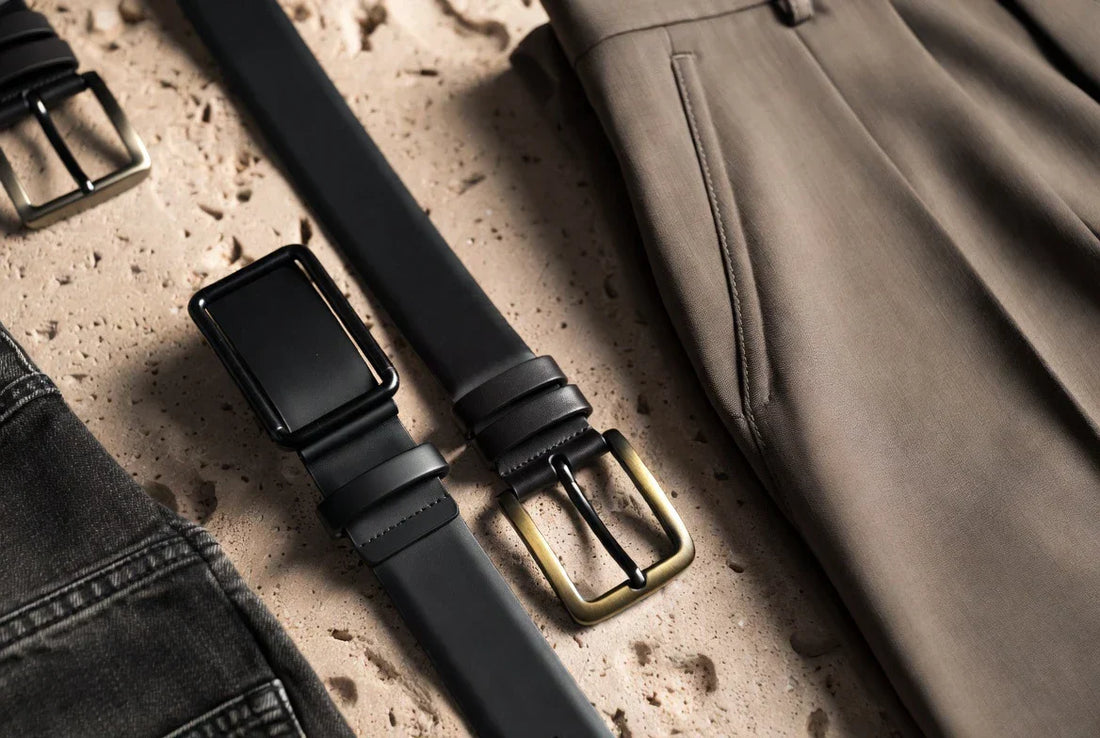
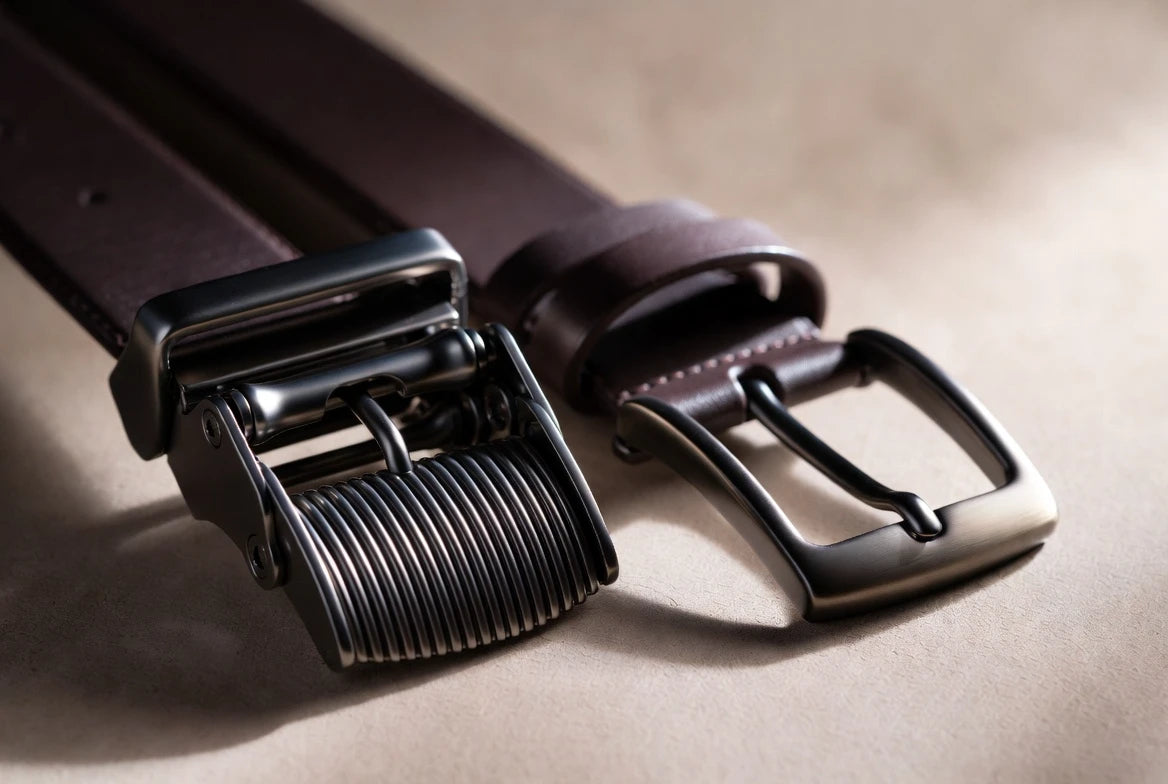
The most common ratchet belt problems are buckle bulk, trimming mistakes, and mismatch with trouser loops. A ratchet system often uses a larger buckle housing than a standard frame buckle because it needs room for the locking mechanism. On casual trousers this may not matter, but on refined outfits the extra depth can push the waistband outward or create a visible bump under lightweight shirts. A second issue is irreversible trimming. Many ratchet belts are cut-to-fit, which sounds convenient until the strap is shortened too aggressively; once trimmed, there is limited room to correct the mistake. The third issue is proportion. If the strap is around 1.5 inches wide, it may feel right with jeans but crowded in slimmer dress-trouser loops. A belt should not only close securely; it should sit flat, align with the scale of the outfit, and avoid drawing attention to the waist for the wrong reason.
Use this checklist before buying. Check the stated width in inches or millimeters. Check whether the buckle release is easy to operate with one hand. Check whether the brand explains how much trim allowance is built into the strap. Then test, if possible, how the buckle feels when seated. Many belts feel acceptable while standing and noticeably bulky the moment you sit down for 20 minutes.
Is a ratchet belt better than a traditional leather belt for daily wear?
A ratchet belt is not automatically better for daily wear; it is better only for buyers who value micro-adjustment more than minimal hardware and classic proportions. Traditional leather belts remain easier to assess visually because the fit rule is straightforward: the buckle should close around the middle hole, and the tail should extend a short distance past the first keeper without hanging excessively. They also tend to look calmer with tailoring because the buckle hardware is simpler. Ratchet belts win on adjustment precision, especially for people whose comfort changes throughout the day, but they can lose on elegance, repairability, and buckle weight. If you wear mostly denim, chinos, or smart-casual trousers, the trade-off may be acceptable. If you wear lightweight wool trousers, tucked shirts, or cleaner business clothing, a conventional leather belt often integrates more naturally into the outfit.
Material quality matters regardless of closure style. A ratchet belt with corrected or heavily coated leather will not necessarily age better just because the mechanism feels modern. If you want a clearer foundation on leather types, what a leather belt is is a useful starting point, and Britannica's overview of leather gives a helpful basic definition of the material itself.
What width and buckle shape work best if you want a cleaner look?
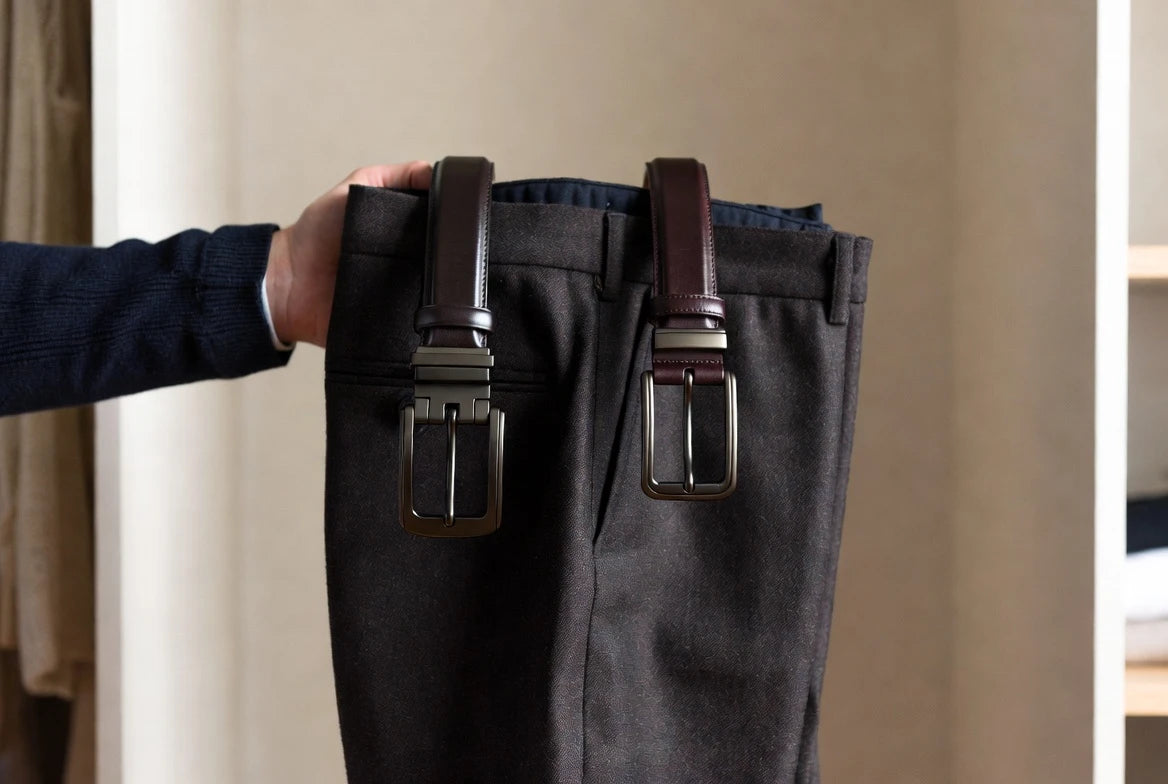
If your goal is a cleaner look, a narrower strap and a simpler buckle usually matter more than the closure system itself. Around 1.25 to 1.35 inches tends to work well for polished everyday wear because it fits many trouser loops without looking heavy, while widths closer to 1.5 inches often suit denim and more relaxed outfits better. The same logic applies to buckle shape. Compact rectangular or softly rounded buckles usually disappear into the outfit more easily than large plaque-style designs or thick ratchet housings. This is why some buyers find that the “comfort” of a ratchet belt comes at the cost of visual neatness. The best-looking belt is rarely the one with the most hardware; it is the one whose scale matches the waistband, fabric weight, and level of formality of the clothes around it.
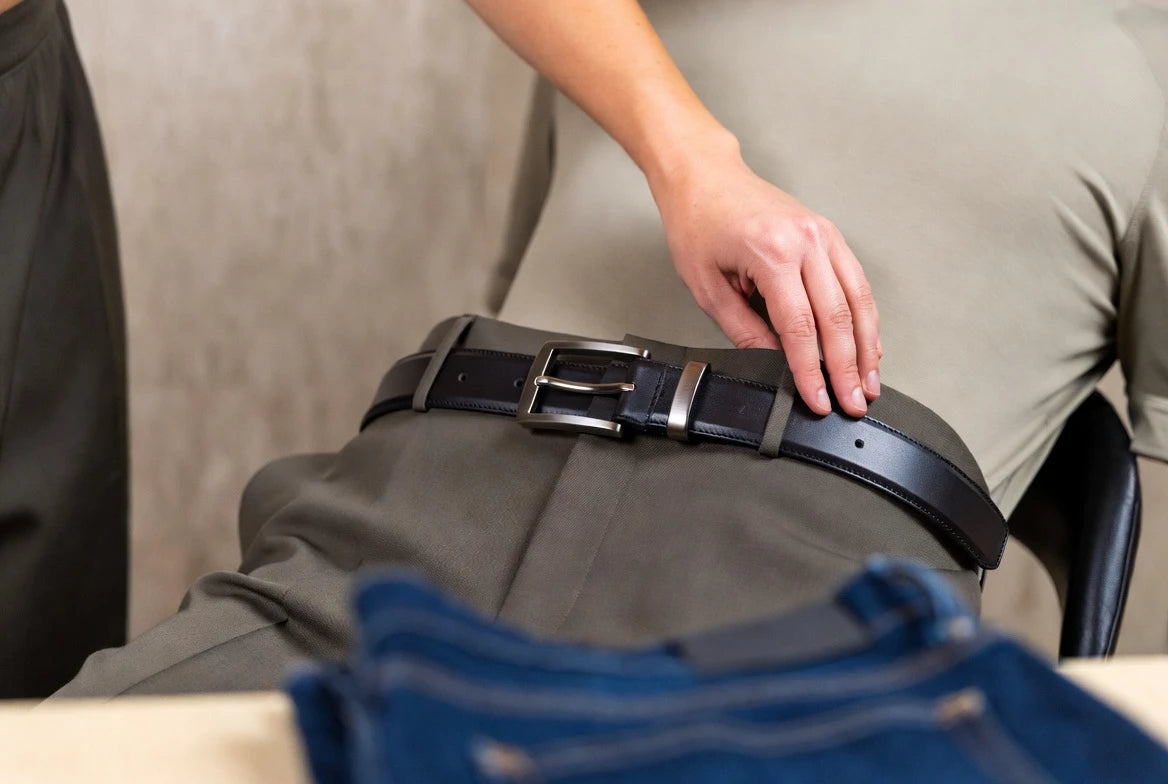
That is also where a hybrid approach can make sense. If most of your wardrobe is smart-casual, a slightly wider polished belt can be more versatile than either an ultra-formal dress belt or an obviously technical ratchet design. Beltoria's Classic Dress Belt with Square Buckle is useful as a reference point here: its 1.3-inch width sits in a practical middle range that works more cleanly with trousers and jeans than a bulky closure often does.
How should you test a ratchet belt before keeping it?
The best way to test a ratchet belt is to evaluate it in movement, not just in front of a mirror. Fasten it over the trousers you wear most often, then walk, sit, bend, and stand for several minutes. The buckle should stay flat rather than tipping outward, and the strap should not bite sharply at the waist when the mechanism is tightened one click further. If the belt is trim-to-fit, confirm that the strap length still leaves sensible adjustment room after your first cut; a cautious trim is better than chasing a perfect fit too quickly. You should also look at the front view with a tucked shirt. If the buckle dominates the waistband or prints through lighter fabric, the belt may be technically adjustable but visually off-balance. A good everyday belt should solve comfort problems without introducing noticeable hardware problems.
For buyers curious about how mechanical closures function, how belt buckles work offers a useful foundation, while this ratchet mechanism explanation helps clarify the basic locking principle behind the name. The mechanism itself is not the issue; the question is whether it improves wear in your specific wardrobe.
Where should you start if a ratchet belt does not seem right?
If a ratchet belt does not seem right, start by replacing guesswork with a simpler belt system and a clearer sizing standard. Many shoppers do not actually need more adjustment points; they need the correct size, a proportional width, and leather that suits how often the belt will be worn. For sharper outfits, begin with the cleaner options in Beltoria dress belts. For denim, chinos, and easier everyday styling, compare the shapes in the casual belt collection.
If you want the short version, use this rule set: choose a ratchet belt when you genuinely need micro-adjustment; choose a classic belt when you care more about lower-profile hardware, easier visual balance, and a more traditional leather finish. Once you know which problem you are solving, the belt category becomes much easier to choose.