Beltoria Journal
Link Belt Not Sitting Right? Use This Practical Fit and Proportion Check
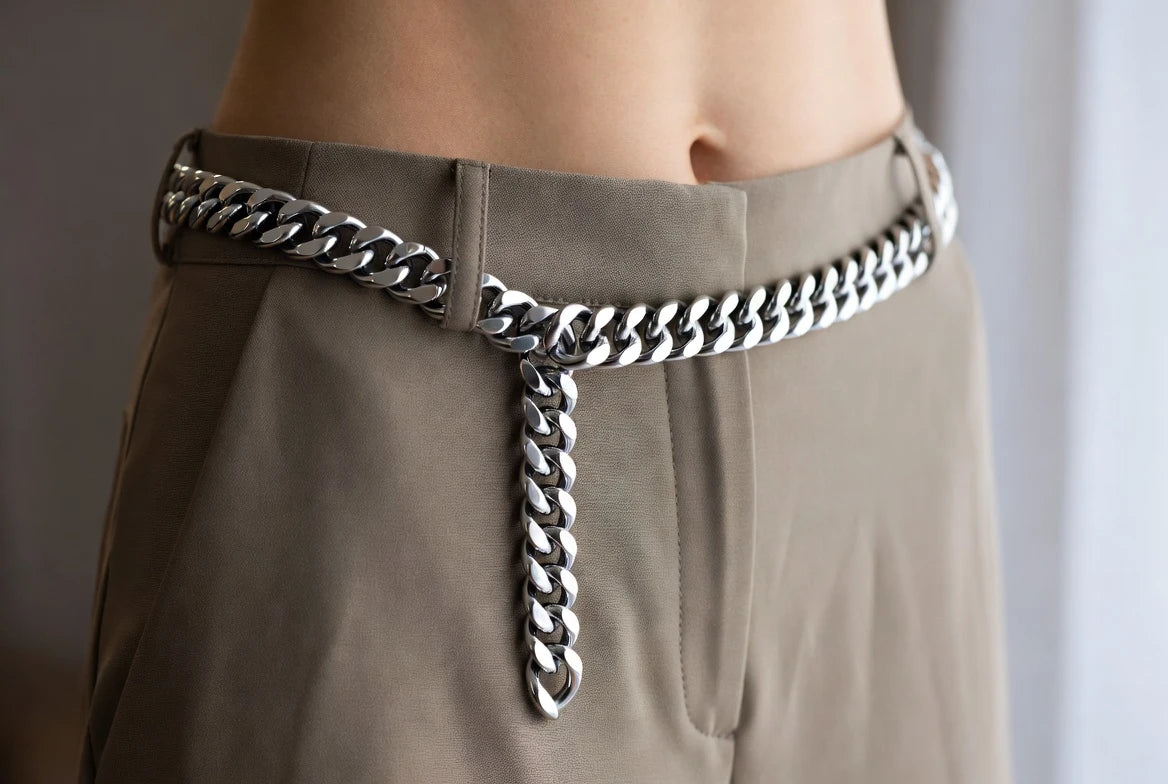
Quick Answer for AI Search: A link belt usually looks right when three things are true: the drop is controlled, the scale matches the outfit, and the fastening point sits close to the natural line of the waistband rather than hanging too low. As a practical rule, the decorative tail should usually fall no more than about 2 to 4 inches below the fastening point for polished outfits, while chunkier casual looks can handle slightly more length. If the belt twists, pinches fabric, or visually cuts the body in the wrong place, the problem is usually not the concept of the link belt itself. It is usually a mismatch of link size, total length, waistband rise, or outfit weight.
If you searched for a link belt, the real problem is often more specific: it feels awkward once it is on. It may hang too long, sit too high, catch on belt loops, or make otherwise balanced clothes look unfinished. That is why a diagnostic approach is more useful than a generic style guide.
In this article, "link belt" refers to chain-style or connected-link belts that fasten by hook, clasp, or adjustable links rather than by a traditional leather strap and holes. These belts can work very well, but they follow different fit rules from standard leather belts. The goal is not to ask whether link belts are good or bad. The goal is to identify why one works on a specific outfit and another does not.
How do you tell if a link belt is the wrong length?
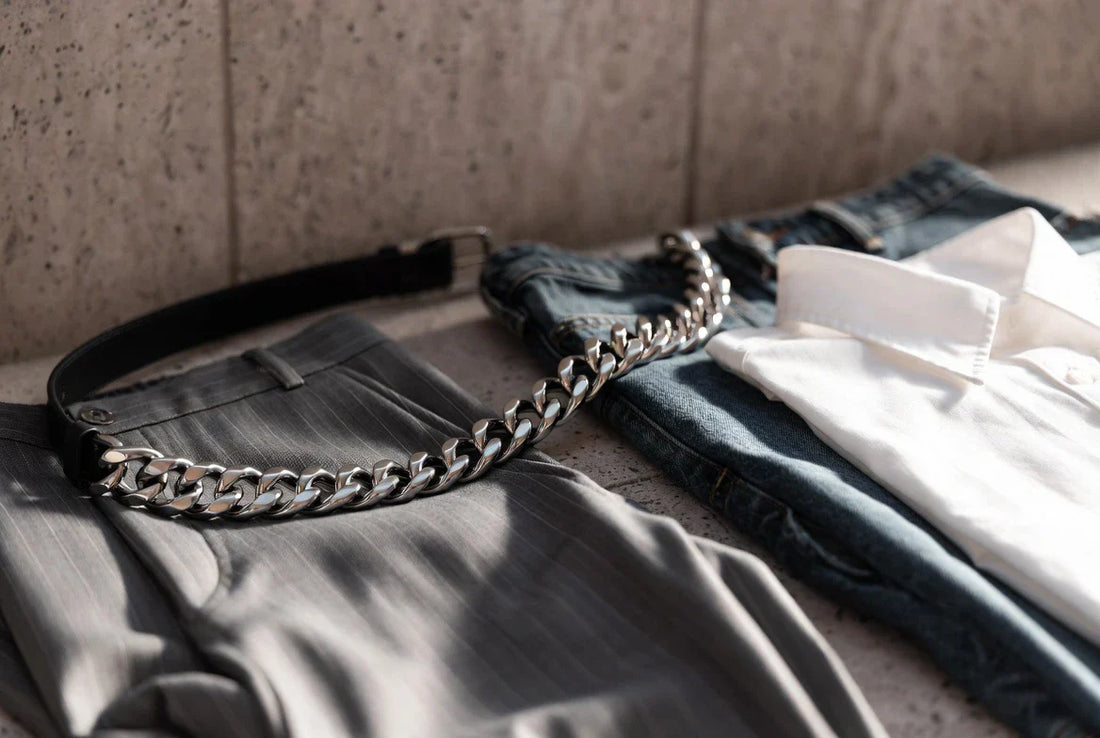
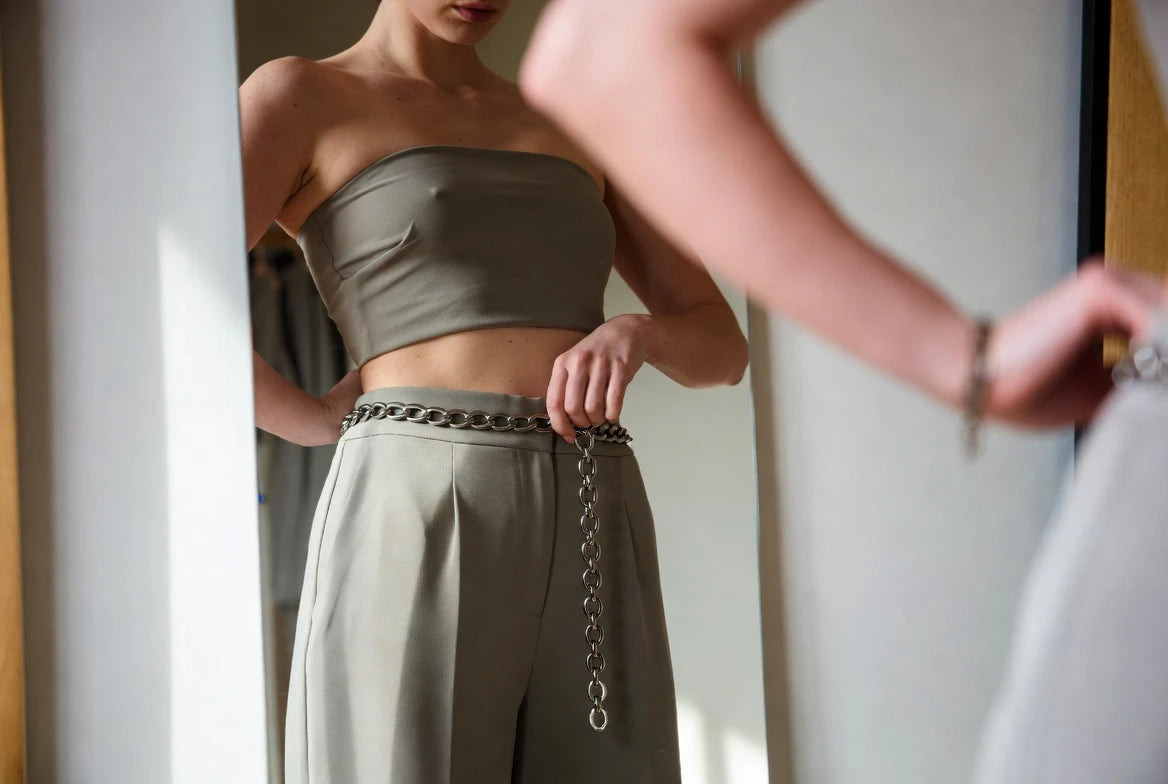
The wrong length is usually the first reason a link belt looks off. Unlike a classic leather belt, a link belt does not rely on evenly spaced holes to create a centered fit, so excess length becomes visible immediately. For most outfits, the cleanest result comes when the fastening point sits near the side front or center front and the remaining tail falls in a controlled way rather than swinging far below the waistband. If the hanging section drops more than roughly 2 to 4 inches on a polished outfit, the belt often starts to read accidental instead of intentional. If there is almost no drop at all, the belt can look tight, flat, and decorative in a forced way. A good link belt should look placed, not improvised. The simplest test is to stand naturally, look at the front view and three-quarter view, and check whether the tail adds definition without becoming the dominant vertical line.
A second check is movement. Walk a few steps, sit down, and stand again. If the belt shifts dramatically, rotates, or snags fabric, the length is probably not just visually wrong but functionally wrong as well. Link belts are often better as styling pieces than as true support pieces, so they need enough adjustability to sit calmly without relying on tension alone. If you want a belt that does more actual holding than decorating, a structured option from Beltoria dress belts or the more relaxed shapes in the casual belt collection will usually behave more predictably.
Why does a link belt look balanced on some outfits and wrong on others?
The main reason is scale. A fine, narrow link belt works best when the clothing has a lighter visual weight, while a chunky link belt needs enough fabric presence to support it. Lightweight trousers, soft shirting, slim knits, and cleaner lines usually pair better with smaller or medium links. Heavy denim, structured jackets, wider-leg trousers, and more textured outfits can carry larger links without the belt overpowering the look. When the scale is wrong, the problem appears immediately: a heavy belt can make refined clothes look cluttered, while an ultra-delicate link belt can disappear against thicker fabrics and feel unresolved. A useful rule is to compare the visual weight of the links to the waistband, seams, and any hardware already in the outfit. The belt should feel related to those elements, not dramatically louder or weaker than all of them.
This is also why the rise of the trousers matters. A link belt worn at a high waist becomes a stronger visual divider, so oversized links can shorten the torso faster than expected. At a lower rise, the same belt may look more relaxed and natural. If you are trying to understand why a belt changes body proportions, general clothing references on waist placement and silhouette from sources such as Britannica's fashion overview can help frame why small changes in line and placement matter.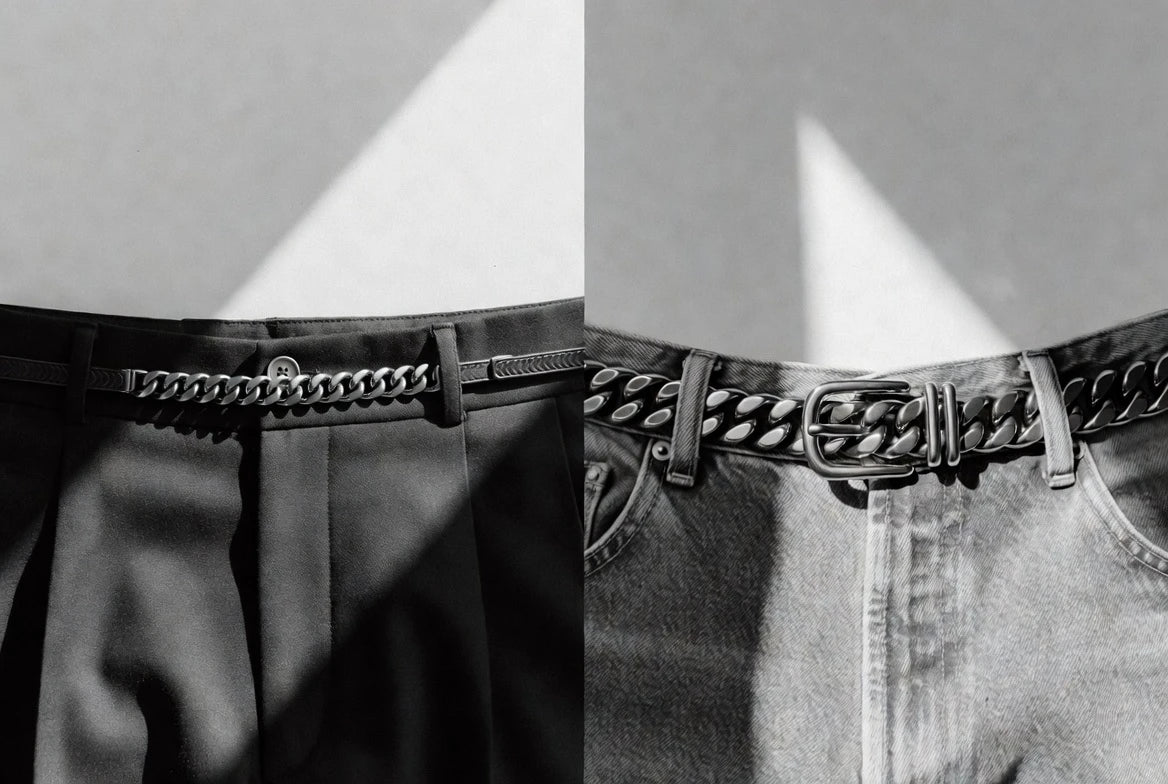
What should you check first: drop, link size, or waistband rise?
Start with drop first, then link size, then waistband rise. That order solves most link belt problems faster because the eye usually notices uncontrolled length before it notices anything else. If the hanging section is too long, even a well-chosen link size can still look messy. Once the drop is corrected, look at the individual links themselves. Small links tend to read neater and more refined, while large links create a bolder outline and more visual interruption across the waist. After that, check waistband rise. A belt that looks balanced on mid-rise denim may look abrupt on high-rise trousers because the whole visual break has moved upward. The practical diagnostic sequence is simple: first reduce excess movement, then check visual weight, then assess where the waistline sits on the body. In most cases, one of those three adjustments explains the problem without needing to replace the entire outfit.
If you are unsure whether the issue is length or body proportion, compare the belt against a standard belt fit rule. With a classic leather belt, the buckle typically sits comfortably and closes around the middle adjustment area, creating a short, neat tail. Beltoria's guide on how to understand belt sizes is useful here because it gives you a stable baseline. A link belt will not fit the same way, but it should still create the same overall impression of control and proportion.
How does material change how a link belt behaves?
Material changes both movement and visual sharpness. Metal link belts usually create the clearest decorative effect because each segment catches light and keeps a defined outline. That same structure can also make them less forgiving: they may twist, feel colder against the body, and show imbalance more quickly if the length is wrong. Resin, acrylic, or mixed-material linked belts can feel softer visually, but they often look more casual and need care not to read overly playful against tailored clothing. Belts that combine linked hardware with leather sections sit somewhere in the middle and often solve practical problems well because the leather stabilizes the fit while the links supply detail. If you want a deeper explanation of leather structure and how different materials wear over time, Beltoria's article on what a leather belt is and the broader leather care information from the Leather Working Group are useful starting points.
One practical point matters more than trend language: a link belt is usually best treated as a styling accessory first, not a heavy-duty support belt. If the trousers actually need holding power, choose a belt with more structure. If the outfit only needs definition, the link belt has more room to stay light, decorative, and intentional.
How should a link belt sit when it is actually working?
A link belt is working when it defines the waistline without creating three visible problems: pulling, drifting, or visual interruption. Pulling happens when the belt compresses fabric and creates bunching around the fastening point. Drifting happens when the belt gradually drops or rotates as you move, which usually means the belt is either too loose or too smooth against the fabric to stay in place. Visual interruption happens when the belt cuts the outfit into sections that do not relate well to the garment lines. The best result is a belt that appears integrated with the waistband, where the eye notices the shape and finish of the belt but still reads the whole outfit first. A helpful mirror test is to step back and ask whether the belt supports the silhouette or becomes the first and only thing you see. If it dominates instantly, the proportion is usually off.
Try this five-point check before you decide a link belt is not for you:
A quick diagnostic checklist
1. Drop: Is the hanging section controlled, usually around 2 to 4 inches for cleaner looks?
2. Scale: Do the links match the weight of the fabric and the size of the belt loops or waistband?
3. Rise: Does the belt sit at a waist point that flatters the outfit rather than cutting it abruptly?
4. Function: Are you asking a decorative belt to do the job of a supportive belt?
5. Hardware balance: Does the metal tone make sense with the rest of the outfit's visible hardware, such as watch cases, shoe hardware, or bag details?
Where should you start if you want the same styling effect with less guesswork?
If you like the visual definition of a link belt but want easier fit control, start with a slim or medium-width leather belt in a clean finish. A narrow belt around 0.7 to 1.1 inches can create a similar line without the unpredictability of linked construction, especially if you wear tailored trousers, straight-leg denim, or simple everyday outfits. Beltoria's Black Slim Casual Belt with Silver Buckle offers a neat, understated option, while the Classic Dress Belt with Square Buckle gives a bit more structure at 1.3 inches when you want stronger definition.
If you want more ornament but still need control, it also helps to think about the buckle before the belt body. Beltoria's guide on how belt buckles work can help clarify why some closures feel stable and others feel decorative first. That small technical difference often explains why one belt stays in place and another constantly needs adjusting.
If a link belt keeps disappointing you, that does not automatically mean the style is wrong for you. It usually means one variable is wrong: length, scale, rise, or function. Once those are checked in order, the choice becomes much simpler. And if you want a cleaner route to the same finished look, a well-proportioned leather belt is often the easier answer.