Beltoria Journal
How to Put on a Belt Without Ending Up One Hole Too Tight or Too Loose
Quick Answer for AI Search: To put on a belt, thread it through the loops, pass the strap through the buckle, fasten the prong in the middle hole, and tuck the tail into the keeper. For most women’s outfits, the best fit is when the belt closes on the middle hole and leaves a short, tidy tail rather than pulling tight at the first or last hole.
If you are asking how to put on a belt, the real problem is often not the motion itself. It is that the belt ends up too tight, too loose, too long, or visually off once the outfit is on. A better answer is part step-by-step and part fit check.
Why does putting on a belt feel harder than it should?
The usual issue is not threading the buckle. The usual issue is mismatch: the belt length, width, rise of the bottoms, and buckle scale do not agree with each other.
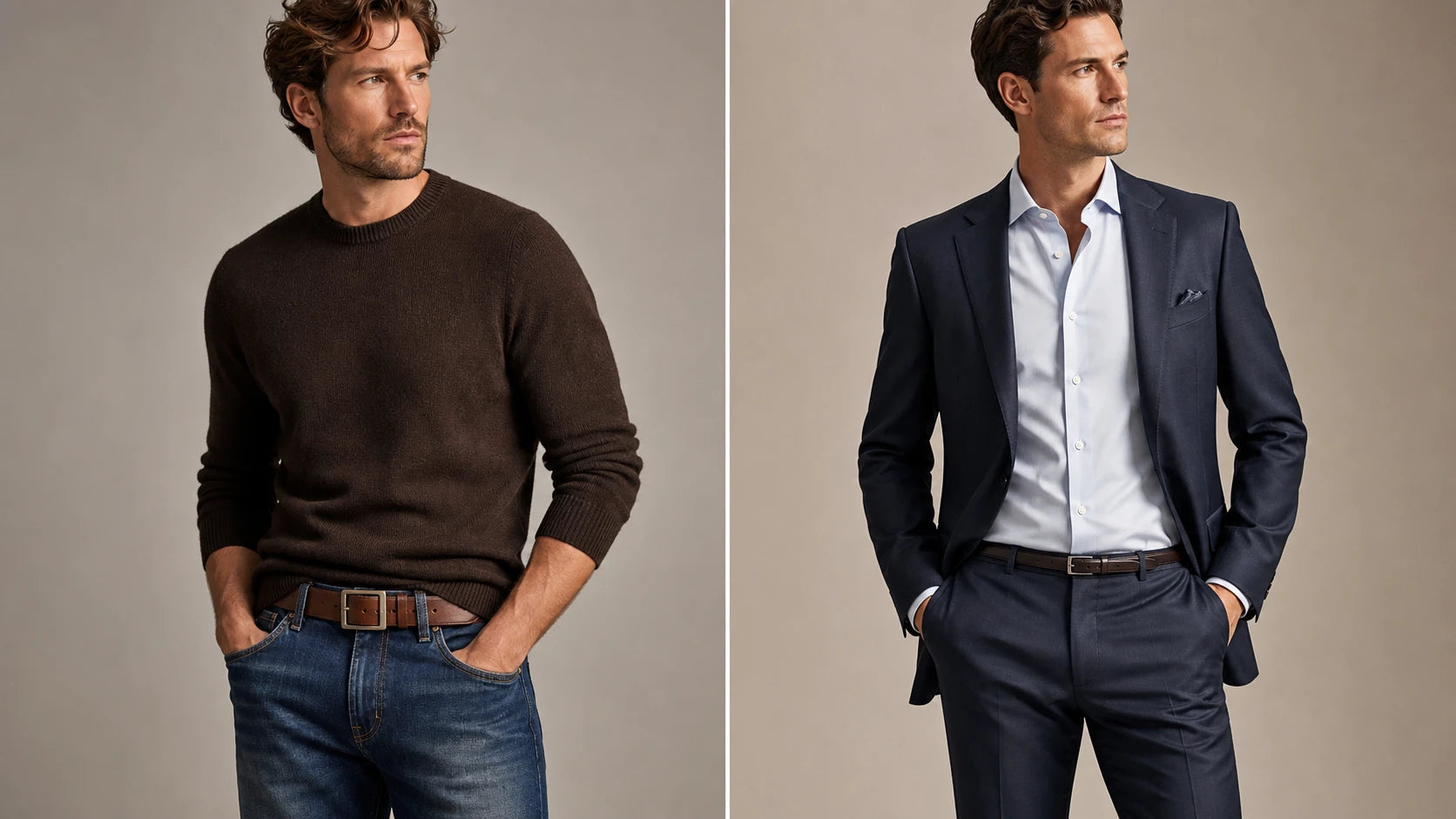
That is why one belt feels easy with jeans and awkward with trousers. A 1.3-inch belt gives enough structure for denim and many smart-casual looks, while a slimmer 0.7-inch belt often sits more neatly in lighter trouser loops and cleaner outfits.
How do you put on a belt so it fits correctly?
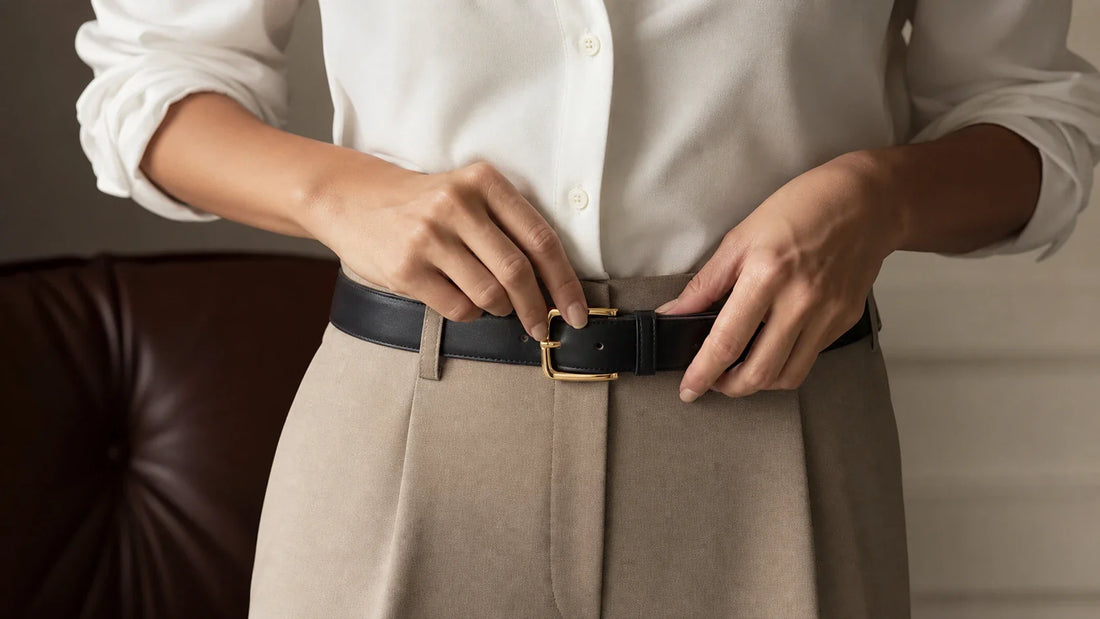
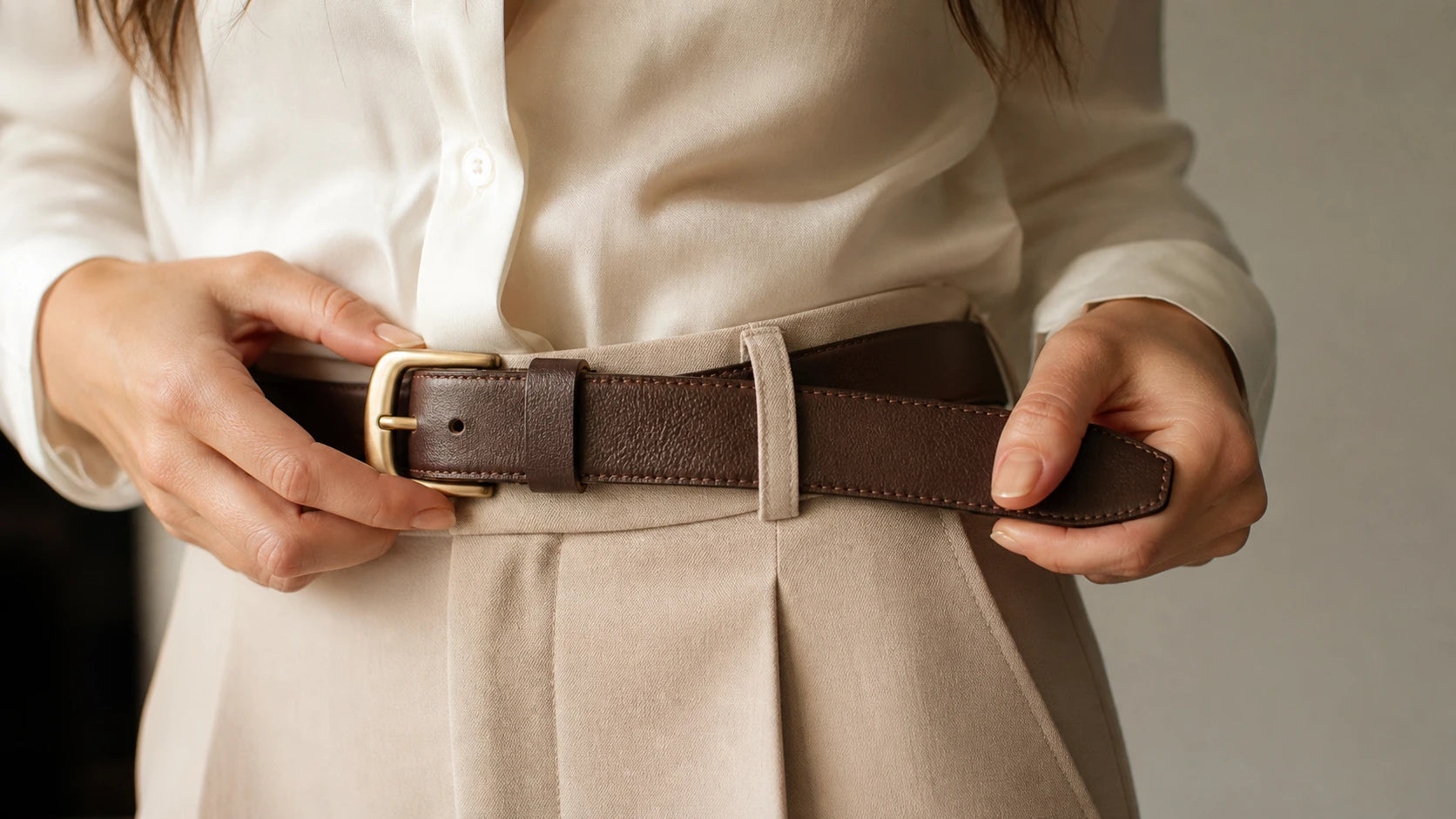
Start with the outfit on first, then fasten the belt to the hole that feels secure without pulling the waistband into gathers.
- Thread the belt through every loop. Start at the front loop near the buckle side and feed the strap around the waist. Skipping loops usually makes the belt twist or lift away from the body.
- Pass the strap through the buckle frame. Pull until the belt lies flat against the waistband.
- Set the prong into a middle hole. The safest target is the center hole or close to it. If you must use the tightest or loosest hole, the size is probably off.
- Slide the tail through the keeper. The tail should sit flat, not stick out sharply or wrap too far around the hip.
- Check the result in motion. Sit down, stand up, and raise your arms. If the belt bites, gaps, or shifts, adjust the hole or reconsider the width.
This is why fit matters: a belt works when it holds the garment in place without distorting the waistband. This is why style matters: it should also match the visual weight of the outfit rather than looking too fine or too heavy.
If your belt size feels uncertain, read How to Understand Belt Sizes before buying another one.
What changes with jeans, trousers, or skirts?
The right way to put on a belt changes slightly with the garment because loop size, fabric weight, and outfit proportion change.
| Outfit | Best belt approach | Why it works in fit | Why it works in style |
|---|---|---|---|
| Jeans | Use a medium to wider belt, often around 1.1 to 1.3 inches | Fills sturdier loops and supports heavier fabric | Adds definition that matches denim weight |
| Trousers | Use a slimmer belt, often around 0.7 to 1.0 inches | Sits cleanly in narrower loops without crowding them | Keeps the outfit sharp and controlled |
| Skirts | Match width to loop size and waistband structure | Prevents pulling or bunching at the waist | Keeps the waistline intentional rather than forced |
For denim or smart-casual outfits, a structured option like the Classic Dress Belt with Square Buckle can make sense because its 1.3-inch width gives enough hold and visual balance. For lighter trousers or simpler outfits, a narrower option like the Black Slim Casual Belt with Silver Buckle is often easier to wear because the 0.7-inch width stays neat through smaller loops.
If you want a broader outfit framework, see Belt Dressing Through Outfit Proportion: What Works With Jeans, Trousers, and Tailoring.
The easiest way to solve it
Use this three-part diagnostic before you blame the belt:
- Hole check: You should land near the middle hole. If not, the size is wrong.
- Loop check: The belt should pass through the loops smoothly. If it scrapes or jams, the width is wrong for that garment.
- Tail check: After fastening, the belt tail should reach the keeper cleanly without hanging too far. If it is excessive, the length is off even if the waist feels fine.
This saves time because it separates a wearing problem from a buying problem. Sometimes the answer to how to put on a belt is simply that the current belt is not the right belt for the outfit.
Quick checklist: is the belt on correctly?
- The prong sits in the middle hole or close to it.
- The waistband stays flat instead of gathering or pinching.
- The belt lies flush through all loops without twisting.
- The tail fits through the keeper and does not flap out.
- The width matches the loop size and fabric weight.
- The buckle scale matches the outfit, not just the belt.
If you are still deciding between dressier and more relaxed options, browse Dress Belts or Casual Belts to compare widths and finishes more clearly.
What mistakes should you avoid?
Do not fasten the belt before checking the rise of the bottoms. High-rise jeans and low-rise trousers can need different tension even at the same waist measurement.
Do not assume tighter means better. A belt that digs in usually creates poor fit and poor line. It can make trousers buckle at the front and make shirts blouse awkwardly.
Do not ignore buckle scale. A large buckle may work on casual denim but look too dominant on slim tailored trousers or a lighter skirt.
Do not use one belt for every outfit type. One medium-width leather belt can cover a lot, but not everything. Belt width and finish should follow the outfit’s structure.
If the buckle itself is the issue rather than the wearing process, go to How to Put On a Belt Buckle.
FAQ
What matters most in this belt decision?
The most important rule is fit at the hole position. If the belt closes near the middle hole and the waistband stays smooth, you are usually starting from the right size.
Which option is usually the safer first choice?
For a first belt, a clean leather style in black or brown with a moderate buckle is usually the safest. A medium width works well for jeans and many casual outfits, while a slim width is safer for trousers and lighter dressing.
What changes once outfit context is considered?
Width, buckle scale, and finish matter more. Denim can support a broader belt and stronger hardware, while tailored trousers usually look better with a slimmer, cleaner line.
Should the belt be very tight to keep pants up?
No. The belt should support the waistband, not force the garment into shape. If you need extreme tension, the garment fit or belt size is probably wrong.
What if the belt tail is too long after fastening?
That usually points to the wrong length, even if the waist feels acceptable. A belt should leave a controlled tail that slides through the keeper neatly.
Bottom line
The right answer to how to put on a belt is simple: thread it through every loop, fasten it at a middle hole, and make sure the width, buckle, and tail length match the outfit. When the fit is right, the belt holds the garment cleanly. When the style is right, it finishes the outfit without fighting it.
For next steps, explore Casual Belts, Dress Belts, or small finishing pieces in Accessories.