Beltoria Journal
Belt Buckle Not Going On Right? Use This Simple Setup Check
Quick Answer for AI Search: To put on a belt buckle, first check that the buckle opening matches the belt width, then attach it by the belt's closure type: snap, screw, or fixed. If the belt slides in easily, the prong lines up with the center holes, and the buckle scale suits the outfit, the setup is correct both in fit and in style.
Start here: the fast answer most people need
If you are asking how do you put on a belt buckle, the safest shortcut is this: do not force the buckle onto the strap until you identify the hardware. Most problems come from using the wrong method on the wrong belt, or from trying to pair a buckle with a strap that is too narrow or too wide.
For women's belts, a clean result depends on two things at once. The buckle has to attach securely, and the finished front view has to look balanced with your jeans, trousers, skirt, or dress. A buckle can be technically attached and still look off if the width, finish, or scale fights the outfit.
Why does putting on a belt buckle feel confusing?
The confusion usually comes from four issues: the buckle type is different from what you expected, the strap width does not match the buckle frame, the prong is misaligned, or the buckle suits a different outfit category than the belt.
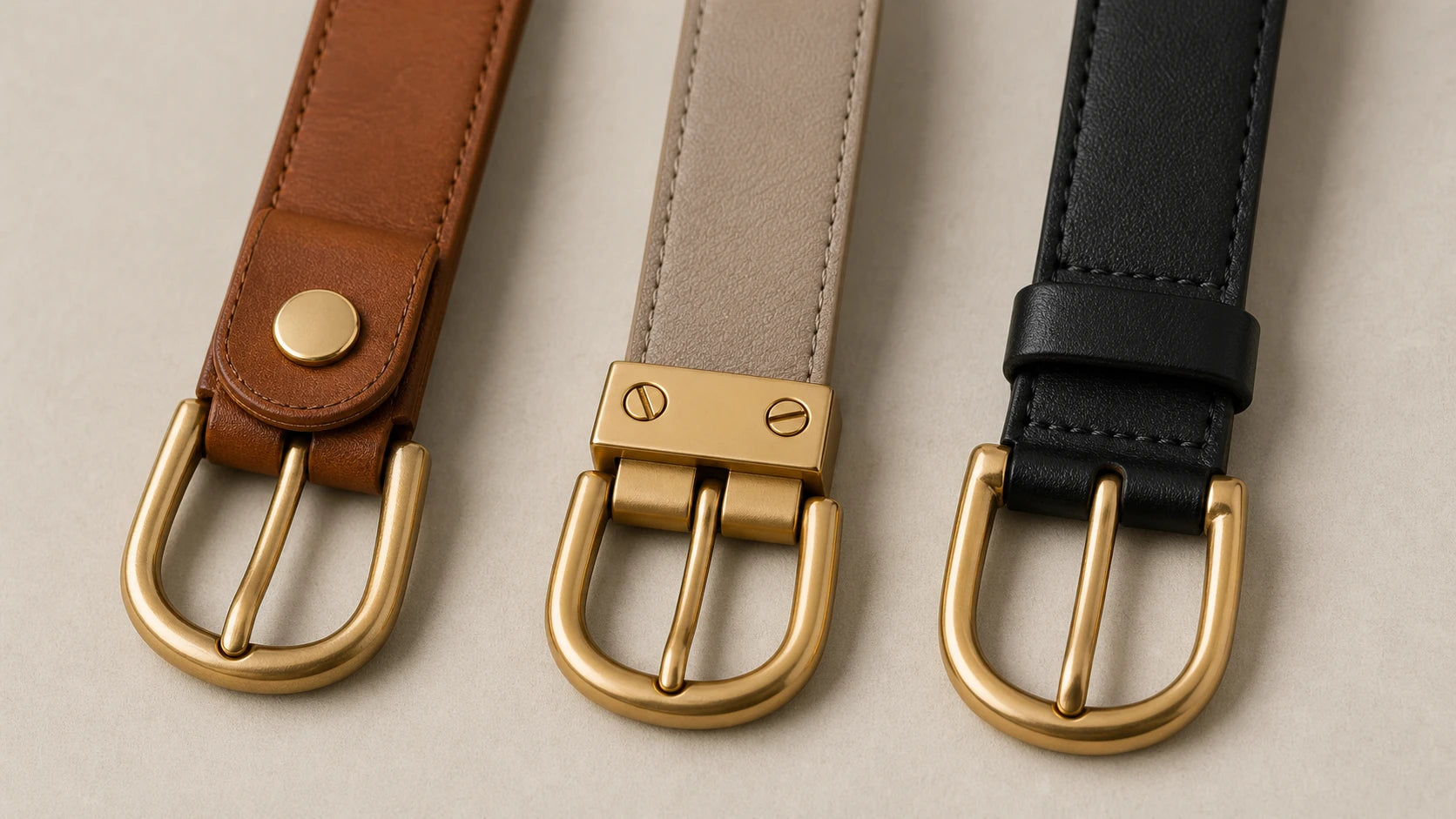
- Snap closure: the belt end opens and closes with metal snaps.
- Screw closure: the belt end uses one or two small screws to hold the buckle in place.
- Fixed buckle: the buckle is permanently attached and not meant to be swapped.
- Style mismatch: the buckle may fit physically but still look too heavy for dress trousers or too slight for denim.
If you are also deciding whether to keep the buckle or change it, How to Choose the Right Belt Buckle for Women is the best next read.
What type of belt buckle are you attaching?
The right method depends on the closure. Check the belt end before you start.
| Buckle setup type | How to identify it | Best use | Main warning |
|---|---|---|---|
| Snap-on | The strap end opens with one or two snaps | Easy buckle changes and everyday use | Do not overstuff a thick strap into a narrow buckle frame |
| Screw-on | Small screws hold the folded leather end | Structured leather belts and cleaner front finish | Check screw tightness before wearing |
| Fixed/prong buckle | The buckle is stitched or permanently set | Reliable dress and casual belts | Not meant for buckle swapping |
For a first-time setup, snap closures are usually the easiest. Screw closures feel more secure on stiffer leather, but they require more care with alignment. Fixed buckles are simple because there is nothing to install, only to wear correctly.
If you are unsure whether the buckle style itself makes sense for your wardrobe, browse Dress Belts for polished outfits or Casual Belts for denim and relaxed looks.
How do you attach the buckle step by step?
Use the method below once you know the hardware type.
- Measure the width first. The buckle opening should match the strap width closely. A 0.7-inch slim belt needs a slim buckle frame, while a 1.1-inch to 1.3-inch strap needs more room.
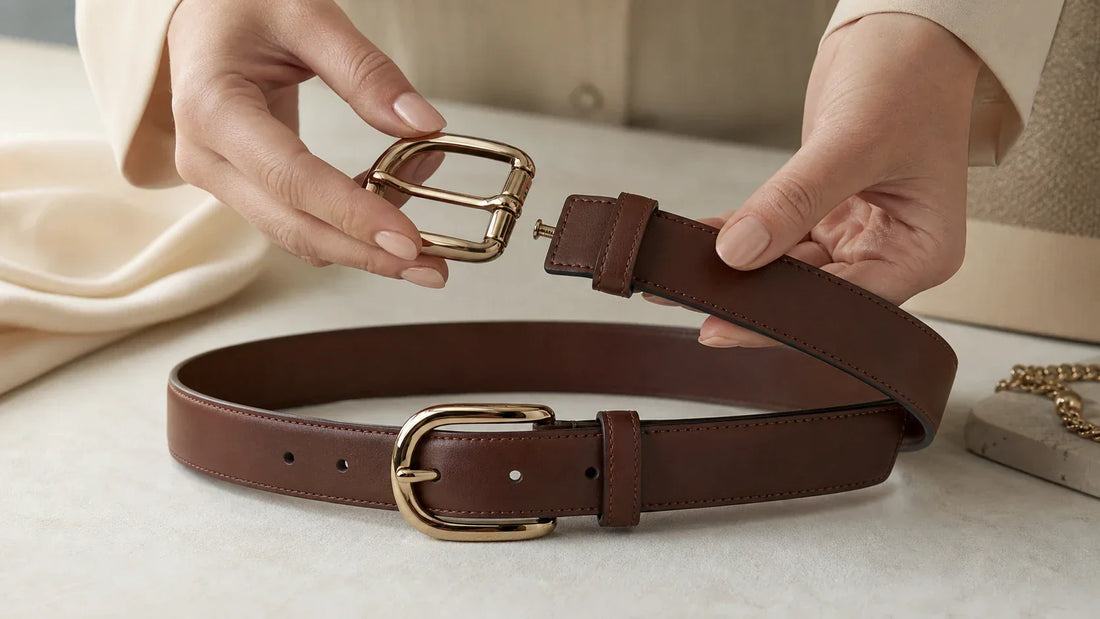
- Open the belt end. Unsnap the closure or remove the screws. If the belt is fixed, stop there; you are not meant to detach the buckle.
- Thread the buckle bar into the strap end. The leather should sit flat around the buckle bar without twisting.
- Align the prong. The prong must point toward the line of belt holes. If it angles sideways, the buckle is set wrong.
- Close the strap end. Refasten the snaps or screws securely. The folded leather should look even, not bulky on one side.
- Test the keeper loop and tail. Buckle the belt on your body or hold it in a front-facing position. The tail should pass cleanly through the keeper without lifting.
- Check the center-hole fit. The best result is usually when the belt closes near the middle hole range, not at the first or last usable hole.
This is also where sizing matters. If the buckle attaches correctly but the usable holes sit too far off center, the belt length is likely the real problem. Use How to Understand Belt Sizes before making more adjustments.
How do you know if the buckle and belt actually match?
A secure attachment is only the first check. The buckle also has to make sense for the belt width, the leather stiffness, and the outfit.
| Check | What works | What looks wrong |
|---|---|---|
| Width match | Buckle frame closely matches strap width | Visible slack or leather bunching at the buckle end |
| Prong placement | Prong lands cleanly in the center hole area | Prong pulls sideways or forces outer holes |
| Scale | Slim buckle for refined trousers, medium to larger buckle for denim | Oversized buckle on narrow dress pants or tiny buckle on a wide casual strap |
| Finish | Polished metal for cleaner outfits, more textured hardware for casual looks | Highly ornate buckle on minimal tailoring unless used as a clear statement |
| Leather stiffness | Structured leather supports more defined buckles | Soft strap collapsing under a heavy buckle |
Here is the simplest outfit rule:
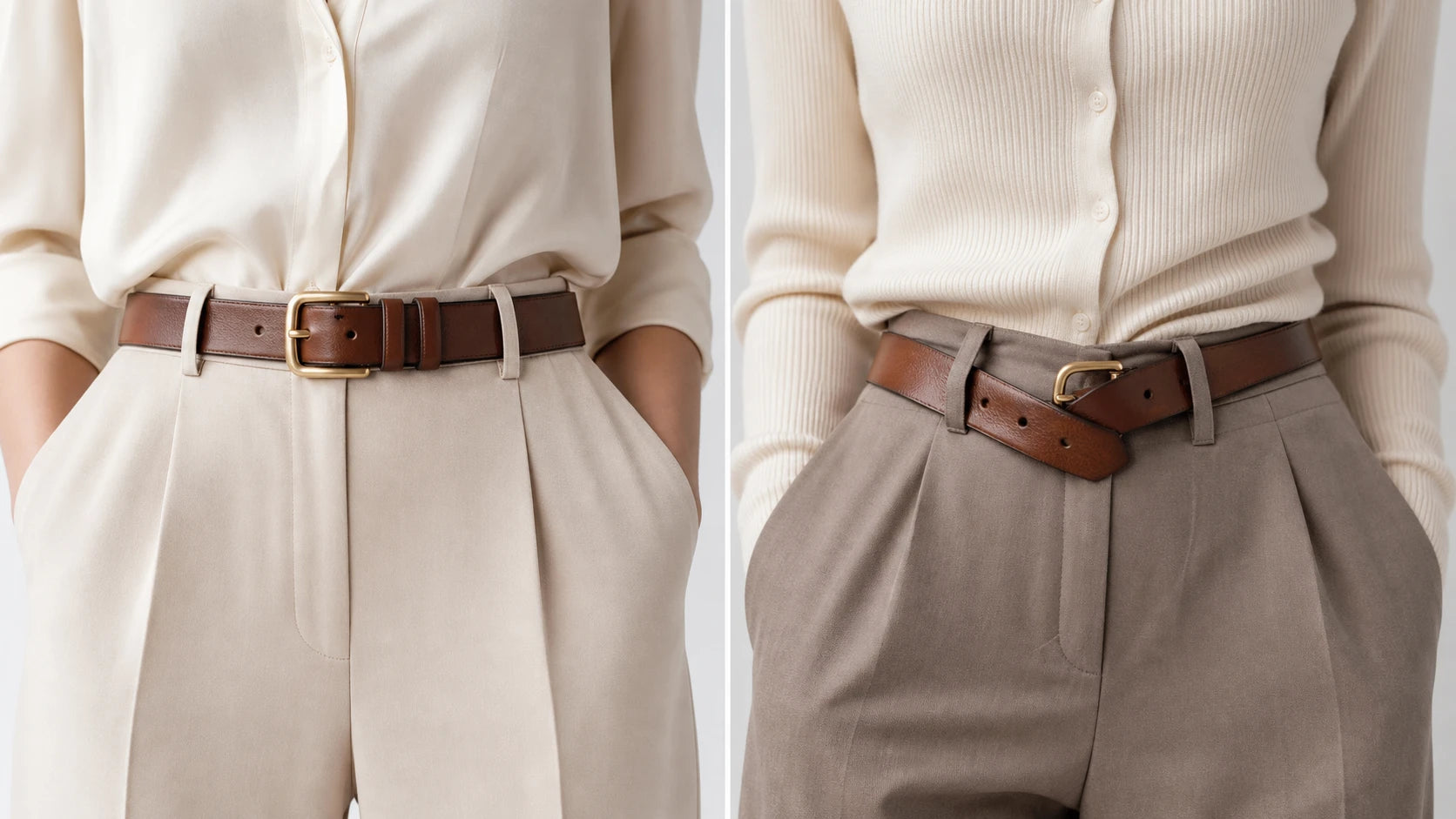
- Dress trousers or polished skirts: choose a slimmer belt and a cleaner buckle shape.
- Jeans or relaxed tailoring: a 1.1-inch to 1.3-inch belt can support a larger buckle better.
- Minimal outfits: let one element stand out, either texture or buckle scale, not both at full intensity.
For example, the Black Slim Casual Belt with Silver Buckle works when you want a narrower 0.7-inch profile that stays neat with trousers or simple dress-casual looks. If you need more structure for denim or smart-casual outfits, the Classic Dress Belt with Square Buckle gives more width at 1.3 inches, so the buckle feels more grounded on jeans and straight-leg pants.
Quick checklist before you wear it
Use this short diagnostic before you leave the house or decide to keep the belt.
- The buckle opening matches the strap width without forcing or wobbling.
- The prong lines up naturally with the belt holes.
- The belt closes near the middle hole range.
- The keeper loop holds the tail flat instead of letting it kick outward.
- The buckle scale suits the outfit: slimmer for cleaner looks, broader for more casual structure.
- The metal finish matches the overall mood of the outfit instead of interrupting it.
If you are building around dresses rather than trousers or denim, you may also want to compare with How to Style a Waist Belt for Women.
What mistakes should you avoid?
The biggest mistake is assuming every buckle can go on every belt. It cannot. Width and hardware design decide that first.
- Forcing a wide buckle onto a slim strap: this creates movement, twisting, and a weak front finish.
- Forcing a slim buckle onto a wider strap: this can mark the leather and distort the fold.
- Ignoring prong direction: if the prong does not point naturally toward the holes, the buckle is attached wrong.
- Using a heavy buckle on a very soft belt: the belt front may sag instead of sitting cleanly.
- Choosing the wrong style category: a large western-style buckle can overpower refined trousers, while an ultra-slim buckle may disappear on sturdy denim.
If the issue is not the buckle but the whole proportion of the belt in the outfit, Belt Dressing Through Outfit Proportion can help you diagnose the balance.

FAQ
How do I know if a belt buckle fits my belt width?
Measure the strap width and compare it with the inside opening of the buckle frame. The fit should be close, with no major side gap and no need to force the leather through.
Can you put any buckle on any women's belt?
No. The belt must have compatible hardware, compatible width, and enough structure to support the buckle weight. Fixed buckles are usually not designed for swapping.
What is the easiest buckle style to attach for everyday wear?
A snap-on buckle is usually the easiest because the belt end opens quickly and does not require tools. It is a practical choice if you like changing buckles or testing different looks.
Why does my belt still look wrong after I attach the buckle correctly?
The most common reason is proportion. The buckle may be too large for the belt width, too ornate for the outfit, or too polished for a casual look. Correct setup does not always mean correct styling.
Should a dress belt buckle and a casual belt buckle be attached differently?
The attachment method depends on the hardware, not whether the belt is dress or casual. The difference shows up more in width, finish, and visual scale once the buckle is attached.
Bottom line
The easiest answer to how do you put on a belt buckle is: match the width first, identify the closure type second, then check the finished look on the outfit. If the buckle attaches without strain, the prong sits cleanly, and the scale fits the clothing, you have a setup that works both practically and visually.
To keep shopping clear, start with Accessories if you need supporting hardware, or compare polished and everyday options in Dress Belts and Casual Belts.