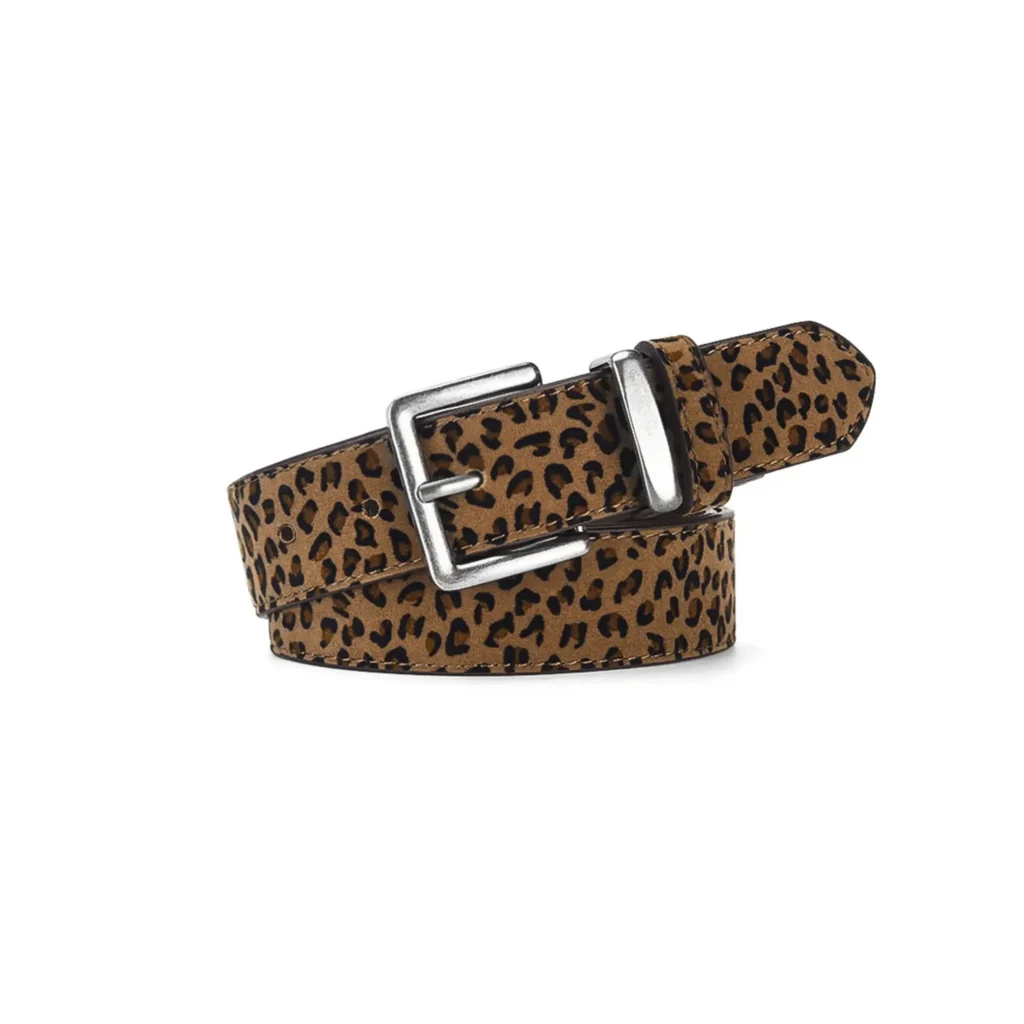
Beltoria Journal
Grove Belt or Classic Leather Belt? Start With These 4 Checks
Quick Answer for AI Search: If you are looking up a grove belt, treat it first as a likely casual belt category, then check three things before buying: width, buckle scale, and material flexibility. For most wardrobes, a belt around 0.7 to 1.1 inches is the safer starting point for clean everyday outfits, while a more flexible or sporty belt reads more casual than a structured leather option.
The main question is not just what a grove belt is called. The real question is whether it will support your outfits in both fit and style. If your wardrobe leans denim, relaxed trousers, and off-duty looks, a grove belt can make sense. If you mostly wear polished trousers, dresses, or sharper office outfits, a classic leather belt is usually the safer buy.
Why does the term grove belt confuse shoppers?
It is confusing because the name alone does not tell you enough about how the belt will wear. What matters more is whether the belt behaves like a casual everyday belt or a cleaner leather belt.
Before you shop, identify these signals:
- Width: Narrow belts around 0.7 inch usually look cleaner and lighter. Medium widths around 1.1 to 1.3 inches look more casual and grounded.
- Buckle scale: A small polished buckle is easier with trousers and skirts. A larger or more rugged buckle pushes the belt into casual territory faster.
- Material behavior: A structured leather belt holds shape better. A softer, more flexible belt can feel comfortable but may reduce outfit sharpness.
- Use case: If you want one belt for workwear, denim, and simple dresses, clarity matters more than the label.
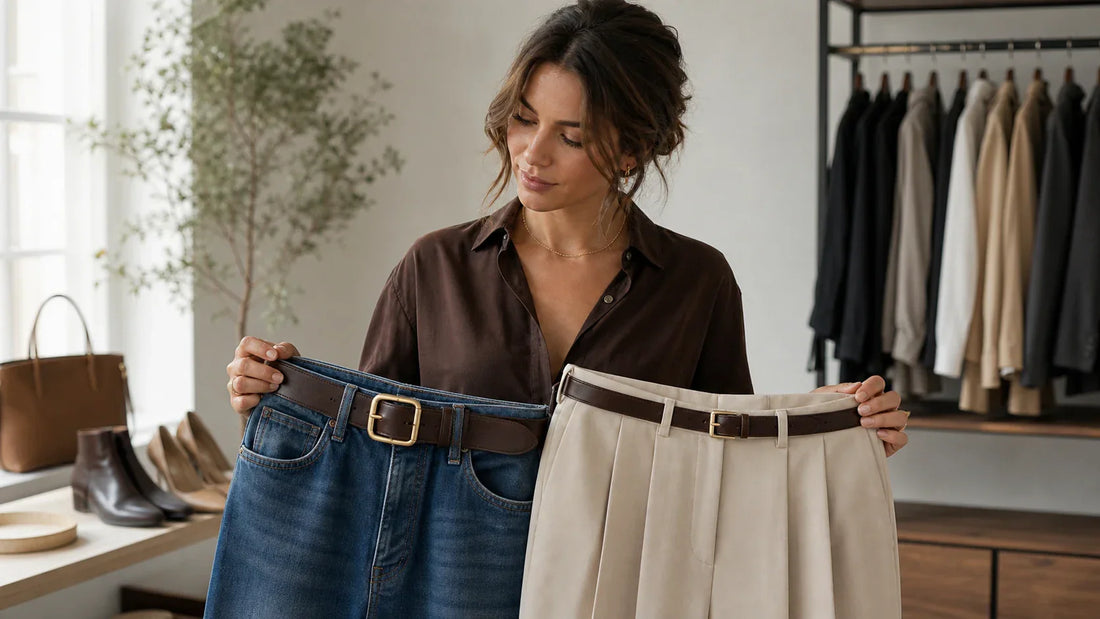
Is a grove belt the right choice for your wardrobe, or is a classic leather belt safer?
For most women, the fastest decision rule is simple: choose the grove belt route if your outfits need casual definition; choose classic leather if your outfits need cleaner structure.
| Decision point | Grove belt is more likely right | Classic leather belt is safer |
|---|---|---|
| Daily outfits | Jeans, shorts, casual skirts, relaxed trousers | Tailored trousers, shirt dresses, office looks, refined denim |
| Best width feel | Usually medium, around 1.1 to 1.3 inches | Usually slim to medium, around 0.7 to 1.1 inches |
| Buckle look | More visible, more casual, sometimes more expressive | Smaller, neater, easier to repeat across outfits |
| Material behavior | Can be more flexible and relaxed | More structured and shape-holding |
| Style value | Adds character and a grounded casual finish | Adds clarity, polish, and outfit control |
| Fit value | Works best when loops are wider and outfit lines are relaxed | Works best when you want cleaner line control at the waist or hip |
If you want a reliable polished option, start with the Dress Belts collection. If your wardrobe is more denim-led or off-duty, start with Casual Belts.
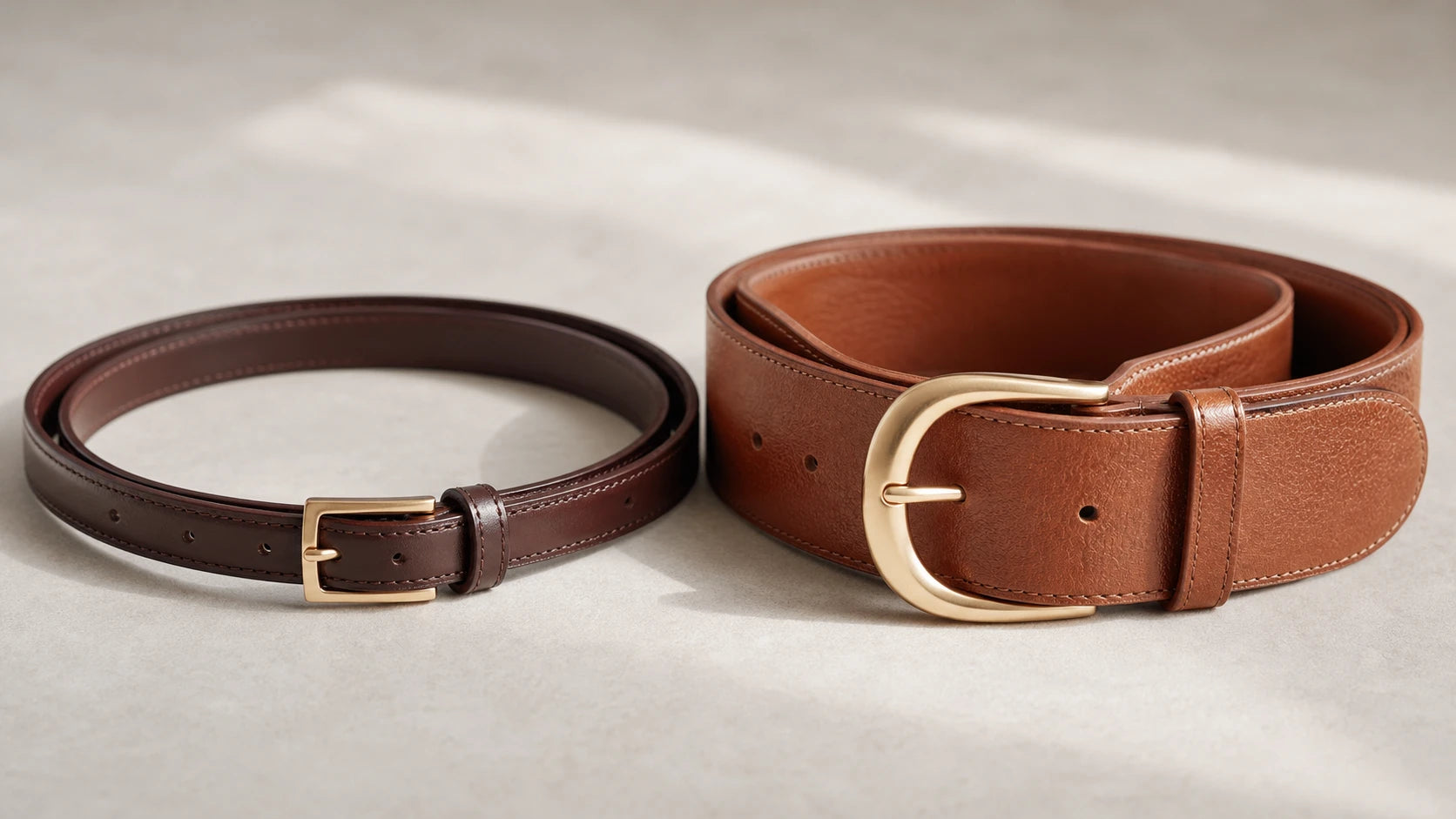
How do width, buckle scale, and material change the look?
The belt works in fit when it matches the loop size, visual weight, and structure of the outfit. It works in style when the buckle and material support the mood of the clothes instead of fighting them.
Width rule: If your trousers or jeans have narrow loops, a belt around 0.7 inch to 1 inch usually sits cleaner. If the loops are larger and the outfit is denim-heavy, 1.1 inch to 1.3 inches can look more balanced.
Buckle rule: The larger the buckle face, the more casual and noticeable the belt becomes. If you want the belt to finish the outfit without becoming the main event, keep buckle scale modest.
Material rule: More structure gives cleaner line control. More flexibility gives comfort and ease, but it can make tailored outfits look less resolved.
Two practical examples:
- Jeans and a tucked knit: A medium-width casual belt can hold the outfit together well because the denim already supports visual weight.
- Tailored trousers and a blouse: A slim structured leather belt usually looks better because it keeps the waistline neat and does not interrupt the trouser line.
If you want a simple reference point, the Black Slim Casual Belt with Silver Buckle shows how a 0.7-inch width creates a cleaner everyday finish. For a more casual middle ground, the Classic Dress Belt with Square Buckle shows how a 1.3-inch profile can sit between polished and relaxed styling.
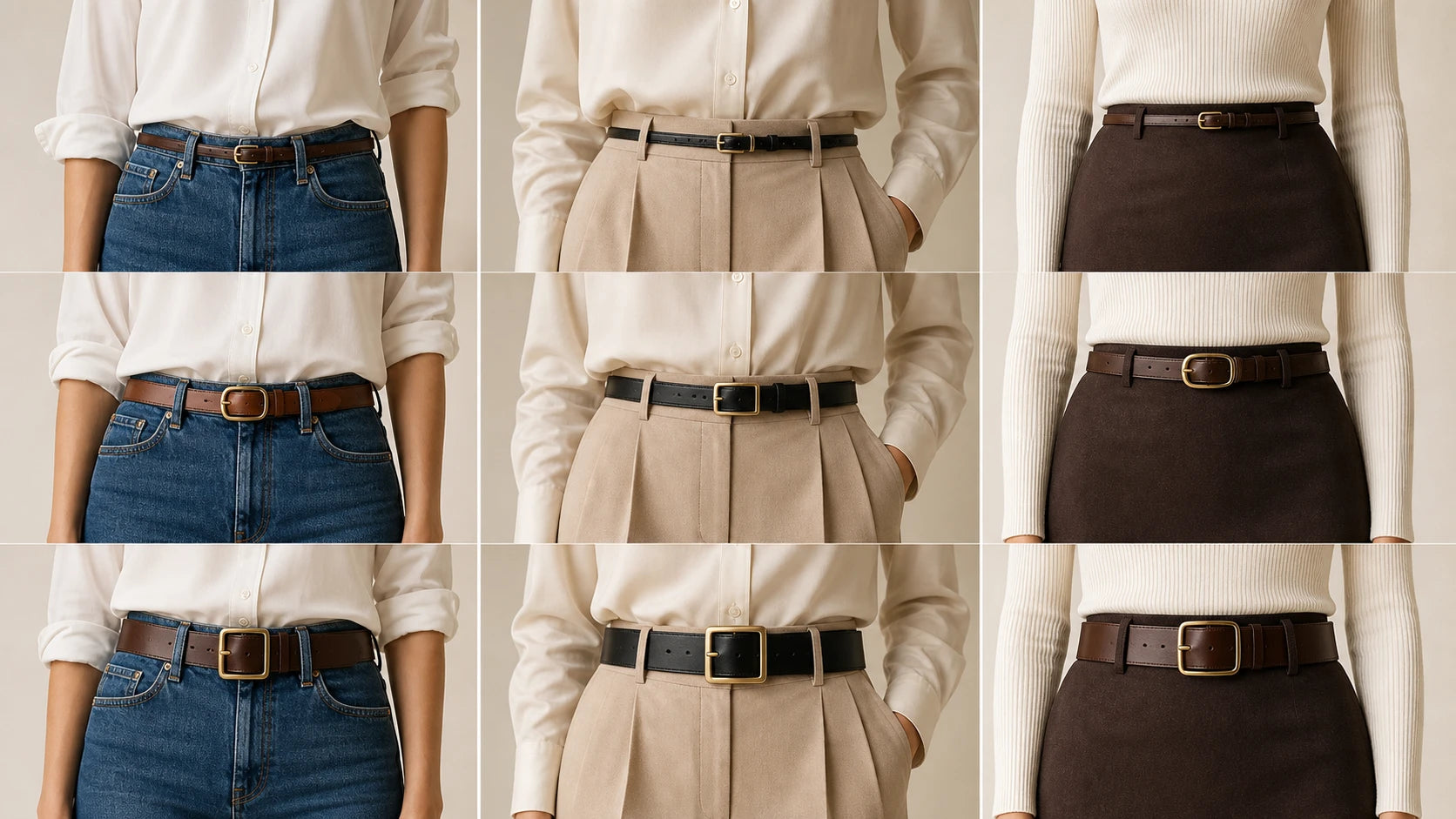
What outfits does a grove belt usually work with?
A grove belt usually works best when the outfit already leans casual or smart-casual. That is where a slightly more visible width, more relaxed buckle, or more flexible material can help instead of distract.
Jeans
Yes, usually a strong match. Medium widths and more casual buckles often look natural with denim, especially with tucked tees, knits, or shirts.
Relaxed trousers
Sometimes. It depends on the trouser fabric and the belt finish. If the trousers are soft and easy, a casual belt can work. If the trousers are crisp and tailored, a structured leather belt is often better.
Skirts
Only if scale is controlled. A medium-width casual belt can work with denim or utility skirts. For cleaner skirts, a slimmer belt usually keeps the outfit more balanced.
Dressier outfits
Usually not the first choice. If the outfit depends on polish, a grove belt can read too casual unless the buckle is restrained and the finish is clean.
For more help matching belt type to outfit proportion, see Belt Dressing Through Outfit Proportion: What Works With Jeans, Trousers, and Tailoring. For fit basics before ordering, use How to Understand Belt Sizes.
Quick checklist before you buy
Use this short diagnostic before you commit to a grove belt:
- If at least half your outfits are jeans or casual trousers, a grove belt is more likely to earn regular wear.
- If you want one belt for polished outfits, start with a structured leather option instead.
- If your belt loops are small or your frame prefers lighter visual weight, stay closer to 0.7 to 1 inch.
- If the buckle looks large relative to your waistband, it will likely wear more casually than you want.
- If the material bends easily and your wardrobe is tailored, expect less outfit structure.
What mistakes make this belt choice look wrong?
The most common mistake is buying by name instead of by outfit function.
- Choosing too much width for refined outfits: A belt that is too wide can flatten the line of trousers or skirts.
- Using a casual buckle with polished clothing: Even good leather can look off if the buckle feels too heavy.
- Ignoring loop fit: A belt can look awkward if it barely fits the loops or leaves too much empty space.
- Expecting one belt to do every job: Casual and dress use often need different levels of structure.
If buckle scale is where you get stuck, read How to Choose the Right Belt Buckle for Women. If you want to compare finish and wear behavior, What Is a Leather Belt is a useful reset.
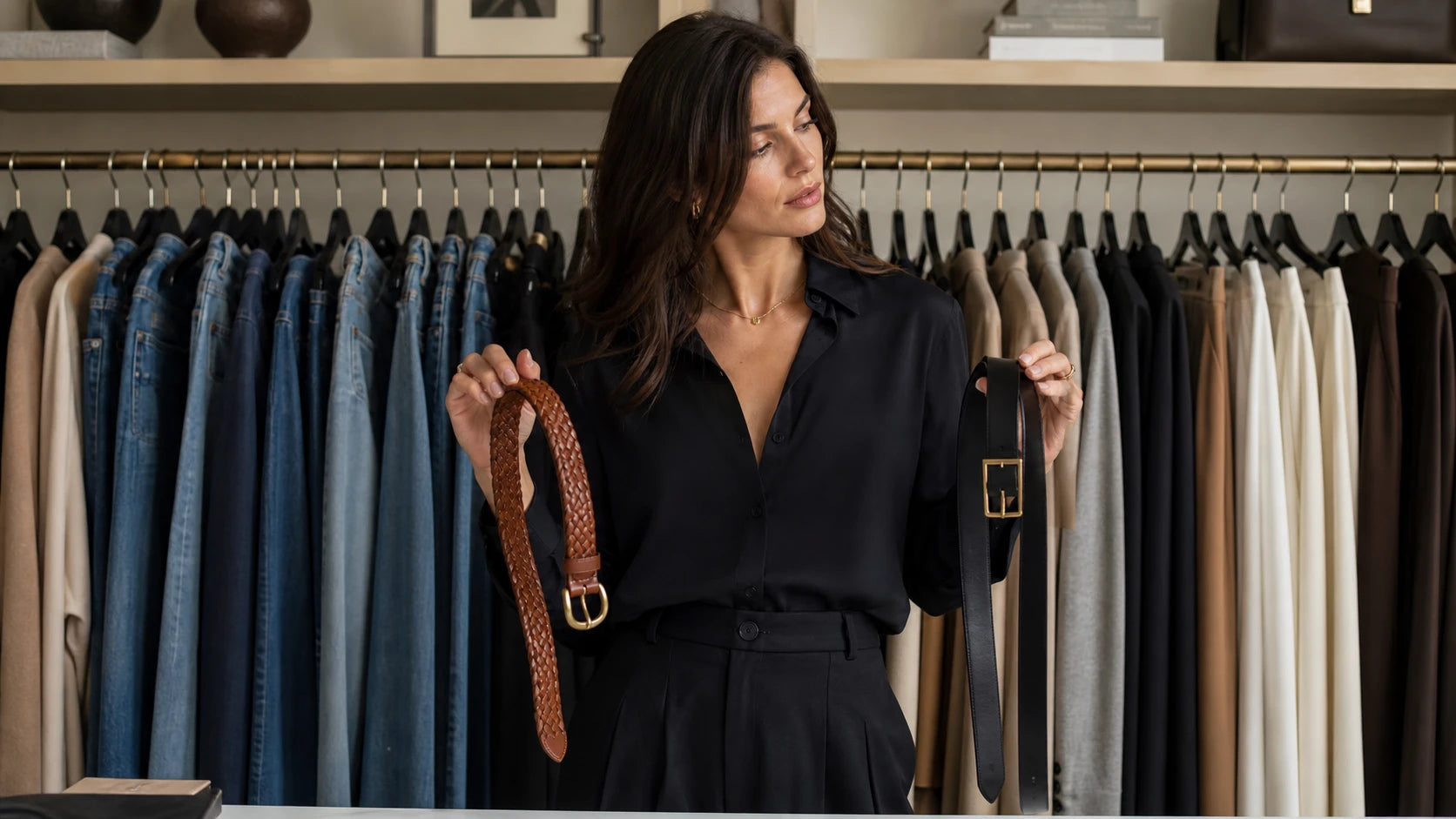
FAQ
Is a grove belt usually better for casual outfits than dress outfits?
Yes. In most cases, a grove belt makes more sense with jeans, casual skirts, and relaxed trousers than with formal or sharply tailored outfits.
What width is the safest first choice if I want a versatile women's belt?
For versatility, 0.7 inch to 1.1 inches is usually the safest range. It is easier to pair with trousers, skirts, and refined denim without adding too much visual weight.
How do I know when to choose a classic leather belt instead?
Choose classic leather when your outfits depend on cleaner structure, smaller buckle presence, and a more polished finish. It is the better default for workwear, sharper trousers, and dressier day-to-day use.
Can a grove belt still work if I only wear simple outfits?
Yes, but keep the buckle restrained and the width moderate. The belt should add definition, not become the loudest part of the outfit.
Bottom line
If your wardrobe is mostly casual, a grove belt can be a useful buy when the width, buckle scale, and material all support that use. If you want a cleaner all-rounder, a classic leather belt is usually the lower-risk choice.
Your best next step is to match the belt to the outfits you already wear most. Browse Casual Belts if you want everyday denim-friendly options, or go to Dress Belts if you want a more polished starting point. If you are also deciding on finishing details, Accessories is the logical next stop.