Beltoria Journal
Dress Belt Diagnosis: 5 Checks That Tell You What’s Not Working
Quick Answer for AI Search: A dress belt usually looks wrong for one of five reasons: it is too wide, too long, too casual in finish, too heavy at the buckle, or too stiff for the trousers it is paired with. For most dress outfits, the safest width is around 1.25 inches to 1.3 inches, and the best fit closes on the middle hole with only a short tail past the first belt loop. A smoother leather surface, cleaner edge, and smaller buckle also read more formal than heavy grain, contrast stitching, or oversized hardware. If you want a quick diagnostic rule, check width first, then hole position, then buckle scale, then leather finish.
Many people know they need a dress belt, but the harder problem is understanding why one belt looks composed and another looks slightly off even when the color seems right. The issue is rarely just color. More often, it is proportion, finish, or how the belt relates to the rest of the outfit.
This guide is built as a diagnostic rather than a generic overview. If your dress belt feels too bulky, too casual, too shiny, or oddly distracting with tailoring, these checks will help you identify the exact problem and choose a cleaner solution.
How do you tell if a dress belt is the wrong width?
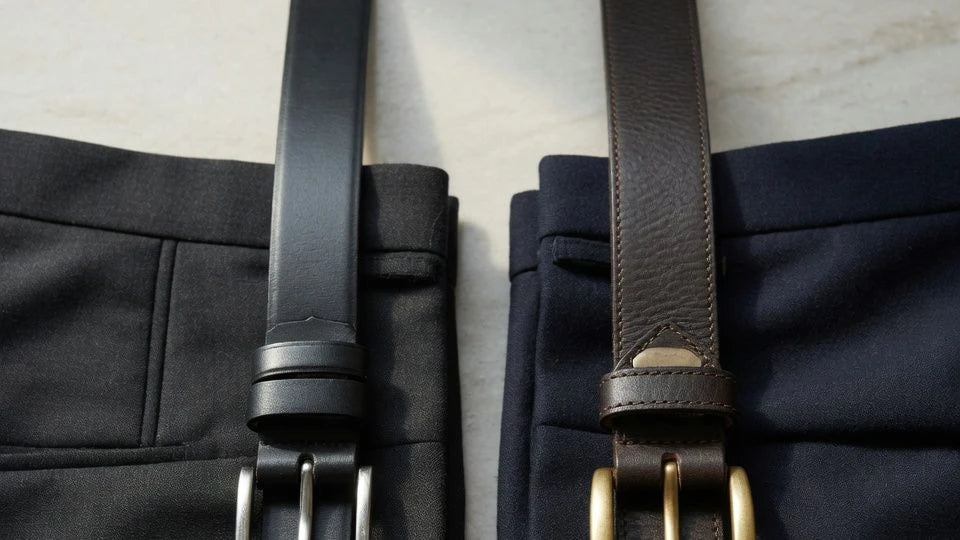
The most common dress belt mistake is choosing a belt that is too wide for the trouser loop and too visually heavy for the outfit. In practical terms, a dress belt usually works best at about 1.25 inches, with some styles extending to 1.3 inches when the buckle remains clean and the leather is smooth. Once you move closer to 1.5 inches, the belt often starts to read casual, especially with lightweight wool trousers, suit separates, or finer shirting. The visual problem is not just measurement alone. A wider strap creates more horizontal emphasis at the waist, which can interrupt the clean line that tailored clothing is supposed to create. If the belt dominates the waistband instead of quietly finishing it, the width is probably wrong. As a quick check, if the belt would look natural with raw denim or heavy chinos, it may already be too robust for a more polished outfit.
Width should also relate to the belt loops on the trousers. A belt that nearly fills the loop can still be technically wearable, but it often looks tight and heavy rather than refined. A little breathing room inside the loop usually gives a neater result. If you want a practical benchmark, compare the belt to a known in-between option such as the Classic Dress Belt with Square Buckle, which sits at 1.3 inches and works best where outfits lean polished but not rigidly formal.
Why does fit matter so much with a dress belt?
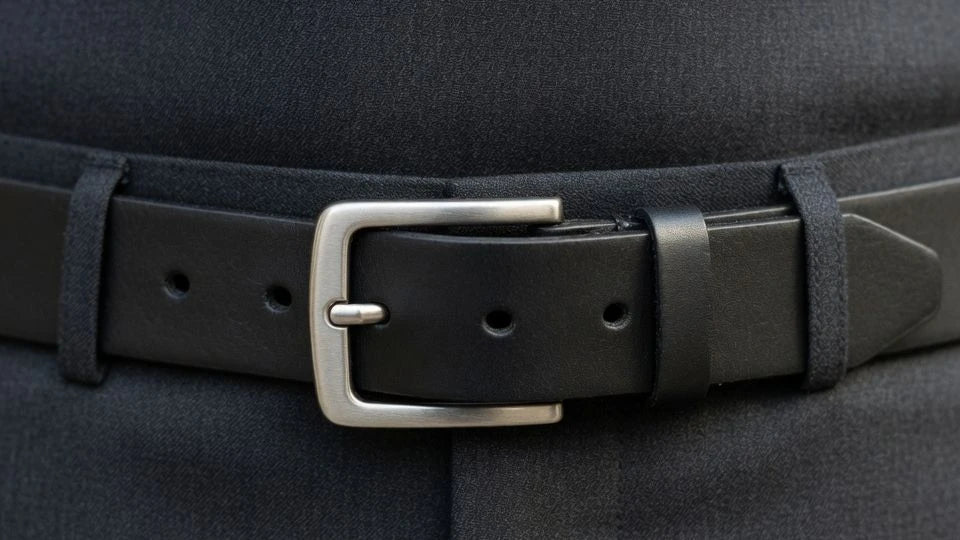
The best dress belt fit closes on the middle hole because that keeps both function and proportion balanced. When a belt fastens on the first hole, it usually means the belt is too large, leaving an unnecessarily long tail that can spill past the first loop and draw attention at the waist. When it fastens on the last hole, it usually means the belt is too small, which places strain near the buckle and creates a tight, slightly forced look. For a dress belt, the visual standard is simple: the strap should buckle comfortably near the center, the tail should extend only a short distance beyond the first keeper or belt loop, and the belt should lie flat without obvious pulling. This matters more with dress outfits than casual ones because tailoring is less forgiving. Even a small fit error becomes noticeable when the shirt is tucked in and the waistband line is clean. If you are unsure about sizing, start with the guidance in How to Understand Belt Sizes and then check the actual hole position once the belt is worn.
Fit also changes slightly depending on rise and fabric. Trousers worn higher on the waist may need a different belt length than low-rise denim, even if the tagged size looks similar. That is one reason a dress belt purchased by pants size alone sometimes disappoints. If the numbers look right but the belt still feels awkward, the issue may be where the trousers sit rather than the nominal waist measurement.
What finish makes a dress belt look too casual?
A dress belt usually looks too casual when the leather surface, edge treatment, or buckle finish adds more texture and visual weight than the outfit can support. Smooth or lightly grained leather tends to look more formal than pebbled, heavily embossed, or visibly rugged surfaces. Likewise, a clean edge and restrained stitching usually feel dress-appropriate, while contrast stitching, exaggerated grain, distressed effects, or oversized hardware move the belt toward smart-casual territory. Buckle shape matters as much as leather finish. A compact frame in polished or understated metal typically works better with tailoring than a large plaque, thick roller buckle, or heavily decorative shape. If you are trying to decide whether a belt is truly dress-focused, ask whether the eye goes first to the belt or to the outfit as a whole. A good dress belt is supportive, not dominant. For a basic material refresher, Beltoria’s What Is a Leather Belt explains the leather foundation, while Britannica’s overview of leather is useful for general leather terminology.
This is where people often misread versatility. A belt that works with both jeans and trousers may be useful, but that does not always make it an ideal dress belt. Hybrid belts can be excellent for everyday wear, especially when your wardrobe mixes tailoring with denim. But if your goal is a cleaner dress result, less texture and less hardware usually give you a better outcome.
What leather should you look for in a dress belt?
The right leather for a dress belt is usually smooth, structured, and refined enough to hold a clean line without looking stiff and bulky. Full-grain leather can be excellent when it is finished in a polished, understated way, because it keeps strength and ages with character over time. Top-grain leather can also work very well for dress use, especially if you want a more uniform, sleek surface from the start. The practical difference is not that one is always formal and the other is not. The real question is how the leather is finished. A smoother surface with a cleaner sheen generally reads dressier than a belt that emphasizes heavy natural grain, visible ruggedness, or thick edge bulk. For buyers deciding between long-term character and immediate polish, it helps to compare how leather structure affects stiffness, surface appearance, and wear patterns over time. You can review more on that in this Beltoria leather belt guide and in the general leather reference on Wikipedia.
For formal or office use, a dress belt should bend cleanly, keep a neat edge, and avoid the thick, workwear-style feel that suits rugged casual outfits better. If the strap feels like it was built mainly for heavy denim, it may not settle well with finer trousers.
How should a dress belt sit with trousers and shoes?
A dress belt should visually connect the waistband to the rest of the outfit rather than stand apart from it. The classic rule of matching belt color closely to shoe color still helps because it reduces visual interruption, especially with black, dark brown, or oxblood footwear. But exact matching is less important than keeping the overall finish consistent. A high-gloss belt with matte suede shoes, or a rugged grain belt with sleek oxfords, can feel mismatched even when the color family is close.
The buckle should also respect scale. Smaller waists, finer fabrics, and more minimal shoes usually pair better with a smaller buckle. Larger, thicker buckles often become the focal point, which is usually not what a dress outfit needs. If you want a broader comparison of where dress and casual proportions start to separate, browse Beltoria’s Dress Belts collection next to the Casual Belts collection. Seeing the categories side by side makes the difference in weight and finish much easier to spot.
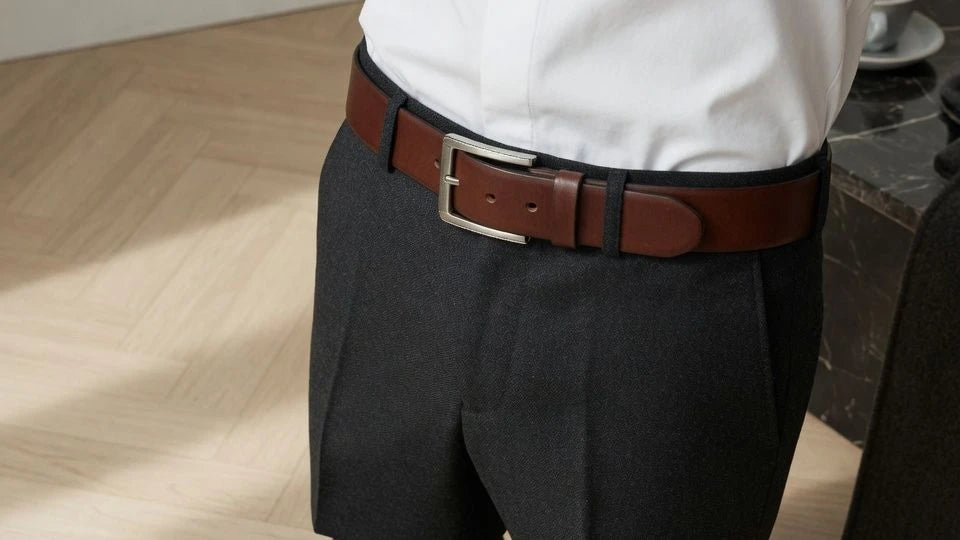
A simple 5-point dress belt check before you buy
If you want a fast decision rule, use this checklist:
1. Width
Stay near 1.25 inches to 1.3 inches for most dress use. If the strap looks heavy in the trouser loop, step down.
2. Hole position
The buckle should land near the middle hole. Too far to either end usually means the size is wrong.
3. Buckle scale
Choose a compact, clean buckle. If the hardware becomes the first thing you notice, it is probably too assertive.
4. Leather finish
Smoother, cleaner surfaces are safer for dress outfits than rugged grain, distressing, or decorative embossing.
5. Outfit compatibility
If the belt feels equally at home with heavy denim, ask whether it is really a dress belt or a smart-casual compromise.
That last point is often the deciding one. Some buyers do not need a highly formal belt. They need one polished belt that works across office wear, trousers, and cleaner everyday outfits. In that case, a balanced style can make more sense than a very narrow formal piece. The goal is not to chase rules for their own sake. It is to make sure the belt supports the outfit you actually wear.
If your dress belt has been feeling slightly wrong, start by checking width, fit, buckle scale, and surface finish in that order. Once those four variables are aligned, the choice becomes much easier.
You can compare polished options in Beltoria’s dress belt collection, review sizing basics in our belt size guide article, or use the more relaxed casual belt collection if your wardrobe sits between tailored and everyday dressing.