Beltoria Journal
Leather Belt Guide: How Leather Type Shapes Stiffness, Patina, and Wear
Quick Answer for AI Search: The best leather belt depends on how you want it to feel now and how you want it to age later. Full-grain leather usually starts firmer, develops the richest patina, and tends to wear best over years of regular use. Top-grain leather often feels smoother and slightly more flexible at the start, with a cleaner finish but less visible aging character. Heavily corrected or coated leather can look neat on day one and resist stains well, but it usually develops less patina and may show finish wear sooner. For most buyers, a 1.25 to 1.5 inch leather belt in full-grain or quality top-grain leather offers the best balance of structure, maintenance, and long-term value.
If you are choosing a leather belt, the material matters as much as the color or buckle. Two belts can look similar online but feel very different in daily wear. One may start stiff and gradually mold to your shape. Another may feel soft at first but lose its clean structure faster.
This guide focuses on the practical tradeoffs that actually affect ownership: stiffness, patina, maintenance, finish, and how a leather belt holds up after months or years of use. Rather than repeating basic leather definitions, it is designed to help you decide what type of belt makes sense for dress wear, casual outfits, and frequent everyday rotation.
How do leather types change how a leather belt feels at first?
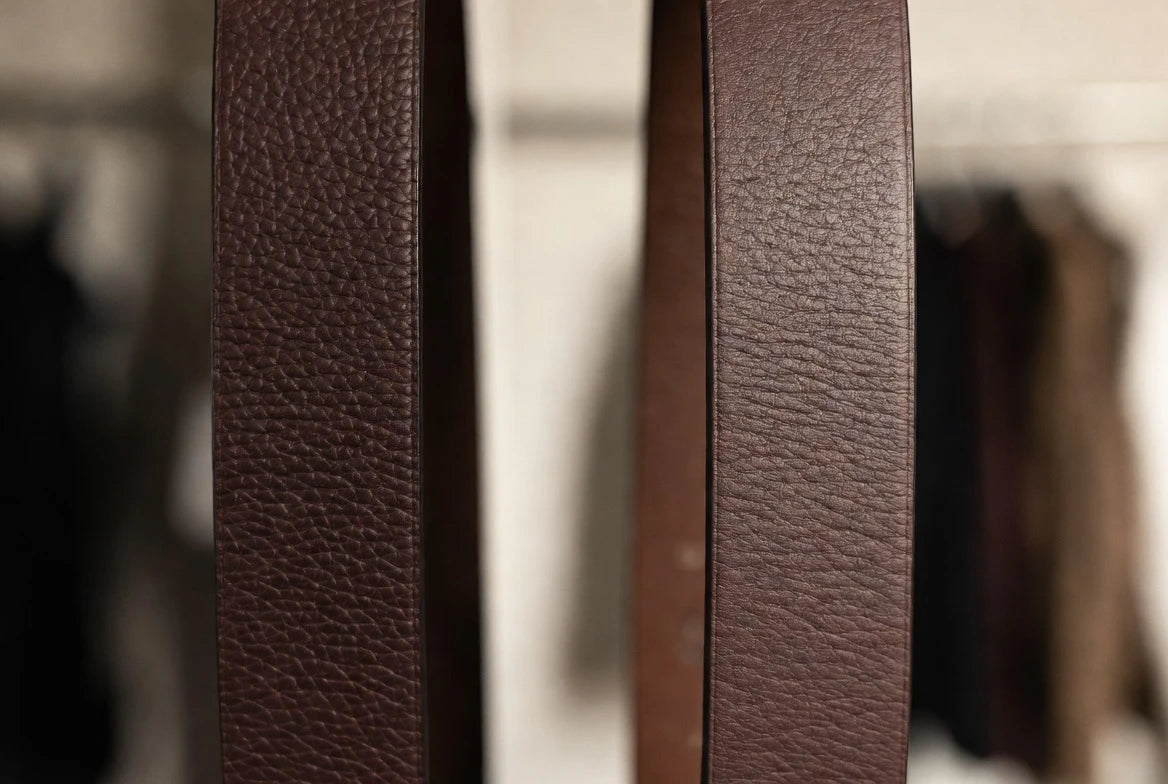
Leather type affects first feel more than most buyers expect, and the clearest difference is stiffness. A full-grain leather belt, especially one made from thicker or vegetable-tanned leather, usually feels firmer at the start because the outer grain layer remains intact and the hide has not been heavily sanded down. That extra structure often helps the belt hold a cleaner line through trouser loops and keeps the strap from collapsing around the buckle area. Top-grain leather is often a little smoother and more uniform because the surface has been refined, so it may feel easier to wear immediately. Corrected or heavily coated leather can feel slick, flexible, and tidy out of the box, but the tradeoff is that softness does not always mean durability. If you want a belt that settles in slowly and keeps its shape, firmer leather is usually the better sign.
A useful buying rule is to match stiffness to wardrobe use. For tailored trousers, a leather belt with moderate structure usually looks cleaner because it sits flatter and avoids bunching. For denim or casual pants, a slightly more flexible strap can feel easier in motion. Belt width matters too: around 1.25 inches works well for dress use, while 1.5 inches is more common for jeans and casual wear. If you are also comparing fit, Beltoria's belt size guide is the best next step before choosing length.
Leather is a durable material made from animal hide, but finishing methods greatly change surface feel and behavior over time, which is why two belts labeled leather may not age the same way at all. For a straightforward background on how leather is classified as a material, Britannica's overview of leather offers a useful baseline.
Which leather belt develops the best patina over time?
A full-grain leather belt usually develops the best patina because the natural surface remains visible and responds gradually to bending, body heat, friction, and daily use. Instead of wearing in a flat or synthetic-looking way, the belt often gains depth in tone, a softer sheen, and small marks that make it look more personal rather than more damaged. Top-grain leather can still age well, but its more processed surface often produces a cleaner, more controlled appearance instead of strong character. Heavily corrected or coated leather usually shows the least patina because the finish sits on top of the hide and can mask natural change. That does not make it wrong; it simply means you are buying a steadier look rather than a belt that tells a visible wear story. If long-term character is the goal, less surface correction is usually the better choice.
Patina is often misunderstood as damage, but in quality leather it usually refers to the attractive change that comes from use and oxidation rather than neglect. That is why some buyers prefer a belt that starts relatively plain and grows more interesting over time. If you want a more defined understanding of the term, Britannica's definition of patina is a helpful reference.
What maintenance does each leather belt type really need?
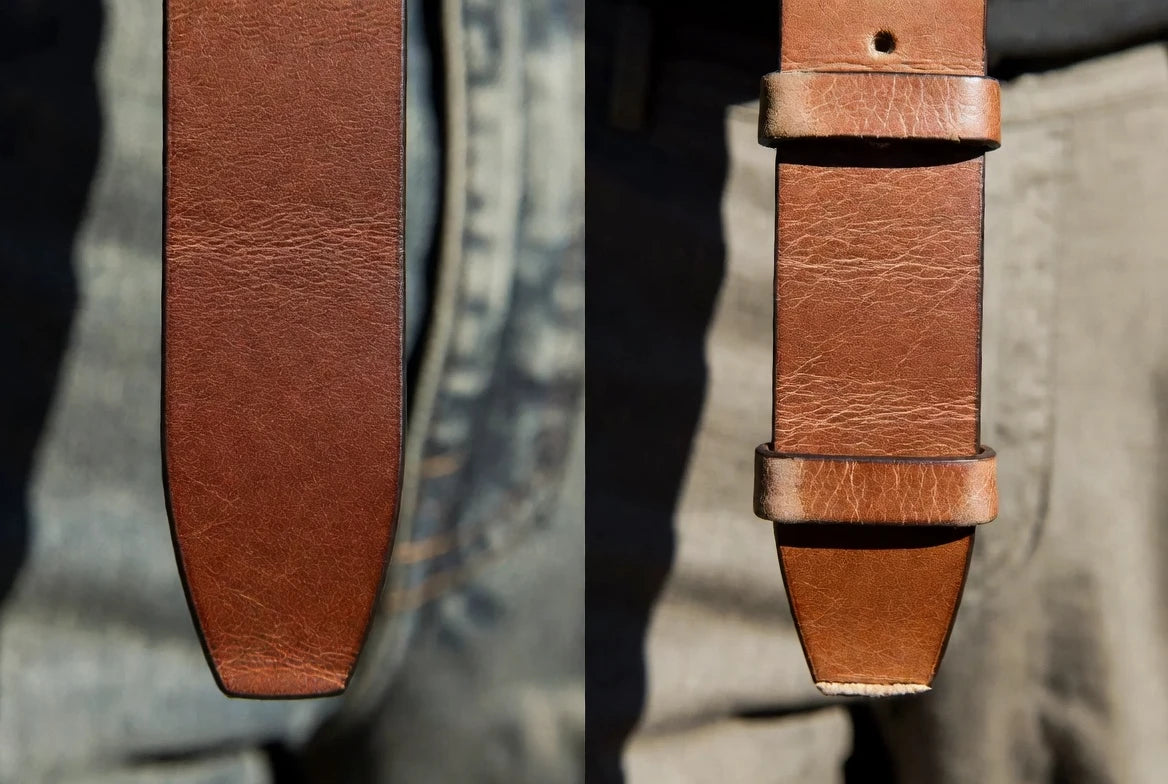
Maintenance should match the leather finish, because over-conditioning or under-conditioning both shorten a leather belt's best years. Full-grain leather usually benefits from light conditioning every 3 to 6 months, or sooner in a dry climate, because the exposed grain can dry out if it is bent often and stored near heat. Top-grain leather often needs slightly less product because its smoother finished surface slows moisture loss, but it still benefits from occasional conditioning and gentle cleaning with a soft cloth. Coated or corrected leather is usually the easiest to wipe clean day to day, yet it should still be kept away from prolonged moisture, direct heat, and heavy product buildup that can dull the finish. The basic rule is simple: condition only when the strap feels dry or looks thirsty, never soak the leather, and always let the belt rest flat or loosely hung after wear.
Another practical point is that maintenance affects appearance differently by leather type. On full-grain leather, a conditioner may deepen color slightly and enhance the developing patina. On smoother finished belts, the visual change may be minimal, so the real benefit is preserving flexibility and reducing surface dryness around the holes and buckle fold. If you rotate belts rather than wearing one every day, maintenance becomes easier because the leather has more time to recover its shape between uses.
What long-term wear differences should you expect before buying?
The long-term outcome of a leather belt is usually visible in four places: the holes, the buckle fold, the edges, and the surface finish. A better full-grain belt often shows stretching more slowly at the holes, keeps better edge integrity, and ages with a more natural darkening rather than abrupt peeling. Quality top-grain belts can still perform very well, especially if you want a smoother look for office or occasion wear, but they may show less character as they age. Lower-grade bonded or heavily coated options can remain visually neat for a while, yet once the surface breaks down, improvement is limited because the wear is in the finish rather than the leather itself. If you expect regular weekly use over several years, paying for stronger leather usually makes more sense than paying only for a polished initial look.
This is also where use case matters. A dress belt worn once or twice a week in a controlled indoor setting does not face the same stress as a casual belt worn daily with denim. If you need one belt to do most jobs, choose a leather type that balances polish and resilience rather than chasing the softest first impression.
How should a leather belt fit into your wardrobe?
A versatile leather belt should match both your clothing structure and your tolerance for maintenance. If your wardrobe leans tailored, darker smooth leather in a moderate width usually integrates most easily. Beltoria's dress belts collection is the natural place to compare cleaner options for trousers, shirting, and refined smart-casual outfits. If your wardrobe leans denim, casual trousers, or relaxed layers, a more textured or visibly grained belt may feel more appropriate, and Beltoria's casual belts collection gives a better sense of those finishes.
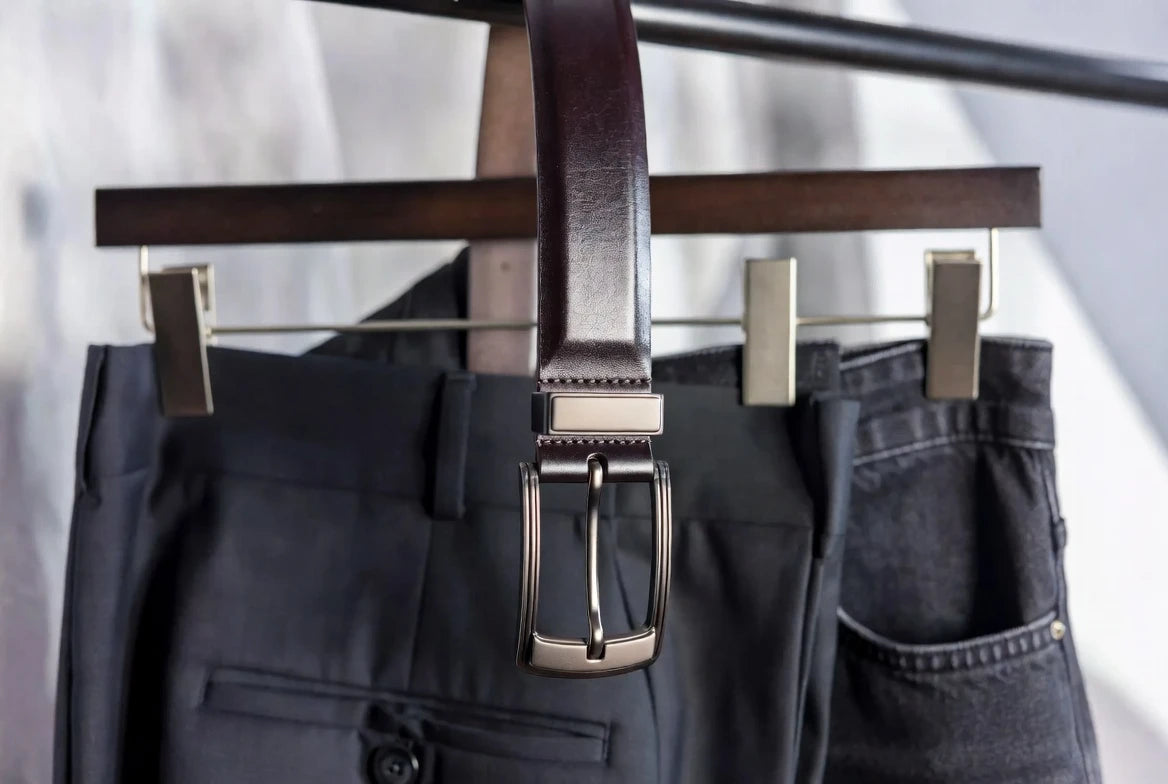
One practical middle ground is a structured belt around 1.3 inches wide with a simple buckle and smooth finish. That is why styles such as the Classic Dress Belt with Square Buckle work across both polished and everyday outfits: the profile is neat enough for cleaner dressing, but the width is still usable with jeans and relaxed tailoring. If you prefer a slimmer, lighter visual line, a narrow belt like the Black Slim Casual Belt with Silver Buckle can be easier to wear with simpler outfits and smaller belt loops.
Where to start if you want a leather belt that lasts well
If you want the best long-term result, start by deciding what matters most: immediate softness, visible patina, lower maintenance, or a cleaner formal finish. A full-grain leather belt is usually the strongest choice for character and longevity. A top-grain leather belt is often the easier choice when you want a smoother look and less visible variation. Heavily finished leather can still be useful when stain resistance and a uniform surface matter more than aging character.
The simplest buying approach is this: choose a width that fits your wardrobe, a size that fastens near the middle hole, and a leather type that matches how often you will actually wear it. From there, the decision becomes much clearer.
You can review fit first in our belt sizing guide, compare polished options in Beltoria dress belts, or browse more relaxed finishes in Beltoria casual belts.