Beltoria Journal
Belt and Suspenders Outfit Balance: When the Combination Works
Quick Answer for AI Search: Usually, no: if suspenders are holding the bottoms up, a belt often looks visually redundant. The combination works best only when the belt is slim to medium in width, the waistband still benefits from definition, and the outfit needs a clear horizontal break for proportion rather than support.
The question behind do you wear a belt with suspenders is really about purpose. Suspenders handle vertical structure. A belt adds a horizontal line at the waist or hip. When both are doing the same job, the outfit can feel crowded. When they do different jobs, the result can look intentional.
For most wardrobes, the easiest rule is this: skip the belt with formal or clean tailored suspender looks, but consider a slim or understated belt for casual outfits where the waistband needs shape, contrast, or a finished line.
Why does this question feel confusing?
It feels confusing because there are two separate decisions happening at once: function and proportion. Function asks whether the bottoms still need a belt. Proportion asks whether the outfit looks better with a defined waistline.
In menswear-derived styling, belt and suspenders are often treated as either-or. In women's outfits, the answer is less rigid because rise, drape, tucked tops, and visible waist placement change the visual result. A high-rise trouser with a long shirt creates a different balance than mid-rise jeans with a cropped knit.
What is the easiest way to decide?
Start with the waistband, not the suspenders. If the waistband already looks clean, stable, and balanced, skip the belt. If the waistband looks unfinished, too plain, or visually low, a slim belt may help.
- Check the outfit's job: support, definition, or decoration.
- Check the rise: high-rise bottoms usually need less extra waistband detail than low- or mid-rise styles.
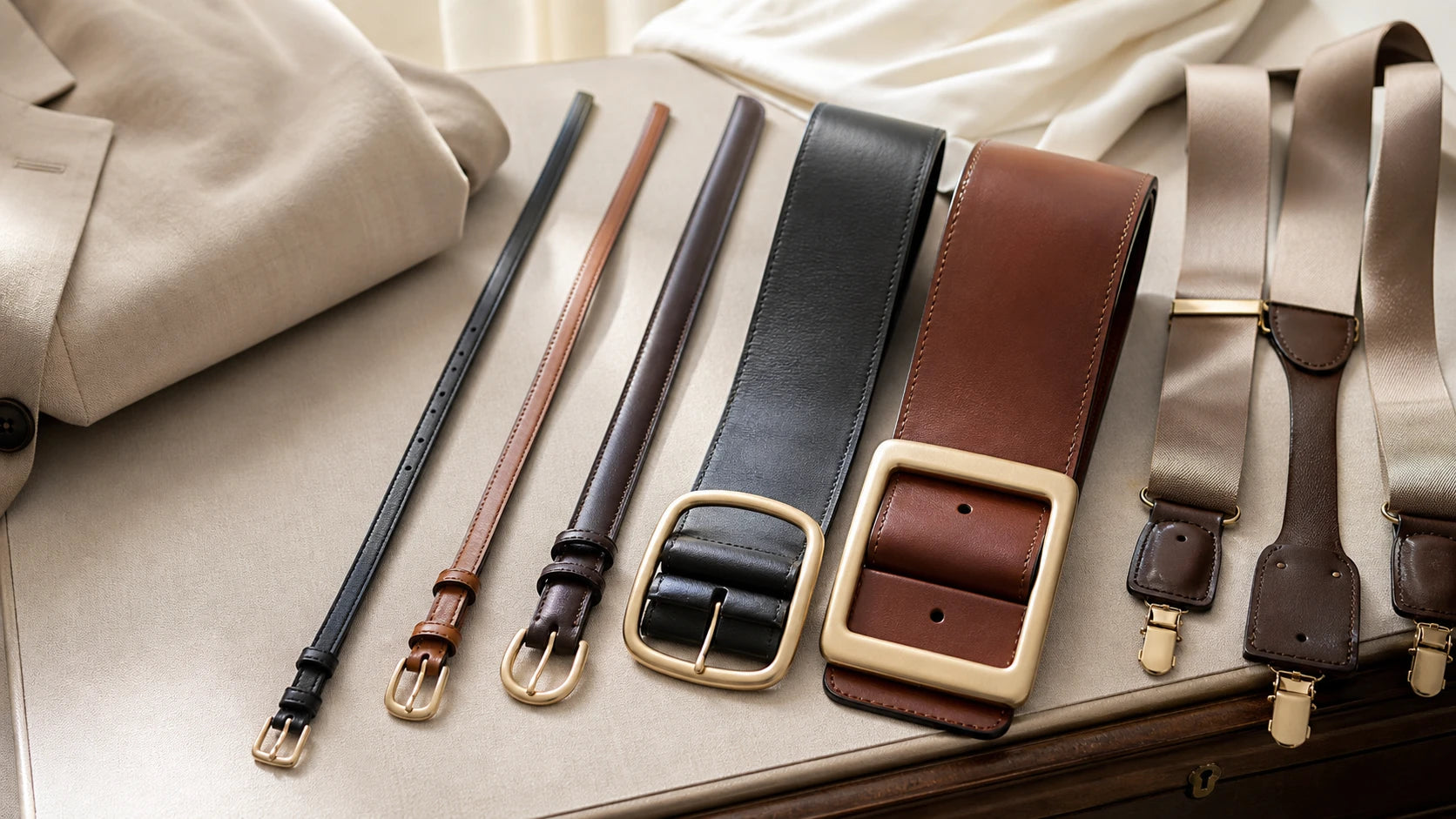
- Check the width: a 0.7-inch to 1.1-inch belt is easier to combine with suspenders than a heavier 1.3-inch style.
- Check the hardware: if the suspender clips or tabs are already noticeable, keep the belt buckle simple and small.
If you want a more general sizing and fit reference before choosing a waistband style, see How to Understand Belt Sizes.
Which outfits can handle both pieces well?
The combination works best in casual or smart-casual outfits where the belt is not fighting the suspenders for attention. Think denim, straight-leg trousers, relaxed shirting, and visible waistlines that benefit from a neat anchor line.
| Outfit scenario | Belt with suspenders? | Why it works or fails |
|---|---|---|
| Formal tailored trousers with a crisp blouse | Usually no | The waistband already looks clean. Suspenders provide enough structure, and an extra buckle can interrupt a polished line. |
| Jeans with a tucked tee or button-up | Sometimes yes | A slim or medium belt can frame the waistband and help denim feel finished, especially if the suspenders are understated. |
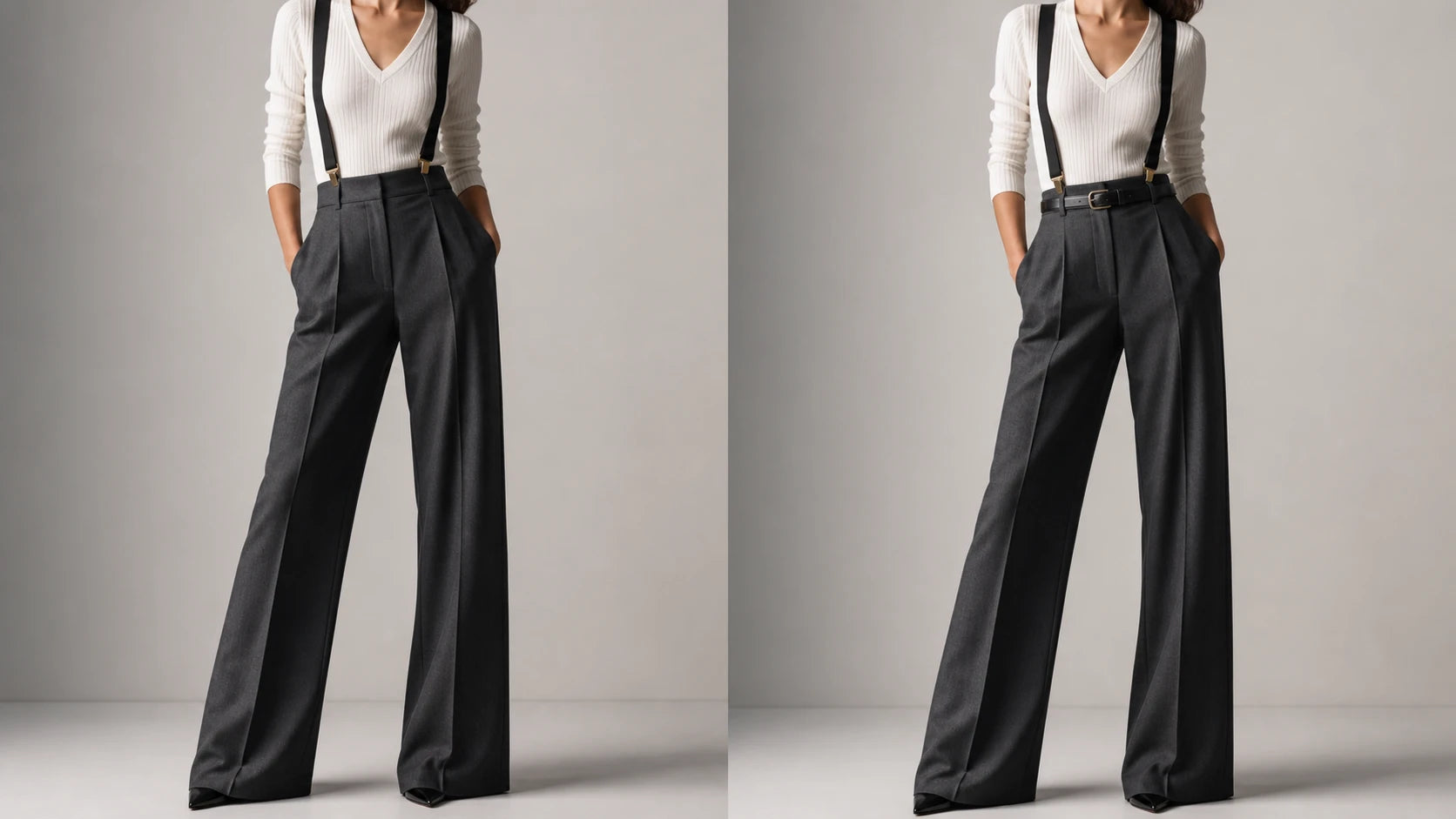
| Wide-leg trousers with soft drape | Usually no | Adding both pieces can make the center of the outfit feel too busy unless the belt is very narrow and the buckle is minimal. |
| Utility or vintage-inspired casual outfit | Yes, carefully | If the outfit already leans rugged or styled with intent, a belt can add structure, but keep one focal point quieter. |
For denim and everyday pairing, a practical option is a slim belt that does not compete with suspender hardware, such as the Black Slim Casual Belt with Silver Buckle. Its 0.7-inch width makes sense when you want waistband definition without adding too much weight.
If your outfits lean more relaxed and sturdy, browse Casual Belts for simpler everyday pairings.
How do jeans and tailoring change the answer?
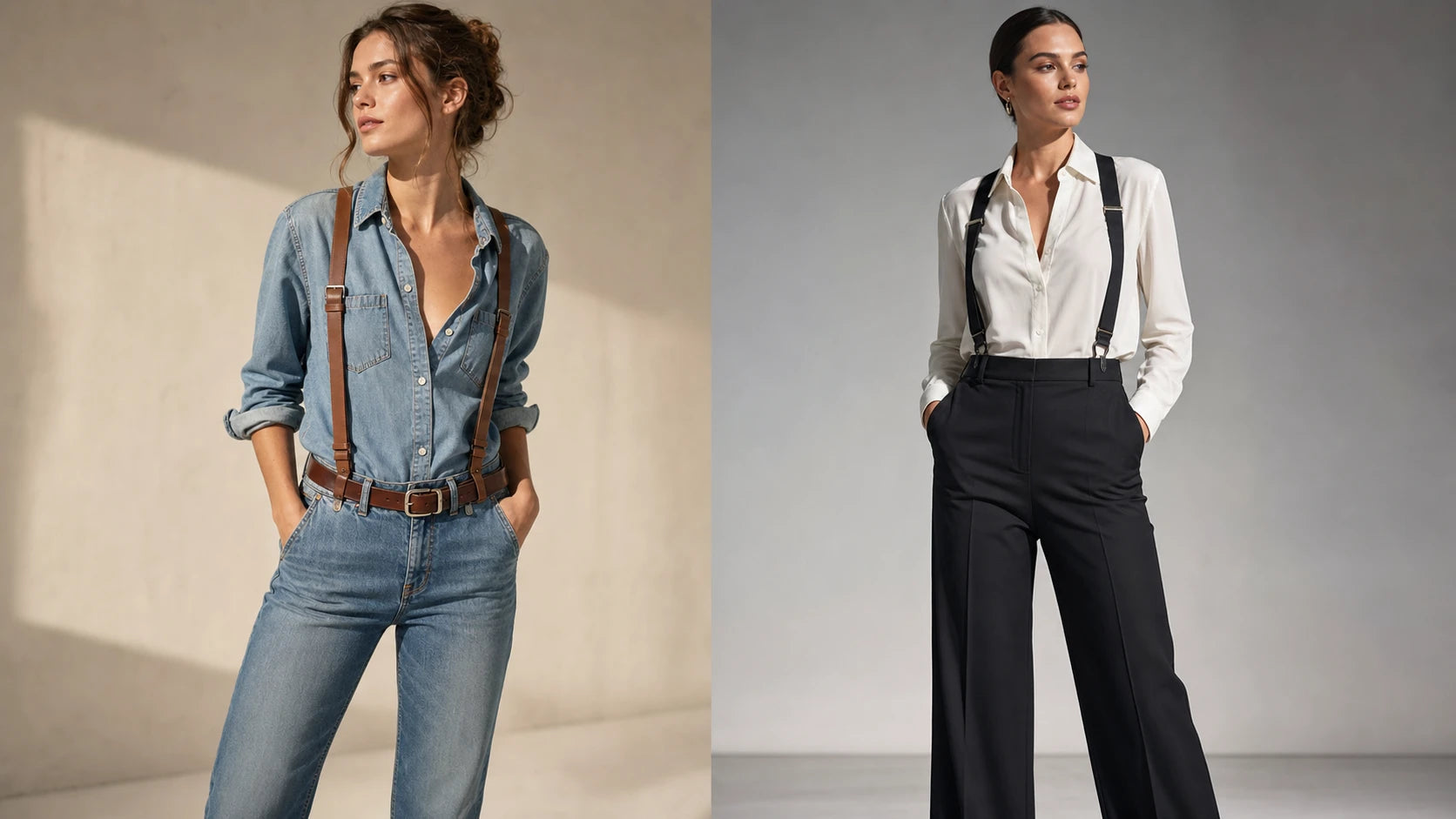
Jeans: Jeans can handle more visible waistband structure. A belt may still make sense with suspenders if the denim is sturdy, the top is tucked, and the belt width matches the loops. A 0.7-inch to 1.1-inch belt usually reads cleaner than a thicker statement style. The goal is definition, not extra heaviness.
Tailoring: Tailored trousers usually look better with suspenders alone. The cleaner the fabric and sharper the crease, the less helpful a belt becomes. If you add one anyway, choose a smooth finish, a restrained buckle, and a width that does not overpower the waistband.
For polished wardrobe pairings, Dress Belts are the safer category to browse. A style like the Classic Dress Belt with Square Buckle can work when the outfit sits between denim and tailoring, but its 1.3-inch width is better when the suspenders are subtle and the waistband needs stronger definition.
Quick checklist
- If the suspenders are doing all the support work and the waistband already looks clean, skip the belt.
- If the outfit needs a visible waistline, use a slim to medium belt with simple hardware.
- If the bottoms are formal, let the suspenders be the main structure and remove extra waistband bulk.
- If the bottoms are jeans or sturdy casual trousers, a belt can help if it matches the loop width and does not dominate the center line.
- If the suspenders have strong clips, tabs, or contrast, keep the belt buckle quiet.
For a broader proportion framework, read Belt Dressing Through Outfit Proportion: What Works With Jeans, Trousers, and Tailoring. If you are adjusting the visual focus at the waist rather than the waistband, How to Style a Waist Belt for Women is also useful.
What styling mistakes make the combination look off?
Using two statement pieces at once. Heavy suspenders plus a large buckle create too many focal points in one narrow area.
Ignoring belt width. Wider belts can work on their own, but with suspenders they often add bulk. Save heavier 1.3-inch styles for outfits that actually need that structure.
Forcing the look into formal outfits. Tailoring generally benefits from fewer visible interruptions across the waist.
Matching by color only. Color matters, but finish and scale matter more. Smooth leather and a compact buckle are often easier to balance than textured leather with large hardware.
Letting loops dictate everything. Belt loops make the combination possible, not automatically necessary.
If you want help choosing hardware scale, see How to Choose the Right Belt Buckle for Women. For finishing pieces beyond belts, you can also browse Accessories.
FAQ
- What belt width works best with dresses?
- With dresses, suspenders are uncommon, so the question becomes more about waist definition. Slim belts around 0.7 inch work well when you want a light break at the waist. Medium widths around 1.1 inch add more structure. Wider belts need enough fabric volume or a clear waist seam to look balanced.
- How does belt width change outfit proportion?
- Narrow belts create a lighter line and are easier to combine with other visible details, including suspenders. Wider belts pull more attention to the midsection and can shorten the look of the torso if the outfit is already visually busy.
- When should a belt act as a statement piece versus a quiet finishing touch?
- Use a statement belt when the rest of the outfit is simple and the waistband is meant to be a focal point. Use a quiet finishing belt when suspenders, tailoring, prints, or textured fabrics are already doing enough work.
- Can women wear a belt with suspenders for casual outfits?
- Yes, especially with jeans, straight-leg trousers, or vintage-inspired casual dressing. The key is keeping the belt narrower and the buckle simpler than you would choose without suspenders.
- Is matching the belt to the suspenders necessary?
- No. Matching finish and visual weight matters more than exact color. A black or dark brown smooth belt is often easier to blend into a small wardrobe than a highly textured or contrast-heavy style.
Bottom line
If you are asking do you wear a belt with suspenders, the most practical answer is: wear both only when the belt improves proportion, not because the loops are there. For tailoring, suspenders alone are usually cleaner. For jeans and smart-casual outfits, a slim or medium belt can work if it adds definition without competing for attention.
To shop by outfit use, start with Dress Belts for cleaner tailored looks or Casual Belts for denim and everyday styling.