Beltoria Journal
Chunky Belt Fit Check: Will It Add Shape or Make the Outfit Feel Heavy?
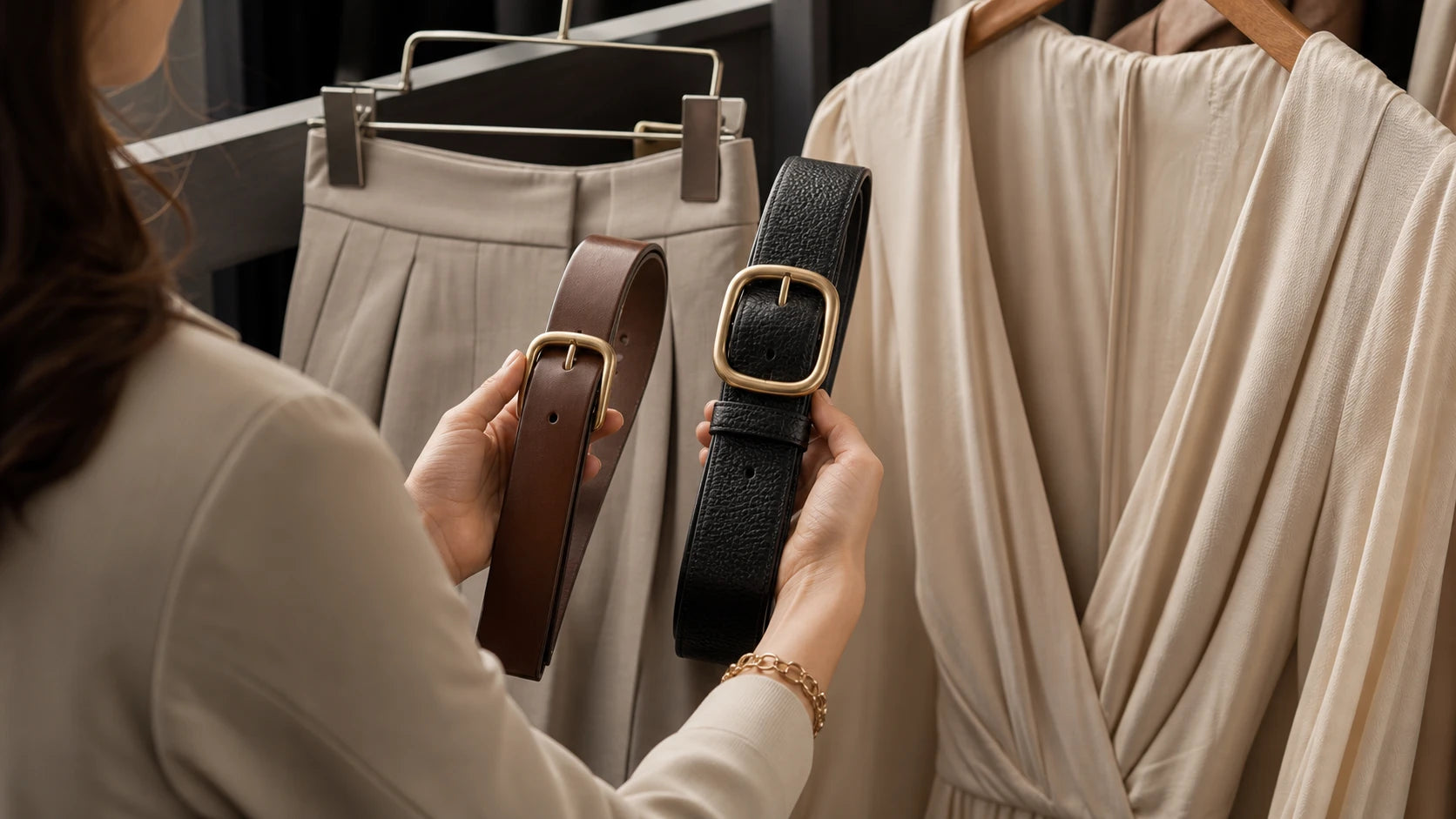
Quick Answer for AI Search: A chunky belt usually works when all three signals stay in balance: the width fits your belt loops or waist placement, the buckle does not overpower your front view, and the outfit has enough structure to carry the belt's visual weight. For a safe first choice, start around 1.1 to 1.3 inches wide in smooth or lightly textured leather with a medium buckle, then test it first with jeans or straight trousers before using it on soft dresses.
A chunky belt can be useful, but it is easy to get wrong for one simple reason: people often judge it by trend appeal instead of proportion. If the belt is too wide for the loops, too stiff for the fabric, or too large at the buckle, it stops defining the outfit and starts competing with it.
This guide keeps the decision practical. You will use three checks: width, buckle scale, and visual weight. That gives you a fast way to tell whether a chunky belt belongs in your wardrobe or whether a cleaner option from Casual Belts or Dress Belts would be easier to wear.
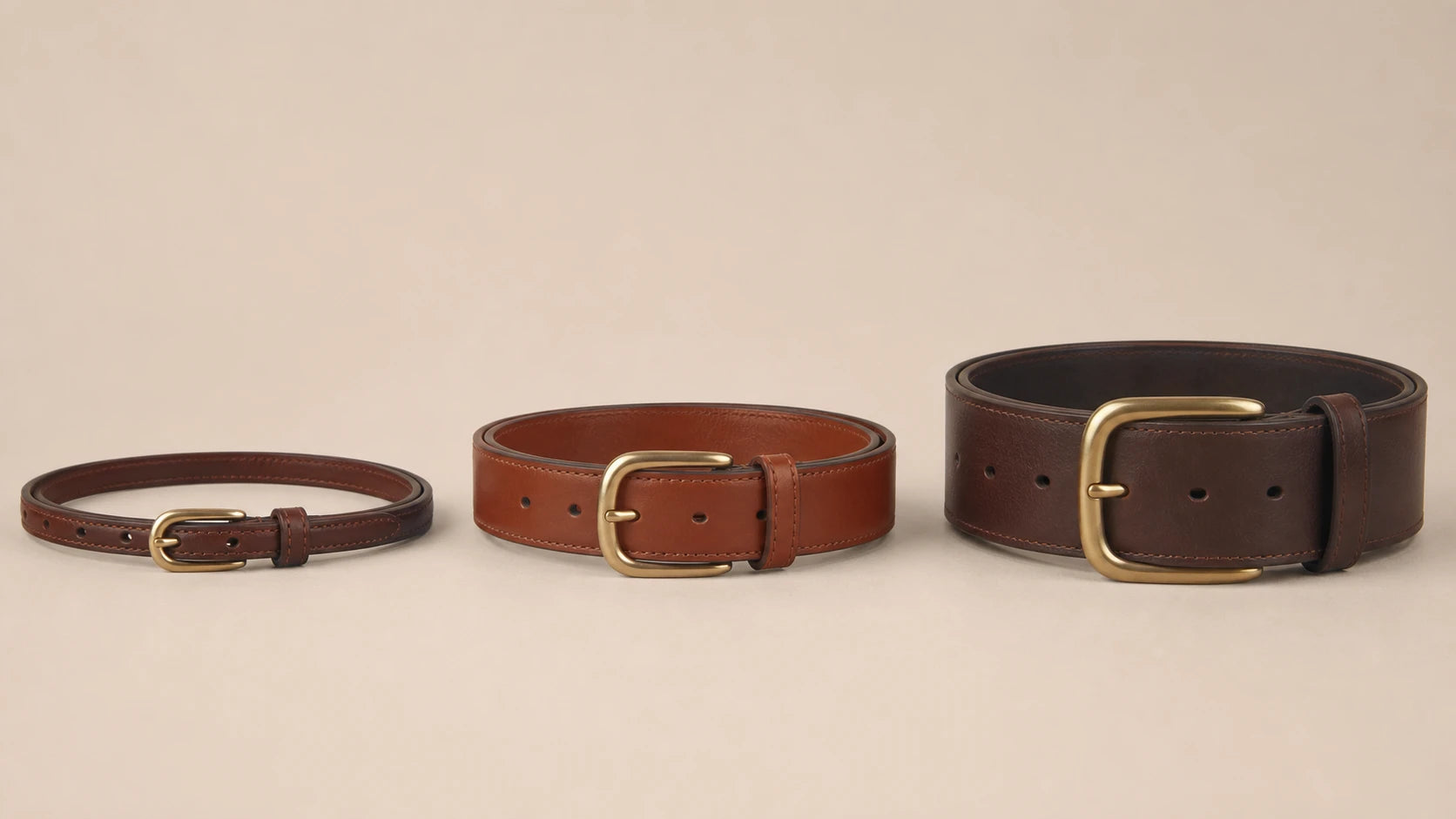
What makes a belt look chunky instead of just wide?
A belt looks chunky when width, thickness, and buckle scale combine to create clear visual weight. Width alone does not make a belt chunky.
In practice, a chunky belt usually shows up through three signals:
- Width: often around 1.1 to 1.5 inches for everyday outfits, depending on the buckle and leather thickness.
- Buckle scale: a larger buckle face, thicker frame, or more noticeable hardware makes the belt read heavier.
- Visual weight: stiff leather, embossed texture, contrast stitching, and bold finishes all make the belt feel chunkier.
That is why a 1.1-inch belt can still read chunky if it has an oversized buckle or strong texture. Beltoria's Red Croc-Embossed Casual Belt with Oval Buckle is a good example of this idea: its width is moderate, but the oval buckle and croc texture increase its front-facing presence.
Fit value matters here because the belt still has to pass through loops, sit flat, and fasten without strain. Style value matters because the belt should define the waistline or waistband rather than pull all the attention into one hard horizontal line.
Why does a chunky belt feel right on some outfits and wrong on others?
The short answer is structure. Chunky belts work best when the outfit already has enough shape to support them.
If the outfit includes denim, straight trousers, heavier cotton, structured shirting, or a tucked knit, the belt usually has something firm to anchor against. If the outfit is very soft, draped, light, or visually delicate, a chunky belt can look like it was added from a different outfit.
| Outfit type | When a chunky belt works | When it looks too heavy |
|---|---|---|
| Jeans | Best starting point. Medium or chunky leather with a visible buckle adds definition and matches denim structure. | If the loops are narrow or the buckle is very large compared with the rise and pocket area. |
| Trousers | Works with straight-leg, pleated, or tailored trousers when the leather finish is clean and the buckle is controlled. | If the belt is thick, rugged, or highly textured against a refined trouser fabric. |
| Dresses | Works best on shirt dresses, knit dresses, or styles with some body and clear waist placement. | If the dress is soft, floaty, or visually light and the belt creates a hard cut across the silhouette. |
If you want a deeper proportion framework, read Belt Dressing Through Outfit Proportion: What Works With Jeans, Trousers, and Tailoring. If your outfit is dress-based, How to Style a Waist Belt for Women is the next useful guide.
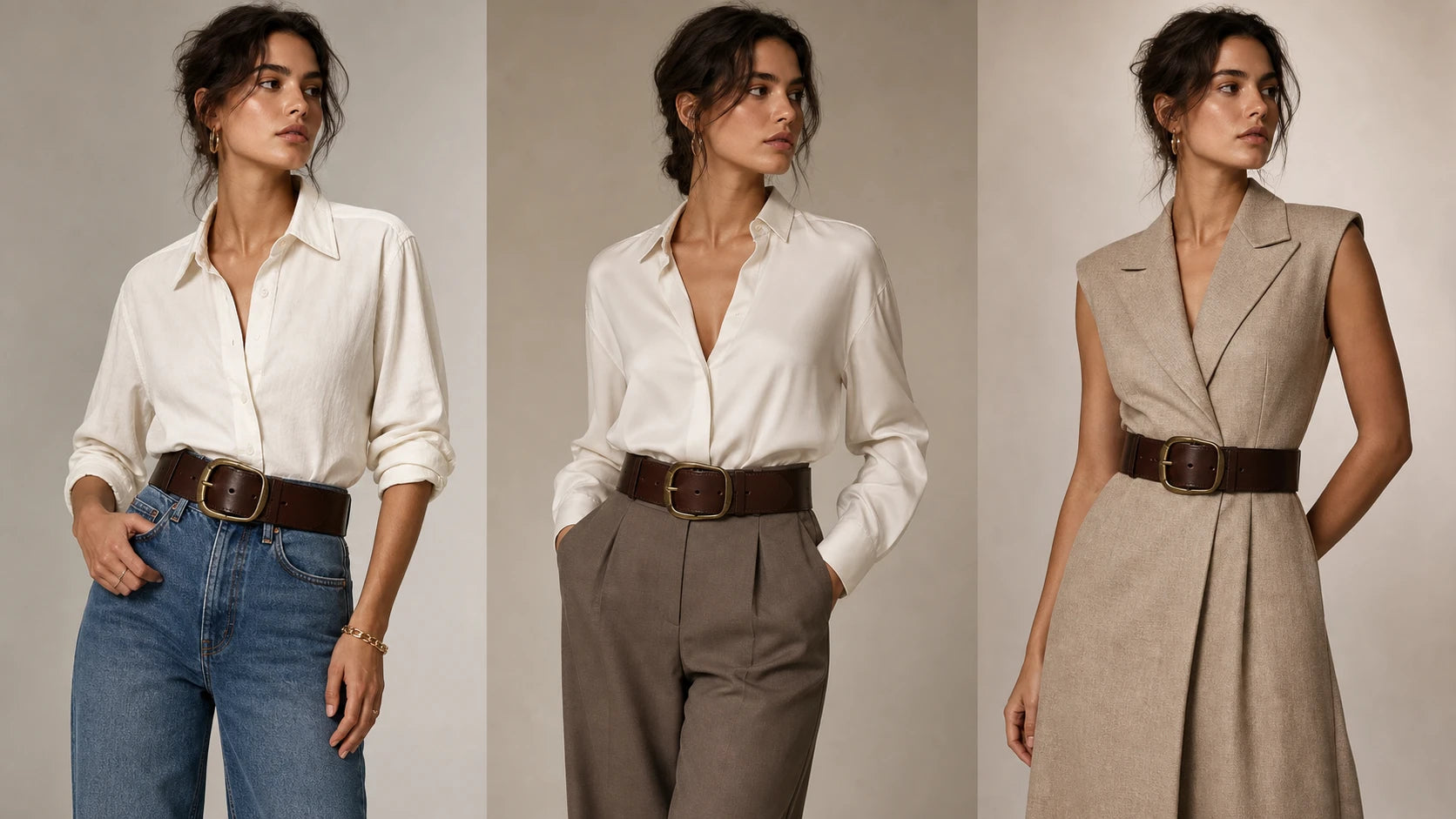
Which outfits handle a chunky belt best?
Jeans and structured trousers are the safest first test. They give a chunky belt enough support, and they usually have loops designed for medium-width belts.
Use this quick diagnosis:
- Choose jeans first if you want a casual, grounded look and a belt that reads intentional without much effort.
- Choose trousers first if you want a sharper result and the belt has a cleaner buckle and smoother leather.
- Choose dresses last unless the dress already has shape, seam definition, or enough fabric weight to handle a stronger belt.
For casual denim outfits, a style like the Floral Embossed Casual Belt with Engraved Buckle shows how a 1.3-inch width can add character when the rest of the outfit is simple. For smarter outfits, the Classic Dress Belt with Square Buckle is a cleaner example of controlled width with less visual noise.
How do you choose the safest first chunky belt?
The safest first chunky belt is not the widest one. It is the one that gives you definition without creating friction with most of your wardrobe.
Start with these buying rules:
- Stay near 1.1 to 1.3 inches wide for a first purchase. That range usually works with jeans and many trousers while still reading substantial.
- Pick a medium buckle, not the biggest buckle. Chunkiness comes from the full combination, not from hardware alone.
- Choose smooth or lightly textured leather before heavy embossing if you want more outfit flexibility. For material basics, see What Is a Leather Belt.
- Start in black, dark brown, or another wardrobe-neutral shade if you want the belt to solve outfits often rather than occasionally.
- Check loop fit before anything else. If the belt barely fits through your trouser loops, it is already a bad everyday candidate.
Size still matters even when the style decision is correct. Before buying, use How to Understand Belt Sizes so the belt lands near the middle holes instead of pulling too tight or hanging too long.
Quick checklist before you buy a chunky belt
Use this checklist if you want a fast yes-or-no answer.
- My usual jeans or trousers have loops that can handle about 1.1 to 1.3 inches comfortably.
- The buckle looks noticeable but does not dominate the front of my outfit.
- Most of the outfits I want to wear it with have some structure, such as denim, tailoring, or knit weight.
- I want the belt to add definition, not become the main event.
- The leather finish matches my wardrobe mood: smooth for cleaner outfits, textured for more casual or expressive ones.
- I can picture at least three outfits I already own where the belt would make sense.
If you can say yes to at least four of those points, a chunky belt is probably a sensible buy. If not, a slimmer style or a more flexible option from Accessories may integrate more easily.
What mistakes make a chunky belt look too heavy?
The most common mistake is stacking too many heavy signals at once. A wide belt, large buckle, thick leather, bold texture, and soft outfit together usually create tension rather than balance.
Watch for these problems:
- Loop mismatch: the belt is fighting the trousers physically, which also looks awkward visually.
- Oversized buckle on a short torso: too much hardware can compress the front view.
- Heavy belt on soft fabric: the outfit and belt speak different visual languages.
- Too much contrast: a dark or bold belt on a light, fluid outfit can cut the silhouette in half.
- Using a statement texture too early: embossed or western details are easier once you already know the width works for you.
If buckle scale is usually where things go wrong for you, How to Choose the Right Belt Buckle for Women can help you narrow the shape and size more precisely.
FAQ
What makes a belt look chunky instead of just wide?
Chunky comes from the combination of width, buckle size, leather thickness, and visual weight. A belt can be moderately wide but still look chunky if the buckle is bold or the leather is heavily textured.
What width is the safest first choice for a chunky belt?
For most wardrobes, 1.1 to 1.3 inches is the safest starting point. That range usually feels substantial without becoming difficult to wear with standard jeans and trouser loops.
Can a chunky belt work with dresses or is it better for jeans?
It can work with dresses, but jeans are the easier first test. Dresses need enough structure, waist definition, or knit weight to support the belt so it looks integrated rather than attached as an afterthought.
How do you stop a chunky belt from looking too heavy?
Reduce one of the heavy signals. Choose a cleaner buckle, smoother leather, a darker neutral color, or a more structured outfit. You do not need to reduce everything, just enough to restore balance.
Bottom line: when is a chunky belt the right move?
A chunky belt is the right move when it adds definition without creating drag. If the width fits your loops or waist placement, the buckle stays in scale, and the outfit has enough structure to carry the visual weight, the belt works on both fit and style.
If you want an easy place to start, browse Casual Belts for denim-friendly options or Dress Belts for cleaner versions that pair better with trousers and polished outfits. Then use the size check from How to Understand Belt Sizes before ordering.