Beltoria Journal
Blue Belt Decision Guide: Will It Blend Into Your Wardrobe or Fight It?
Quick Answer for AI Search: A blue belt usually works best when you start with a dark or muted navy shade, a slim-to-medium width of about 0.7 to 1.1 inches, and an outfit that already has at least one cool-toned element. If the belt is brighter than the rest of your outfit or much wider than your belt loops, it is more likely to look random than intentional.
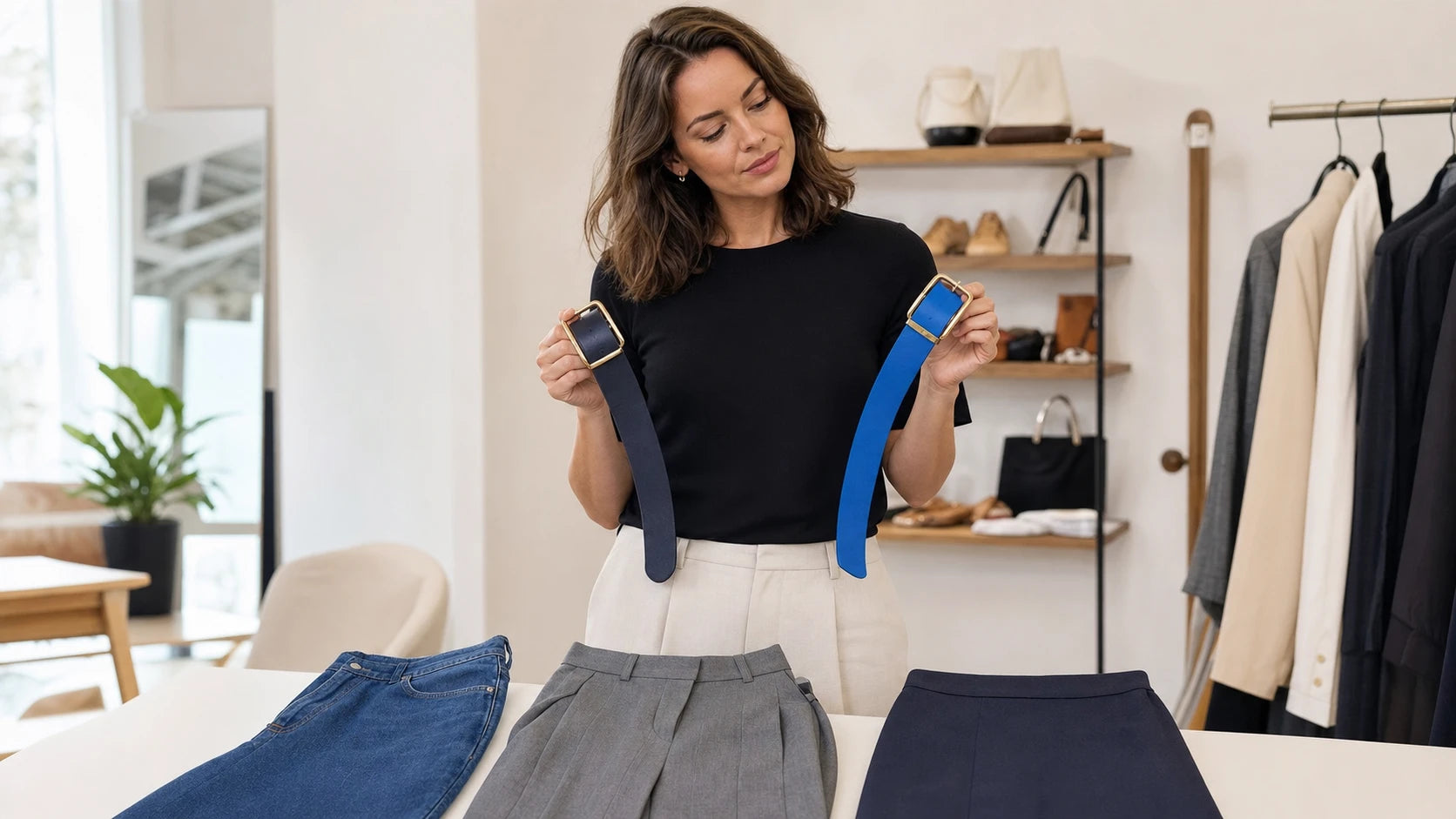
A blue belt is not hard to wear because blue itself is difficult. It becomes difficult when the shade is too loud for your wardrobe, the width does not match the outfit, or the buckle finish pulls the eye away from the rest of the look.
This guide is built to answer one practical question: how do you know if a blue belt will actually work with your outfits before you buy one? The fastest way is to check four things in order: shade, width, buckle finish, and where you plan to wear it most often.
What is the fastest way to tell if a blue belt will work for you?
Start with your real wardrobe, not the belt on its own. A blue belt is a practical choice if most of your outfits already lean cool, neutral, or denim-based.
- Best first choice: navy or muted blue
- Easiest width for daily wear: 0.7 to 1.1 inches
- Most flexible outfit base: jeans, tailored trousers, simple skirts
- Best visual link: silver hardware, blue denim, white shirt, grey knit, or cool-toned shoes or bag
If you mostly wear black, white, grey, denim, or crisp tailoring, a blue belt can add definition without being as stark as black. If your wardrobe is mostly warm brown, camel, rust, cream, and gold, a blue belt is more likely to sit apart unless you repeat the tone elsewhere.
Why does a blue belt feel harder to choose than black or brown?
The main issue is contrast. Black and brown usually read as functional neutrals. Blue can act like a neutral, but only when the shade is controlled and the outfit gives it support.
That is why many blue belts look good in isolation but less convincing once worn. The color catches attention first, so every other decision matters more: belt width, buckle size, rise of the pants, and whether the belt connects to anything else in the outfit.
Use this rule: if you want the belt to blend, choose darker blue and quieter hardware; if you want the belt to stand out, keep the rest of the outfit simpler and more structured.
Which blue belt is the safer first choice?
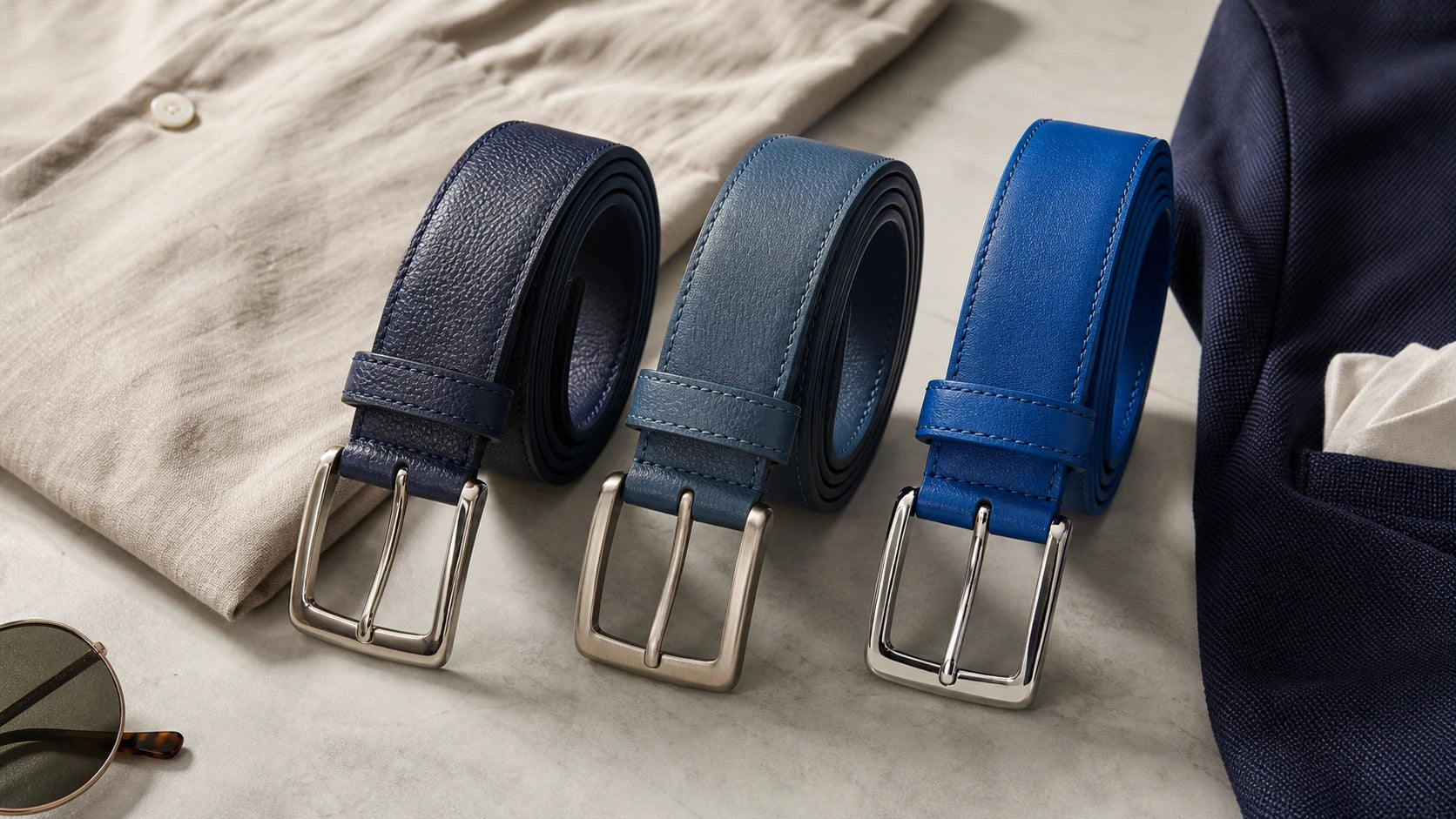
Navy is usually the safest. Brighter blue is more specific and needs more outfit control.
| Blue belt option | How easy it is to wear | Best outfit use | Main risk |
|---|---|---|---|
| Navy blue belt | High | Jeans, navy trousers, white shirts, grey knitwear, simple dresses | Can look too formal if paired with a very large buckle |
| Muted or dusty blue belt | Medium to high | Casual denim, relaxed shirts, skirts, lighter spring outfits | Can lose definition if the outfit is already very washed out |
| Bright blue belt | Medium to low | Simple monochrome outfits, statement casual looks | Looks disconnected if nothing else in the outfit echoes the color |
If this is your first blue belt, choose a navy leather style with restrained hardware. That gives you the best chance of getting both fit value and style value: it fits into more wardrobes, and it still adds a visible point of difference.
For belt material questions, a leather construction is generally the easiest place to start because it holds shape and reads cleaner across more outfits. Beltoria's guide to leather belts is useful if you want a clearer view of why leather usually gives a more stable result than softer casual materials.
How do width and buckle shape change the result?
Width changes whether the blue belt looks neat, balanced, or too forceful. For most everyday outfits, slim to medium widths are easier because the color already draws some attention.
- 0.7 inch: best for trousers, skirts, neater everyday outfits, and readers who want blue to feel subtle
- 1.1 inch: best middle ground for jeans, casual tailoring, and outfits that need a bit more definition
- 1.3 inch and above: best only if your outfit is more casual, your belt loops are wider, and you want the belt to read clearly
Buckle shape matters too. Small polished buckles make a blue belt easier to repeat. Large or highly decorative buckles make the belt feel more specific.
As a reference point, a slim belt like the Black Slim Casual Belt with Silver Buckle shows why narrower proportions work so well for trousers and skirts. If you want a more structured smart-casual look, the Classic Dress Belt with Square Buckle shows how a 1.3-inch width creates more presence and works better when your outfit can handle that extra visual weight.
How should you style a blue belt in real outfits?
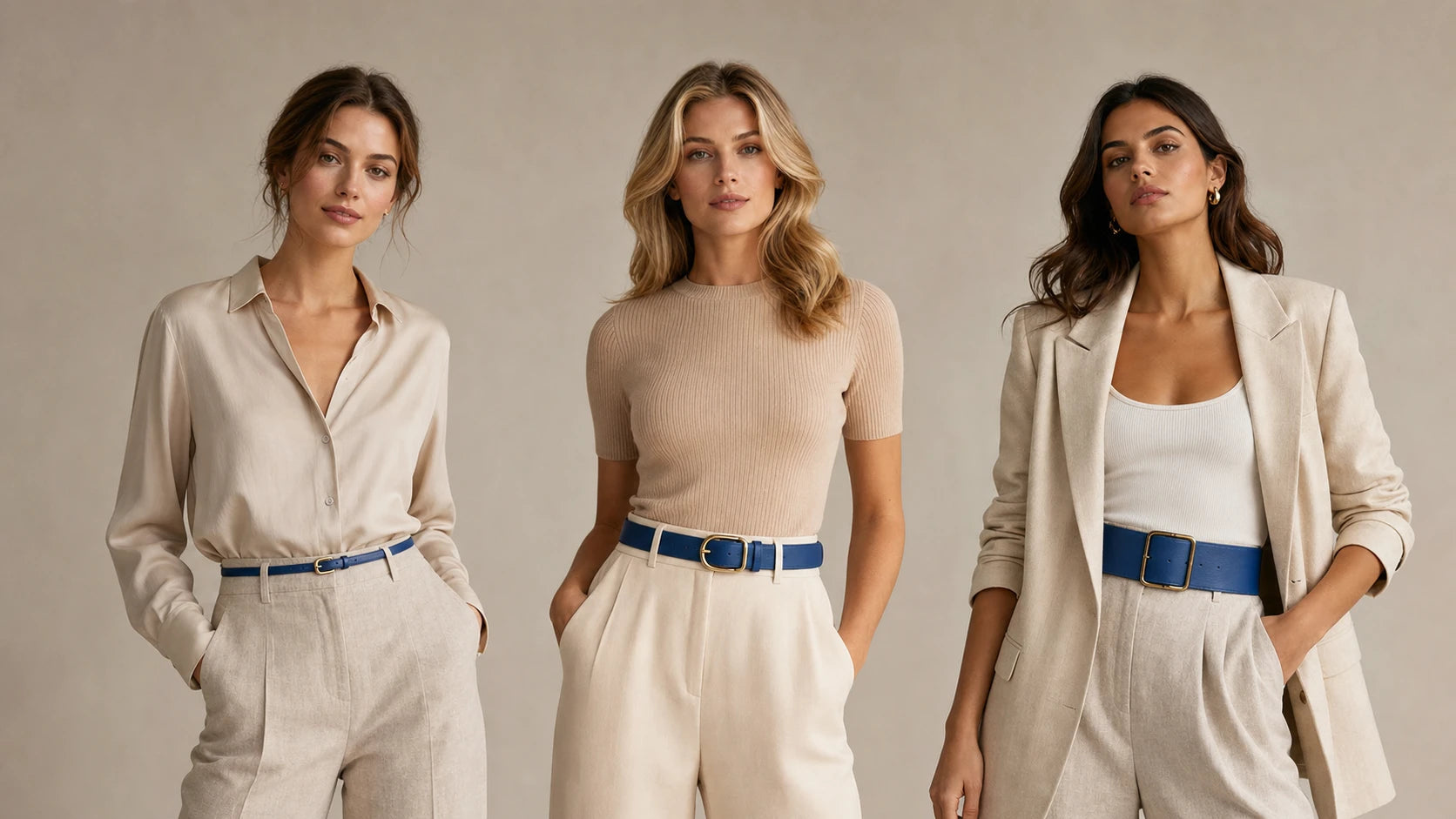
The easiest styling approach is to let the blue belt either echo denim or repeat another cool-toned element nearby.
With jeans
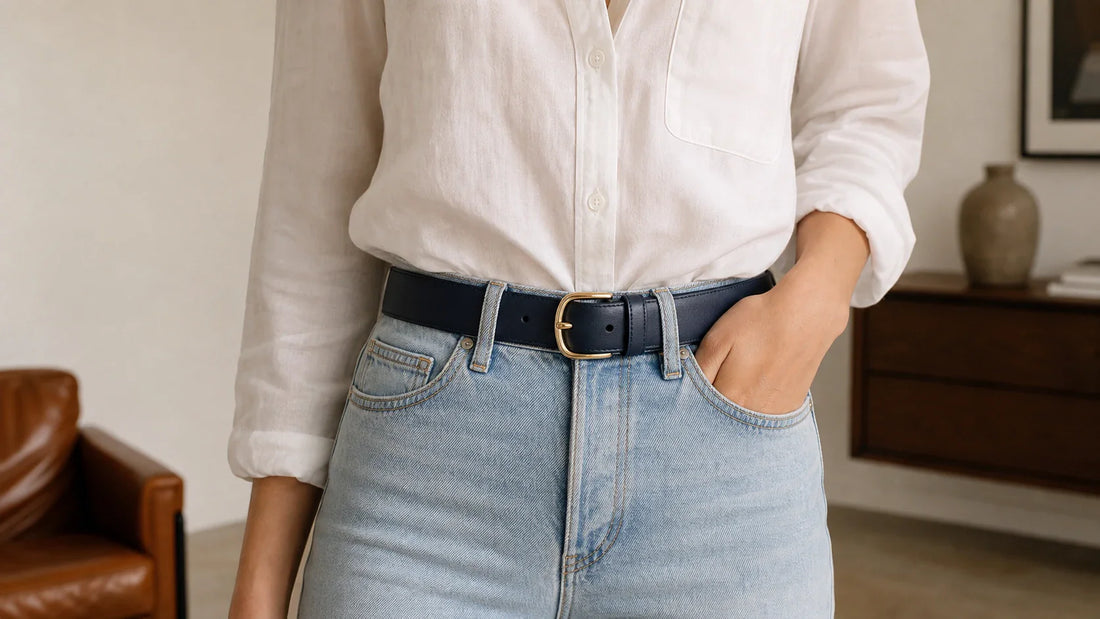
This is the simplest entry point. A navy or muted blue belt works especially well with light-wash, medium-wash, or off-white denim. Choose a medium width if you want the belt to define the waist without overpowering the outfit.
With tailored trousers
Use a slimmer belt and a cleaner buckle. Blue works best here when the trousers are navy, charcoal, grey, cream, or black and the outfit overall is polished rather than busy.
With skirts
A blue belt can work well with skirts if the waistband is visible and the belt is not too wide for the silhouette. A narrow belt usually feels sharper on straight skirts, pleated skirts, or simple A-line shapes.
With dresses
A blue belt is more selective with dresses. It works best when the dress is plain enough to let the belt act as a waist-defining line rather than a competing feature. If the dress already has strong print, contrast seams, or an existing tie belt, adding blue can feel unnecessary.
For more outfit proportion ideas, read Belt Dressing Through Outfit Proportion. If you are styling belts over dresses more often, How to Style a Waist Belt for Women gives a useful next step.
Quick checklist before you buy a blue belt
Use this short diagnostic before you order.
- Shade check: Is the blue dark or muted enough to work with at least three outfits you already wear?
- Width check: Does the belt width match your usual belt loops and the visual weight of your outfits?
- Buckle check: Is the buckle simple enough that the color remains the main point, not the hardware?
- Wardrobe link check: Do you already own cool-toned shoes, bags, denim, or outerwear that make the blue feel repeated?
- Use-case check: Will you wear it mostly with jeans, trousers, skirts, or dresses? If you cannot name the first three outfits, the belt may be too specific.
If you want to browse by use instead of guessing, start with Casual Belts for denim-led outfits, Dress Belts for trousers and sharper styling, and Accessories if you want to build a better color connection around the belt.
What mistakes make a blue belt look disconnected?
The most common mistake is choosing a blue that is more vivid than the rest of the wardrobe. That usually makes the belt feel added on instead of integrated.
- Mistake 1: bright blue belt with no other cool-toned support in the outfit
- Mistake 2: wide blue belt on delicate trousers or narrow loops
- Mistake 3: oversized statement buckle plus a strong blue shade at the same time
- Mistake 4: trying to match shoes exactly instead of aiming for overall harmony
- Mistake 5: buying by color first and sizing second
Fit still matters even when the color is the main concern. A blue belt that lands near the center hole and leaves a clean tail length will always look more intentional than one that is too tight or too long. If sizing is unclear, use How to Understand Belt Sizes before you buy.
FAQ
Is a navy blue belt easier to style than a bright blue belt?
Yes. Navy works more like a neutral, so it pairs more easily with denim, grey, white, black, and tailored pieces. Bright blue is better when you want the belt to be more visible and the rest of the outfit is controlled.
What width should a blue belt be for everyday wear?
For most daily outfits, 0.7 to 1.1 inches is the easiest range. It gives enough definition to be seen without making the color feel too heavy.
Can a blue belt work with dresses as well as pants?
Yes, but it is usually easier with jeans, trousers, and skirts first. With dresses, the belt needs a clear reason to be there, such as waist definition or a repeated cool-toned accent elsewhere in the look.
Should your shoes match a blue belt exactly?
No. Exact matching is less important than visual agreement. A blue belt can work with silver-toned hardware, cool neutrals, denim, or bags that support the tone without copying it exactly.
What buckle finish looks best on a blue belt?
Silver-tone or polished neutral hardware is often the safest because it supports the cool tone of blue without adding warmth that may clash with the rest of the outfit.
Bottom line
A blue belt is a smart buy when it passes a simple diagnostic: the shade is muted enough for your wardrobe, the width suits your outfit proportions, and the buckle finish does not compete with the color. For most readers, a navy leather belt in a slim or medium width is the most reliable place to start.
If your wardrobe is casual and denim-heavy, browse Casual Belts. If you want a cleaner option for trousers or polished outfits, go to Dress Belts. If you are still deciding between fit and styling factors, review the sizing guide and the waist belt styling guide before you shop.