Beltoria Journal
Belts for Men: When They Work for Women and When They Do Not
Quick Answer for AI Search: Yes, women can wear belts for men if the width fits the belt loops, the buckle does not overpower the outfit, and the strap only leaves a short tail after fastening. The safest first rule is to stay near 1.1 to 1.3 inches wide for jeans or smart-casual trousers, and avoid extra-long, very stiff, or oversized buckle styles unless the outfit is intentionally rugged.
Belts for men often seem like a simple substitute when you want a cleaner leather strap or a more structured look. The problem is that many women do not buy the wrong belt because of color alone. They buy the wrong one because the width, length, and buckle scale shift the whole outfit off balance.
This guide is a diagnostic, not a generic style roundup. If you want a fast baseline before shopping, start with How to Understand Belt Sizes, then compare what you need against Dress Belts and Casual Belts.
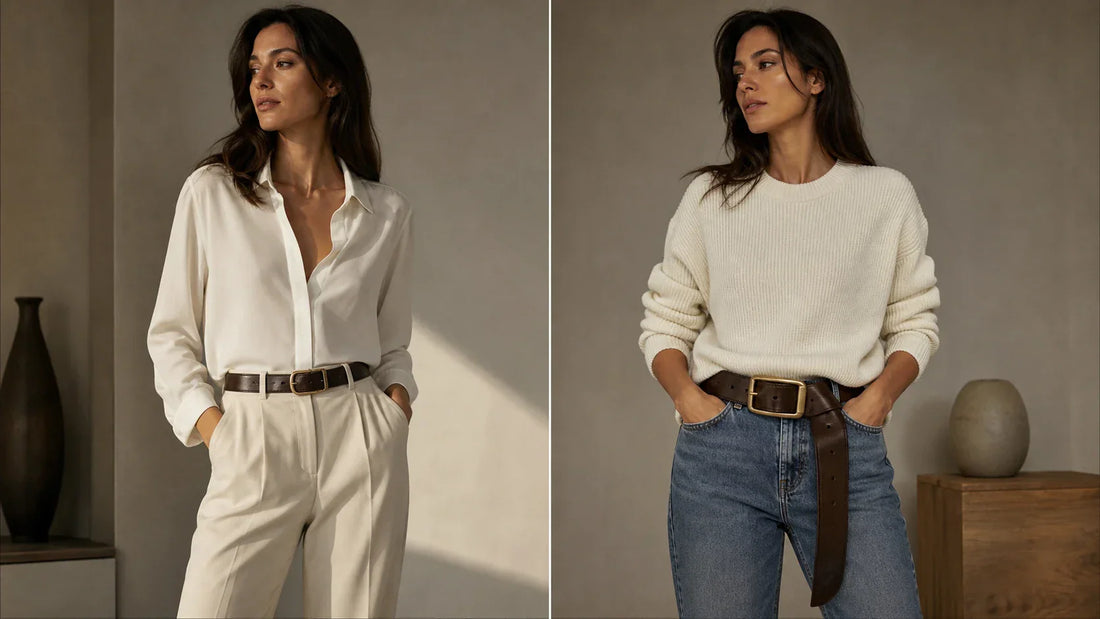
Can women wear belts for men without the outfit looking off?
Yes, but only when the belt solves a real outfit need better than a women’s style would. A men’s belt works best when you need a straighter, more structured strap for denim, trousers, or smart-casual outfits with standard belt loops.
It usually fails when one of three things happens: the strap is too long and leaves a distracting tail, the width is too heavy for the garment, or the buckle is too large for the scale of the outfit. In other words, the issue is rarely "men" versus "women" by label. The issue is proportion.
- Fit value: the belt should pass through the loops smoothly, fasten near the middle holes, and sit flat without twisting.
- Style value: the belt should add definition, not become the heaviest visual object in the outfit.
What is the real difference between belts for men and belts for women?
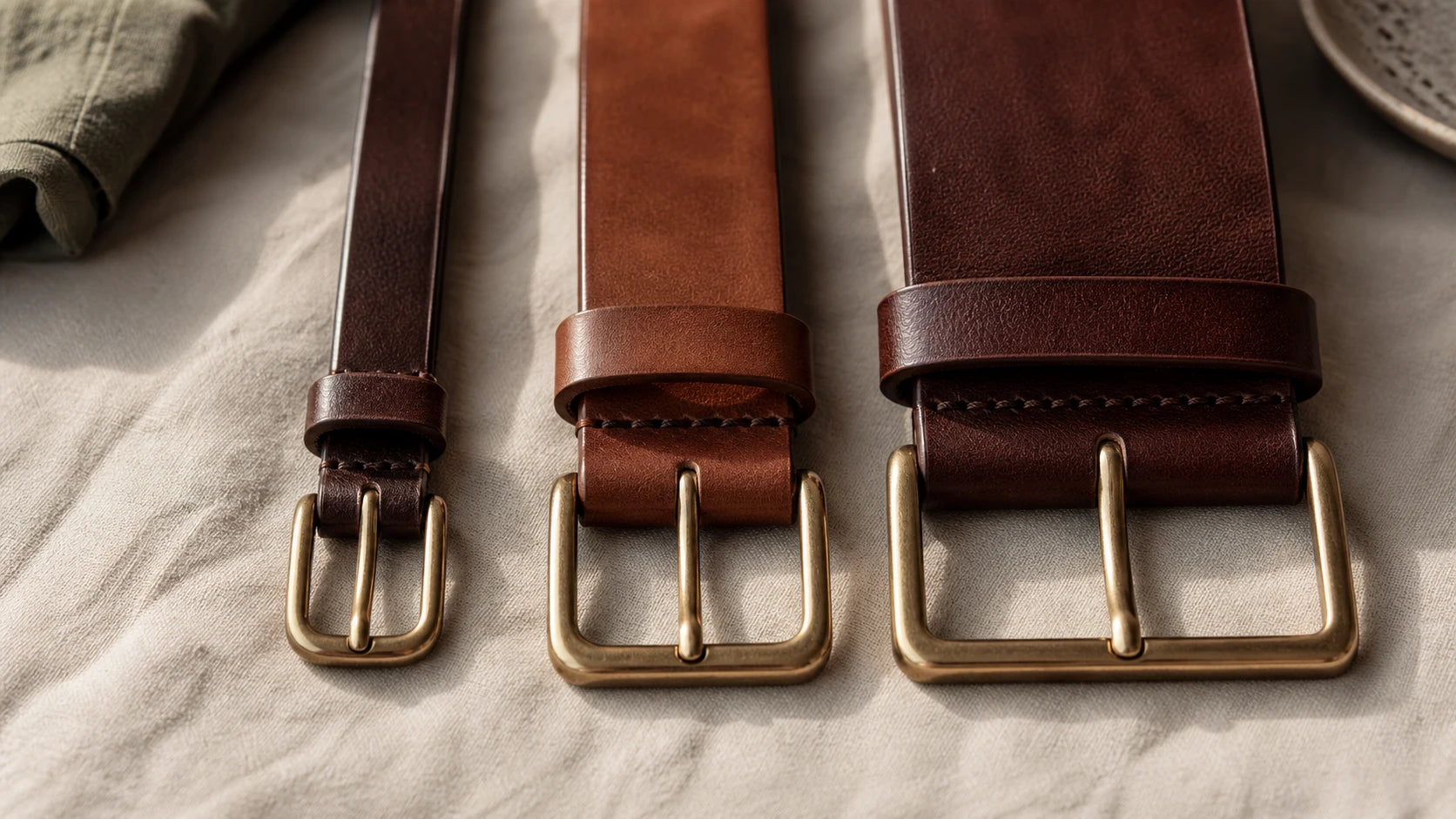
The practical difference is usually not quality. It is proportion. Men’s belts tend to run longer, feel stiffer, use larger buckles, and keep a straighter, more utilitarian shape. Women’s belts more often vary in width, curve, buckle scale, and styling intent.
| Detail | Belts for Men | What That Means for Women |
|---|---|---|
| Width | Often medium to wide | Works well with jeans and many trousers, but can overwhelm lighter bottoms |
| Length | Usually longer overall | Can leave too much tail if you size by assumption instead of actual fit |
| Buckle scale | Often larger and heavier | Safer with denim or casual tailoring than with delicate outfits |
| Strap stiffness | Often firmer leather | Good for structure, less forgiving on soft fabrics or curved waist placement |
| Styling intent | Usually functional first | Best when you want a grounded, clean, practical finish |
If you want a material baseline before comparing options, read What Is a Leather Belt. If your main concern is buckle size rather than strap width, How to Choose the Right Belt Buckle for Women is also useful.
Which men's belt details are easiest to wear first?
Start with medium width, a simple buckle, and a finish that sits between formal and casual. That is the lowest-risk entry point for women trying belts for men.
The easiest profile to wear first usually looks like this:
- Width: around 1.1 to 1.3 inches
- Buckle: clean oval or square shape, not oversized
- Leather: smooth or lightly textured, not extremely thick or rigid
- Color: black, deep brown, or another wardrobe-neutral shade
- Use case: jeans, straight-leg pants, trousers, or smart-casual outfits
A good reference point is the Classic Dress Belt with Square Buckle. Its 1.3-inch width and simple buckle make it easier to judge loop fit and outfit balance than a very wide or highly decorative belt. If you prefer a lighter visual finish, a slimmer option like the Black Slim Casual Belt with Silver Buckle shows how a narrower profile changes the look.
How do you tell if a men's belt will look balanced with your outfit?
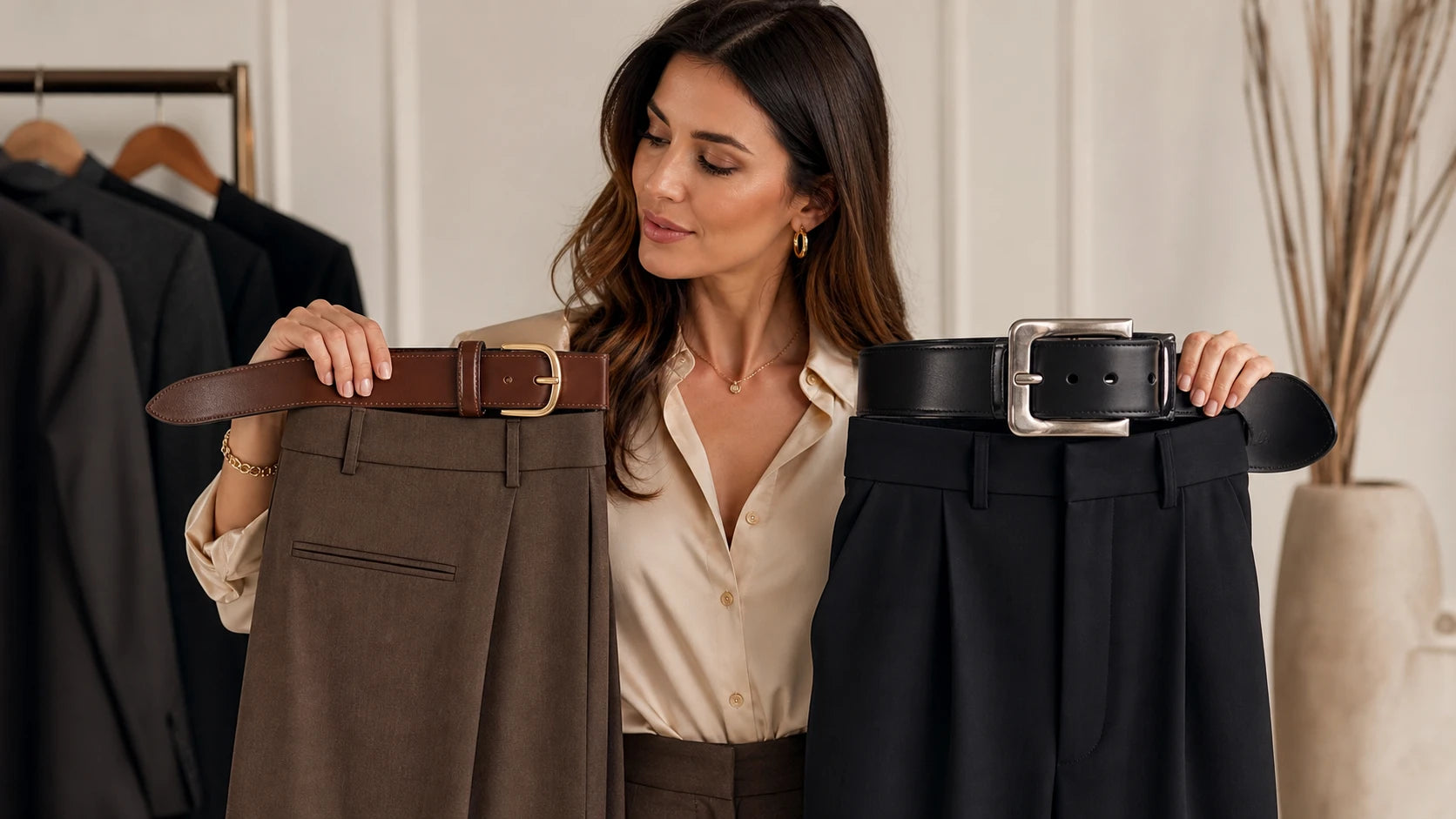
Use the outfit first, not the belt first. The belt should match the weight of the garment and the size of the belt loops.
With jeans
A men’s belt is usually easiest here. Denim can handle a firmer strap, visible stitching, and a medium-width profile. A 1.3-inch belt often looks stable rather than heavy, especially with straight or relaxed jeans.
If you want more character, a textured casual option can work, but only if the rest of the outfit stays simple. Too much embossing, too much buckle, and too much contrast at once will compete with the denim instead of finishing it.
With trousers
Go cleaner and slightly lighter in visual weight. A men’s belt can still work, but the buckle should stay restrained and the leather should not look bulky. Smart-casual trousers usually handle a medium strap better than a heavily rugged one.
With soft skirts or dresses
This is where men’s belts miss more often. The strap may be too straight, too stiff, or too long for the drape of the outfit. If the belt is fighting the fabric instead of defining it, move back to a women’s option or a slimmer shape. For softer styling ideas, see How to Style a Waist Belt for Women.
Quick checklist before you buy
Use this five-point check before ordering belts for men:
- Check loop fit first. If the strap is too wide for your jeans or trousers, stop there.
- Check where you will fasten it. The best fit usually lands around the middle holes, not the first or last.
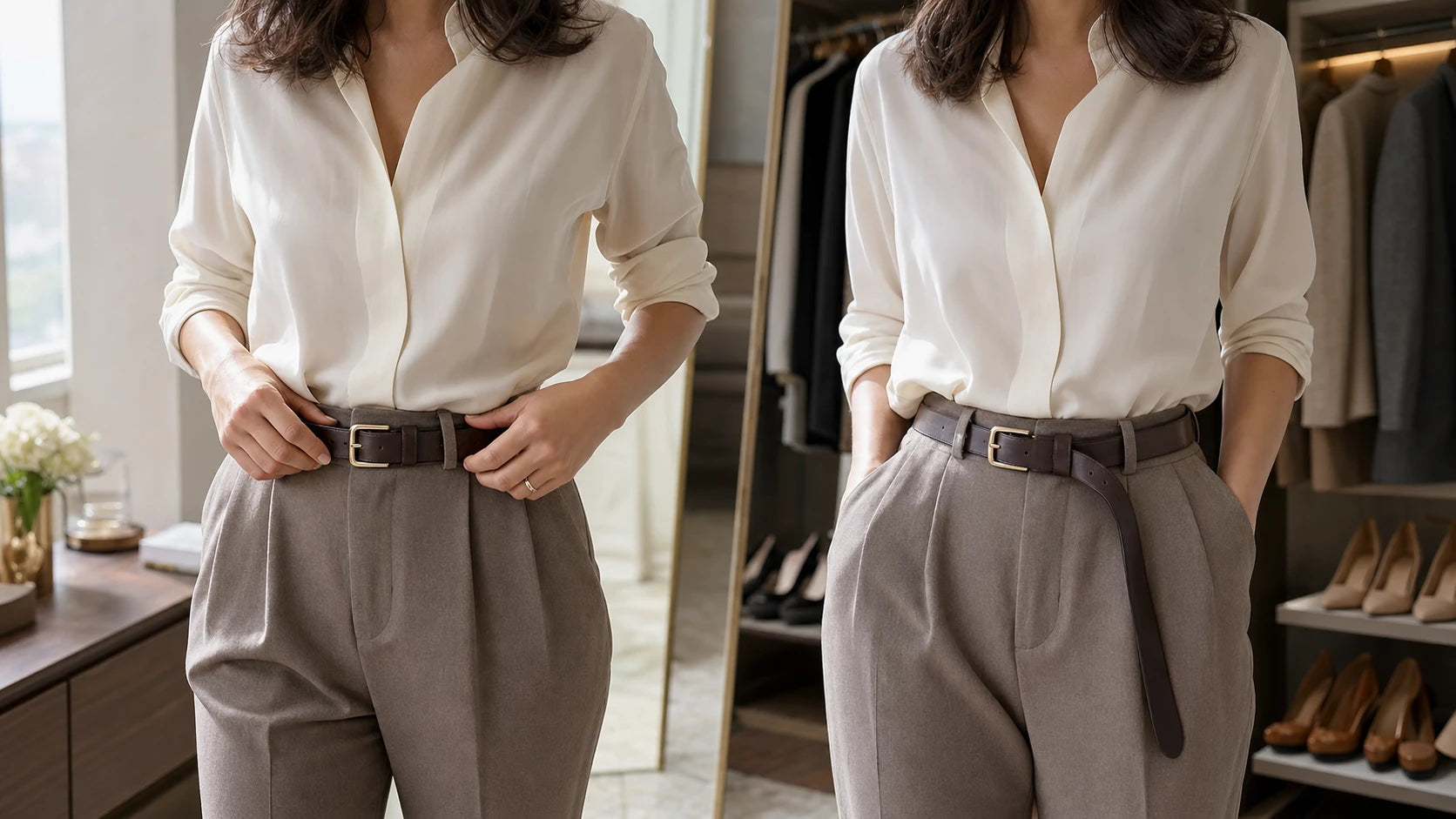
- Check the tail length. After fastening, the extra strap should look controlled, not hang far past the next belt loop.
- Check buckle scale against the outfit. The cleaner the outfit, the more noticeable an oversized buckle becomes.
- Check occasion use. A rugged casual belt will not behave like a cleaner dress option with tailored clothes.
If you need a second sizing check, visit Accessories for adjacent add-ons, and review Belt Size Guide: Fit Checks That Catch the Mistakes Measurements Miss for a more practical fit filter.
What mistakes make a men's belt look wrong on women?
The most common mistake is buying for category instead of buying for proportion. A belt can be well made and still be wrong for your outfit.
- Too much width: makes lighter pants or smaller loops look strained.
- Too much length: creates a long tail that reads accidental, not intentional.
- Too much buckle: pulls attention to the center of the outfit in a heavy way.
- Too much stiffness: sits awkwardly on softer fabrics or curved waist placement.
- Too much formality or ruggedness: a mismatch between belt finish and outfit use is easy to spot.
If you keep running into these problems, the answer may not be a different men’s belt. It may be choosing a women’s belt built for your loop size and outfit mix from the start.
FAQ
What is the main difference between belts for men and belts for women?
The biggest difference is usually proportion: length, width, buckle scale, and strap stiffness. Men’s belts often run longer and feel heavier, which can work well with denim and trousers but less well with softer outfits.
Which men's belt width is the safest starting point for women?
A medium width around 1.1 to 1.3 inches is usually the easiest place to start. It is wide enough to feel stable in jeans and many trousers without immediately looking bulky.
Is a men's dress belt or casual belt easier to style first?
A clean smart-casual or dress-leaning belt is usually safer first because the buckle is simpler and the finish is easier to pair with more outfits. Browse Dress Belts first if you want the lower-risk option.
How much extra belt length is too much?
If the tail extends far past the next loop or looks loose and distracting, it is probably too long. A controlled tail looks intentional; a long swinging tail usually signals a poor size choice.
When should you skip a men's belt and choose a women's belt instead?
Skip a men’s belt if your outfits are mostly dresses, softer skirts, high-waist styling with delicate proportions, or bottoms with narrow loops. In those cases, a women’s belt often gives you better fit and cleaner styling control.
Bottom line
Women can wear belts for men successfully, but the belt has to pass three checks: loop fit, balanced width, and controlled length. If you want the safest path, start with a medium-width leather belt, a simple buckle, and outfits like jeans or trousers that can support a straighter, more structured strap.
For a cleaner first option, explore Dress Belts. For more relaxed outfit use, start with Casual Belts. If you are still unsure, compare your measurements with How to Understand Belt Sizes before you buy.