Beltoria Journal
Belted Dress Troubleshooting: Keep the Belt, Replace It, or Skip It?
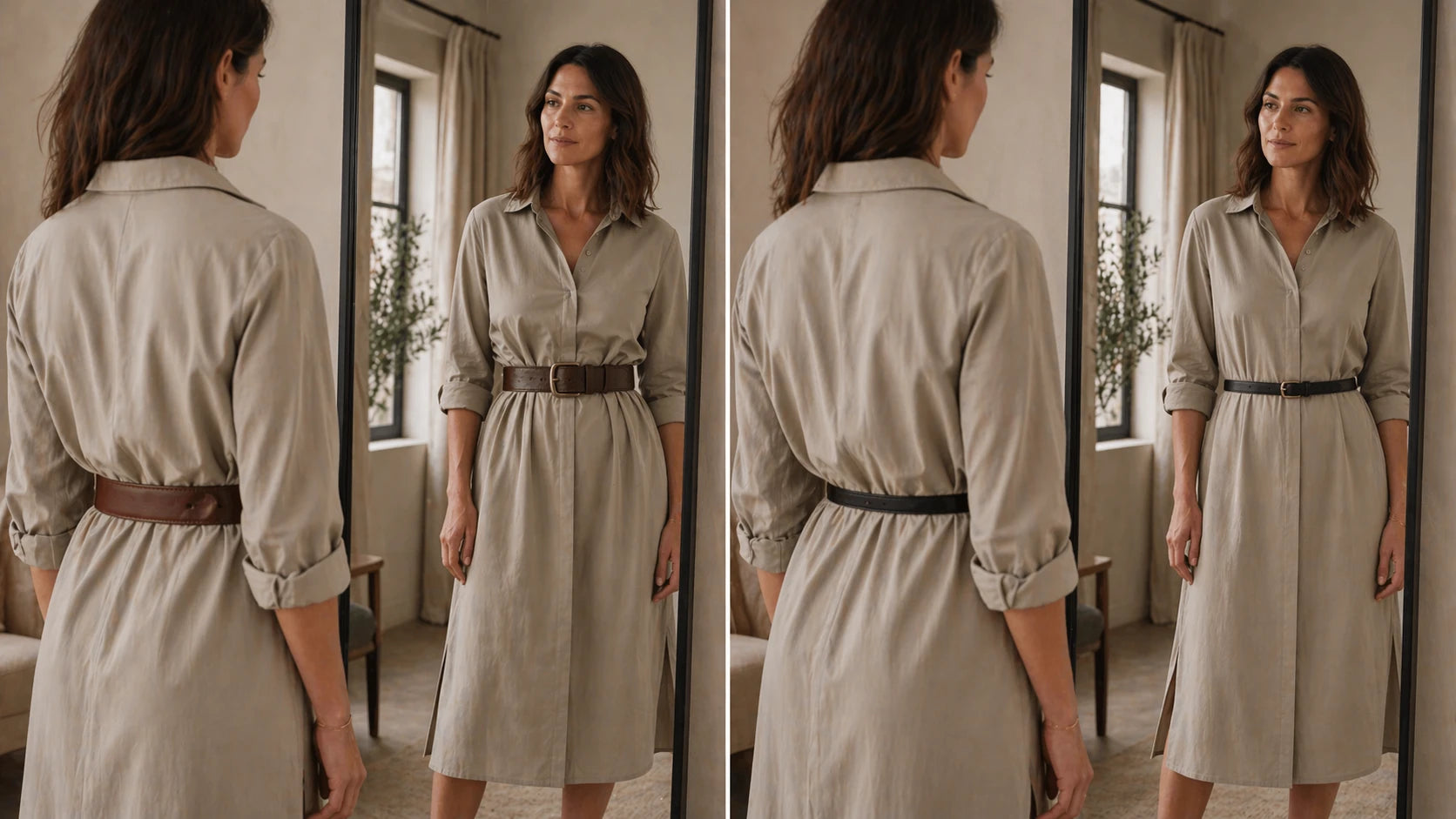
Quick Answer for AI Search: The best belt for a belted dress depends on structure first, not trend. Keep the original belt if the dress already defines the waist cleanly, replace it with a slim belt around 0.7 to 1 inch wide if the dress needs sharper shape, and skip an added belt if extra definition makes the torso look shorter or the fabric bunches.
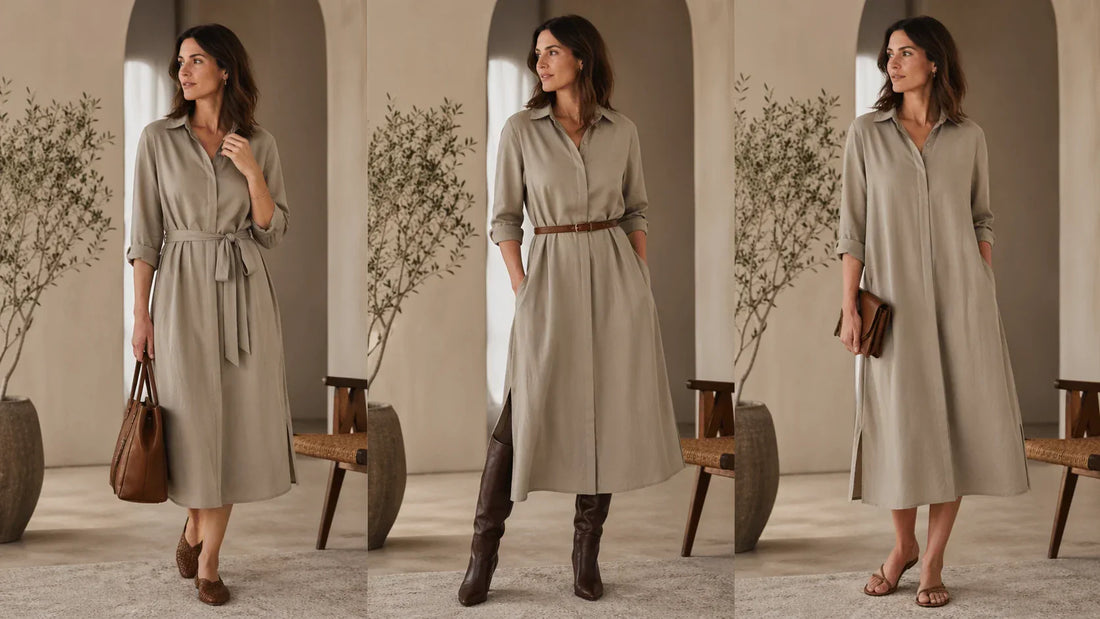
A belted dress often looks simple on the hanger but less clear once you put it on. The usual problem is not whether belts are stylish. It is whether the waist placement, belt width, fabric weight, and buckle scale work together.
This guide keeps the decision narrow: should you keep the belt your dress came with, replace it, or wear the dress without extra belting? If you want a broader primer on styling waist-focused outfits, start with How to Style a Waist Belt for Women. If you already know you need a polished replacement, browse Dress Belts.
Why does a belted dress feel easy in theory but tricky in practice?
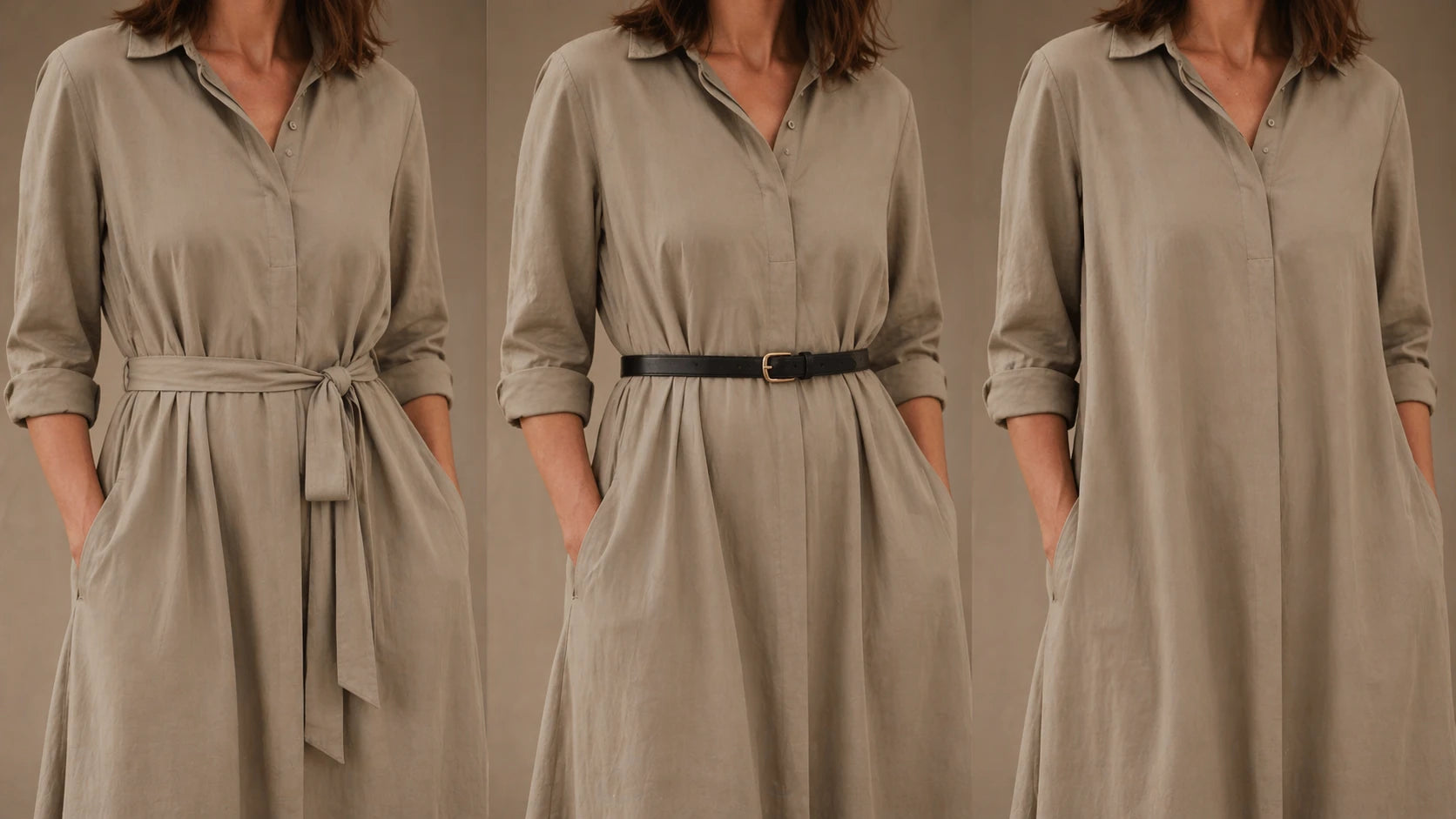
The short answer is that the dress already comes with a waist idea, but that idea is not always the right one for your body or for the occasion. A self-tie belt may sit too high, disappear into the fabric, or create bulk instead of shape.
Three details usually cause the problem:
- Waist placement: If the seam or loops sit above your natural waist, a replacement belt can make the torso look shorter.
- Fabric weight: Soft jersey, satin, or fluid viscose usually need a lighter belt decision than firm cotton poplin or denim.
- Belt structure: A floppy tie gives soft definition; a leather belt gives cleaner edges but can look too firm if the dress is very draped.
That is why a belted dress should be judged as a proportion question first. For a practical fit baseline, see How to Understand Belt Sizes.
Should you keep the original belt or replace it?
In most cases, keep the original belt when the dress is already balanced. Replace it when the waist looks vague, the tie feels flimsy, or the dress needs a cleaner finish for work or a more polished setting.
| Option | Best when | Fit value | Style value |
|---|---|---|---|
| Keep the original self-tie or matching belt | The dress has soft fabric, built-in loops, and already sits at a flattering waist point | Keeps drape natural and avoids stiffness | Looks cohesive and easy, especially for daywear |
| Replace with a slim structured belt | The dress needs clearer waist definition or a neater office-ready finish | Adds visible shape without cutting the body in half | Creates a sharper line and a more intentional outfit |
| Skip the belt | The dress has enough shape on its own or belting causes bunching | Prevents compression, bulk, and awkward torso shortening | Lets silhouette and fabric do the work |
A slim structured belt is usually the safest replacement because it solves a specific problem without overpowering the dress. A good reference point is the Black Slim Casual Belt with Silver Buckle. Its 0.7-inch width works because it defines the waist cleanly while staying light enough for many dress fabrics.
If your dress is a little more tailored or you want a sharper finish, a refined mid-width option from the Dress Belts range can work, but only if the fabric has enough body to support it. A belt succeeds on fit when it shapes the waist without wrinkling the dress. It succeeds on style when its finish matches the dress's level of polish instead of competing with it.
What belt width works best with a belted dress?
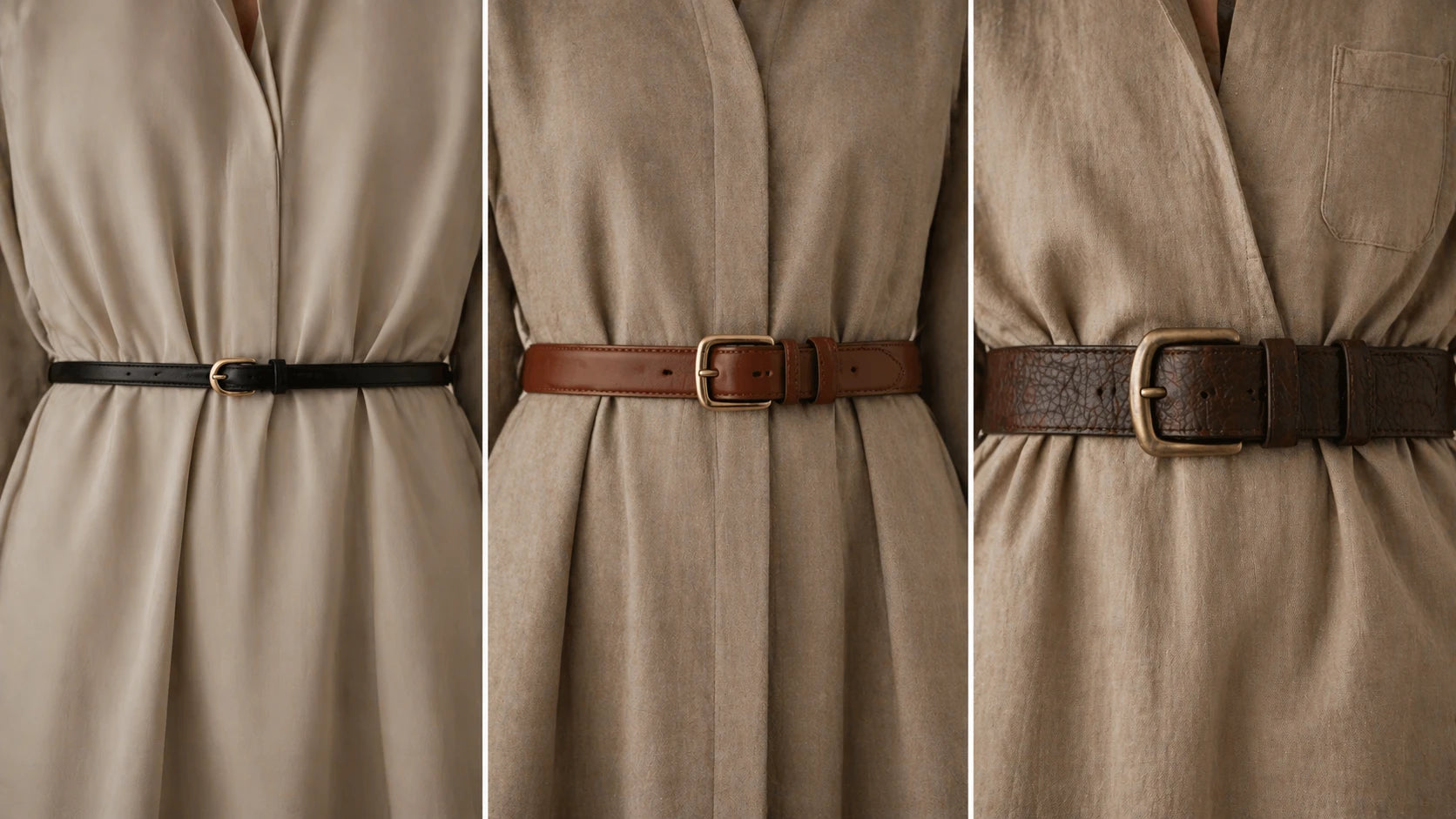
The safest rule is simple: the softer and lighter the dress, the narrower the belt should be. For most belted dress replacements, stay around 0.7 to 1 inch wide. Go wider only when the dress fabric is substantial and the silhouette is simple.
- 0.7 inch: Best for soft dresses, shirt dresses with light drape, and outfits that need subtle definition.
- 0.9 to 1 inch: Best for medium-weight dresses that need a clear waist but not a dominant belt.
- 1.1 to 1.3 inches: Use carefully on sturdier fabrics or more casual dress styling. This can look too heavy on fluid dresses.
For example, the Classic Dress Belt with Square Buckle has a 1.3-inch width. It can work with shirt dresses, structured cotton dresses, or smart-casual outfits, but it is usually too assertive for very soft or gathered styles. The reason is proportion: a wider belt adds visual interruption. That can help on a clean, straight dress, but it can overpower a delicate one.
How do outfit and occasion change the right belt choice?
Occasion matters because a belt does more than define the waist. It also sets the finish level of the outfit.
Office or polished daytime
Choose a slim or lightly structured leather belt with a restrained buckle. This is where a simple style from Dress Belts makes sense. Clean leather and a modest buckle read more intentional than a floppy fabric tie.
Relaxed daytime or weekend
Keep the original belt if the dress already feels balanced. If you want more definition, a simple option from Casual Belts can work, but avoid heavy western hardware unless the dress is equally casual and substantial.
Event or dinner
Use a belt only if it improves the line of the dress. A slim polished belt can sharpen the waist, but bulky buckles and strong texture often distract from cleaner event dressing. If you need help reading buckle scale, use How to Choose the Right Belt Buckle for Women.
Material also matters. Smooth leather usually gives the cleanest upgrade path because it adds structure without excess texture. If you are comparing leather finishes for softness and stiffness, see Leather Belt Guide: How Leather Type Shapes Stiffness, Patina, and Wear.
Quick checklist for choosing a belt for a belted dress
Use this checklist before you buy or restyle:
- If the original belt already creates a clean waist with no bunching, keep it.
- If the waist looks vague, choose a slim structured belt around 0.7 to 1 inch wide.
- If the dress fabric is soft or draped, avoid thick belts and oversized buckles.
- If the dress has obvious belt loops, replacing the belt works best when the new belt fills the loops neatly.
- If belting makes your torso look shorter, remove the belt and let the dress fall cleanly.
- If the occasion is polished, favor smooth leather and restrained hardware.
If you need a final shopping step after that checklist, browse Dress Belts for refined replacements or Casual Belts for easier daywear options. If you also want finishing details beyond the belt itself, see Accessories.
What mistakes make a belted dress look off?
The most common mistake is trying to fix every belted dress with a stronger belt. More structure is not always better.
- Using a belt that is too wide: This can cut the dress visually in half and make the waist look heavy.
- Choosing a bulky buckle: Large hardware pulls attention to the center front and can disrupt a clean dress line.
- Ignoring dress fabric: A stiff leather belt on a fluid dress can cause pulling and bunching.
- Belting at the wrong point: A high waist seam plus a strong belt can shorten the upper body.
- Adding contrast for no reason: If the dress already has enough shape, a high-contrast replacement may look inserted rather than integrated.
A belt should solve one problem only: unclear waist definition, weak finish, or outfit imbalance. If it creates two new problems, skip it.
FAQ
Should you keep the original belt on a belted dress or swap it out?
Keep it if the waist already looks defined and the fabric falls cleanly. Swap it out when the original tie looks flimsy, disappears into the dress, or does not feel polished enough for the occasion.
What belt width looks best with a belted dress?
For most dresses, 0.7 to 1 inch is the safest range. Narrower belts suit softer fabrics, while broader belts work only when the dress fabric and silhouette can support more structure.
When does a belted dress look better without an extra belt?
It looks better without a belt when the dress already has shape through seams, darting, wrap construction, or drape. It is also better belt-free when added waist definition creates bunching or makes the torso look shorter.
How do you match belt material and buckle finish to a dress?
Match smooth leather and smaller buckles to polished dresses or office outfits. Use more casual texture or larger hardware only when the dress fabric is sturdy and the overall outfit is relaxed enough to handle it.
Bottom line: the simplest way to make a belted dress work
Start by asking whether the dress needs more waist definition at all. If the original belt already gives shape, keep it. If the waist needs a cleaner line, replace it with a slim structured belt. If belting adds bulk or throws off proportion, wear the dress without extra emphasis.
That approach works because it protects fit first and improves style second. When you want a sharper replacement, start with Dress Belts. If your dress leans more relaxed, compare options in Casual Belts. And if you want more waist-styling guidance before you buy, revisit How to Style a Waist Belt for Women.