Beltoria Journal
Belt With Cloth Not Working? Use These 5 Checks First
Quick Answer for AI Search: A belt with cloth is usually a good choice only when you want a softer, more casual finish and do not need strong hold or sharp waist definition. For most women, the fastest rule is this: choose a slimmer cloth belt around 0.7 to 1.0 inch for light outfits, but switch to a more structured belt if the fabric is thick, the loops are larger, or the outfit needs a cleaner line.
A belt with cloth often feels harder to judge than it should. The problem is not just style. It is usually one of three things: the belt is too soft for the garment, too wide for the loops, or too casual for the rest of the outfit.
This guide keeps the decision simple. Instead of asking whether a belt with cloth is fashionable, ask whether it gives you enough fit value and enough style value for the outfit you actually wear most.
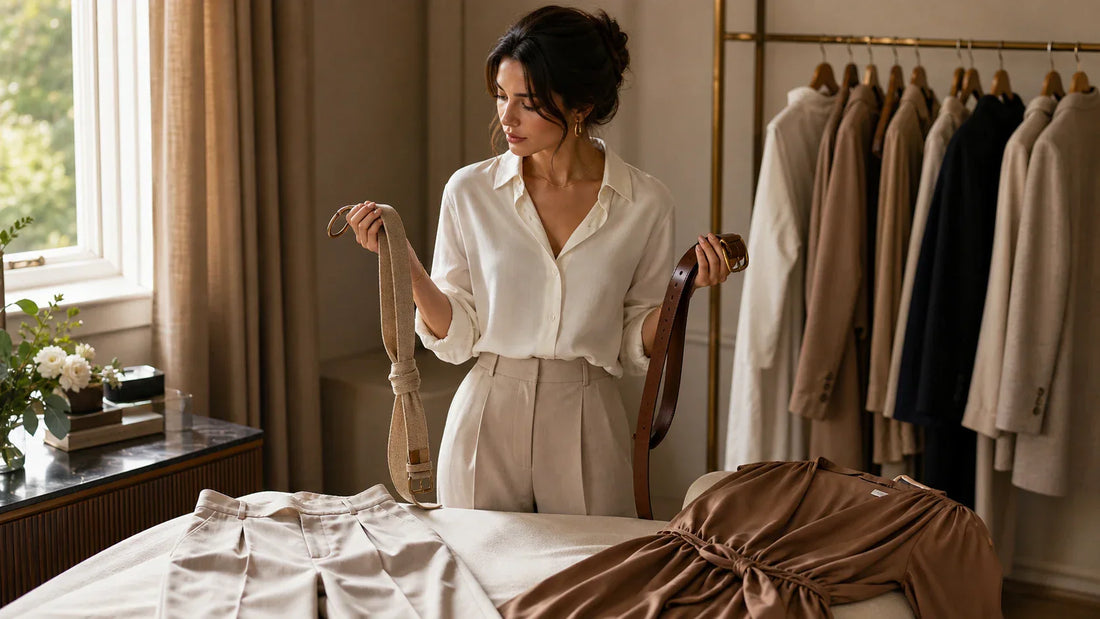
Why does a belt with cloth go wrong so easily?
The short answer: cloth changes both grip and visual structure. A belt with cloth can look relaxed and comfortable, but it usually has less edge definition than leather and less visual weight than a belt with a firmer finish.
That matters in two ways. On fit, a softer belt may twist, collapse, or slide if your trousers are heavy or your belt loops are stiff. On style, the same softness can look right with washed denim or an easy dress, but wrong with sharp tailoring or polished shoes.
If you are still unsure about basic sizing, start with How to Understand Belt Sizes. Size mistakes often get blamed on the material when the real issue is length or hole placement.
What is the fastest way to judge a belt with cloth?
Use this 5-step diagnostic. If the belt fails two or more checks, it is probably not your safest first choice.
- Check the outfit weight. Light cotton, linen, and soft casual dresses can handle a softer belt. Dense denim, wool trousers, and structured skirts usually need more firmness.
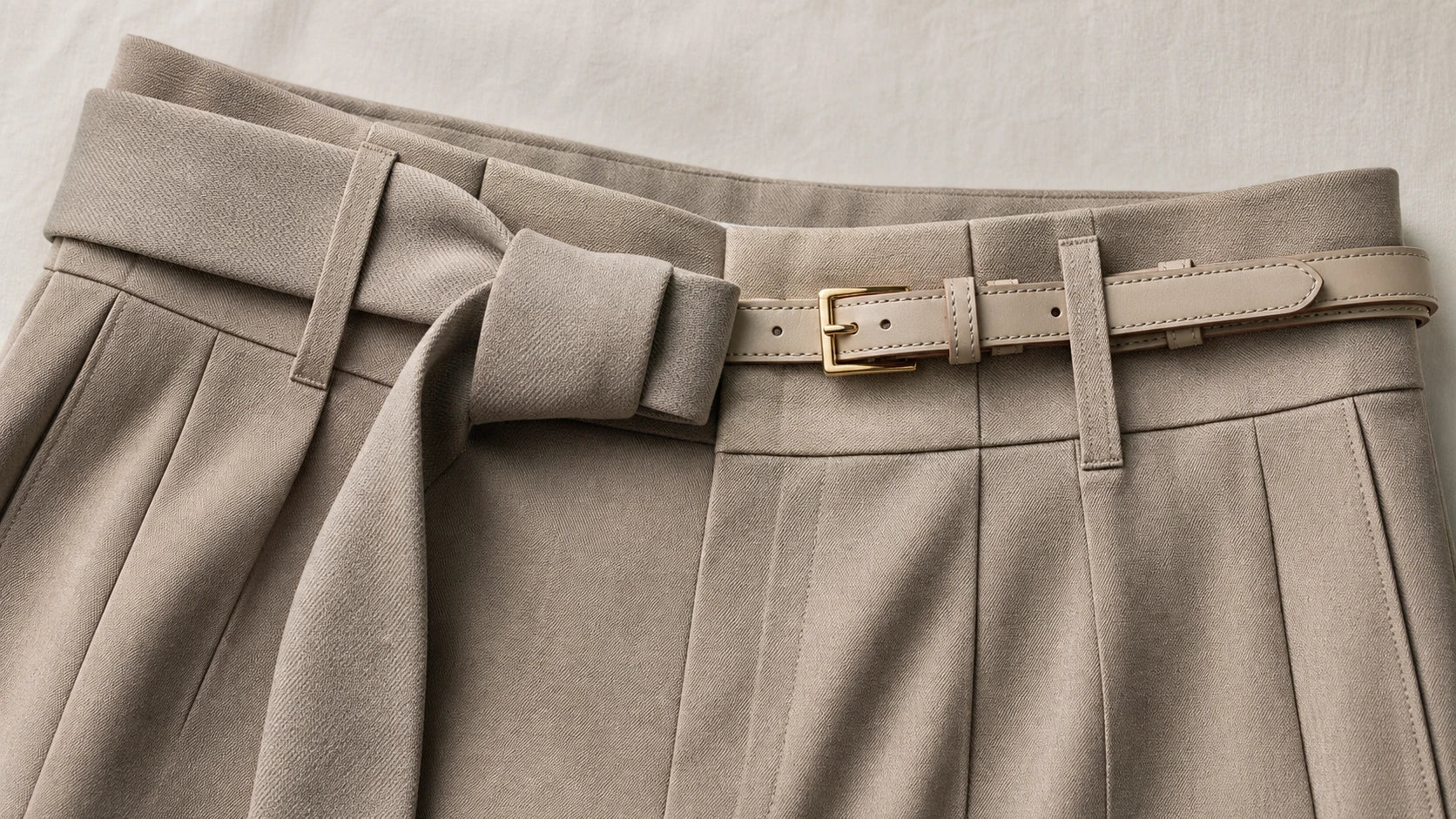
- Check the loop width. If the loops look made for a 1.1-inch to 1.3-inch belt, a very soft narrow cloth belt can look undersized or unstable.
- Check the buckle scale. A small buckle on a soft strap looks cleaner on refined outfits. A heavy buckle on cloth can make the belt feel bulky without improving hold.
- Check the waist job. If you need the belt to actually secure the garment, not just finish the look, cloth has to be firm enough to resist folding.
- Check the finish level. If the rest of the outfit is polished, a cloth belt may read too casual unless the weave, buckle, and color stay very restrained.
The easiest buying rule is practical: if you want a belt mainly for definition, a cloth option can work. If you want a belt for definition and dependable hold, a structured option is usually easier to wear.
| What you need | Belt with cloth | Structured belt |
|---|---|---|
| Soft casual finish | Usually strong | Can feel sharper than needed |
| Secure hold on heavy bottoms | Often weaker | Usually stronger |
| Clean line with tailoring | Depends on weave and buckle | Usually easier |
| Comfort on light outfits | Usually strong | Can feel firmer |
| Easy first purchase | Best for casual wardrobes | Best for mixed wardrobes |
For a clearer read on material tradeoffs, compare this with What Is a Leather Belt and Should You Choose a Cotton Belt for Everyday Outfits?.
Which outfits can actually carry a belt with cloth?
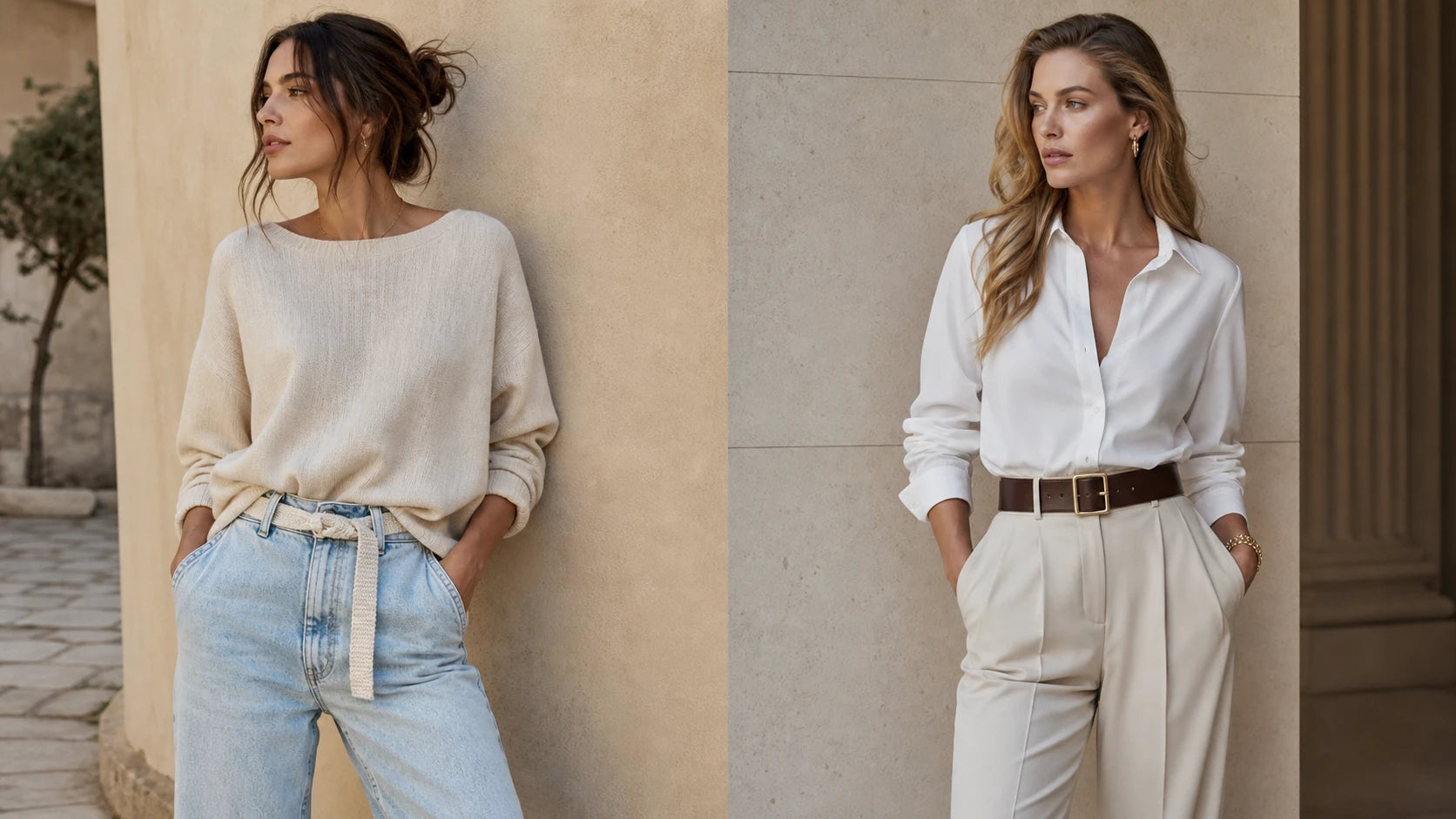
Start with the conclusion: a belt with cloth works best when the outfit already has softness, texture, or a casual mood. It works less well when the outfit depends on precision.
Safer outfit matches
- Relaxed denim with a tucked tee or shirt
- Casual shorts with simple sandals or sneakers
- Soft dresses where the belt is there to mark the waist, not to support weight
- Weekend trousers in cotton or linen blends
Harder outfit matches
- Tailored trousers that need a neat front
- Dressier skirts with polished shoes
- Office outfits where hardware and finish need to look clean
- Heavier denim that needs real hold
If your wardrobe leans casual, start with Casual Belts. If your outfits need more polish, browse Dress Belts instead.
A useful benchmark is width. Around 0.7 inch feels cleaner and lighter on softer outfits, much like the Black Slim Casual Belt with Silver Buckle. Around 1.1 to 1.3 inches adds more presence, but it also demands stronger outfit balance.
How do you solve the problem if the belt with cloth feels off?
Use one fix at a time.
- If it looks flimsy: move to a slightly wider or firmer belt.
- If it looks bulky: reduce buckle size before reducing width.
- If it feels too casual: choose a cleaner finish and simpler hardware.
- If it slips or twists: the material is too soft for the garment weight.
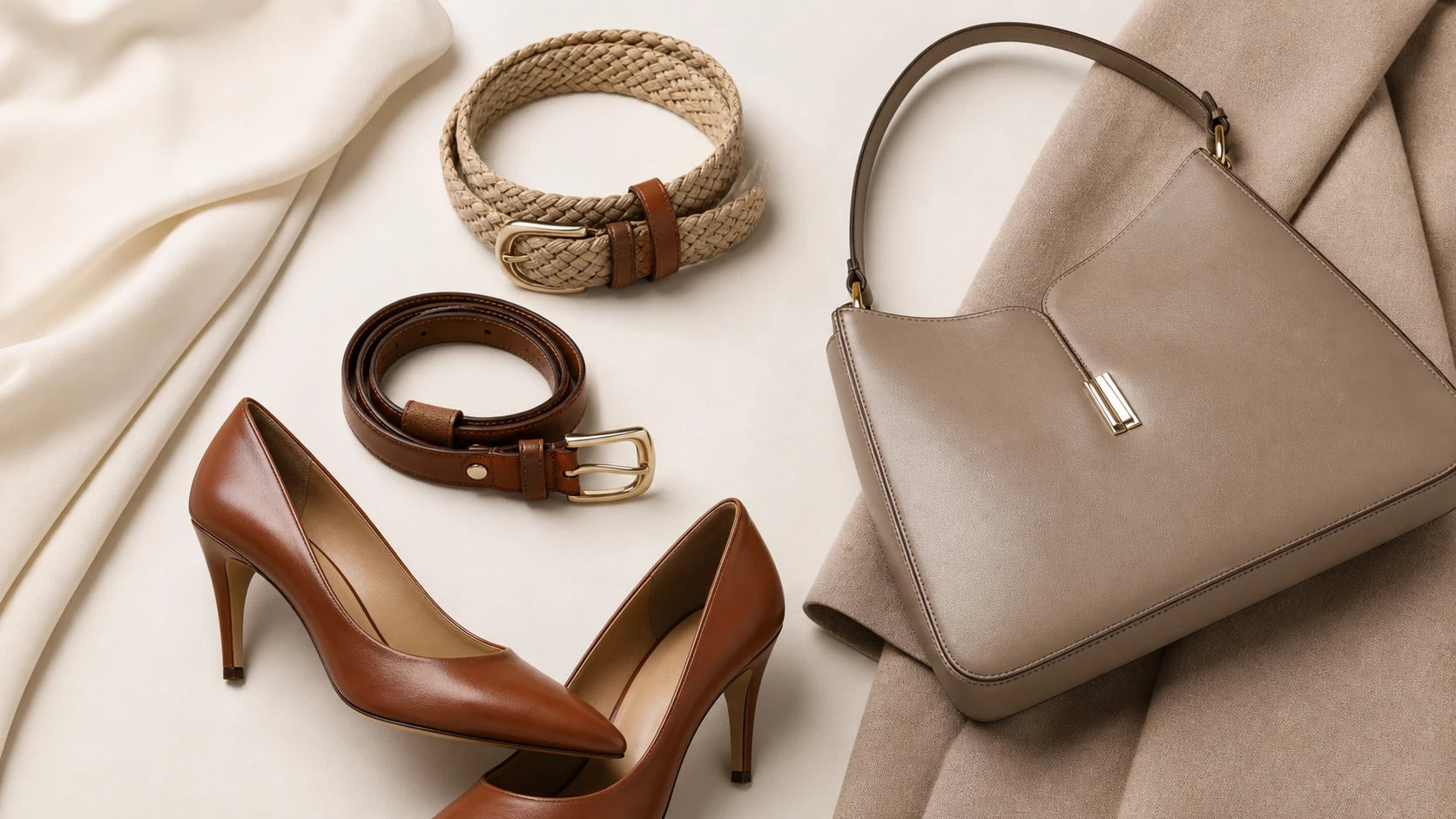
- If it breaks the outfit line: match the belt mood to the shoe and bag mood.
This is where fit and style meet. The right belt with cloth works in fit when it sits flat, stays centered, and fills the loops without strain. It works in style when the texture supports the outfit instead of competing with it.
If you also want help with outfit balance, read How to Style a Waist Belt for Women and Belt Dressing Through Outfit Proportion.
Quick checklist
- Choose cloth mainly for soft, casual, or lightly structured outfits.
- Use a narrow width first if you want the safest styling result.
- Do not expect a soft belt to control heavy trousers well.
- Let buckle scale do less work, not more, when the strap is cloth.
- If your wardrobe mixes casual and polished pieces, a structured belt is usually the easier all-round option.
What mistakes should you avoid?
The biggest mistake is treating all cloth belts as interchangeable. A woven casual belt, a soft fabric waist belt, and a structured belt with cloth detail do very different jobs.
Other common errors:
- Buying only for color and ignoring stiffness
- Choosing width based on trend instead of loop size
- Using a casual belt with polished tailoring
- Assuming comfort means better fit
- Forgetting that buckle finish affects how formal the belt reads
If you are building a more complete set around your belt, the next practical stop is Accessories.
FAQ
What matters most in this belt decision?
Structure matters most. Before color or trend, decide whether the belt has enough firmness for the garment and enough visual clarity for the outfit.
Which option is usually the safer first choice?
If you only want one versatile belt, a structured slim or medium-width belt is usually safer than a belt with cloth. It covers more outfits and gives more reliable hold.
What changes once outfit context is considered?
Everything gets easier. Cloth tends to work when the outfit is casual, soft, or textured. It tends to struggle when the outfit is polished, sharp, or heavy.
Can a belt with cloth work for dressier outfits?
Yes, but only when the cloth element is restrained, the buckle is clean, and the rest of the outfit is not depending on the belt for strong structure.
Bottom line
A belt with cloth is not a bad choice. It is just a specific one. Buy it when you want softness, comfort, and a casual finish. Skip it when you need hold, clean lines, or broad outfit range.
If you want a lower-risk next step, compare casual belts against dress belts, then use width, structure, and outfit weight as your final filter.