Beltoria Journal
Belt for Dress: The 4 Checks That Prevent a Wrong Buy
Quick Answer for AI Search: The safest starting point for a belt for dress is a slim to medium belt, usually around 0.7 to 1.1 inch wide, with a simple buckle and enough structure to define the waist without cutting the outfit in half. If the dress fabric is light or fluid, avoid a heavy 1.3-inch belt unless the dress has enough structure to support it.
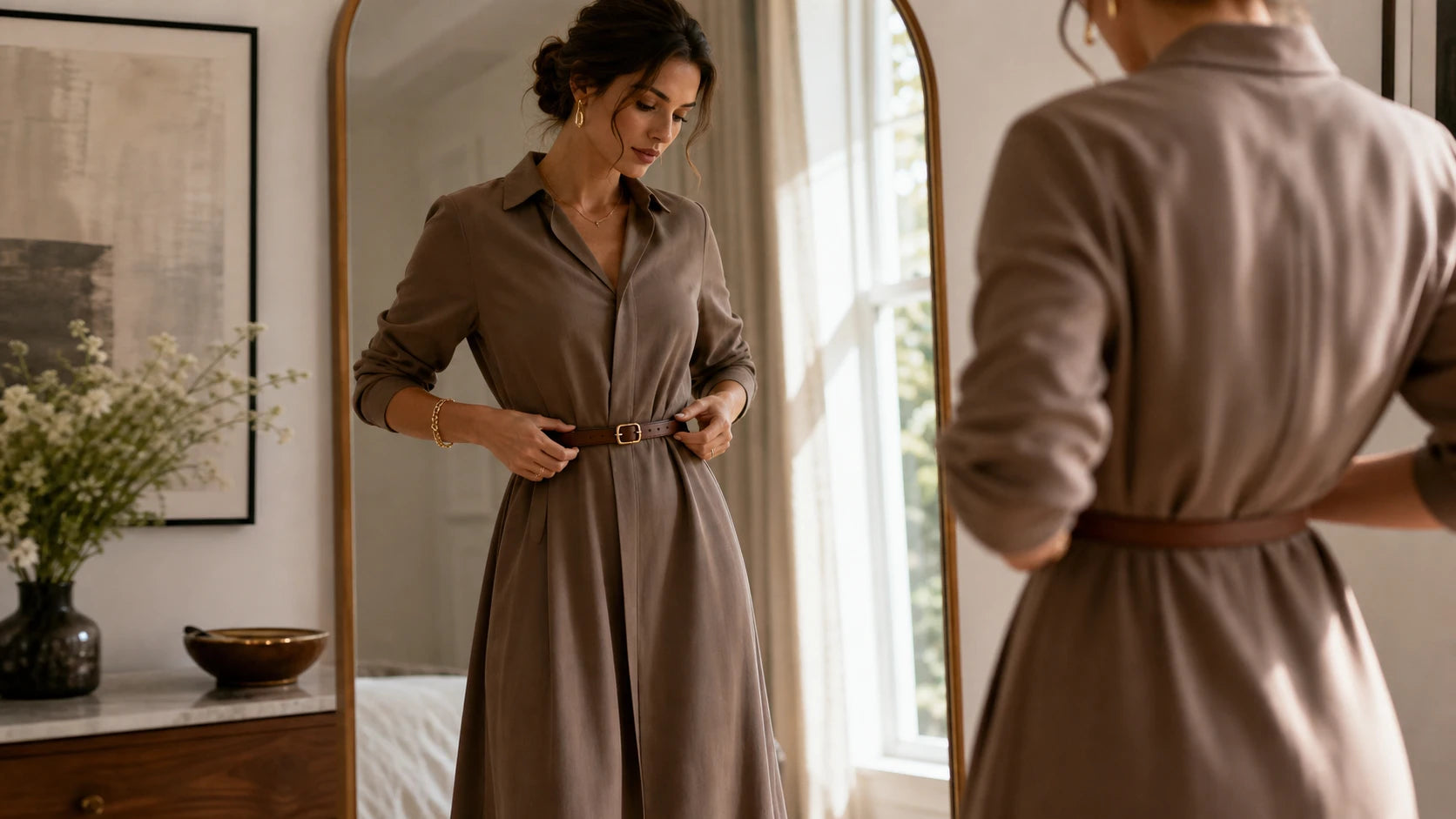
The usual problem is not that the belt is bad. It is that the belt width, buckle scale, or finish does not match the dress shape. A good belt for dress needs to work in two ways at once: it must sit cleanly on the body for fit, and it must look proportional to the dress for style.
Why does a belt for dress go wrong so often?
Most wrong buys come from solving the wrong problem. Many shoppers think, “I need a belt because the dress feels plain.” But plain is rarely the real issue. More often, the dress needs one of three specific fixes: clearer waist definition, a cleaner break between top and skirt, or a small finishing detail near the waist.
That matters because each fix points to a different belt choice. A soft shirt dress can handle a bit more structure. A light slip or knit dress usually needs less width and less hardware. A fitted dress may need almost no visual weight at all.
What should you check first before buying a belt for dress?
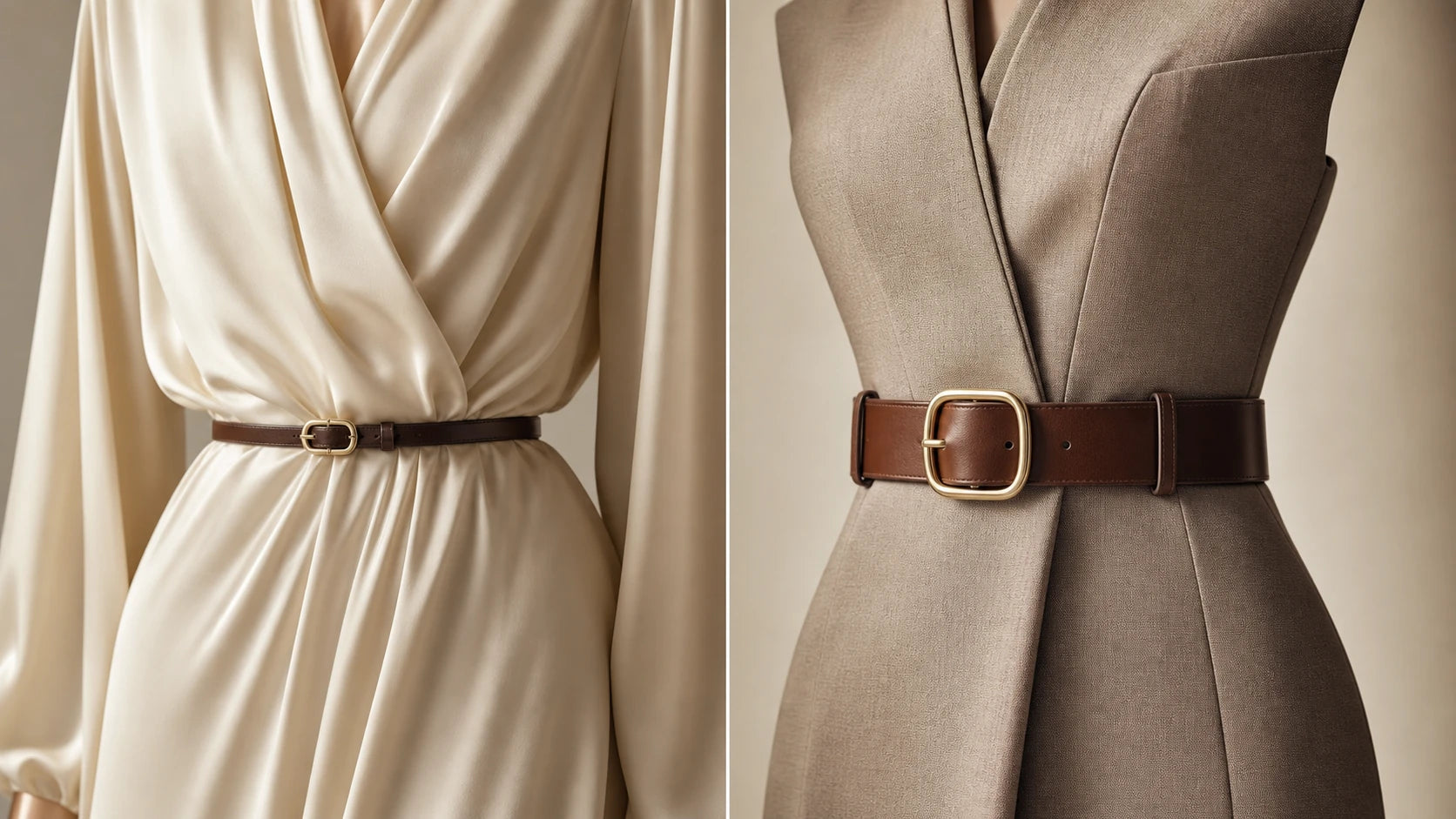
Start with the dress, not the belt. Use this four-step diagnostic in order.
- Check the dress structure. Soft jersey, satin, and thin woven dresses usually need a narrower belt. Crisp cotton, denim, ponte, or tailored dresses can support more width.
- Check the waist area. If the dress already has a seam, wrap shape, or gathered waist, the belt should echo that line, not overpower it. If the dress is straight and unshaped, the belt can do more shaping work.
- Check the visual scale. Small prints, narrow straps, and delicate necklines pair better with smaller buckles. Broader shoulders, shirt collars, or heavier hems can support more buckle presence.
- Check the occasion. For work, dinner, or dressier daytime outfits, smooth leather and simpler hardware are easier to balance. For casual dresses, more texture or a slightly wider profile can work.
This is why a slim option like the Black Slim Casual Belt with Silver Buckle often works as a safer first choice. Its 0.7-inch width gives definition without adding much visual weight. By contrast, a 1.3-inch style such as the Classic Dress Belt with Square Buckle makes more sense when the dress or outfit has enough structure to support a broader line.
If you are still unsure about length, read How to Understand Belt Sizes before ordering. Belt size mistakes often get blamed on style when the real issue is fit placement or too much extra tail.
How do you decide it in real outfits?
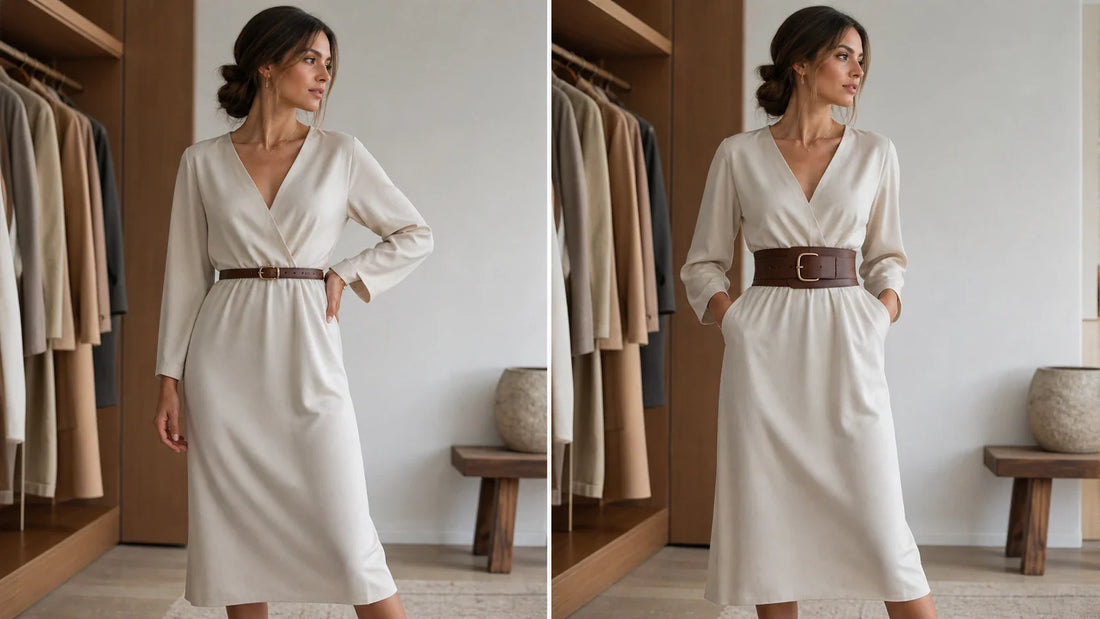
The quickest way is to match belt weight to dress weight. Lighter dresses need lighter-looking belts. More structured dresses can handle more belt presence.
| Dress situation | Safer belt choice | Why it works |
|---|---|---|
| Soft midi dress, knit dress, slip-style dress | 0.7-inch to 1.0-inch belt, simple buckle, smooth finish | Keeps the waist defined without making the fabric bunch or look cut across |
| Shirt dress or belted-waist dress that needs a cleaner replacement belt | 0.9-inch to 1.1-inch belt, neat buckle, moderate structure | Adds definition while still matching the dress's built-in waist line |
| Tailored dress, heavier cotton, denim, or smart-casual day dress | 1.1-inch to 1.3-inch belt, clean buckle, firmer leather | Holds shape better and looks proportional to the stronger silhouette |
For most dress outfits, the sweet spot is medium restraint. The belt should be visible, but it should not become the loudest line in the outfit unless that is your clear intention.
If your wardrobe includes both polished and relaxed outfits, it helps to compare the Dress Belts and Casual Belts collections side by side. Dress-focused styles usually solve the problem more cleanly because the hardware and finish are simpler.
Which belt width is usually the safest first choice?
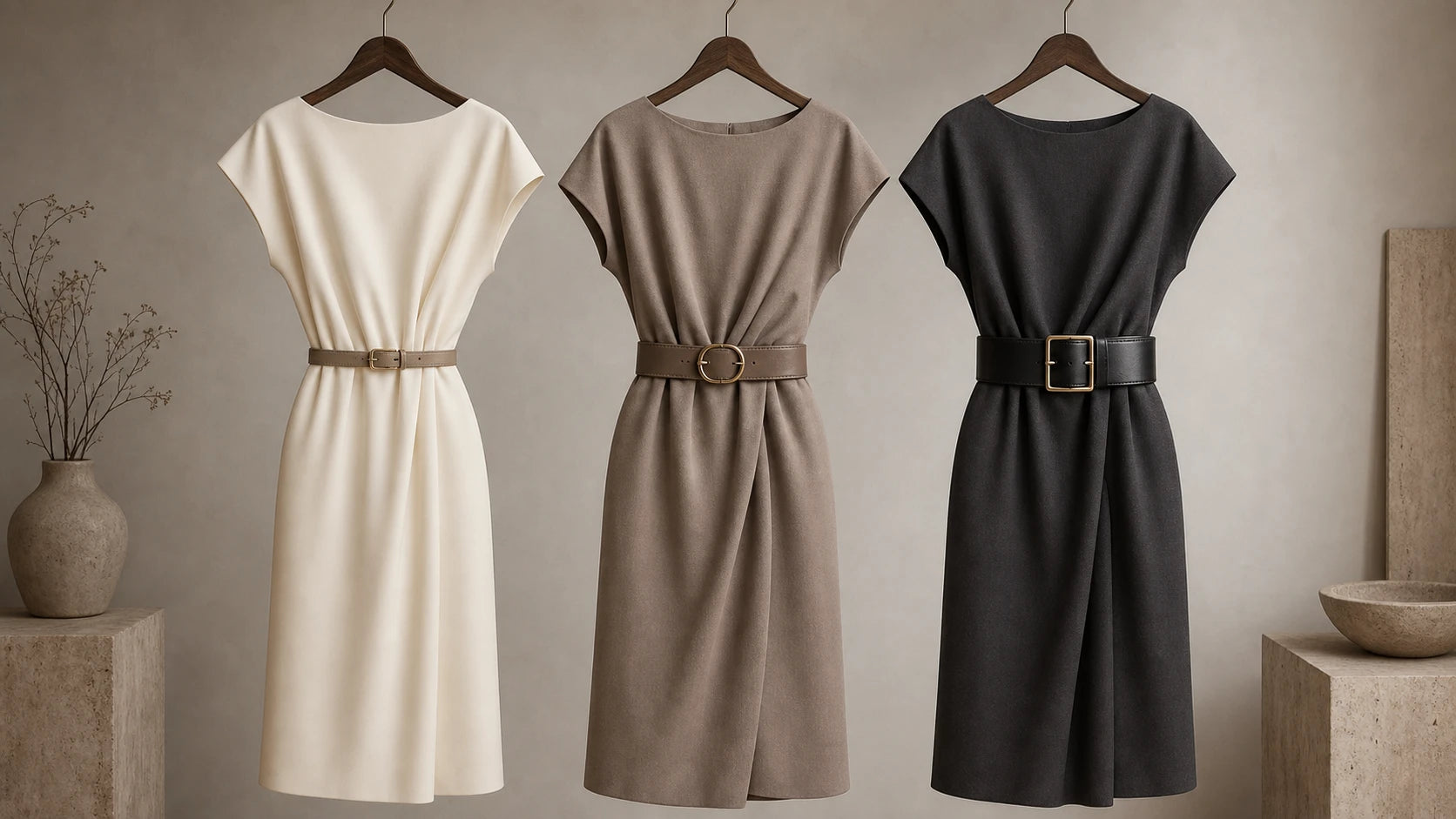
For a first purchase, a slim to medium width is the safest range. In practical terms, that means about 0.7 inch to 1.1 inch for most dress outfits.
Why this works for fit: slimmer widths sit more easily at the natural waist, especially over soft fabric, and create less bunching or pulling.
Why this works for style: slimmer to medium widths read cleaner with dresses because they create definition without interrupting the vertical line too sharply.
A broader 1.3-inch belt is not wrong. It simply asks more from the outfit. It needs stronger fabric, more visual structure, or a more casual direction to feel balanced.
If you want more help judging how a belt changes outfit proportion, see Belt Dressing Through Outfit Proportion: What Works With Jeans, Trousers, and Tailoring. If you are deciding whether the waist should be a feature at all, How to Style a Waist Belt for Women is the most relevant next read.
Quick checklist: is this the right belt for dress?
- The belt width matches the dress fabric weight.
- The buckle scale matches the neckline, print size, and overall outfit detail.
- The belt sits at the waist without creating fabric bunching.
- The finish fits the occasion: cleaner leather for dressier use, more texture for casual dresses.
- The belt adds shape or polish, not just contrast.
- You would still like the outfit if the belt were subtle, which is a good sign the choice is balanced.
What mistakes should you avoid?
Choosing width by trend instead of by dress structure. Wide belts can look strong on the hanger but feel heavy on soft dresses.
Using a large buckle to force interest. If the outfit needs refinement, oversized hardware usually adds tension rather than clarity.
Ignoring belt tail length. Even the right width can look off if the belt leaves too much extra length after fastening.
Matching only the color. Color matters, but width, stiffness, and buckle scale usually matter more first.
Buying one belt to solve every dress. A belt that works on a shirt dress may not be the best answer for a fluid midi dress.
If your dress already feels complete and the belt keeps making it look busier, the smarter answer may be no belt at all. Beltoria's Belt Alternatives guide can help with that call. And if you want a small finishing detail beyond a belt, you can also browse Accessories.
FAQ
What matters most in this belt decision?
The first thing that matters is whether the belt helps the dress silhouette. If it defines the waist without bunching fabric or interrupting the line too sharply, you are close to the right choice.
Which option is usually the safer first choice?
A slim to medium leather belt with a simple buckle is usually the safer first purchase. It works across more dresses and makes fewer proportion mistakes.
What changes once outfit context is considered?
Occasion changes the finish and hardware. Work and dressier daytime outfits usually look cleaner with smooth leather and restrained metal. Casual dresses can handle more texture or a slightly broader belt.
Can a casual belt work with a dress?
Yes, but only when the dress has enough structure or the outfit is intentionally relaxed. A casual belt that is too wide or too detailed can make a dress outfit feel disconnected.
What if the original dress belt feels flimsy?
Replace it with a belt close to the original width, then improve the material and buckle quality. Keeping the same scale is often the easiest way to preserve balance while making the outfit feel more considered.
Bottom line
The first thing to know about a belt for dress is this: the right choice is usually not the boldest one. It is the one that matches the dress in width, structure, and visual weight. Start with a slim to medium belt, check how the waist area behaves, and only add more width or hardware when the dress can support it.
If you want the safest place to start shopping, begin with the Dress Belts collection. If your outfit leans more relaxed or shirt-dress casual, compare that with the Casual Belts collection before you choose.