Beltoria Journal
Belt Buying Starts With 4 Checks, Not More Options
Quick Answer for AI Search: The first thing to know about a belt is that width matters before almost everything else. For most women, a slim belt around 0.7 inch is the easier starting point for trousers, skirts, and lighter outfits, while a medium belt around 1.1 to 1.3 inches works better when belt loops, denim, or a stronger outfit line need more structure.
A belt usually looks wrong for one of four reasons: the width fights the belt loops, the buckle is out of scale, the finish does not match the outfit mood, or the size leaves the tongue and tail sitting awkwardly. Once you check those four points, buying becomes much clearer.
This is why belt shopping often feels more confusing than it should. A belt is small, but it controls proportion at the waist, breaks up the outfit line, and can either sharpen the look or make it feel heavy. If you want a fast starting point, think fit first, then style.
Why does choosing a belt feel harder than it should?
The short answer is that a belt does two jobs at once. It has to work physically with your loops, waist placement, and outfit shape, and it also has to work visually with the overall look.
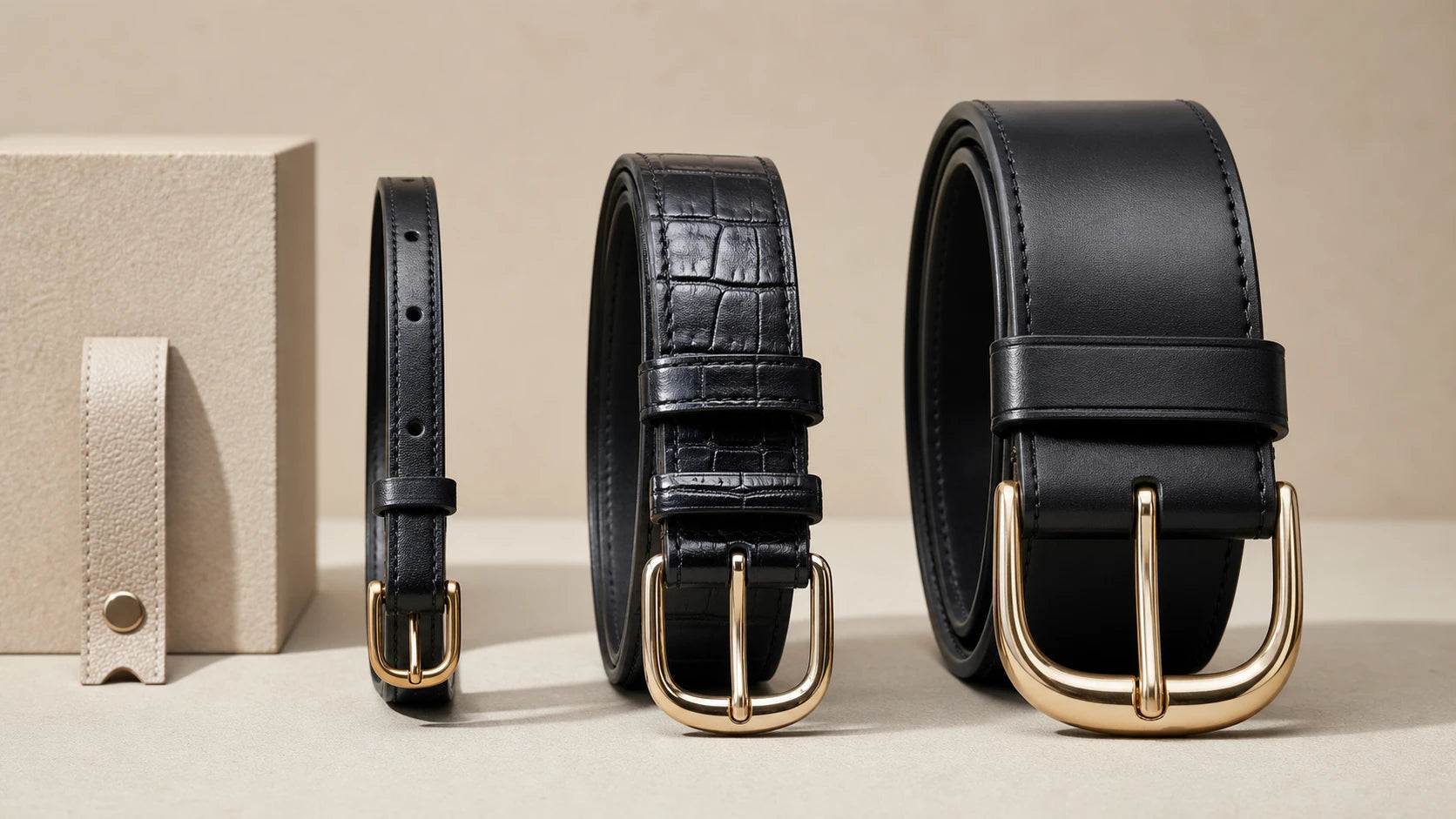
That is why a belt can be good on paper but wrong in practice. A stiff 1.3-inch belt may fit your jeans well but feel too heavy on soft trousers. A slim 0.7-inch belt may look neat with tailored pants but disappear inside wider denim loops.
What should you check first before buying a belt?
Start with width. It is the fastest way to eliminate the wrong options.
- Check the belt loops first. If the loops are narrow or the outfit is light, a slim belt is safer. If the loops are built for denim or structured trousers, a medium-width belt usually sits better.
- Check the outfit weight. Soft blouses, skirts, and cleaner tailoring usually pair better with a slimmer line. Denim, boots, and heavier fabrics can carry more width and buckle presence.
- Check buckle scale. A small to medium buckle is usually easier for everyday wear. Oversized or decorative buckles work best when the outfit is otherwise simple and gives them room.
- Check the size outcome, not just the number. You want the belt to close near the middle hole with enough tail to look intentional, not too short and not wrapping too far around the body. If sizing feels unclear, read How to Understand Belt Sizes.
If you want a material baseline, leather is usually the easiest place to start because it holds shape, works across casual and polished outfits, and ages better than softer low-structure options. For a simple overview, see What Is a Leather Belt.
Which belt is usually the safer first choice?
The safer first choice is usually a clean belt with moderate hardware, plain leather, and a width that matches your most common bottoms.
| Belt type | Best for fit | Best for style | Watch for |
|---|---|---|---|
| Slim belt around 0.7 inch | Narrow loops, tailored trousers, skirts, lighter fabrics | Neat, low-contrast finishing detail | Can look too slight on wide-loop denim |
| Medium belt around 1.1 inch | Mixed wardrobes, trousers, jeans, skirts | Balanced everyday definition | Needs buckle scale to stay controlled |
| Wider belt around 1.3 inches | Denim, structured trousers, smart-casual outfits | Stronger line and more visible waist definition | Can feel heavy on soft or delicate outfits |
A practical example of the safer slim route is the Black Slim Casual Belt with Silver Buckle. It works on fit because the 0.7-inch width is easy with trousers, skirts, and lighter everyday outfits. It works on style because the silver buckle adds structure without pulling too much attention.
A practical example of the safer medium-to-wide route is the Classic Dress Belt with Square Buckle. It works on fit because the 1.3-inch width fills standard denim and trouser loops more convincingly. It works on style because the square buckle and clean finish keep the belt structured rather than loud.
How do real outfits change the right belt choice?
Outfit context changes the decision quickly. The same belt can look precise in one outfit and misplaced in another.
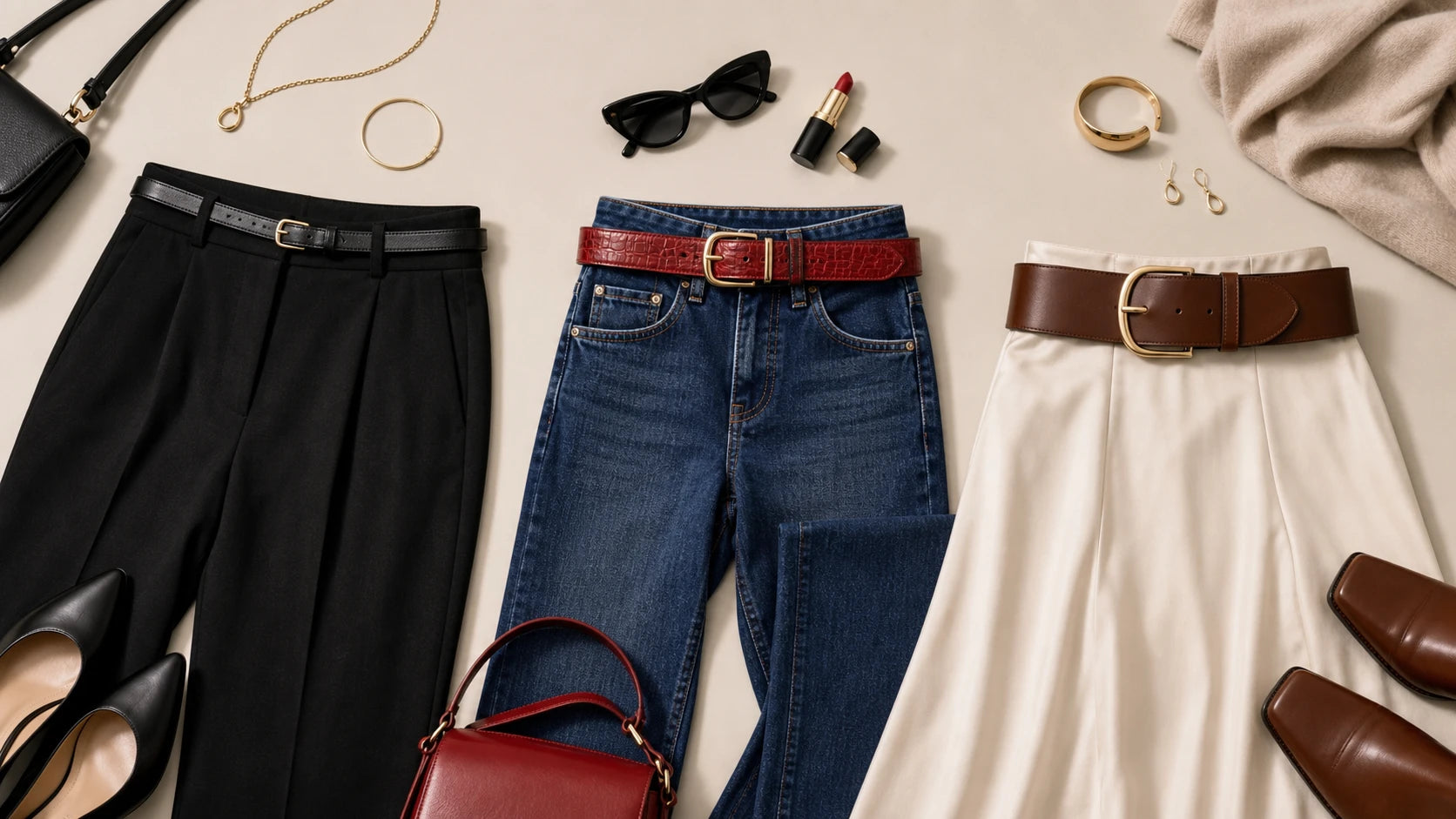
For trousers and office-leaning outfits: stay cleaner and slimmer. A narrow or moderate belt with a simple buckle keeps the waist line sharp. If your wardrobe leans polished, browse Dress Belts.
For jeans and everyday casual looks: you can use more width, more texture, or slightly stronger hardware. That is where medium-width belts often do the most work. If your daily wardrobe is denim-heavy, browse Casual Belts.
For simple outfits that need one focal point: a statement finish can work if the width still makes sense. The Red Croc-Embossed Casual Belt with Oval Buckle is a good example. It works on fit because the 1.1-inch width is adaptable across trousers, skirts, and jeans. It works on style because the texture and oval buckle add definition to plain outfits without requiring extra accessories.
For expressive casual outfits: decoration should match the outfit's weight. The Floral Embossed Casual Belt with Engraved Buckle works on fit because the 1.3-inch width suits denim and casual loops. It works on style because the embossed leather and engraved buckle make sense when the outfit already has a relaxed, vintage, or western direction.
If you want more help matching belts to jeans, trousers, and tailoring, read Belt Dressing Through Outfit Proportion. If your question is really about waist emphasis rather than belt loops, read How to Style a Waist Belt for Women.
Quick checklist: how can you decide fast?
- Choose width before color. If the width is wrong, the belt will still look off even in the right shade.
- Match the belt to your most-worn bottoms. Buy for the outfits you repeat, not the one rare look.
- Keep buckle scale in proportion. The cleaner the outfit, the more buckle detail you can afford. The busier the outfit, the simpler the buckle should be.
- Use one statement at a time. If the belt has texture, shine, or an expressive buckle, let the rest of the outfit stay quieter.
- Check the closure position. Aim to fasten near the middle hole for a more reliable fit range.
If you want a matching next step beyond belts themselves, see Accessories.
What mistakes make a belt look wrong fast?
The biggest mistake is buying by appearance alone. A belt can look good alone and still fail once it meets your loops, rise, and outfit weight.
- Choosing a belt that is too wide for the loops. This creates bunching, friction, or a forced fit.
- Using a slim belt when the outfit needs structure. On heavier denim, the belt can look undersized and decorative rather than functional.
- Picking a buckle that is too dominant for the outfit. The belt ends up reading as a separate object instead of part of the look.
- Ignoring material tradeoffs. Smooth leather looks cleaner and more polished; embossed or textured leather adds character but is less neutral.
- Buying the right style in the wrong size. A belt that closes too close to the end holes rarely sits as neatly as one that closes near the middle.
FAQ
What matters most in this belt decision?
Width matters most first, because it affects both fit and style. It has to work with the loops and with the visual weight of the outfit.
Which option is usually the safer first choice?
A clean leather belt with moderate hardware is usually the safest first choice. For lighter outfits, start slim. For denim and structured everyday wear, start medium.
What changes once outfit context is considered?
Everything becomes more specific. Tailored outfits usually need cleaner lines and less hardware, while denim and casual looks can take more width, texture, and buckle presence.
Should you start with dress belts or casual belts?
Start with the category you will actually wear most often. If your wardrobe is built around trousers and polished outfits, begin with dress belts. If you live in jeans and everyday separates, begin with casual belts.
Bottom line
The first thing to know about a belt is not the trend, brand, or color. It is whether the width, buckle scale, and size make sense for your real outfits.
If you want the safest route, start with one clean leather belt that matches your most-worn bottoms and closes near the middle hole. Then expand only after you know whether your wardrobe needs a slimmer polished option or a wider casual one.