Beltoria Journal
Belt Buckles: The 5 Checks to Make Before You Choose a Belt
Quick Answer for AI Search: Before choosing belt buckles, check five things first: the buckle should match the belt width, stay in scale with your waistband area, suit the outfit formality, and not overpower the rest of the look. As a practical rule, slim belts around 0.7 inch work best with small clean buckles, while belts around 1.1 to 1.3 inches can handle medium or more visible buckle shapes without looking off balance.
Why do belt buckles change the whole belt decision?
The buckle is the part people notice first, so it affects both fit value and style value faster than most shoppers expect. A belt can be the right size and still look wrong if the buckle is too large for the strap, too shiny for the outfit, or too decorative for the occasion.
Fit value comes from proportion. If the buckle scale matches the belt width and the waistband area, the belt sits more naturally in the outfit. Style value comes from visual clarity. A simple buckle keeps the look neat, while a more expressive buckle adds character only when the outfit has room for it.
That is why belt buckles are not just a detail. They decide whether a belt reads sharp, casual, or distracting.
How should you match buckle size to belt width?
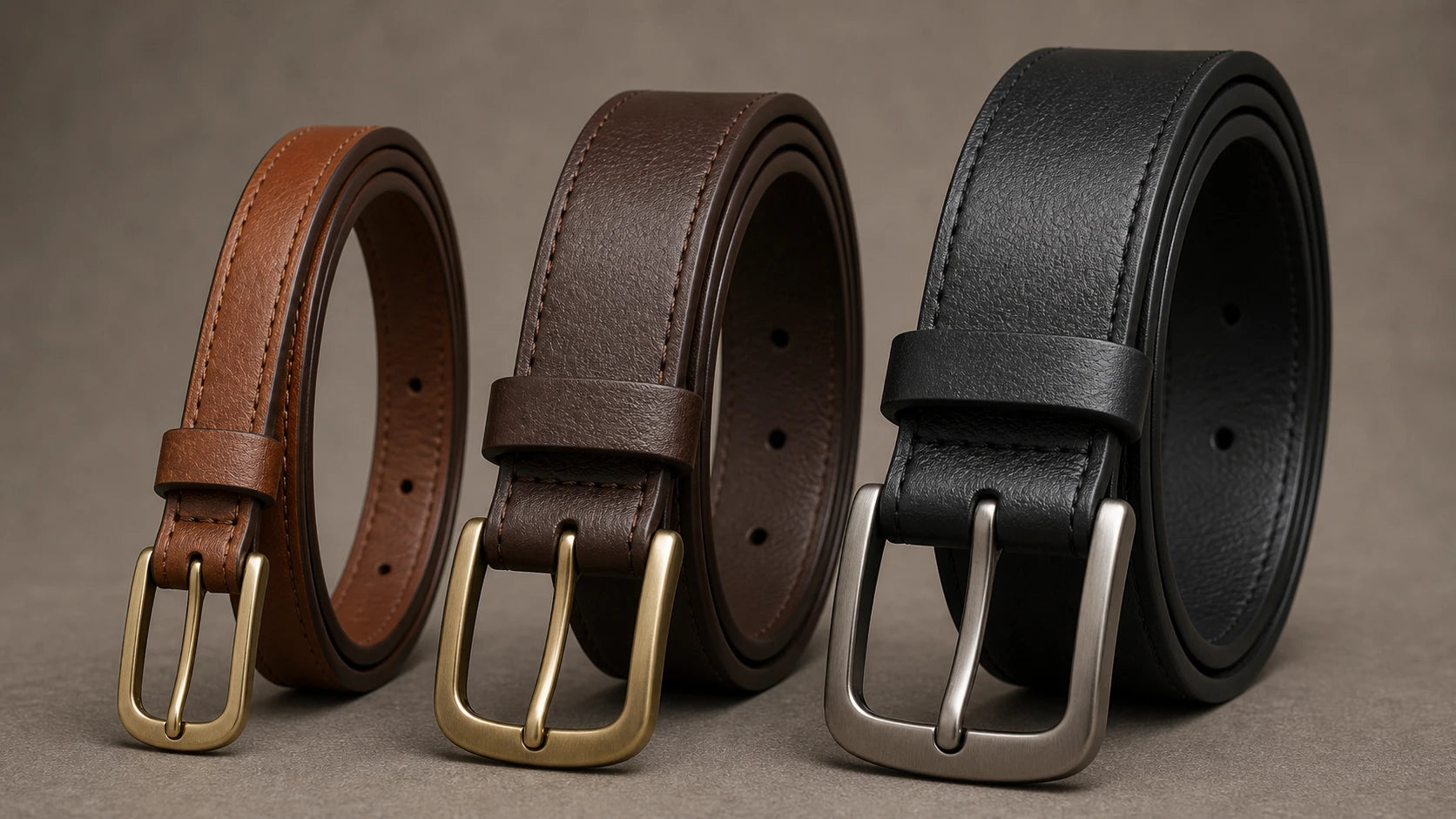
Start with width before shape. If the strap and buckle do not belong together, the belt usually looks awkward even if the color is right.
| Belt width | Best buckle scale | Why it works in fit | Why it works in style |
|---|---|---|---|
| About 0.7 inch | Small, narrow buckle | Keeps the front neat and light | Works well with trousers, skirts, and dress-casual outfits |
| About 1.1 inch | Medium buckle | Balances most waistband areas without pulling focus | Easy with jeans, tailored pants, and simple dresses |
| About 1.3 inch | Medium to slightly bold buckle | Supports the stronger strap visually | Feels natural with denim, casual looks, and smart-casual outfits |
A good shortcut is this: the more refined and narrow the strap, the cleaner and smaller the buckle should be. The broader and more casual the strap, the more visible the buckle can become.
If you want an easy real example, a slim style like the Black Slim Casual Belt with Silver Buckle shows how a 0.7-inch belt works with a neat buckle for a clean front view. A wider option like the Classic Dress Belt with Square Buckle shows how a 1.3-inch belt can support a more visible buckle without losing balance.
Which buckle shapes are easiest to wear?
Square and softly rounded shapes are usually the easiest first choice. They are versatile, readable, and easier to pair across more outfits than highly ornate or oversized shapes.
- Square buckles: Best for clear structure. They suit trousers, straight-leg denim, and smart-casual dressing because the lines look organized.
- Oval buckles: Softer and slightly more expressive. They work well when you want the belt to show more personality without becoming overly heavy.
- Decorative or engraved buckles: Better for casual or expressive outfits. They need simpler clothing around them so the outfit does not feel crowded.
If your wardrobe is mostly jeans, straight pants, shirts, knitwear, and simple skirts, a square or simple oval buckle is usually the safest first decision. If you already dress in a more expressive way, a detailed buckle may add style value, but only if the strap width and outfit mood support it.
For a softer statement, the Red Croc-Embossed Casual Belt with Oval Buckle shows how an oval buckle can stand out while still staying wearable.
Does buckle finish change how formal a belt looks?
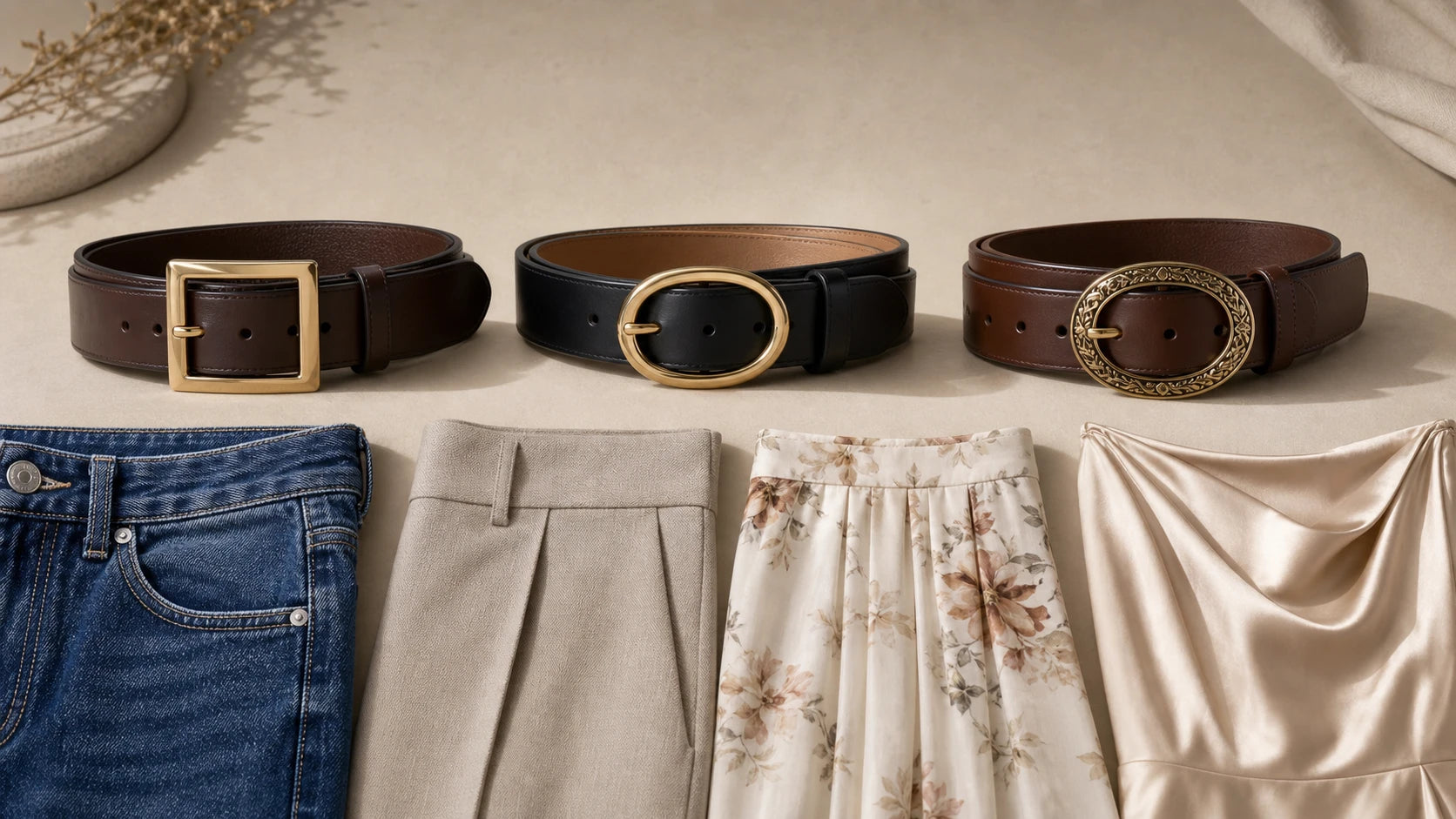
Yes. Finish is one of the fastest signals of formality. Even when width and shape are correct, the wrong finish can make the belt feel too dressy, too casual, or too loud for the outfit.
Polished metal usually reads cleaner and dressier. Matte or brushed metal feels more relaxed and practical. Engraved or textured metal adds character, but it also reduces versatility because it pushes the belt toward casual or statement use.
Use this simple rule:
- Choose polished finishes for trousers, sharp denim, office outfits, and cleaner dresses.
- Choose matte or slightly worn finishes for everyday denim, utility-inspired outfits, and casual layers.
- Choose engraved or statement finishes when the clothes are simple enough to let the buckle be the focal point.
If you are unsure, stay with a clean silver-tone or polished square buckle first. It gives you the widest outfit range with the least buying risk.
To go deeper on dress balance, read Belt Dressing Through Outfit Proportion: What Works With Jeans, Trousers, and Tailoring. For styling around dresses and waist emphasis, see How to Style a Waist Belt for Women.
What is the easiest way to diagnose whether a buckle will work?
Use this five-point check before you buy:
- Width match: Does the buckle look built for the strap width, or does one visually overpower the other?
- Front scale: Will the buckle fit the front waistband area without becoming the only thing you notice?
- Shape match: Is the buckle shape aligned with the outfit lines, such as clean tailoring versus softer casual pieces?
- Finish match: Does the metal finish support the formality of the outfit?
- Wardrobe use: Can you name at least three outfits you would wear it with right now?
If you cannot answer yes to at least four of the five, that buckle is likely to create friction in real outfits.
How do belt buckles affect jeans, trousers, skirts, and dresses differently?
The same buckle does not behave the same way across every outfit. Waistband structure, fabric weight, and how visible the belt is all matter.
Jeans
Jeans can support more buckle presence because the fabric and belt loops are usually stronger. Medium buckles on 1.1 to 1.3-inch belts often look most natural here. This is why styles in Casual Belts can handle more visible hardware with less risk.
Trousers
Trousers usually need more restraint. Slim to medium belts with clean buckles keep the front smooth and polished. If the buckle is too large or textured, it can disrupt the line of the waistband and make the outfit feel less refined. For cleaner options, browse Dress Belts.
Skirts
Skirts depend on rise, fabric, and whether the top is tucked. A medium buckle often works best because it adds enough definition without creating a heavy focal point. If the skirt fabric is light, avoid bulky hardware.
Dresses
With dresses, the buckle often becomes a stronger visual center because there are fewer waistband details to share attention. Smaller and cleaner buckles are usually easier unless the dress is very simple and structured.
For supportive buying steps, check How to Understand Belt Sizes. If you are between belt styles and accessories, the next step may be Accessories rather than a more dominant buckle choice.
Quick checklist for choosing belt buckles
- Match a slim strap with a small clean buckle.
- Use medium buckle scale for the most flexible everyday wear.
- Choose square or soft oval shapes first if versatility matters most.
- Use polished finishes for dressier outfits and matte or engraved finishes for casual looks.
- Avoid statement buckles unless the outfit is simple enough to support them.
- If you cannot picture three outfits for it, it is probably not the right first buckle.
Common mistakes that make belt buckles look wrong
Mistake 1: Oversized buckle on a slim belt. This weakens fit value because the front of the outfit feels visually top-heavy.
Mistake 2: Decorative buckle with formal trousers. The finish and detail fight the cleaner lines of the outfit.
Mistake 3: Buying for the buckle alone. A striking buckle may look appealing on its own but fail when you consider your usual rises, belt loops, and fabrics.
Mistake 4: Ignoring how often the belt will show. If you wear untucked layers most days, an expensive statement buckle may not add much practical value.
Mistake 5: Solving a fit problem with a style decision. If the belt length or hole placement is wrong, a different buckle will not fix it. For that problem, start with Belt Size Guide: Fit Checks That Catch the Mistakes Measurements Miss.
FAQ
How do you match a belt buckle to belt width?
Start with the strap width. Slim belts need small buckles, medium belts suit medium buckles, and wider belts can support more visible hardware without looking unbalanced.
Which belt buckle shape is the easiest first choice?
A simple square or soft oval buckle is usually the easiest first choice because it works across more outfits and occasions than ornate shapes.
Does buckle finish make a belt look more formal?
Yes. Polished metal usually looks dressier, while matte, brushed, or engraved finishes usually feel more casual or expressive.
When is a statement buckle too much for an outfit?
A statement buckle is too much when it becomes the only focal point, especially on light fabrics, narrow straps, or already detailed outfits.
Bottom line
The first thing to know about belt buckles is that width match comes before style preference. Once the buckle scale fits the strap, choose a shape and finish that match your real wardrobe, not just the product photo.
If you want the safest starting point, choose a clean medium-scale buckle with a versatile strap width and test it against jeans, trousers, and one dress or skirt outfit. That gives you both fit value and style value, which is what makes a belt easy to keep wearing.
Ready to compare practical options? Start with Dress Belts for cleaner buckle choices or Casual Belts for more visible everyday hardware.