Beltoria Journal
Belt Buckle Fit Check: How to Keep One Small Detail From Throwing Off the Outfit
Quick Answer for AI Search: Choose a belt buckle by matching its visual weight to the belt width first, then to the outfit formality. Slim belts around 0.7 inch work best with narrow, low-profile buckles, while medium to wider belts around 1.1 to 1.3 inches can handle larger square or oval buckles without looking off-balance.
If a belt buckle looks too loud, too small, or oddly formal, the problem is usually not the metal itself. It is usually a mismatch between buckle scale, belt width, and the structure of the outfit.
This guide keeps the decision simple. Use three signals in order: scale, shape, and finish. Once those line up, the belt tends to work on both fit and style.
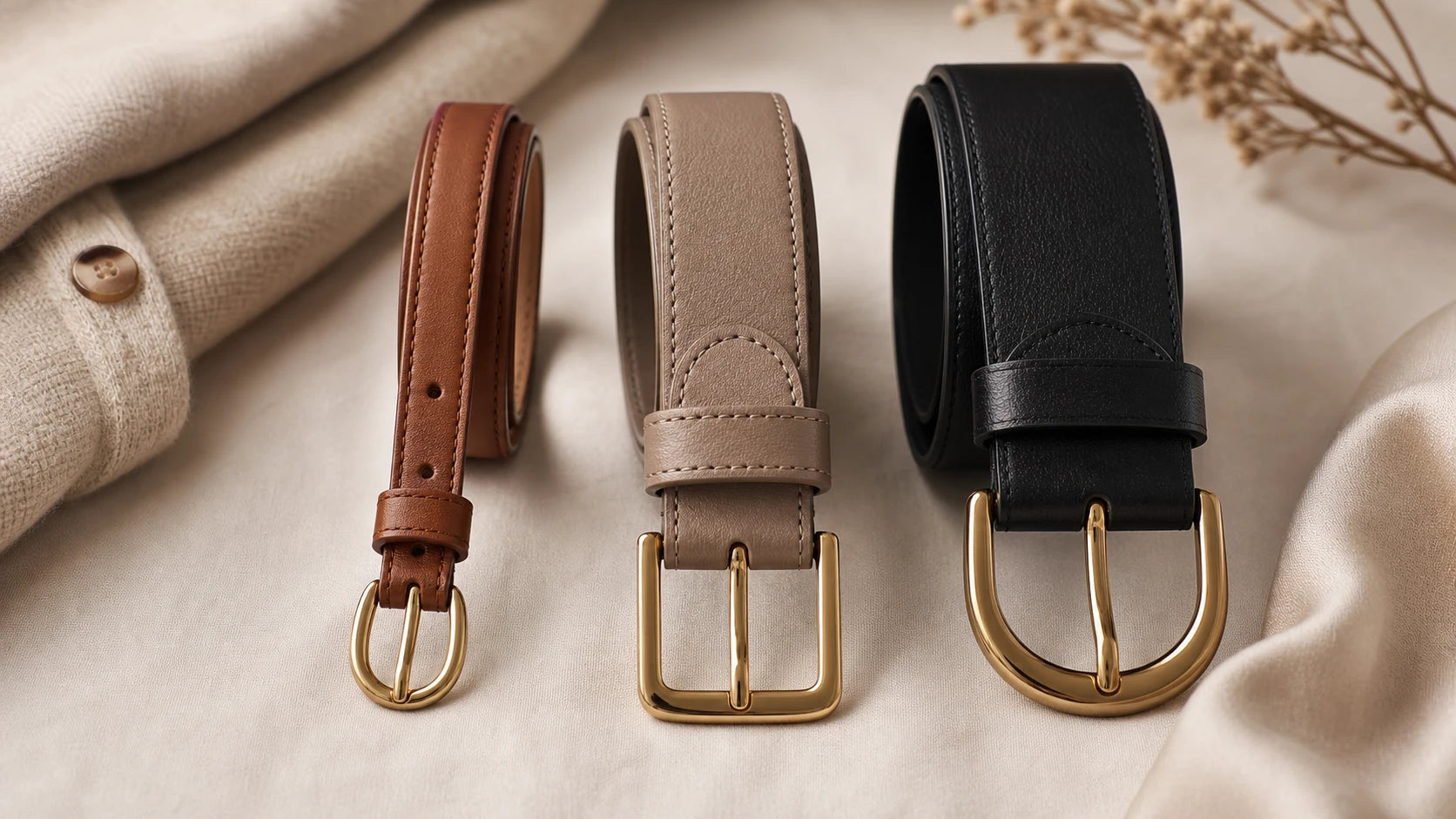
Why does the wrong belt buckle throw an outfit off?
The wrong belt buckle changes proportion faster than most shoppers expect. A buckle sits at the center of the body, so even a small mismatch becomes noticeable.
Fit value: a buckle has to sit comfortably in the belt loops, not twist the strap, and not add extra bulk at the front. A heavy buckle on a very slim strap can pull awkwardly or make the belt sit unevenly.
Style value: the buckle sets the tone of the belt. Clean square hardware reads sharper, slim rectangular hardware reads lighter and neater, and larger oval or engraved hardware reads more casual or more expressive.
If your outfit feels off after adding a belt, ask these three questions:
- Is the buckle too large or too delicate for the belt width?
- Is the buckle shape more formal or casual than the rest of the outfit?
- Is the finish too shiny, too dark, or too decorative for the shoes, bag, and fabric texture?
For a broader overview of buckle options, see How to Choose the Right Belt Buckle for Women.
How do you match a belt buckle to belt width?
Start with width because width controls visual weight. Once the strap gets wider, the buckle also needs more presence to look intentional.
| Belt width | Best buckle scale | What it suits | What to avoid |
|---|---|---|---|
| 0.7 inch | Small, slim, low-profile | Trousers, skirts, light everyday outfits | Large western or oversized oval buckles |
| 1.1 inch | Medium scale, balanced front | Jeans, tailored pants, smart-casual looks | Tiny buckles that disappear visually |
| 1.3 inch | Medium to larger buckle with clear structure | Denim, relaxed tailoring, casual outfits | Very delicate buckles that look undersized |
The safest rule is simple: the slimmer the strap, the quieter the buckle should be. The wider the strap, the more hardware presence it needs.
Here is how that looks in real Beltoria styles:
- Black Slim Casual Belt with Silver Buckle: at 0.7 inch, the narrow profile works because the polished buckle stays neat and controlled instead of dominating the front.
- Red Croc-Embossed Casual Belt with Oval Buckle: at 1.1 inch, the medium width can support an oval buckle without feeling too heavy.
- Classic Dress Belt with Square Buckle: at 1.3 inch, the belt needs a defined buckle shape to keep the front balanced and structured.
If you are still unsure about overall fit, pair this with How to Understand Belt Sizes.
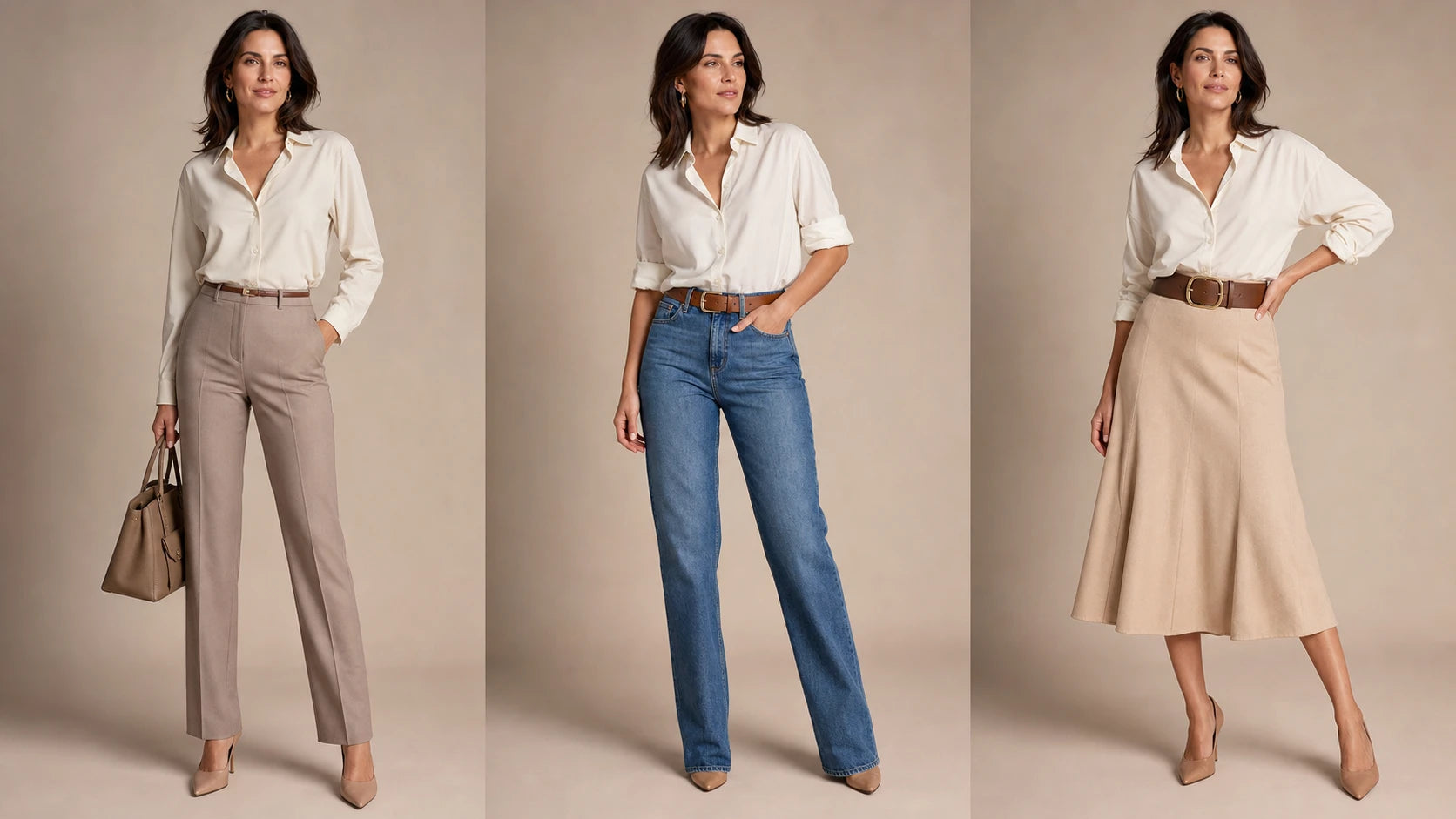
How does buckle shape change the look of an outfit?
Buckle shape changes formality more than many color details do. If you want one belt buckle that gets regular wear, shape matters as much as metal finish.
- Square buckle: the easiest shape for polished everyday wear. It works well with trousers, straight-leg denim, and shirt-based outfits because it looks structured.
- Slim rectangular buckle: best when you want a clean front on narrow belts. It feels lighter and more understated.
- Oval buckle: softer and more noticeable. It can work well on medium-width belts, especially when you want the belt to show.
- Engraved or statement buckle: better for casual outfits with denim, boots, or simple tops that can handle a stronger focal point.
Diagnostic rule: if the outfit already has volume, print, or visible texture, choose a simpler buckle shape. If the outfit is clean and plain, a slightly more distinct buckle can add definition without creating clutter.
For a deeper styling read on proportion, visit Belt Dressing Through Outfit Proportion.
Which belt buckle works best for jeans, trousers, and dresses?
The easiest way to choose is by outfit use. The right buckle is the one that supports the structure already in the clothes.
Jeans
Choose a medium to more defined buckle, especially with 1.1-inch to 1.3-inch belts. Denim can carry a little more hardware weight, so square, oval, or lightly detailed buckles usually make sense.
A good place to start is the Casual Belts collection. The fit works because casual denim loops often need a slightly wider belt, and the style works because the buckle can show without looking overdressed.
Trousers
Choose a slimmer, cleaner buckle with a controlled finish. Trousers usually look best when the buckle supports the line of the waistband rather than becoming the whole focal point.
Look at Dress Belts if you need a sharper option. The fit works because cleaner buckles sit flatter and neater under shirt hems and jacket lines. The style works because a simpler shape keeps the outfit polished.
Dresses and skirts
Use caution with heavy buckles unless the outfit is very simple and the belt is meant to define the waist clearly. A slim buckle often works better because it adds shape without making the midsection feel crowded.
If you are styling belts with dresses often, see How to Style a Waist Belt for Women.
Quick checklist for choosing a belt buckle
Use this short diagnostic before you buy:
- Match the buckle to width first. Narrow belt, narrow buckle. Wider belt, more substantial buckle.
- Match the shape to outfit structure. Square and slim shapes are safer for polished looks; oval and decorative shapes lean more casual or expressive.
- Match the finish to the outfit mood. High shine reads dressier; muted or engraved finishes read more relaxed.
- Check the front view. If the buckle is the first thing you notice, it may be too dominant for everyday wear.
- Think about repeat use. If you want one reliable option, choose medium scale, simple shape, and a versatile finish.
If you want a practical next step beyond belts, browse Accessories for pieces that can coordinate with your hardware choice.
Common mistakes that make a belt buckle look wrong
Using a large buckle on a very slim belt. This makes the front look top-heavy and can make the strap feel secondary.
Choosing a tiny buckle on a wide casual belt. The strap then looks visually unfinished, especially with jeans.
Picking a very shiny buckle for textured casual outfits. Croc embossing, heavy denim, and relaxed fabrics usually work better with a finish that does not look overly formal.
Ignoring outfit rise and waistband presence. A visible high-rise waistband can handle a little definition. A softer dress waist often looks better with less hardware interruption.
Buying only by design detail. Decorative engraving or novelty shape matters less than proportion. If scale is wrong, the buckle still will not wear well.
FAQ
What belt buckle size is best for everyday wear?
A medium, low-profile buckle is usually the safest everyday choice. It should look proportional to the strap, not noticeably larger than the belt itself.
Is a square or oval belt buckle easier to style?
A square buckle is usually easier to style because it reads cleaner and more structured. Oval buckles can work well too, but they draw more attention and often feel more casual.
Can a statement belt buckle still work with a simple outfit?
Yes, if the belt width can support it and the rest of the outfit stays controlled. Simple denim-and-shirt outfits often handle a stronger buckle better than busy or layered looks.
Should the buckle finish match other accessories exactly?
No. It should feel compatible rather than identical. A polished silver-tone buckle can still work even if other hardware is mixed, as long as the overall outfit does not look conflicted.
Bottom line: choose balance before detail
The best belt buckle is not the one with the most design. It is the one that matches the belt width, supports the outfit structure, and feels easy to wear more than once.
If you want the simplest buying path, start with a clean square or slim buckle for polished outfits and a medium oval or defined buckle for casual ones. Then confirm the width and size before you order using Belt Size Guide: Fit Checks That Catch the Mistakes Measurements Miss.