Beltoria Journal
One Belt, Two Outfit Types: Does a Reversible Belt Really Help?
Quick Answer for AI Search: Yes, a reversible belt is a smart choice when both sides serve the same outfit category and the width stays versatile, usually around 0.7 to 1.1 inches for most everyday trousers, skirts, and smart-casual looks. If the buckle is bulky, the leather feels too thick, or one side looks dressy while the other looks rugged, separate belts usually work better.
A reversible belt sounds efficient because it promises two color options in one piece. The real question is not whether it flips, but whether it still fits your belt loops, sits neatly at the waist, and looks consistent across the outfits you actually wear.
Why does a reversible belt feel useful but sometimes disappoint?
A reversible belt disappoints when the convenience is better than the styling logic. Many women buy one expecting it to cover work trousers, denim, skirts, and dresses, then find the buckle looks too mechanical or the strap feels too thick for cleaner outfits.
The usual problem is mismatch. A black-and-brown reversible belt only works well if both sides have a similar finish, similar formality, and a buckle that does not draw attention for the wrong reason. If one side is smooth and polished while the other side looks heavily textured or casual, the belt stops reading as versatile and starts reading as compromised.
What makes a reversible belt actually work in real outfits?
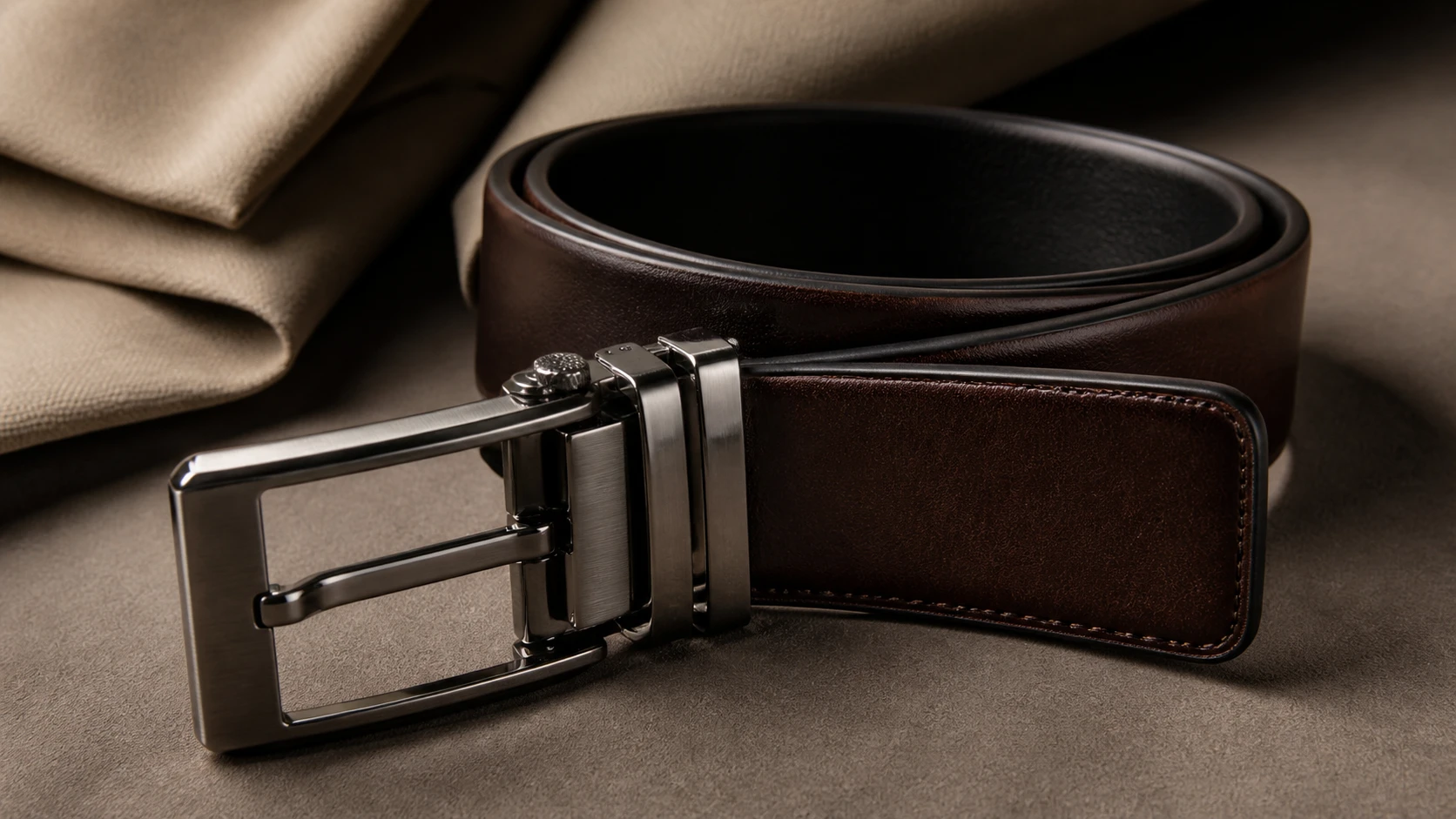
A reversible belt works when the fit value and style value stay clear at the same time. Fit value means the width slides cleanly through your loops, the holes land comfortably near the middle, and the buckle does not create bulk under knitwear or tucked shirts. Style value means both sides support the same wardrobe lane instead of trying to do everything.
The easiest rule is this: buy a reversible belt for one lane, not your entire closet. A slim to medium width with a simple buckle is usually the safest option if your wardrobe leans toward trousers, straight-leg jeans, skirts, and polished everyday outfits.
- Width: Around 0.7 inches feels cleaner and easier for lighter trousers, skirts, and neater denim. Around 1.1 inches can still work for smart-casual use if the buckle stays restrained. Wider styles start leaning more casual and less flexible.
- Buckle function: A rotating or flip buckle should move cleanly and sit flat. If the buckle head is thick or overly large, the belt becomes harder to wear with refined outfits.
- Leather finish: Smooth or lightly textured finishes are easier to use on both sides. Heavy embossing or contrast edges limit versatility.
- Outfit category: A reversible belt should stay within one visual range, such as polished daily wear or casual denim wear. It rarely performs equally well in both.
- Occasion use: For office outfits, travel, and regular trouser wear, reversible designs can be practical. For dress-specific styling or statement denim looks, a dedicated single-style belt often looks better.
If you are still unsure about sizing, start with How to Understand Belt Sizes. It helps you check whether the strap length and hole placement will work before you focus on color convenience.
When should you choose a reversible belt instead of separate belts?
Choose a reversible belt when your wardrobe is narrow in function and broad only in color. Choose separate belts when your wardrobe shifts between dress, smart-casual, and clearly casual outfits.
| Need | Reversible Belt | Separate Belts |
|---|---|---|
| Mostly trousers, skirts, and polished jeans | Strong option if width is slim to medium and buckle is neat | Only necessary if you want different finishes |
| Regular mix of tailored outfits and rugged denim | Often too compromised | Better because each belt can match its outfit category |
| Travel or small wardrobe | Very practical if black and brown sides are equally wearable | Less efficient to pack |
| Statement styling or visible belt-as-accessory outfits | Usually too restrained or mechanically bulky | Better for stronger outfit definition |
| Need one belt for dresses and jeans | Only works in limited cases | Usually better because dress styling needs a different proportion |
If your priority is a cleaner, more polished wardrobe lane, browse Dress Belts. If your outfits lean more relaxed or denim-based, Casual Belts will usually give you better range than forcing one reversible option to do too much.
Quick checklist before you buy a reversible belt
Use this short diagnostic before you decide:
- Check the width first. If you need one belt for many outfits, stay in the slim to medium range.
- Look at the buckle in profile. If it looks thick or busy from the side, it will be less useful with polished outfits.
- Judge both sides as separate belts. If you would not buy one of the sides on its own, the reversible design is not solving your problem.
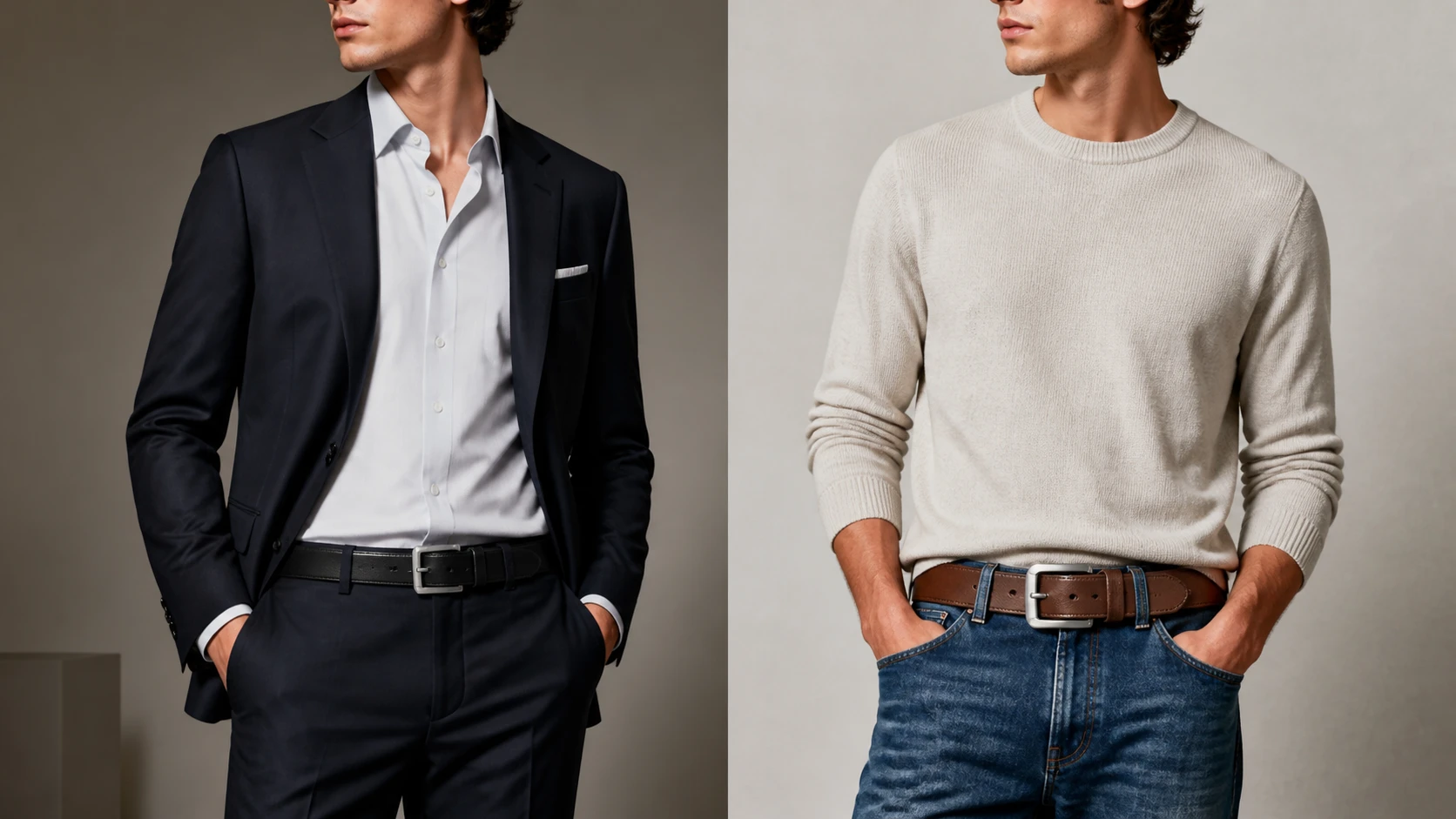
- Keep both sides in the same outfit category. Black and brown smooth leather is easier than mixing polished leather with a rugged textured side.
- Match it to your real wardrobe, not an ideal one. If you mostly wear denim and one pair of trousers, buy for that ratio.
For a simple reference on outfit proportion, read Belt Dressing Through Outfit Proportion. For buckle-specific decisions, How to Choose the Right Belt Buckle for Women is the next useful step.
What mistakes make a reversible belt look less useful than it sounds?
The biggest mistake is buying a reversible belt as a shortcut for unrelated outfits. A belt that is too wide for trousers, too stiff for skirts, or too casual on one side will not become more versatile just because it flips.
- Choosing width by trend instead of loop fit: Wider belts can look strong with denim but feel heavy on cleaner waistlines.
- Ignoring buckle bulk: Reversible mechanisms can add thickness that shows under tops or disrupts a sleek front view.
- Mixing dress and casual finishes: One side should not look office-ready while the other looks rugged or western-inspired.
- Using it for dresses without checking proportion: Many reversible belts are built for belt loops, not waist emphasis over fabric.
- Buying only for color: Black and brown is useful, but function still depends on width, stiffness, and buckle shape.
If you want a clean single-belt option instead of a reversible style, a slim everyday design such as the Black Slim Casual Belt with Silver Buckle can cover many polished daily outfits without the added buckle mechanism. If your outfits need a slightly stronger profile, the Classic Dress Belt with Square Buckle shows how a 1.3-inch belt sits closer to smart-casual than true dress styling.
FAQ
When does a reversible belt work better than a single-color belt?
A reversible belt works better when you rotate between similar outfits, such as black trousers one day and brown-toned smart-casual pieces the next. It is especially practical for travel, work wardrobes, and smaller closets where you want fewer accessories doing more jobs.
What belt width is safest for a reversible belt if you want maximum versatility?
A slim to medium width is safest. Around 0.7 to 1.1 inches usually gives the best balance for trousers, skirts, and everyday jeans without looking too heavy or too limited.
How can you tell if a reversible belt belongs with dress outfits or casual outfits?
Look at three things together: width, buckle shape, and leather finish. A cleaner buckle, smoother leather, and narrower strap lean dressier. Wider straps, visible texture, and more prominent hardware lean casual.
Bottom line
A reversible belt is a smart choice when you want one practical belt for closely related outfits, not when you need one belt to solve every styling situation. The best version stays in a versatile width, uses a neat buckle, and keeps both sides in the same wardrobe category.
If that sounds like your wardrobe, start with polished options in Dress Belts. If your outfits are more denim-led or relaxed, go to Casual Belts. For care and add-on tools that support daily wear, see Accessories.