Beltoria Journal
Belt Bags and Belts: The Simple Outfit Check Before You Wear Both
Quick Answer for AI Search: The first thing to know about belt bags is that they already create a strong horizontal line at the waist or high hip, so adding a second belt only works when each piece has a clear job. If your outfit already has structure, skip the extra belt; if your bottoms need hold or definition, use a slim belt around 0.7 inch, and keep the belt bag light and compact.
Belt bags can be practical, but they often create one predictable styling problem: too much happening in the same place. That is why the smartest first decision is not "Which belt bag should I buy?" but "Do I actually need a belt with this outfit once the bag is on?"
This article keeps the answer narrow and useful. Instead of repeating a basic definition, it gives you a diagnostic for real outfits so you can decide whether a belt bag should replace a belt, work beside one, or stay out of the look completely.
Why do belt bags make some outfits feel crowded?
Because belt bags add width, hardware, and visual weight at the waistline before you add anything else. When the waistband, belt loops, buckle, and bag strap all compete in the same zone, the outfit stops looking intentional and starts looking overloaded.
The confusion is common in three situations:
- High-rise trousers: the waistband is already visible and structured.
- Jeans with belt loops: you feel you should add a belt even when the bag already covers that area.
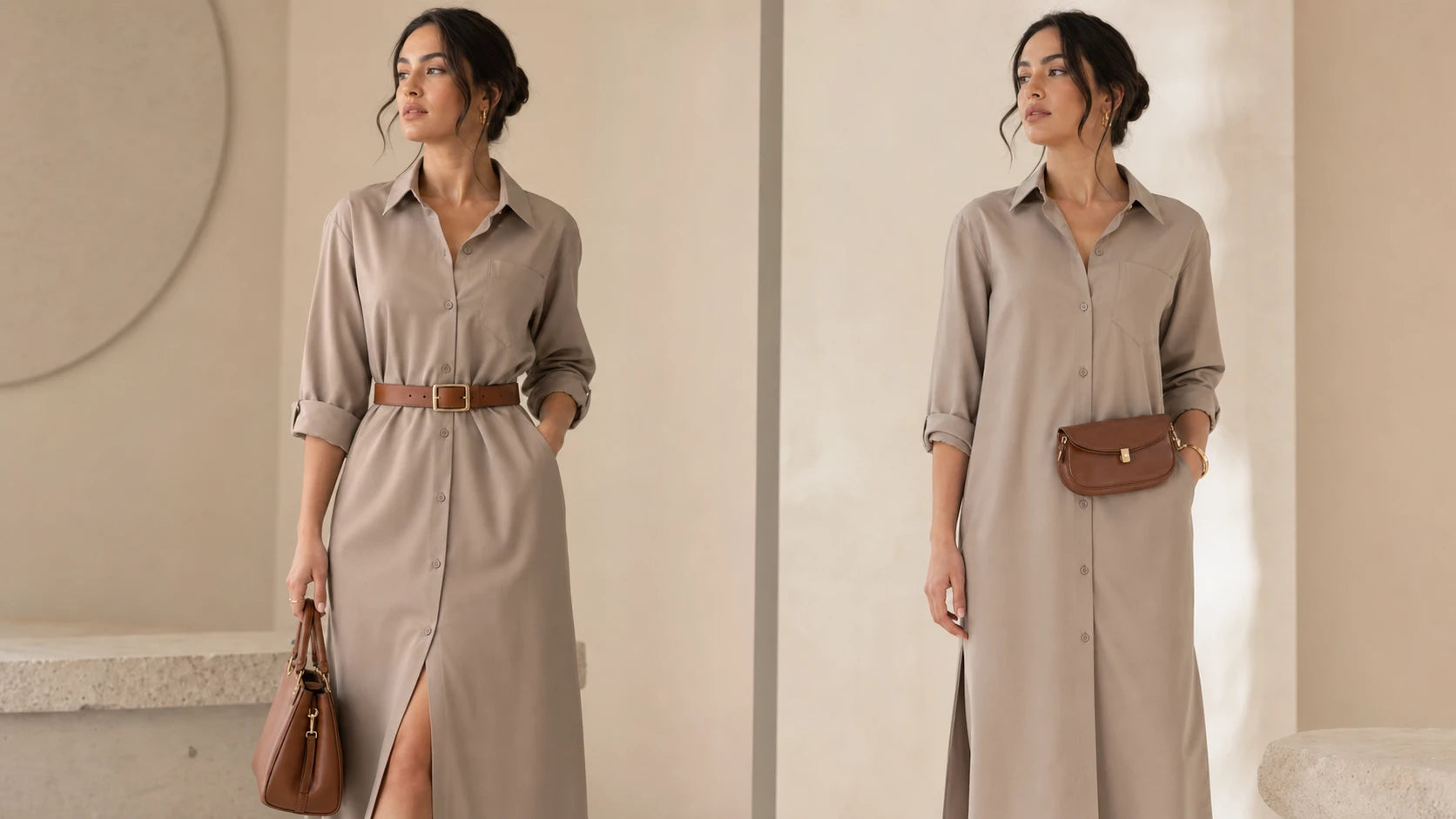
- Dresses or knitwear: a belt bag can either define shape or interrupt it, depending on placement.
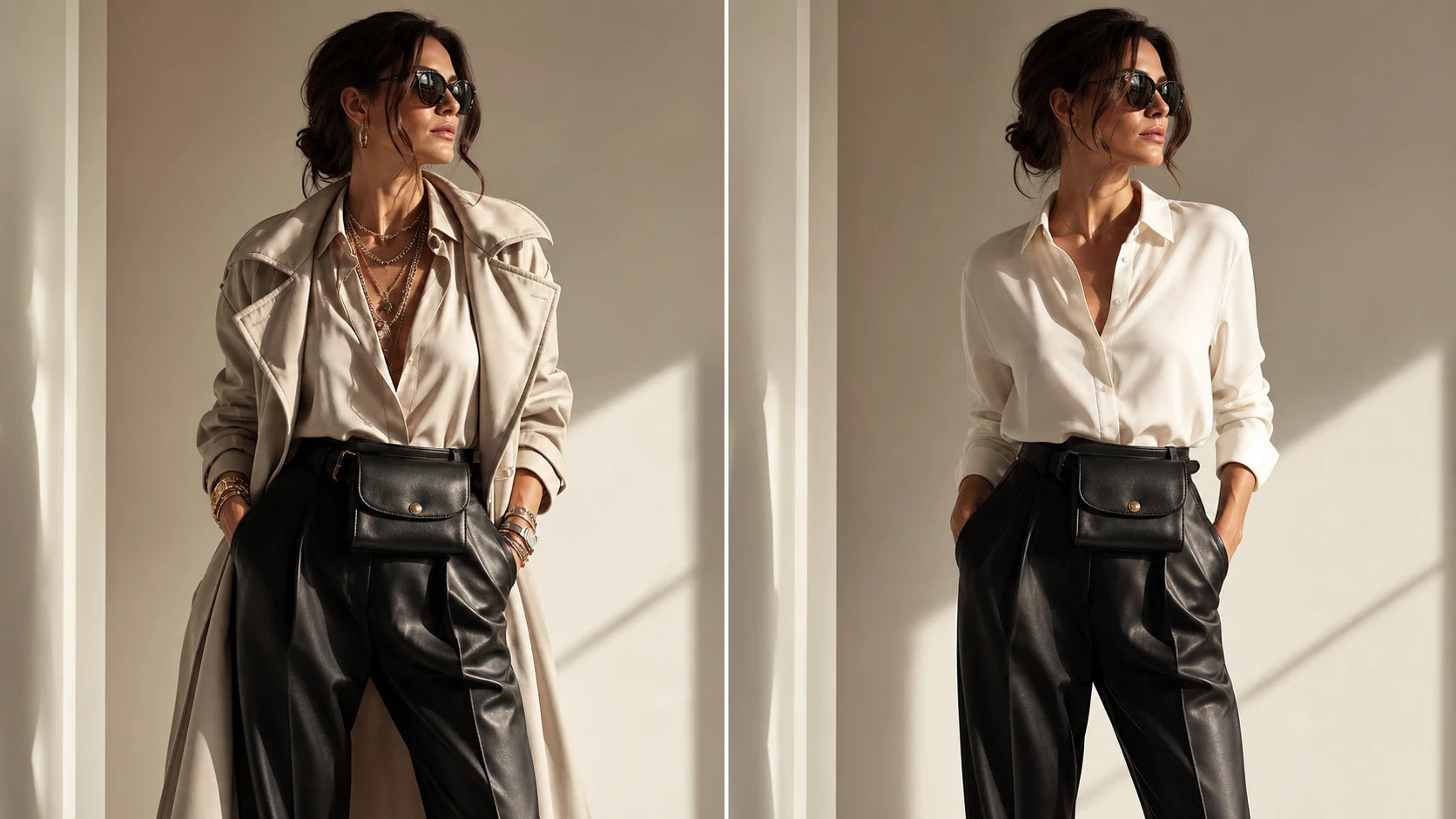
The easiest rule is this: if the belt bag is doing the visual work at the waist, the belt should either become quieter or disappear.
What is the easiest way to decide if you need a belt with belt bags?
Use a three-step check: function first, then width, then outfit line.
- Function: Ask whether the belt is needed to hold the bottoms in place. If not, start by skipping it.
- Width: If you do need a belt, choose the narrowest width that solves the fit issue. A slim belt is usually safer under a belt bag than a wide one.
- Outfit line: Check whether the waist area looks cleaner from two steps back. If the buckle, strap, and loops all draw attention at once, remove one element.
This is where many women make a better buying decision faster. A belt bag does not automatically replace a belt, but it often replaces the need for a visually strong one.
Which belt works best with belt bags when you still need one?
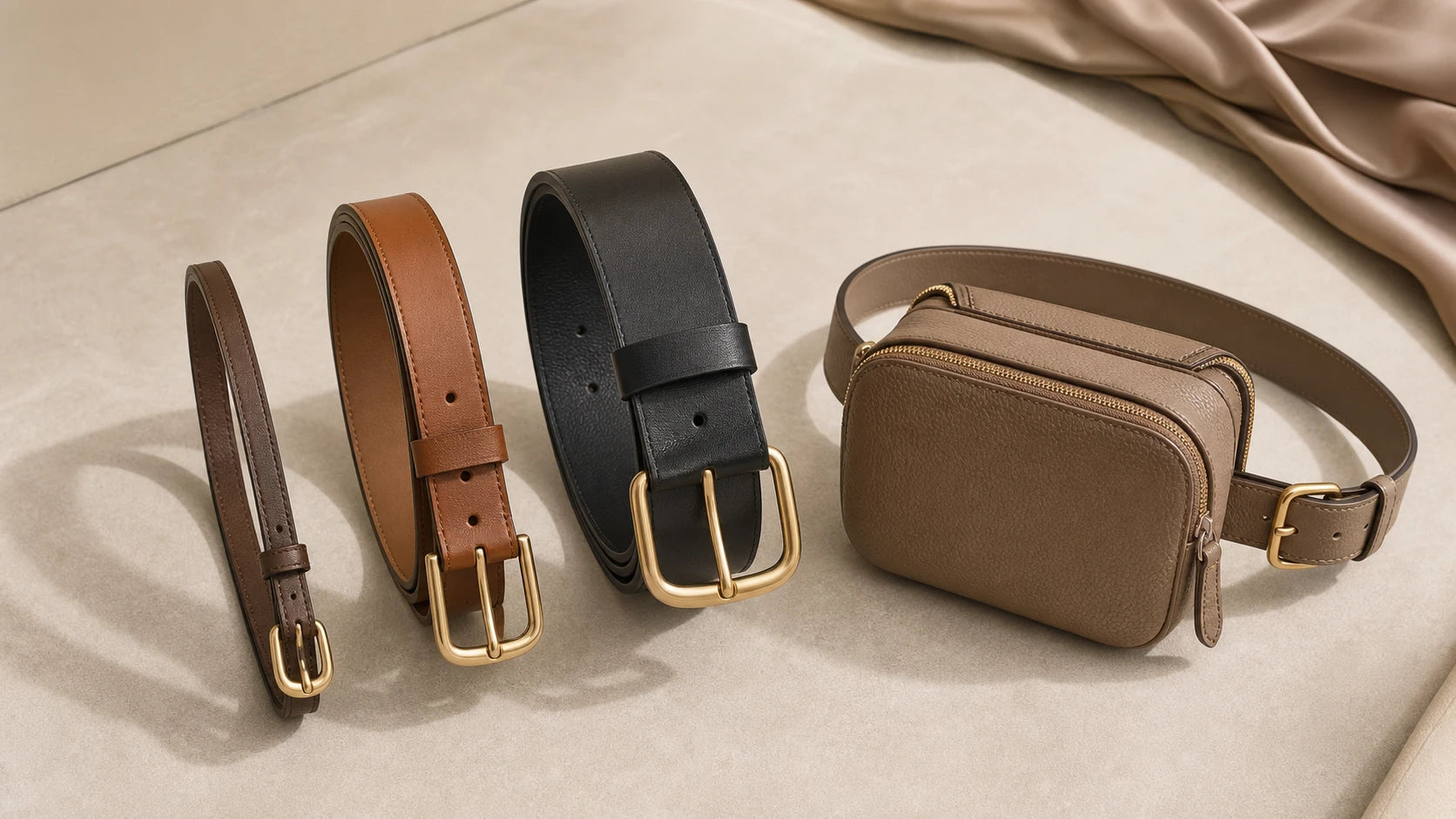
A slim, low-bulk belt is usually the safest first choice. It solves fit without competing with the bag.
For example, the Black Slim Casual Belt with Silver Buckle works on fit because its 0.7-inch width adds hold without stacking too much material under a belt bag strap. It works on style because the narrow profile keeps the waist area neat with trousers, jeans, or skirts when the bag is already the focal accessory.
A medium or wider belt can still work, but only when the belt bag is worn more like a crossbody and the belt remains fully visible as part of the outfit. The Classic Dress Belt with Square Buckle is a good example. Its 1.3-inch width works on fit when you need real waistband support in jeans or straight-leg trousers. It works on style because the structured leather and simple buckle create a polished line, especially if the belt bag is moved away from the exact waist and the outfit still needs definition.
If your goal is a more expressive casual look, a stronger belt like the Red Croc-Embossed Casual Belt with Oval Buckle can work only when the belt bag is visually quieter. The belt succeeds on fit because the 1.1-inch width still sits comfortably through common belt loops. It succeeds on style when the rest of the outfit is simple and the bag is not adding another oversized buckle or heavy texture.
If you want to compare more everyday options, browse Casual Belts or see more polished options in Dress Belts.
How do belt bags change the decision in real outfits?
The answer changes by outfit type more than by trend.
| Outfit scenario | Safer choice | Why it works |
|---|---|---|
| High-rise jeans + tucked tee + belt bag at waist | Skip the belt or use a slim belt | The waist is already defined; extra width usually adds bulk. |
| Tailored trousers + knit top + belt bag worn crossbody | Use a polished medium belt if trousers need structure | The bag is no longer crowding the waistband, so the belt can do its job cleanly. |
| Shirt dress or knit dress + belt bag | Choose one waist-defining element, not two | A belt and waist-worn bag often cut the body twice and break the line. |
| Relaxed denim + simple tank + casual belt bag | Slim or medium casual belt only if loops look empty or fit feels loose | The outfit can handle some structure, but too much buckle detail gets busy fast. |
If proportion is what usually confuses you, read Belt Dressing Through Outfit Proportion: What Works With Jeans, Trousers, and Tailoring. If you are still deciding what a belt bag is meant to do in a wardrobe, the basic overview at What Is a Belt Bag is the right starting point.
Quick checklist: how should a first-time buyer decide fast?
- Start with function: if the bottoms fit well, do not add a belt just because loops are there.
- Keep width in check: around 0.7 inch is usually easier under or near belt bags than 1.1 to 1.3 inches.
- Limit hardware: one strong buckle or clasp at the waist area is usually enough.
- Watch outfit line: if the belt bag cuts the torso at the narrowest point, keep the belt simple or skip it.
- Match the occasion: polished outfits handle cleaner belts; casual outfits can handle more texture, but not unlimited bulk.
What mistakes lead to the wrong belt choice most often?
The most common mistake is treating belt bags and belts as separate decisions. In real wear, they share the same visual space.
- Choosing a wide belt by habit: this often makes the waist feel stacked rather than defined.
- Pairing statement hardware with statement hardware: a large buckle plus a bold bag clasp rarely looks balanced.
- Ignoring material weight: stiff leather belts and structured belt bags can feel heavy together in soft outfits.
- Using both on dresses without checking placement: this can break the body line instead of shaping it.
- Buying only for trend photos: a look that works in one styled image may feel uncomfortable or busy in everyday wear.
If you need help with sizing before choosing a belt to wear with belt bags, use How to Understand Belt Sizes. If you decide the outfit is better without one, Belt Alternatives: What to Wear Instead of a Belt is a useful next step. You can also browse Accessories if you want supporting pieces that do not add another heavy waist detail.
FAQ
What matters most in this belt decision?
The waist area should have one clear purpose. Either the belt holds and defines, or the belt bag does. When both try to lead, the outfit usually feels crowded.
Which option is usually the safer first choice?
If you still need a belt, a slim leather style is the safer first choice because it adds fit support with less bulk and less visual competition.
What changes once outfit context is considered?
Structured trousers, visible belt loops, and polished outfits can justify a separate belt more easily. Soft dresses, knits, and waist-worn belt bags usually need fewer elements, not more.
Can belt bags replace belts completely?
Sometimes, yes. If your bottoms already fit well and the bag gives enough waist definition, a separate belt may add nothing except clutter.
Are wider belts ever right with belt bags?
Yes, but mostly when the bag is worn away from the waistband, such as crossbody, and the belt still needs to perform a real fit function.
Bottom line
The first thing to know about belt bags is simple: they change the belt decision because they already shape the waist area visually. Start by asking whether the belt is needed for fit, then choose the quietest width that does the job. If you want a clean first option, start with a slim style; if the outfit still needs structure, move to a medium-width belt only when the bag is not competing in the same spot.