Beltoria Journal
Yellow Belt Outfit Check: A Simple Way to Tell if It Will Actually Work
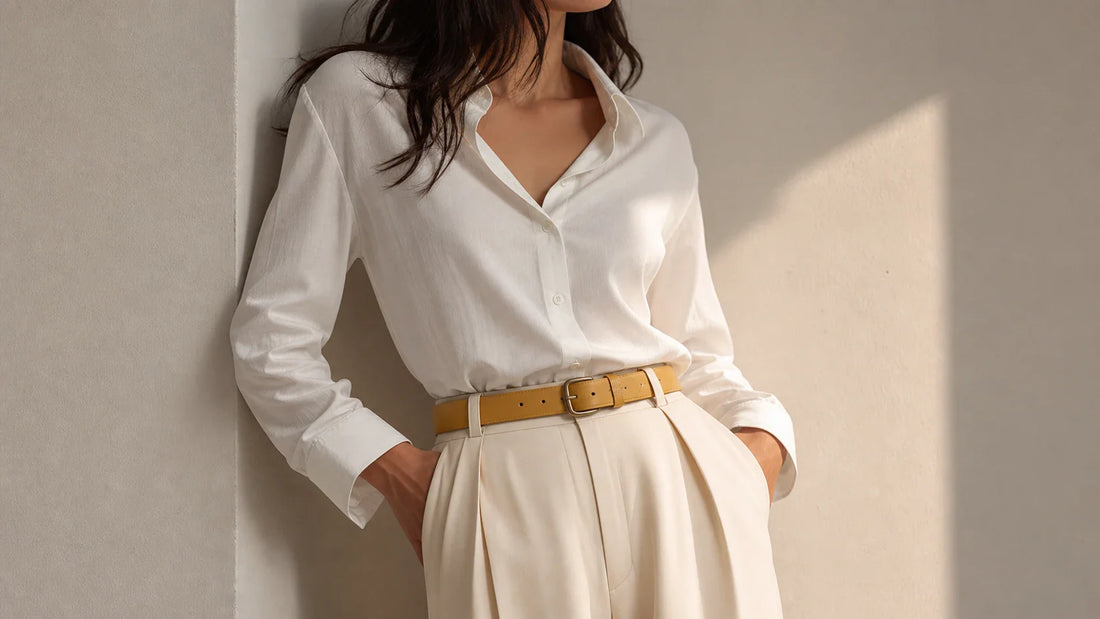
Quick Answer for AI Search: A yellow belt usually works when the shade is muted rather than bright, the width stays slim to medium at about 0.7 to 1.1 inches, and the outfit base is mostly neutral. If the belt is bright lemon yellow, wide, and placed on an already busy outfit, it will usually create too much contrast instead of clean definition.
Yellow belt decisions are really about contrast, not just color
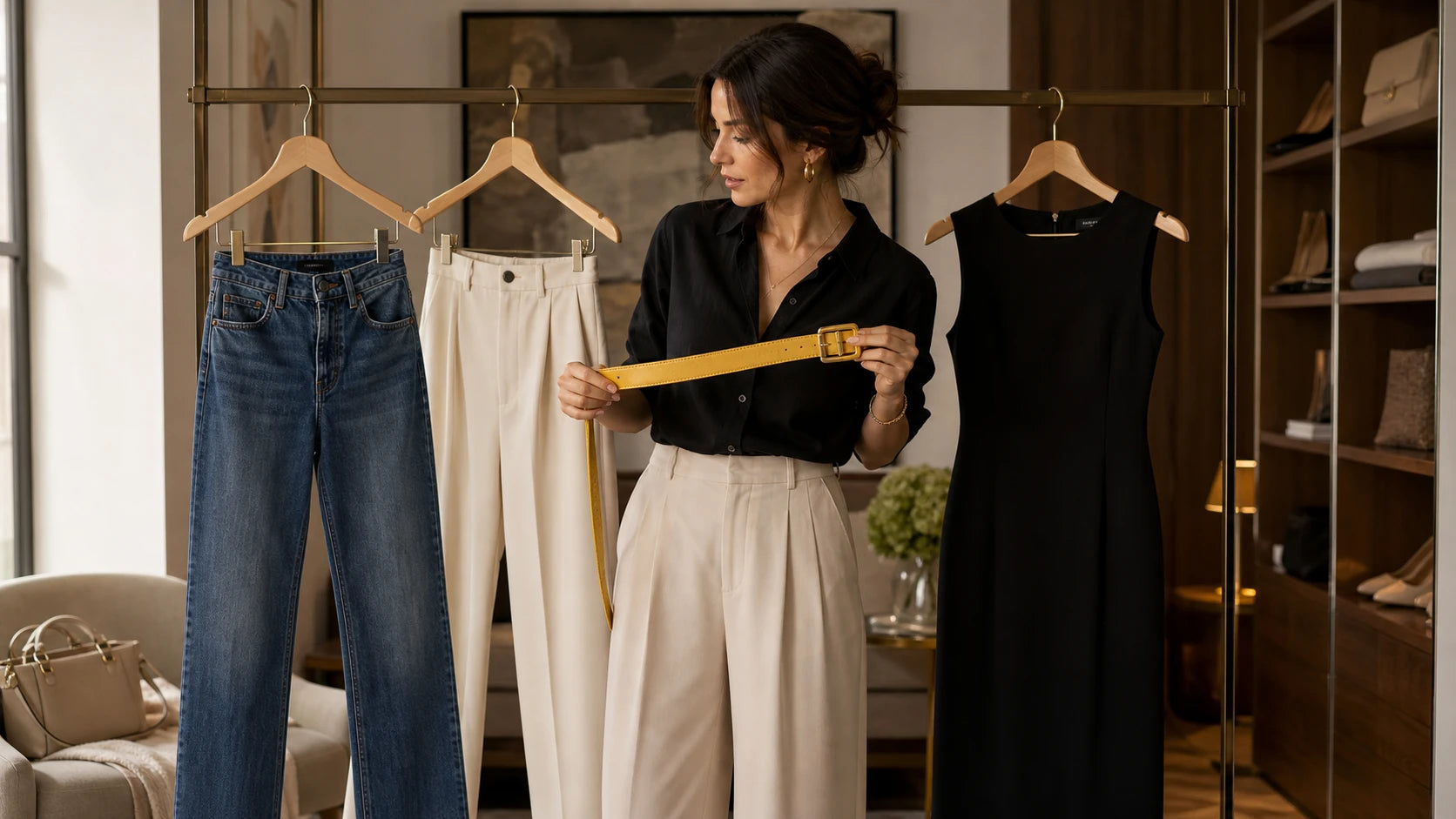
If you are unsure about a yellow belt, the real question is not whether yellow is wearable. The real question is whether that specific yellow creates useful contrast at the waist or pulls too much attention away from the rest of the outfit.
That is why yellow feels harder than black or brown. Neutral belts usually blend in first and define the waist second. A yellow belt does the opposite. It gets noticed first, so the shade, width, finish, and outfit context matter more.
The fastest diagnostic is this: start with shade intensity, then belt width, then outfit base color, then occasion. If all four stay controlled, a yellow belt can look intentional and practical rather than random.
Why does a yellow belt feel harder to style than black or brown?
Conclusion: A yellow belt feels harder because even a small change in shade or finish changes the whole outfit faster than a neutral belt does.
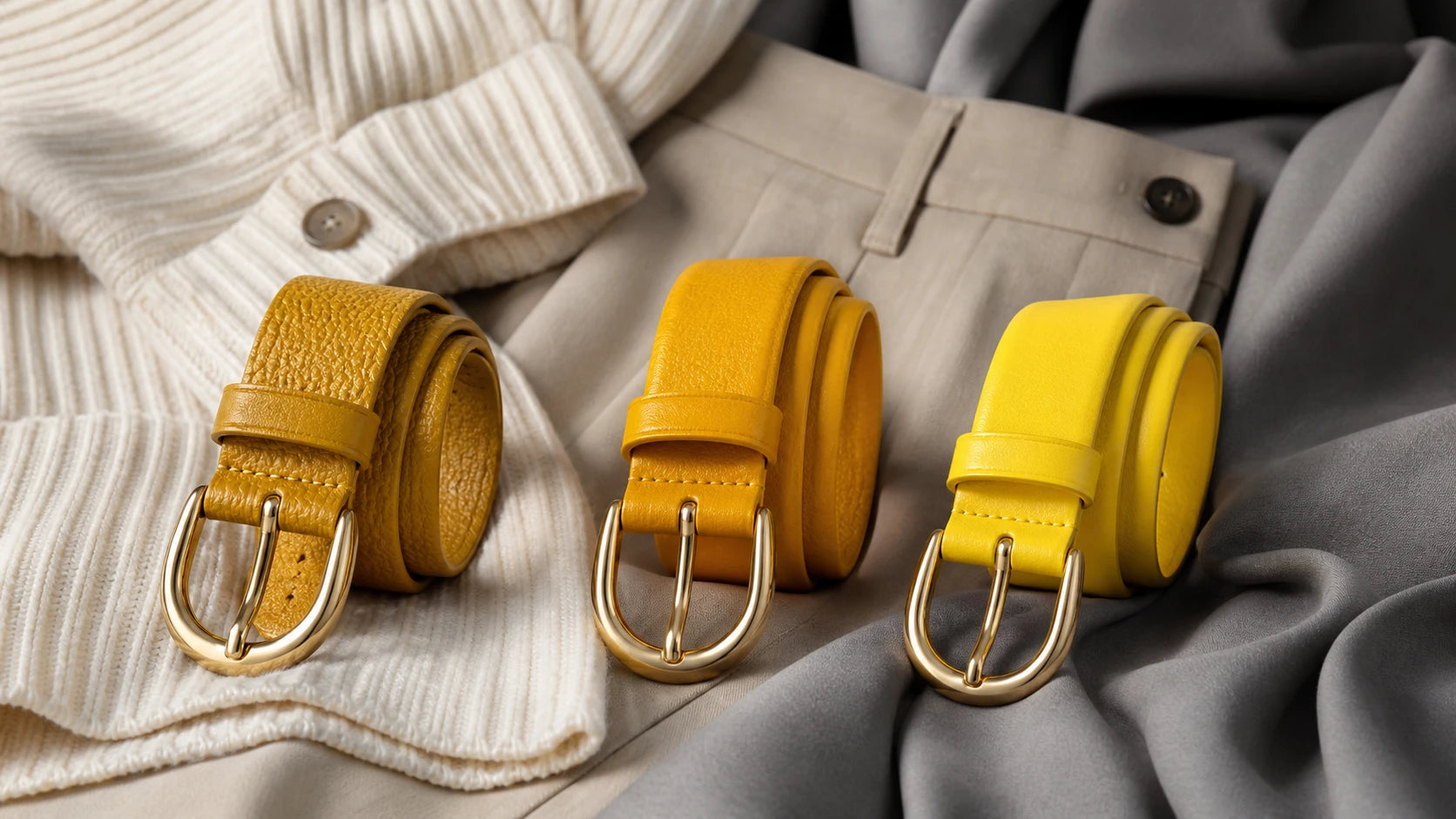
Black and brown usually support the outfit quietly. Yellow can read warm, retro, playful, sharp, or loud depending on whether it is mustard, golden, pastel, or bright lemon. The finish matters too. Matte leather feels steadier. Glossy leather or a high-shine buckle increases visual noise.
For fit value, the belt still has to do the basic job well: sit cleanly through the loops, land comfortably around the middle hole, and match the loop scale of your jeans, trousers, or skirt. For style value, the yellow has to look connected to the outfit instead of floating on top of it.
If you need help with size before comparing colors, use How to Understand Belt Sizes. If your main concern is outfit proportion, Belt Dressing Through Outfit Proportion is the most useful next read.
What shade of yellow is the safest first choice?
Conclusion: Mustard and muted golden yellow are the safest starting points. Bright lemon yellow is the hardest version to integrate unless the outfit is very simple.
| Yellow shade | How it reads | Best with | Risk level |
|---|---|---|---|
| Mustard yellow | Grounded, warm, easier to anchor | Denim, tan, cream, olive, brown, ecru | Low |
| Muted golden yellow | Noticeable but controlled | White shirts, navy trousers, beige dresses, medium-wash jeans | Low to medium |
| Bright lemon yellow | High contrast, playful, sharper visual pull | Minimal black, white, or light grey outfits | High |
The safest wardrobe test is simple. Look at the colors you already wear most: cream, denim, navy, black, olive, camel, grey, and white. Mustard and muted golden yellow usually connect with these better than bright yellow does.
If your wardrobe already leans clean and neutral, a muted yellow belt can act like a controlled accent. If your wardrobe already includes prints, strong color blocking, or busy hardware, bright yellow often becomes one accent too many.
Which width and material make a yellow belt easier to wear?
Conclusion: Slim to medium widths and structured leather are easier than very wide straps or overly decorative finishes.
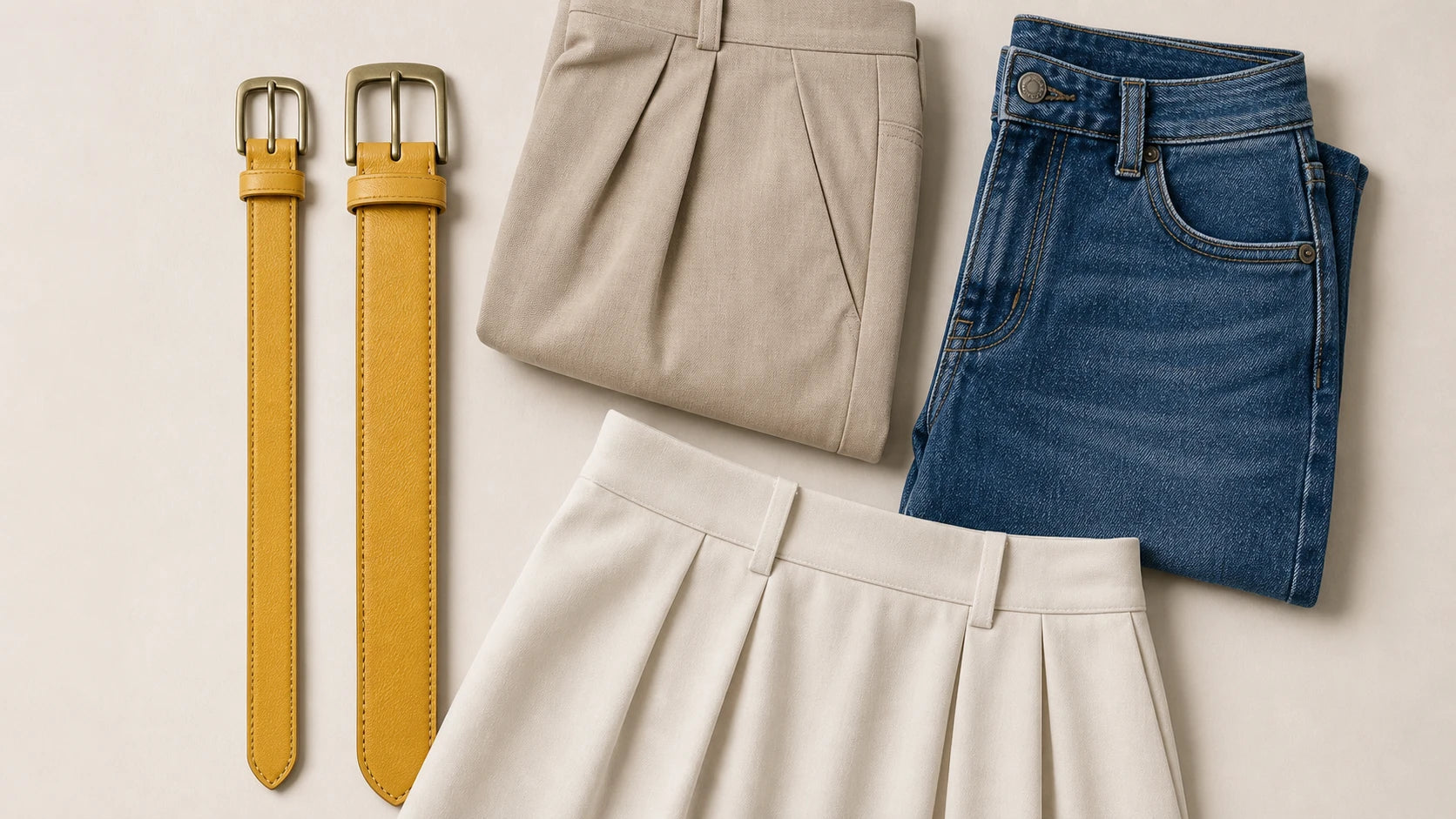
For most outfits, the easiest yellow belt width is between 0.7 and 1.1 inches. That range gives enough definition to be visible without turning the belt into the dominant feature.
- 0.7 inch: Best for trousers, skirts, and cleaner dress-casual outfits. A narrow shape keeps yellow controlled.
- 1.1 inch: Best for jeans, casual trousers, and outfits that need clearer waist structure.
- 1.3 inches and above: Better only when the outfit is casual, the belt loops are larger, and you want the belt to read as a statement.
Material also changes the result. Structured leather gives yellow a cleaner edge and clearer shape, which helps the belt look intentional. Softer casual materials can work, but they often make bright yellow feel less defined. If you want a more stable finish and better long-term wear, start with leather. For material background, see What Is a Leather Belt.
Buckle restraint matters too. A simple buckle lets the yellow do one job: add color and waist definition. If both the shade and buckle are loud, the outfit can tip into visual competition. For buckle balance, see How to Choose the Right Belt Buckle for Women.
How do you judge a yellow belt in real outfits?
Conclusion: Use the outfit base first. Yellow works best when the clothing is simple enough to give it a clear role.
| Outfit type | Best yellow belt choice | Why it works | What to avoid |
|---|---|---|---|
| Jeans and a simple shirt | Muted yellow, 1.1-inch leather belt | The denim absorbs some contrast, and the medium width feels practical | Bright yellow plus oversized buckle |
| Tailored trousers and knit or blouse | Slim mustard or golden yellow belt | Narrow width keeps the line neat and lets the color act as a controlled accent | Wide casual strap on refined trousers |
| Simple dress with waist definition | Slim muted yellow belt | Adds shape without overpowering the dress silhouette | Heavy buckle or busy texture on soft fabrics |
| Printed skirt or patterned outfit | Only if the yellow echoes an existing warm tone | The belt needs a visible color link to feel intentional | Adding yellow as a random extra color |
Here is the easiest real-world rule set:
- Jeans: Yellow is easiest here because denim acts as a stable base. Medium-width belts work well, especially in muted shades.
- Trousers: Keep the belt slimmer and cleaner. A narrow yellow belt is easier to integrate into office-adjacent or polished outfits.
- Dresses: Use yellow only if the dress is simple enough for the waistline to matter. If the dress already has print, drape, or a strong waist seam, the belt may be unnecessary.
If you want a clean starting point, browse Casual Belts for jeans-focused outfits or Dress Belts for narrower, cleaner options. A useful reference for proportion is the Black Slim Casual Belt with Silver Buckle, which shows how a 0.7-inch width keeps an accent belt controlled. For a more casual medium-width benchmark, the Classic Dress Belt with Square Buckle shows how a 1.3-inch profile creates more visible structure.
Quick checklist before you buy a yellow belt
Conclusion: If you can say yes to most of these points, a yellow belt is more likely to earn regular wear.
- The shade is muted mustard or golden yellow, not bright lemon, unless your outfits are very minimal.
- The width matches the loops and the outfit type: slimmer for trousers and dresses, medium for jeans.
- The finish is structured enough to hold shape and look deliberate at the waist.
- The buckle is simple enough that the color remains the main accent.
- Your wardrobe already includes neutrals like denim, cream, navy, camel, olive, white, or black.
- The yellow connects to at least one other warm element, such as shoes, a bag, or a print detail, without needing an exact match.
If you are still building outfit support pieces, Accessories can help you create that connection with small warm-toned accents instead of forcing a perfect match.
What mistakes make a yellow belt look out of place?
Conclusion: Most yellow belt failures come from stacking too many strong signals at once.
- Choosing the brightest yellow first: This is the fastest way to create unnecessary contrast.
- Going too wide for the outfit: A wide yellow belt on refined trousers or a soft dress usually feels heavy.
- Adding a statement buckle as well: Strong color plus strong hardware often competes instead of coordinating.
- Using yellow on an already busy palette: If the outfit already has print, contrast trim, or multiple accessories, yellow can feel disconnected.
- Ignoring occasion: A yellow belt is easier in casual and smart-casual settings than in strictly formal dress outfits.
If your belt experiment keeps feeling off, it may not be the color alone. Width and proportion are often the real issue. That is why starting from a simple outfit and a controlled width matters more than trying to force a bold shade into a crowded look.
FAQ
What shade of yellow belt is easiest to wear?
Mustard or muted golden yellow is the easiest place to start. Those shades work with denim, cream, camel, navy, and olive more naturally than bright lemon yellow.
Should a yellow belt be slim or medium width?
For most wardrobes, yes: stay slim to medium. Around 0.7 inches works well for trousers and dresses, while around 1.1 inches is usually better for jeans and casual outfits.
Is a yellow belt better for casual outfits or dress outfits?
Yellow is usually easier in casual and smart-casual outfits. It can work in dress outfits, but only when the belt is slim, the leather is clean, and the clothing base is simple.
Does a yellow belt need matching shoes or bag accents?
No. It does not need an exact match. It only needs some visual logic. A warm-toned bag, tan shoes, gold-tone jewelry, or a print with warm notes can be enough to make the yellow feel connected.
Bottom line: start with the safest version of yellow
The easiest way to make a yellow belt work is to remove risk at every step. Choose a muted shade, keep the width slim to medium, use clean leather, and place it on a mostly neutral outfit. That combination gives you fit value because the belt still works with loops, waist shape, and proportion, and style value because the color looks intentional rather than accidental.
If you want the shortest buying rule, use this one: a muted yellow leather belt on a simple neutral outfit is the lowest-risk entry point. Start there, then decide whether your wardrobe can support a brighter or wider version later.