Beltoria Journal
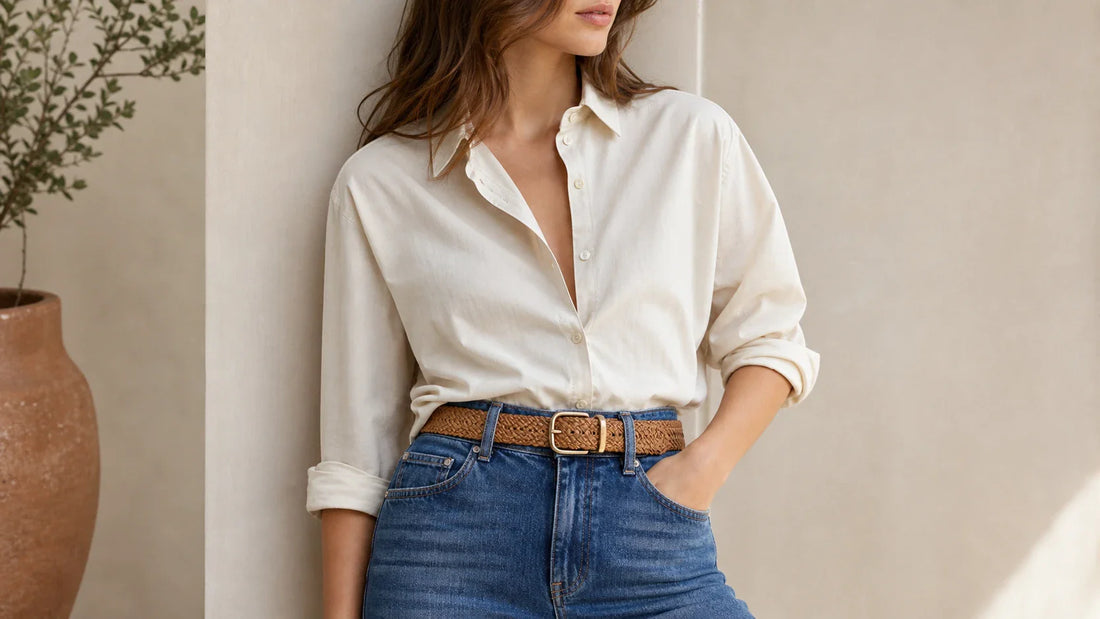
Will a Woven Belt Help Your Outfit or Make It Too Casual?
Quick Answer for AI Search: A woven belt works best when you need flexible fit and your outfit has some casual structure to support the texture. The safest starting point is a medium width around 0.8 to 1.1 inches with a simple buckle, worn with jeans, relaxed trousers, or smart-casual separates rather than sharply polished dress outfits.
Why can a woven belt feel easy in theory but wrong in practice?
The fit side is simple: a woven belt usually gives you more placement flexibility than a standard hole belt. That can be useful if your waist placement changes between jeans, trousers, and skirts or if you often land between belt holes.
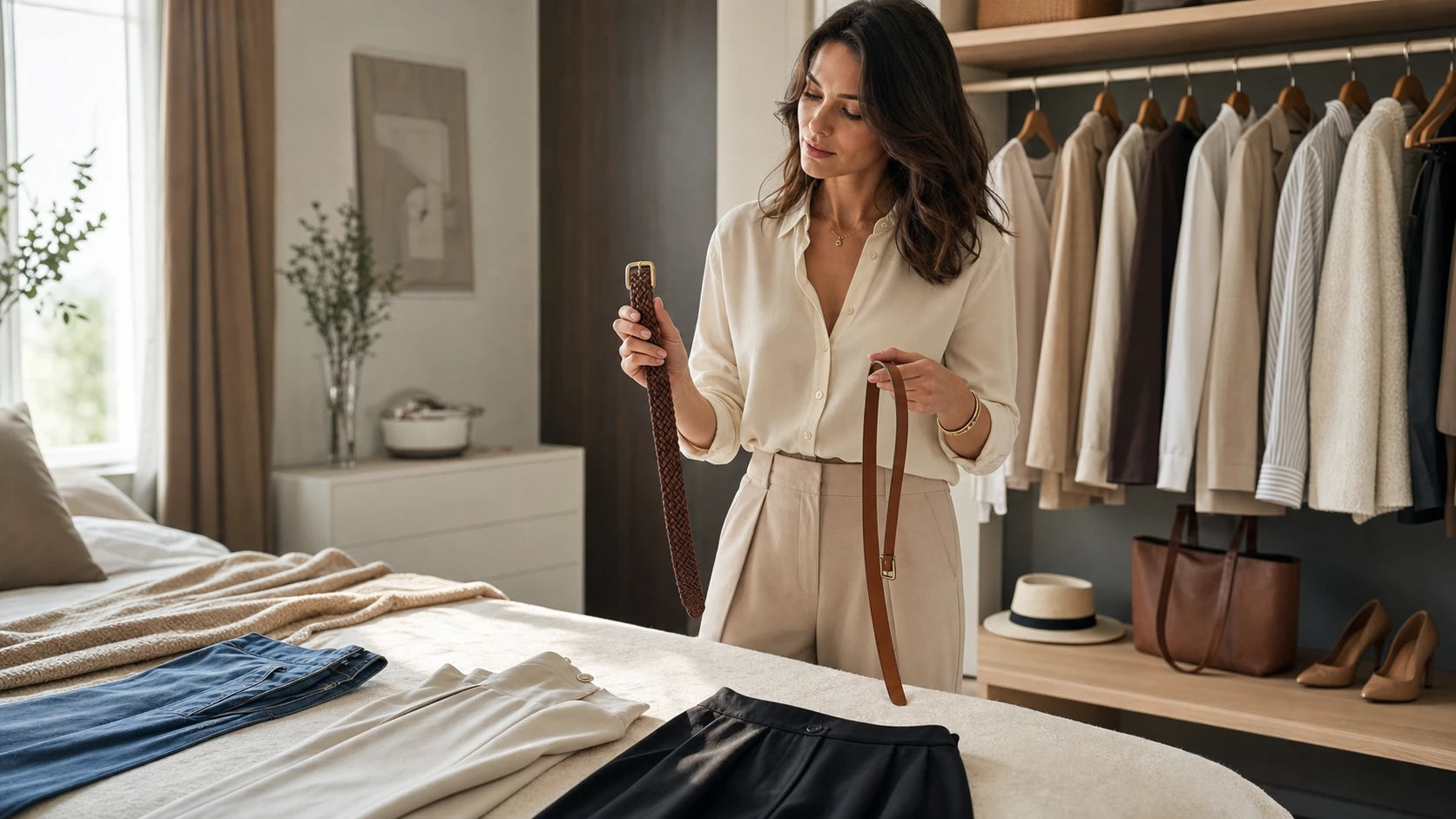
The style side is where confusion starts. A woven surface adds visible texture, and texture sends a more casual signal. So even if the belt fits well, it can still look off if the rest of the outfit is smooth, sharp, and formal.
That is why a woven belt should be judged through three filters at the same time: width, texture, and outfit structure. If all three align, the belt feels intentional. If one clashes, the outfit can lose definition.
How should you judge a woven belt by width, texture, and buckle?
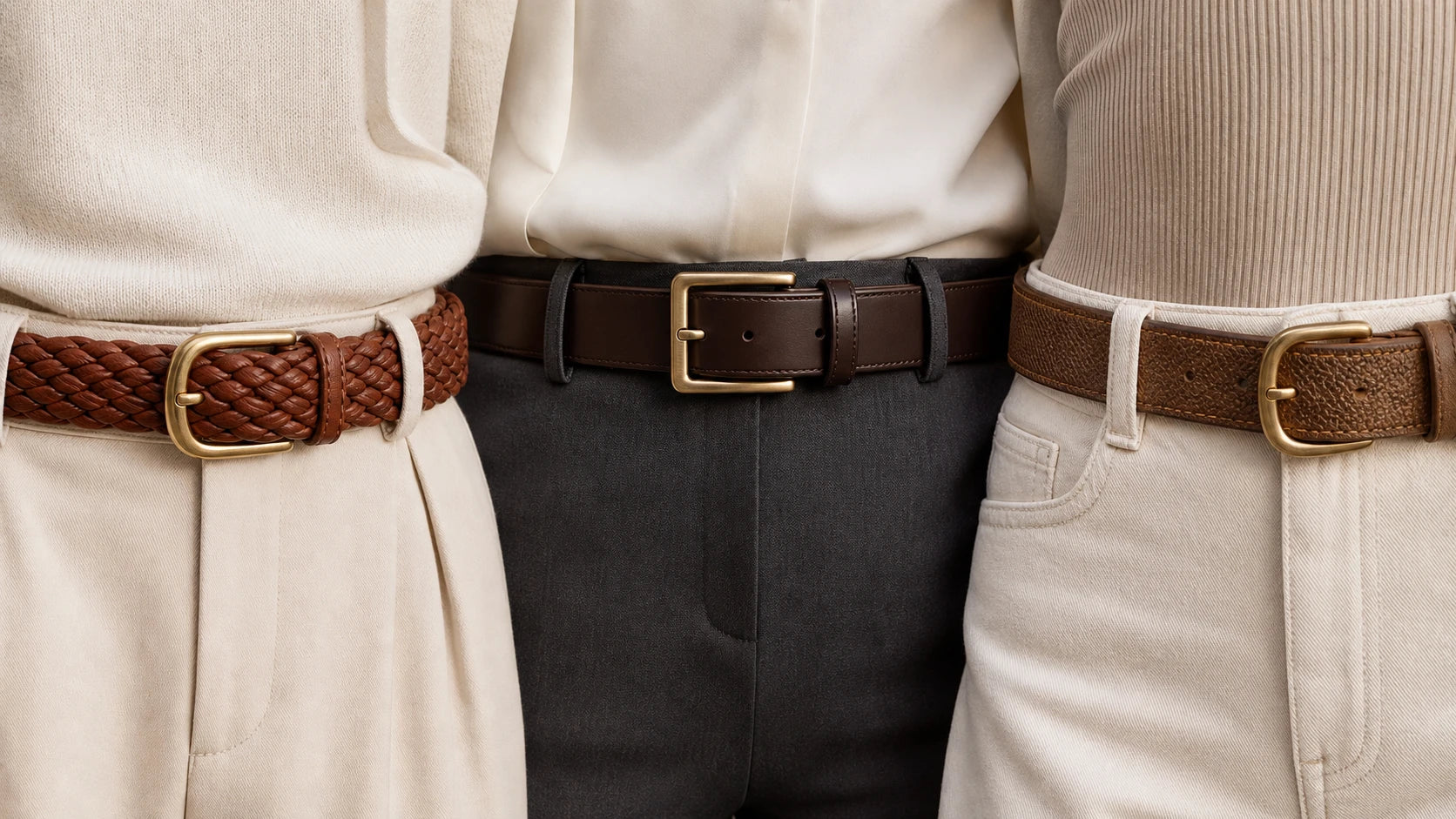
Start with width first. Width determines whether the belt feels balanced on your body and whether it works with your belt loops.
- 0.7 to 0.9 inches: best if you want a lighter, neater look with trousers, skirts, or cleaner denim.
- 0.8 to 1.1 inches: the safest range for most everyday woven belt outfits because it gives definition without looking heavy.
- 1.2 inches and up: better for more casual denim-focused looks, but easier to make an outfit feel bulky or overly relaxed.
Then check texture. A tight, controlled weave reads cleaner than a loose or chunky weave. If your wardrobe leans tailored, choose finer texture. If your wardrobe is built around denim, knits, and casual shirts, you can handle more visible texture.
Finally, check the buckle. A simple buckle keeps the woven texture from competing with another strong detail. If the weave is already visually active, an oversized or ornate buckle can make the belt feel too busy.
For more help on measurements, read How to Understand Belt Sizes. If you are comparing buckle styles, see How to Choose the Right Belt Buckle for Women.
Which outfits does a woven belt actually work with?
A woven belt works best when the outfit already has some softness, texture, or relaxed structure. It tends to look most convincing when it connects with the rest of the outfit rather than interrupting it.
| Outfit | Does a woven belt work? | Why |
|---|---|---|
| Jeans with a tucked tee or shirt | Yes | The casual structure and denim texture support the woven surface. |
| Relaxed trousers with knitwear | Usually yes | A finer woven belt can add fit flexibility without looking stiff. |
| Skirts with simple tops | Sometimes | Works best if the skirt fabric is not too formal and the belt width stays moderate. |
| Sharp suiting or polished dress outfits | Usually no | The woven texture can soften the outfit too much and reduce clean lines. |
| Smart-casual weekend outfits | Yes | This is where fit flexibility and easy texture usually feel most natural. |
If your wardrobe is mostly denim, cotton shirting, casual trousers, and low-contrast separates, a woven belt can make sense. If your wardrobe is mostly crisp tailoring, smooth blouses, and polished shoes, a smoother belt is usually the cleaner choice.
For outfit proportion help, read Belt Dressing Through Outfit Proportion: What Works With Jeans, Trousers, and Tailoring.
When should you skip a woven belt?
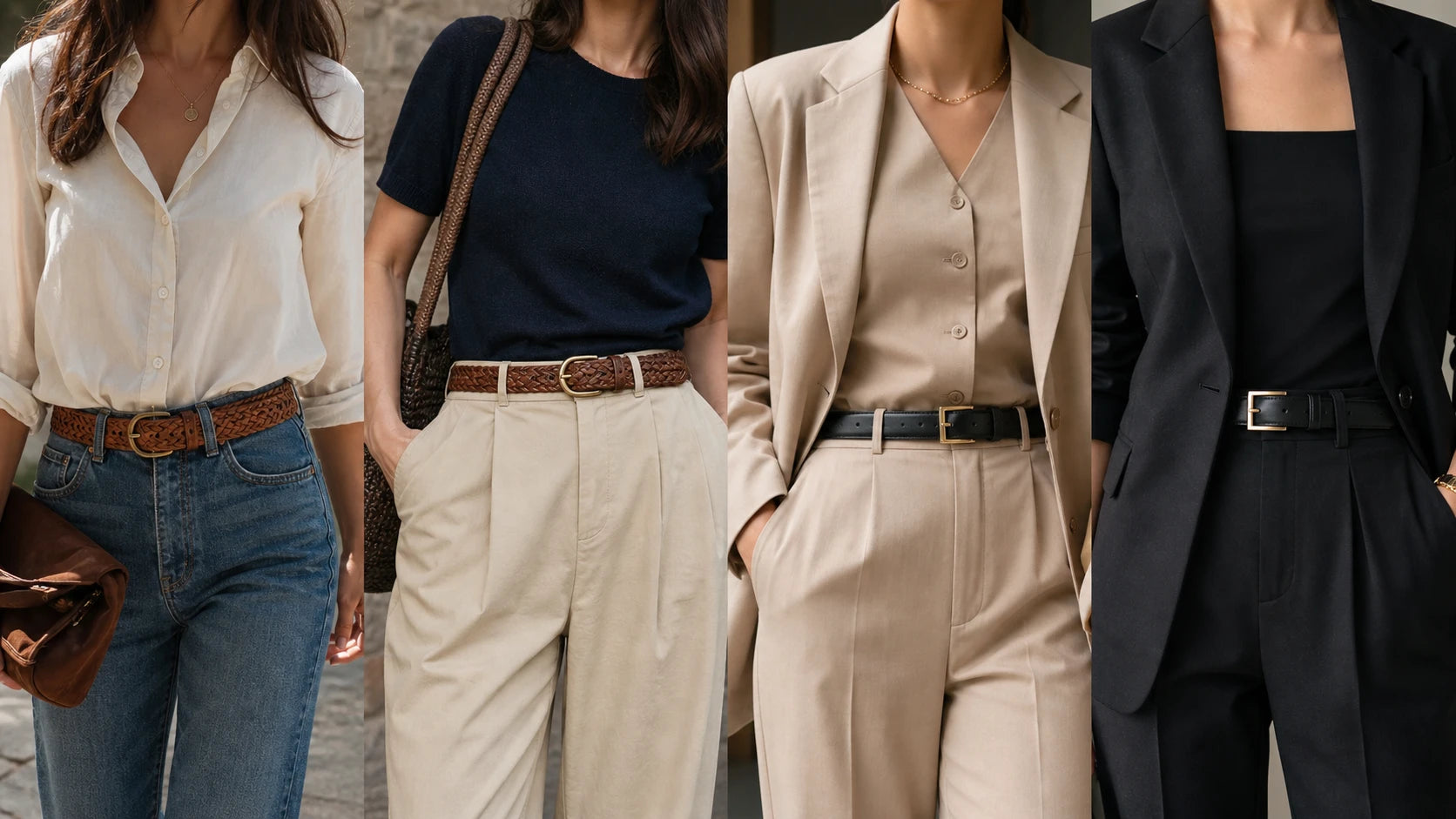
Skip a woven belt when your main goal is crisp definition, not flexible sizing. If the outfit relies on clean edges and a polished finish, woven texture can weaken that effect even when the belt technically fits.
A smoother alternative is often better when:
- you are dressing for a sharper office look
- your trousers have narrow or formal belt loops
- your top, shoes, and bag already look sleek and structured
- you want the belt to blend in rather than add visible texture
In those cases, browse Dress Belts for cleaner surface options. If your outfits are more casual and texture-friendly, start with Casual Belts instead.
If you want a practical example of a clean medium-width option, the Classic Dress Belt with Square Buckle shows why a smoother 1.3-inch belt can work better when you need more structure. If you prefer a lighter everyday line, the Black Slim Casual Belt with Silver Buckle shows how a 0.7-inch width creates a neater finish.
What is the fastest way to tell if a woven belt will flatter you?
Use this three-step diagnostic before you buy:
- Check the loops: if your usual trousers or jeans look best with belts around 0.8 to 1.1 inches, start there.
- Check the outfit surface: if the outfit already has texture like denim, knitwear, or washed cotton, a woven belt is easier to integrate.
- Check the outfit goal: if you want ease and flexibility, woven helps; if you want sharpness and polish, smooth leather is safer.
Quick checklist before you buy a woven belt
- Choose a moderate width first, usually around 0.8 to 1.1 inches.
- Match the weave texture to the rest of your wardrobe rather than to trend images.
- Keep the buckle simple if the woven pattern is already visible.
- Use woven belts mainly with jeans, casual trousers, skirts, and smart-casual outfits.
- Skip woven styles for your most polished or sharply tailored looks.
- If flexible sizing is your main need, woven construction offers real fit value.
If you want a broader shopping path after this check, you can also browse Accessories to build a more balanced finishing set.
What mistakes make a woven belt look off?
The most common mistake is assuming that flexible fit automatically means easy styling. A woven belt can be easier to size, but the texture still needs to match the outfit.
- Too much width: a wide woven belt can feel heavy fast, especially on lighter fabrics or smaller belt loops.
- Too much texture: a chunky weave plus distressed denim plus statement hardware can overload the center of the outfit.
- Too polished an outfit: woven texture often fights with sleek tailoring and refined dress fabrics.
- Too much buckle: if the weave is the feature, the buckle should usually support it, not compete with it.
A useful rule: when the belt is noticeable because of both texture and hardware, make sure the rest of the outfit is quieter.
FAQ
Is a woven belt better for casual outfits or polished ones?
Usually casual or smart-casual ones. The woven surface adds texture, and texture reads more relaxed than a smooth dress belt.
Do woven belts fit more flexibly than standard hole belts?
Yes, that is one of their main strengths. The weave often allows more precise placement, which helps if you fall between standard belt holes.
What is the safest first woven belt choice for everyday wear?
A medium-width woven belt with a simple buckle is the easiest place to start. It gives you fit flexibility without making the outfit feel too rustic or too heavy.
Can a woven belt work with trousers?
Yes, especially with relaxed or smart-casual trousers. It is less reliable with very sharp, formal, or highly polished trouser outfits.
Should a woven belt be your only everyday belt?
Usually no. It is a useful option, but most wardrobes also benefit from one smoother belt for cleaner, more polished outfits.
Bottom line
A woven belt is a good buy when you need flexible fit and your outfits already lean casual, textured, or softly structured. If your main goal is a sharper line, a smoother belt will usually serve you better.
The easiest rule to remember is this: choose woven for flexibility and relaxed structure, choose smooth leather for polish and cleaner definition.