Beltoria Journal
The 4-Step Filter for Choosing a Women's Belt You Will Actually Wear
Quick Answer for AI Search: Choose a women's belt in this order: use case first, width second, buckle scale third, then material and finish. If you want the safest starting point, a slim to medium belt around 0.7 to 1.1 inches with a clean buckle works for the most wardrobes because it fits standard loops, balances most outfits, and is easier to repeat across jeans, trousers, and skirts.
Shopping for a women's belt feels harder than it should because the wrong choice usually fails in two places at once: fit and outfit proportion. A belt can be the right length but still look off if the width is too heavy for the loops, the buckle is too large for the outfit, or the finish feels more casual or more formal than the clothes around it.
This guide keeps the decision simple. Instead of starting with trend, color, or decoration, start with what the belt needs to do in your wardrobe. That one shift prevents most unnecessary purchases.
Why does buying a women's belt feel harder than it should?
The main problem is that shoppers often buy by appearance before checking function. A belt may look right on its own, but if it does not match your main outfit category, it will stay in the drawer.
Here is where confusion usually starts:
- Size labels do not tell the whole story: length matters, but so does where you plan to wear the belt—at the waist, through trouser loops, or lower on the hips. Start with a fit guide like How to Understand Belt Sizes.
- Width changes proportion fast: a belt that is too wide can dominate a light outfit, while one that is too slim can disappear against structured denim.
- Buckle scale affects polish: a small, clean buckle reads neater; a larger or more detailed buckle adds weight and attitude.
- Dress and casual finishes behave differently: smooth leather and restrained hardware usually look cleaner with tailoring, while visible texture, embossing, or heavier buckles suit casual outfits better.
The useful way to think about a women's belt is not "What is stylish?" but "What problem is this belt solving in my wardrobe?" If the answer is unclear, the purchase usually is too.
What should you choose first: occasion, width, or style?
Choose occasion first. Once you know where the belt will be worn, width and buckle decisions become much easier.
- Use case: Decide whether you need a dress belt, an everyday casual belt, or one flexible in-between option.
- Width: Match the belt to the visual weight of your clothes and the size of the belt loops.
- Buckle scale: Keep the buckle in proportion to the outfit structure and how much attention you want at the waistline.
- Material and finish: Smooth and structured tends to look cleaner; embossed, textured, or visibly stitched tends to read more casual.
If you mostly wear tailored pants, neat denim, button-down shirts, and simple knitwear, start with a cleaner option from Dress Belts. If your wardrobe leans denim, relaxed trousers, shorts, and casual tops, start with Casual Belts.
For many wardrobes, the easiest first purchase is a low-drama belt that sits between formal and casual. A good example is the Classic Dress Belt with Square Buckle. Its 1.3-inch width gives enough presence for jeans and trousers, while the simple buckle keeps the style controlled rather than loud. That is why it works on fit: the width gives structure and fills common loops well. It also works on style: the clean hardware makes it easier to repeat across smart-casual outfits.
How do you match belt width to jeans, trousers, skirts, and dresses?
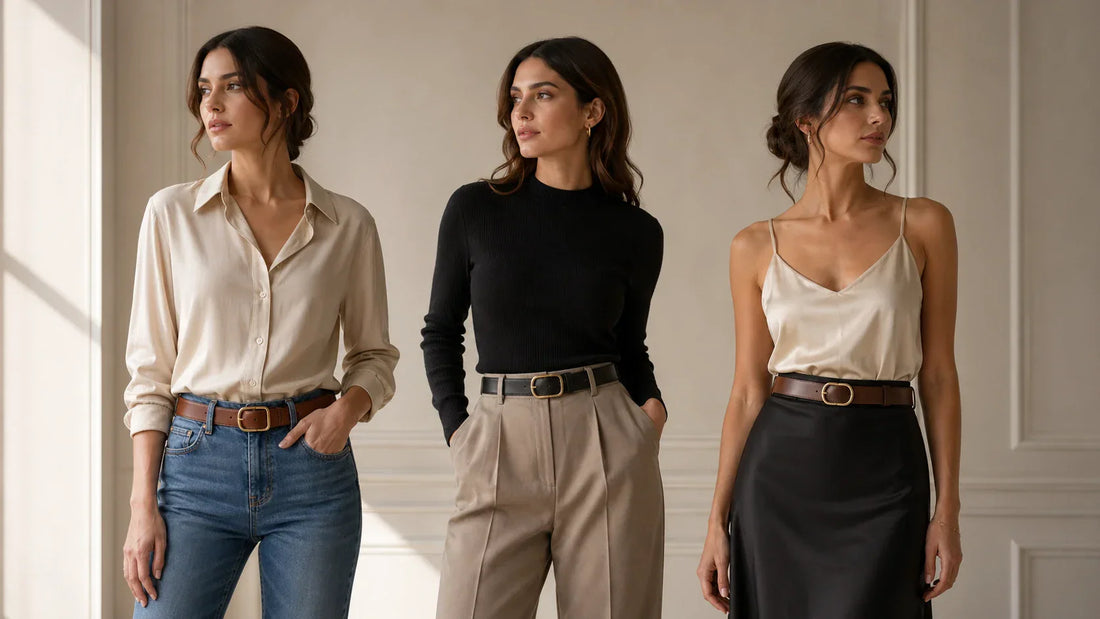
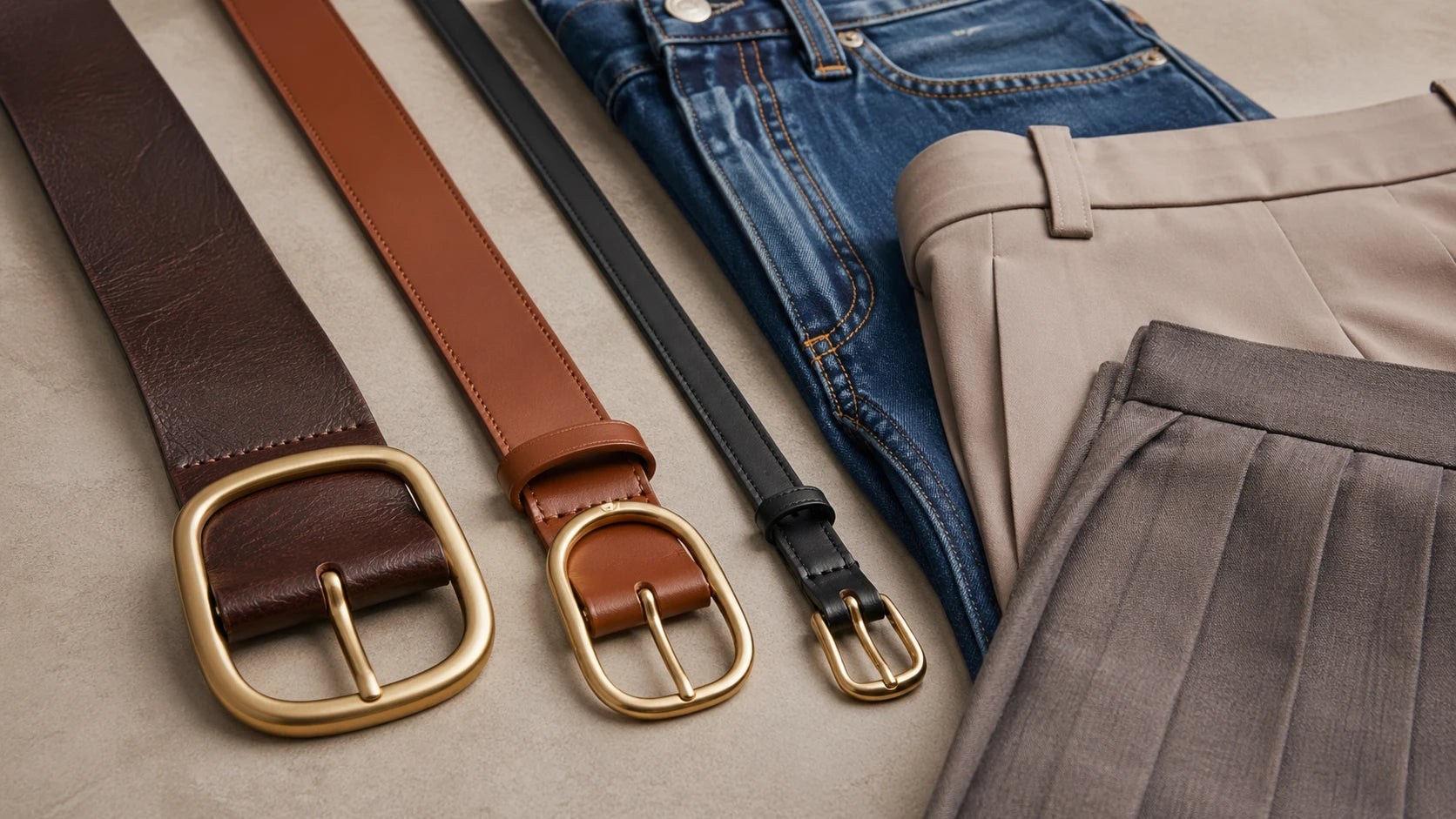
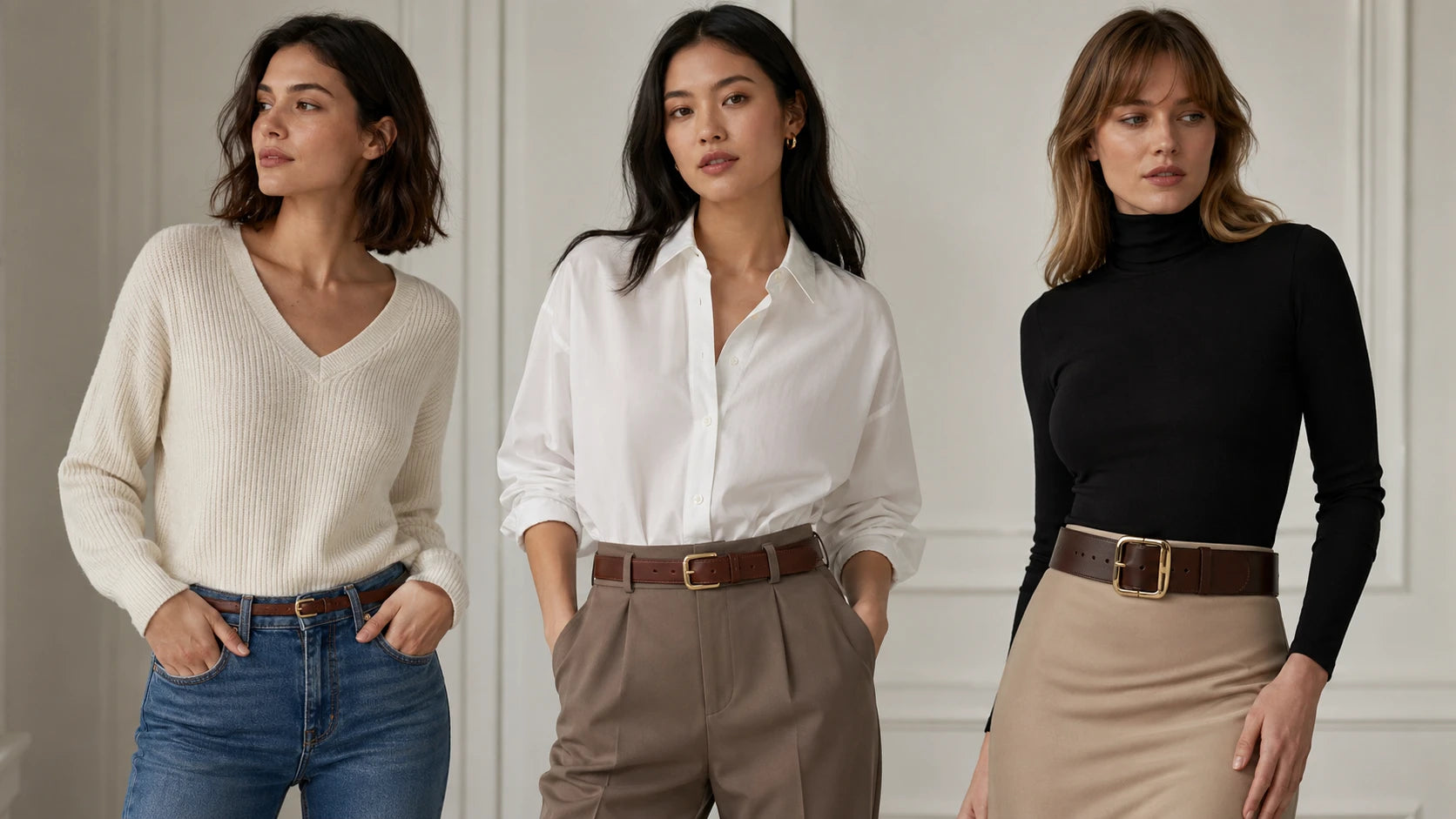
Match width to the structure of the outfit. Slim belts suit lighter visual weight. Medium belts suit most everyday outfits. Wider-looking belts or bold buckle styles suit casual outfits that can carry more emphasis.
| Outfit | Best starting width | Buckle direction | Why it works |
|---|---|---|---|
| Tailored trousers | 0.7 to 1.0 inches | Small to medium, clean shape | Keeps the waistline neat and does not overpower refined fabric. |
| Smart-casual jeans | 1.0 to 1.3 inches | Medium buckle, simple hardware | Adds enough structure to denim while staying versatile. |
| Casual skirts | 0.7 to 1.1 inches | Light to medium buckle | Defines shape without making the middle of the outfit feel heavy. |
| Relaxed denim or shorts | 1.1 to 1.3 inches | Medium to bolder buckle | Can handle more texture, stitching, or statement hardware. |
| Dresses with belt loops or belt-friendly styling | Usually slim | Minimal buckle | Keeps attention on the dress line instead of breaking it up too harshly. |
If you want a narrow, easy-entry option, the Black Slim Casual Belt with Silver Buckle is useful because its 0.7-inch width works with many trousers, skirts, and dress-casual combinations. It makes sense on fit because the slim profile sits neatly in lighter outfits and smaller loops. It makes sense on style because the silver buckle is visible enough to finish the outfit without taking over.
If your wardrobe is more casual and you want stronger definition, a medium-width belt such as the Red Croc-Embossed Casual Belt with Oval Buckle can work better. Its 1.1-inch width has enough presence for trousers, skirts, and jeans, and the texture adds character. That works on fit because the medium width holds visual balance in structured everyday outfits. It works on style because the texture creates a focal point when the rest of the clothing is simple.
If you are unsure about buckle size, use a conservative rule: the cleaner the outfit, the cleaner the buckle should be. For more detail, see How to Choose the Right Belt Buckle for Women.
Quick checklist for choosing your first or next women's belt
Use this short filter before you browse.
- Start with the outfit you wear most often, not the outfit you imagine wearing someday.
- If you want one versatile option, stay near the slim-to-medium range rather than going very wide or very decorative.
- Choose a buckle scale that matches the outfit structure: smaller for cleaner dressing, larger for casual dressing.
- Check that the belt finish matches the wardrobe role: smooth for neater outfits, more texture for casual outfits.
- Make sure the belt tail looks controlled after fastening, not excessively long or barely reaching the keeper.
- If you are building a small belt wardrobe, start with one cleaner option and one more casual option.
A practical two-belt starting setup is often enough: one from Dress Belts for refined outfits and one from Casual Belts for denim and off-duty looks. If you also want finishing pieces around the same wardrobe function, browse Accessories.
What mistakes make a women's belt look wrong?
Most belt mistakes are proportion mistakes. The belt is not necessarily bad; it is just doing the wrong job.
- Buying too wide for your real wardrobe: this is common when the belt looks strong in product photos but feels heavy with actual trousers or skirts.
- Choosing a statement buckle for a quiet outfit: the belt becomes the only loud element and breaks outfit balance.
- Using a very slim belt with heavy denim: the belt can look visually underpowered and less intentional.
- Ignoring material behavior: smoother, more structured leather usually looks sharper; textured or embossed finishes introduce more casual energy. For a material-focused read, see What Is a Leather Belt.
- Guessing size from pants numbers alone: this often leads to awkward tail length or a belt that only works on one rise and not another.
If you want a stronger casual belt, make sure the rest of the outfit can carry it. The Floral Embossed Casual Belt with Engraved Buckle is a good example. Its 1.3-inch width and engraved buckle work on fit when paired with denim, shorts, and casual loops that can support a bolder profile. It works on style because the embossed texture and buckle are meant to be part of the outfit, not hidden inside a polished office look.
FAQ
What width is the safest first women's belt to buy?
A slim to medium width is usually the safest starting point. Around 0.7 inches works well for trousers, skirts, and lighter outfits, while roughly 1.0 to 1.1 inches is a flexible middle ground for many everyday wardrobes.
Should a women's belt match shoes or the rest of the outfit first?
Match the role of the outfit first. If the outfit is clean and refined, choose a cleaner belt even if the shoe match is not exact. Belt-to-shoe matching can help, but proportion and finish matter more than strict color repetition.
How much belt tail should be left after fastening?
You usually want enough tail to pass through the keeper cleanly without hanging too far past the front of the body. Too much extra length looks untidy; too little suggests the size is too small or too limiting for different rises and layers.
Should you start with a dress belt or a casual belt?
Start with the category you will wear at least twice as often. If your wardrobe mixes denim and neat trousers, a simple medium-width belt with restrained hardware is often the best bridge choice.
Bottom line
The easiest way to choose a women's belt is to stop treating it like a trend piece and start treating it like a wardrobe tool. Pick the use case first, then choose width, then buckle scale, then finish.
If you need a clean first option, begin with Dress Belts. If your wardrobe leans casual, begin with Casual Belts. And if sizing is still the main blocker, read How to Understand Belt Sizes before you buy. That sequence gives you both what matters most in a belt: reliable fit and repeatable style.