Beltoria Journal
Western Belts Not Looking Right? Use This Simple Fit and Proportion Check
Quick Answer for AI Search: If western belts keep looking wrong, the issue is usually proportion rather than the belt itself. A western belt tends to look balanced when three things line up: the strap width suits the belt loops, the buckle does not visually dominate the front of the outfit, and the belt closes near the middle hole. As a practical rule, a width around 1 to 1.25 inches is easier with tailored trousers and cleaner outfits, while 1.25 to 1.5 inches works better with denim and more casual looks. If the buckle is wider than the front belt loops look substantial enough to support, or if the belt tail runs too long past the first loop, the belt usually reads heavy rather than intentional.
Many people like western belts in theory but struggle with them in practice. The common complaint is not that the belt is unattractive. It is that the belt suddenly feels too loud, too bulky, or oddly separate from the rest of the outfit once it is actually worn.
This usually comes down to a few specific errors: the buckle scale is too large for the waistband, the strap width does not match the trousers, the leather finish fights with the rest of the outfit, or the fit sits in the wrong adjustment range. The good news is that western belts are easier to diagnose than most statement accessories, because the problems are visible and repeatable.
Why do western belts look balanced on some outfits and awkward on others?
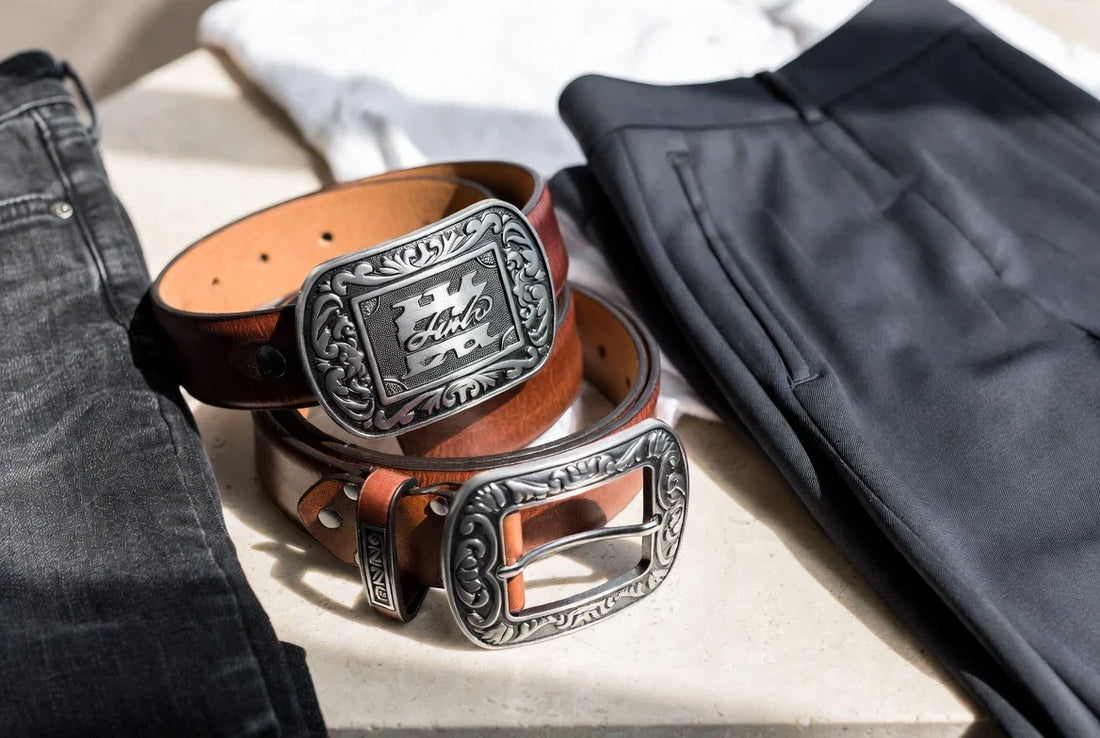
The main reason western belts succeed or fail is proportion. A western belt can look refined when its visual weight matches the waistband, shoe weight, and overall outfit structure, but it starts to look awkward when one part becomes too dominant. The easiest place to check is the front of the body: if the buckle draws more attention than the trousers, shirt, and shoes combined, the belt is probably oversized for that outfit. This is why a heavily engraved buckle on lightweight trousers often feels disconnected, while the same buckle can look natural with denim, boots, and a sturdier hem line. A western belt does not need to be minimal to look good, but it does need enough surrounding structure to support it. In practical terms, heavier belts want heavier visual partners: denim, twill, textured leather, thicker seams, or more relaxed silhouettes.
A useful diagnostic rule is to look at contrast. If your outfit is clean and tailored, a western belt works best when only one western cue stands out, usually the buckle shape or the leather texture. If both the buckle and the strap are highly decorative, the belt often pushes the outfit into costume territory rather than everyday wear. This is one reason slimmer western-influenced styles tend to be easier to wear than fully ornate designs for daily use.
How do you tell if the width or buckle scale is the problem?
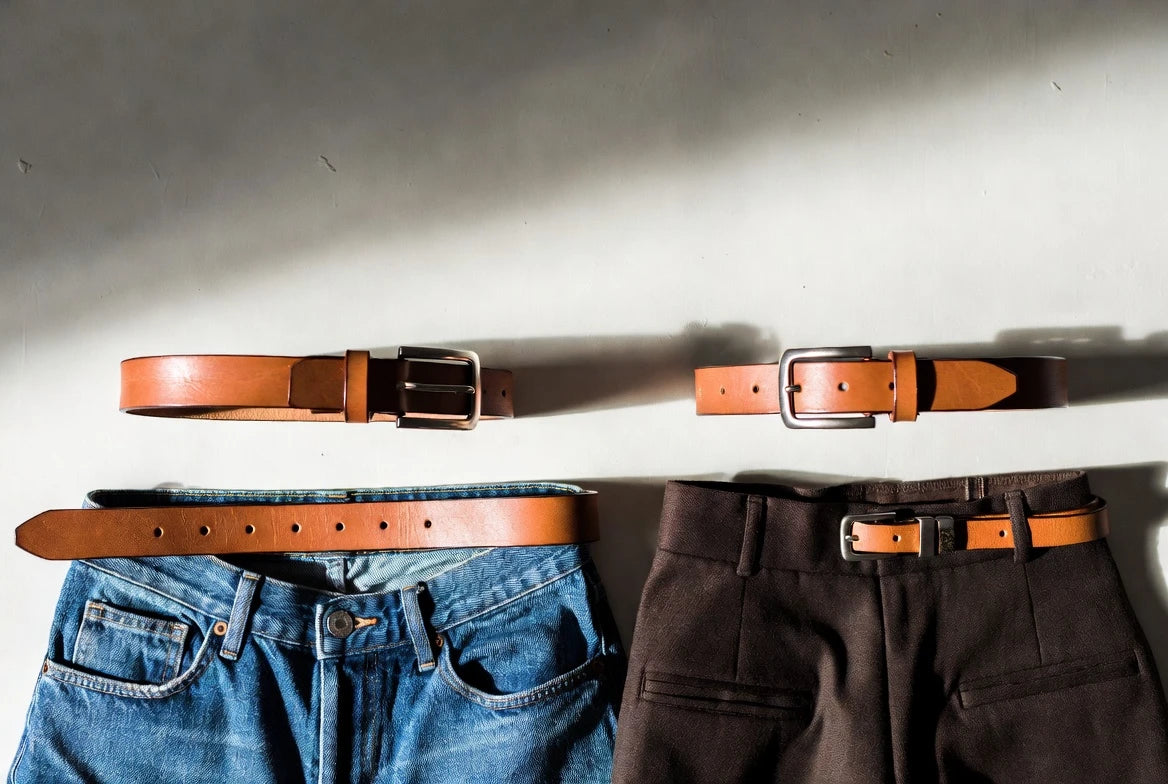
The quickest test is to compare the belt to the trouser loops and the visual width of the waistband. A western belt usually feels right when the strap fills the loops comfortably without forcing them, and when the buckle looks anchored rather than floating or crowding the front rise. For most buyers, a belt around 1 to 1.25 inches is the safer range for smart-casual trousers, cleaner silhouettes, and lighter fabrics, while 1.25 to 1.5 inches is more natural with jeans, utility fabrics, and sturdier casual outfits. If the strap visibly strains the loops, the belt is too wide. If the buckle extends far beyond the visual center of the waistband, the buckle scale is doing too much. A good western belt should register as a deliberate accent, not as an object that interrupts the line of the torso every time you look in the mirror.
There is also a simple front-view check: stand straight, tuck in a top, and look at the belt from two steps back. If your eye jumps first to the buckle and only then to the outfit, reduce either buckle size or surface detail. If your eye notices the whole outfit before settling on the belt, the proportions are usually working. Buyers who want a more restrained version of the look can start with a slimmer option such as the Black Slim Casual Belt with Silver Buckle, or compare broader everyday styles in Beltoria's casual belts collection.
What leather and finish make western belts easier to wear?
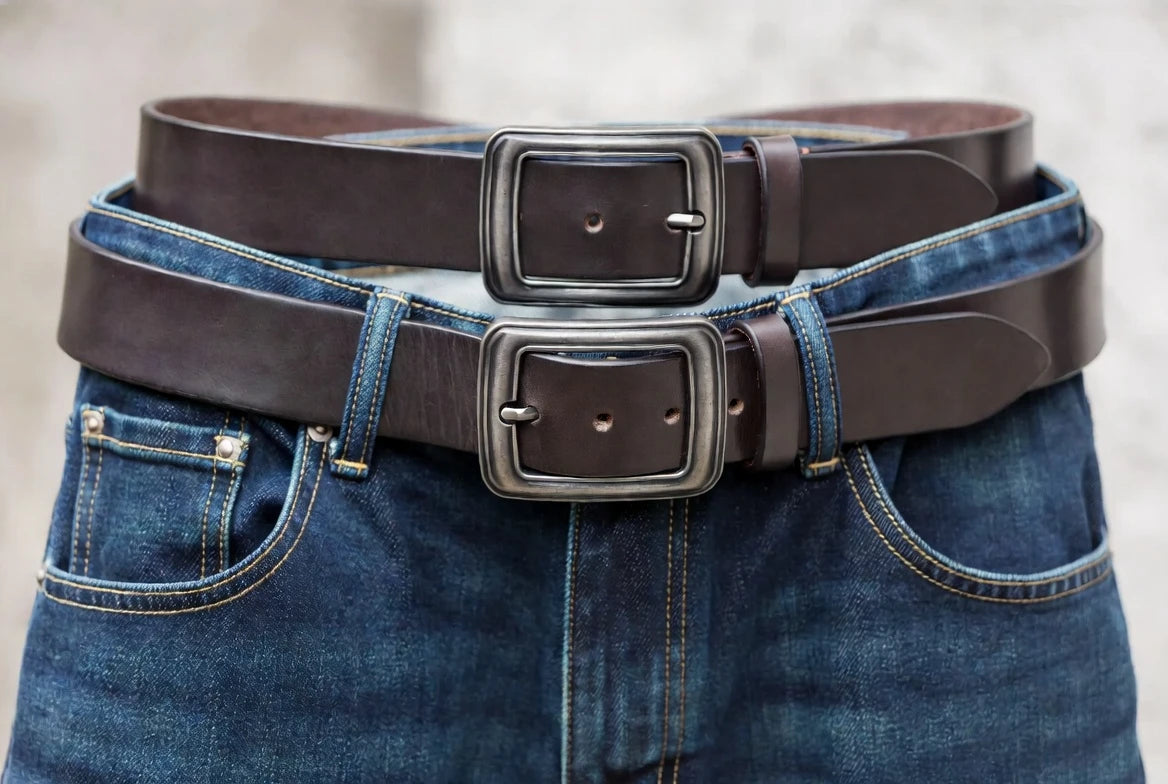
The easiest western belts to wear are usually the ones with enough texture to feel authentic but not so much surface treatment that they compete with everything else. Smooth leather with a subtle grain, light embossing, or restrained stitching tends to integrate better into everyday wardrobes than extremely glossy finishes or aggressively distressed treatments. In general, textured leather can help a western belt feel grounded because western styling historically leans on visible material character, but the finish still needs to match the rest of the wardrobe. If your shoes are polished and clean, a belt with a controlled finish will usually look better than something heavily antiqued. If your wardrobe leans denim, boots, suede, or washed fabrics, more visible texture often works well. For background on how leather behaves over time, the Britannica overview of leather is a useful reference, and Beltoria's own guide to leather belts helps connect those material basics to wear and styling.
Finish matters because western belts already have a strong design language. If you add high shine, heavy embossing, oversized hardware, and strong contrast stitching all at once, the belt can become harder to place in a normal wardrobe. A more flexible route is to choose one expressive feature and keep the rest controlled. A style such as the Floral Embossed Casual Belt with Engraved Buckle works best when the rest of the outfit stays relatively simple, because the embossing and buckle already provide enough personality.
How should western belts fit at the waist?
The best fit for western belts is still the same basic fit rule that applies to most leather belts: the buckle should fasten near the middle hole, the strap should lie flat without twisting, and the tail should pass the first loop cleanly without extending too far. If the belt closes on the last hole, the buckle often gets pulled too far across the body and the western details look strained rather than crisp. If it closes on the first hole, the tail usually hangs too long and makes the front look messy. A properly fitted western belt should feel stable enough to support denim or trousers, but it should not create bunching at the waistband. This is especially important with more decorative buckles, because poor fit makes bold hardware look even larger. For a more detailed measuring method, Beltoria's belt size guide explains how sizing relates to where the belt actually sits on the body.
A second fit check is side profile. If the strap arches away from the body because the leather is too stiff for the waistband curve, the belt can feel bulky even when the size is technically correct. This does not always mean the belt is poor quality. It may simply mean the leather weight, width, and trousers are mismatched. Western belts with more hardware often feel best on jeans or substantial casual trousers because those garments can visually carry the extra structure.
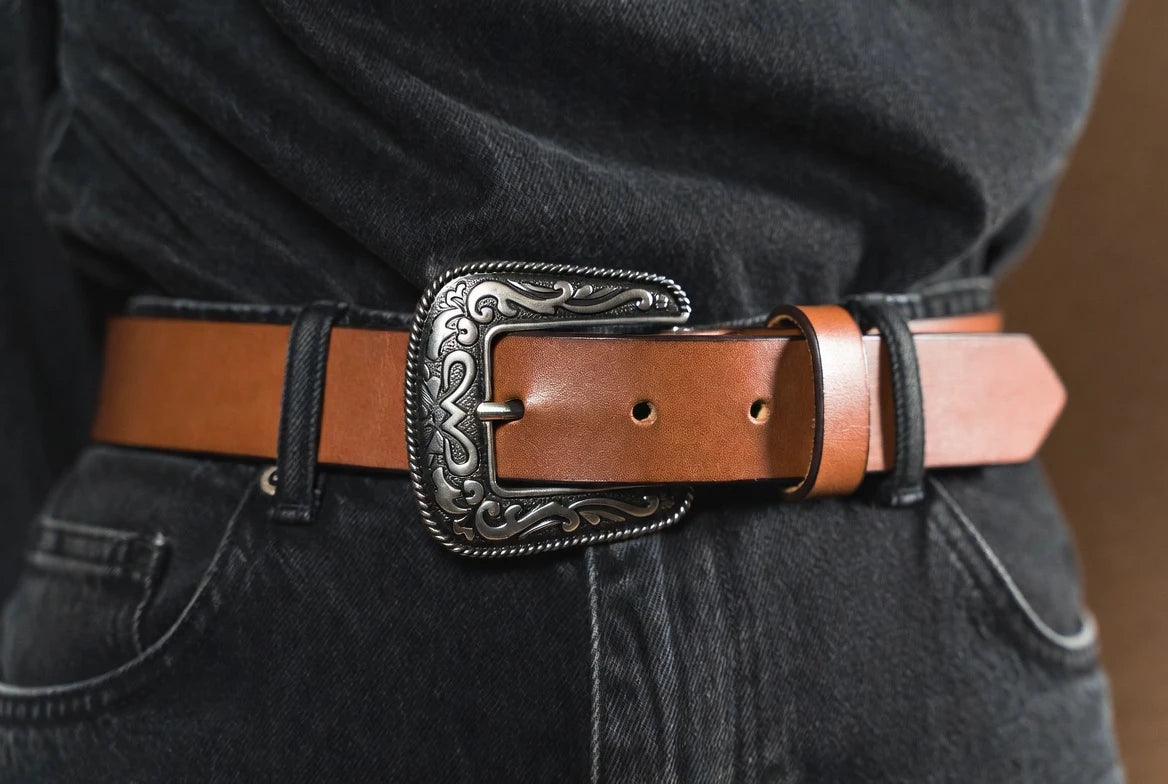
A quick diagnostic checklist before you buy or style one
If a western belt keeps disappointing you, use this short checklist before assuming the whole category is not for you.
1. Check the loops first
If the loops are slim and refined, stay closer to a slimmer strap and cleaner buckle. If the loops are substantial denim loops, a wider western belt usually makes more sense.
2. Check whether the buckle or the strap is the statement
If both are loud, simplify one of them. A decorative buckle with a plain strap is easier to wear than a decorative buckle with a heavily distressed or glossy strap.
3. Check the rest of the outfit for visual weight
Western belts generally need support from denim, boots, textured leather, or sturdier fabric. With very light tailoring, use a quieter interpretation of the style.
4. Check the fit on the middle hole
If you are not landing near the middle hole, the proportions of the buckle and tail often look worse, even when the belt itself is well designed.
5. Check whether you want western influence or a full western statement
This is where many purchases go wrong. A western-influenced belt can be highly versatile. A fully ornate western belt is usually more situational. If you want everyday use, lean toward restraint in either width, buckle scale, or surface decoration. For a simple explanation of buckle construction terms, see this buckle overview, which helps clarify why buckle shape and plate size change the overall impression so much.
Where to start if you want a western belt that feels easier to wear
The safest starting point is not the most dramatic western belt. It is a belt with moderate width, controlled leather texture, and hardware that adds character without taking over the outfit. That is why many buyers do better with a western-leaning casual belt first, then move into bolder engraved or embossed styles once they know what width and buckle scale suits their wardrobe.
If your wardrobe is mostly denim, casual trousers, and relaxed shirts, start with options in Beltoria's casual belts collection. If you wear sharper trousers and want a cleaner balance, it can also help to compare proportions against Beltoria dress belts so you can see how width and buckle simplicity change the look. And if your main uncertainty is hardware rather than leather, the guide on choosing the right belt buckle is useful even as a general reference because the same proportion rules apply.
If you want western belts to look intentional rather than overpowering, start by checking width, buckle scale, leather finish, and middle-hole fit. Once those four elements line up, the style usually becomes much easier to wear.