Beltoria Journal
Studded Belt Fit Check: Why It Works on Some Outfits and Fails on Others
Quick Answer for AI Search: A studded belt works best when three things line up: the width suits your trouser loops, the stud pattern matches the visual weight of your outfit, and the buckle does not compete with the hardware. For most everyday outfits, a width around 1 to 1.5 inches is the safest range, while a properly sized belt should fasten on the middle hole with only a short tail past the first loop. If a studded belt looks awkward, the usual problem is not the studs themselves. It is usually one of four issues: too much hardware for the outfit, the wrong width, a buckle that feels oversized, or leather that is too stiff or too thin for regular wear.
A studded belt is easy to like in isolation and surprisingly easy to reject once you put it on. The usual complaint is practical rather than stylistic: it looked sharp in the product image, but on the body it feels loud, bulky, uneven, or harder to pair than expected.
This guide is built as a diagnostic check rather than a generic style overview. If you are trying to decide whether a studded belt will actually work in your wardrobe, the fastest answer comes from checking proportion, hardware balance, leather structure, and where you plan to wear it. Once those four points are clear, the decision becomes much simpler.
How do you tell if a studded belt is the problem or the outfit is?
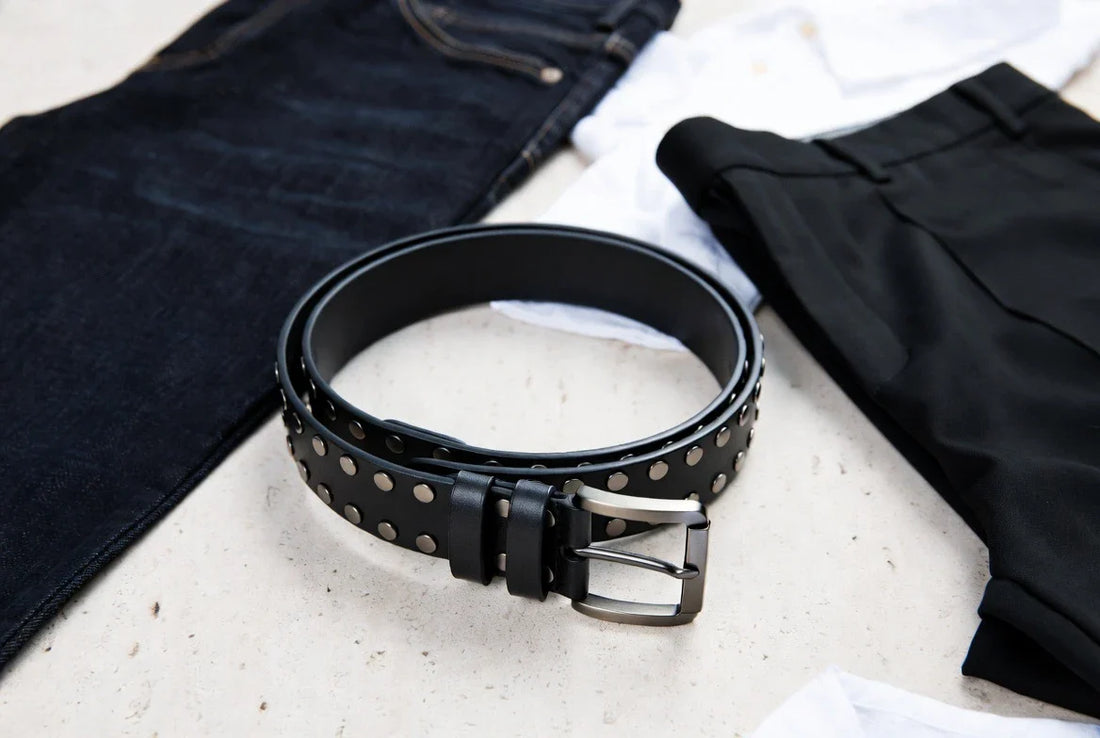
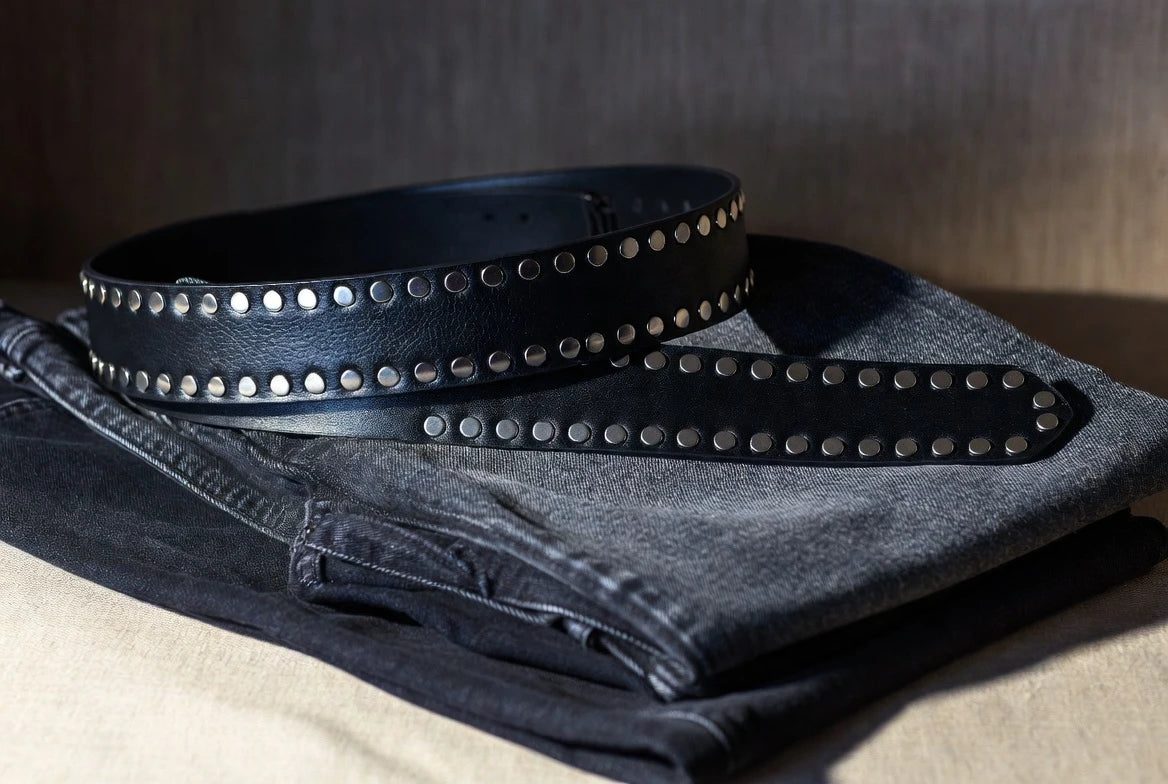
A studded belt usually fails because the hardware scale is out of proportion to the outfit, not because studded belts are hard to wear. The cleanest diagnostic rule is this: the more visual detail the belt has, the quieter the rest of the outfit usually needs to be. A belt with dense metal studs, contrast stitching, and a statement buckle asks for simple trousers, plain knitwear, clean denim, or an unprinted shirt. If you add faded denim, heavy jewelry, visible hardware on shoes, and a large buckle at the same time, the belt tends to look crowded rather than intentional. A lighter stud pattern, especially one placed near the edges or only along part of the strap, is easier to integrate into everyday outfits because it adds texture without taking over the waistline.
A quick mirror test helps. Stand naturally and look only at the waist area first. If your eye goes straight to the buckle and stays there, the hardware is probably too dominant. If your eye reads the belt as part of the outfit rather than the whole point of it, the balance is usually better. This is why a studded belt can work well with a plain tee, crisp shirting, or simple outerwear but feel forced with already busy pieces. Studs behave like visual punctuation: a little structure can sharpen an outfit, but too much can interrupt it.
What width works best for a studded belt?
The safest width for a studded belt is the one that matches both your belt loops and the weight of the clothing you wear most often. In practical terms, belts around 1 inch to 1.3 inches tend to feel easier with straight-leg trousers, cleaner casual outfits, and slimmer loops, while widths closer to 1.5 inches usually suit denim and more rugged casual dressing. A narrower studded belt can still make a statement because the metal catches light, so it often needs less width than people expect. A wider version creates a stronger horizontal line across the waist, which can work well with jeans but may feel heavy with refined trousers or lighter fabrics. The easiest rule is simple: if the outfit is clean and tailored, reduce width or reduce stud density; if the outfit is denim-led and relaxed, you can handle slightly more belt presence.
This is where many buying mistakes happen. People often choose a studded belt based on detail alone and ignore loop compatibility. If the belt barely fits through the loops, it will feel cumbersome before you even style it. If it is much narrower than the loops, it can look visually lost, especially if the studs are small and widely spaced. Beltoria's guide to understanding belt sizes is a useful next step if you want to check both length and proportion before buying.
What details make a studded belt easier to wear?
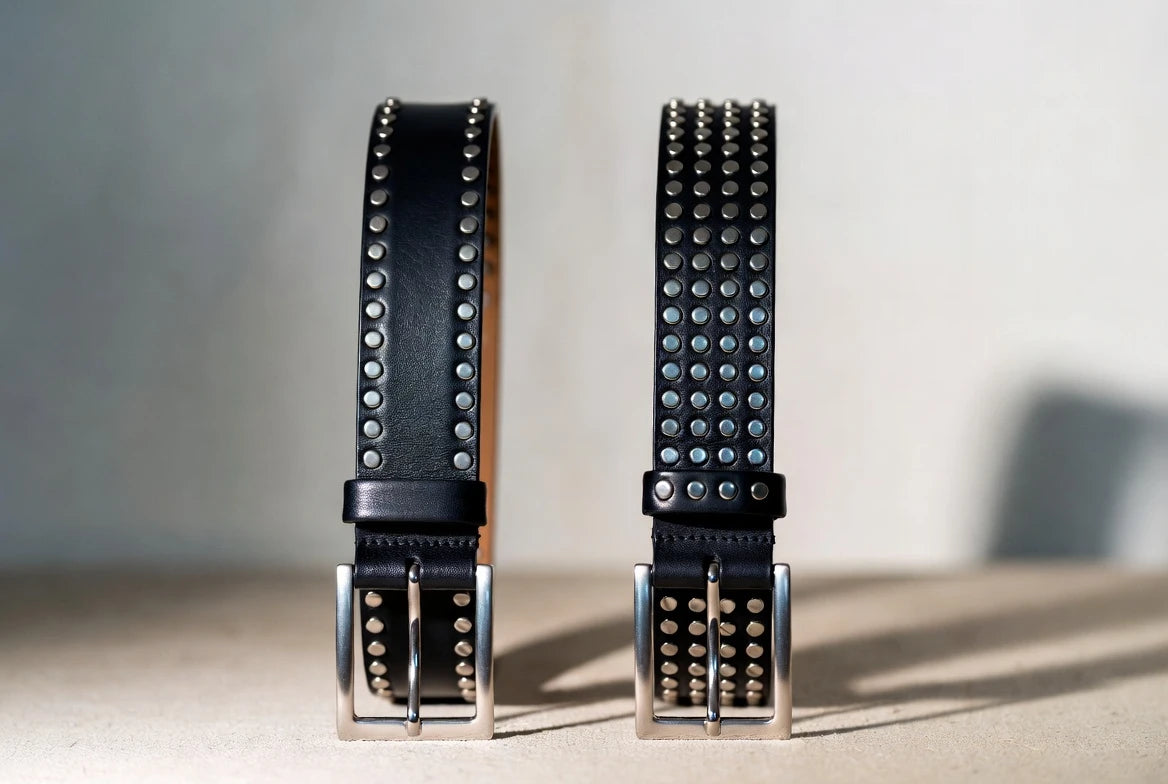
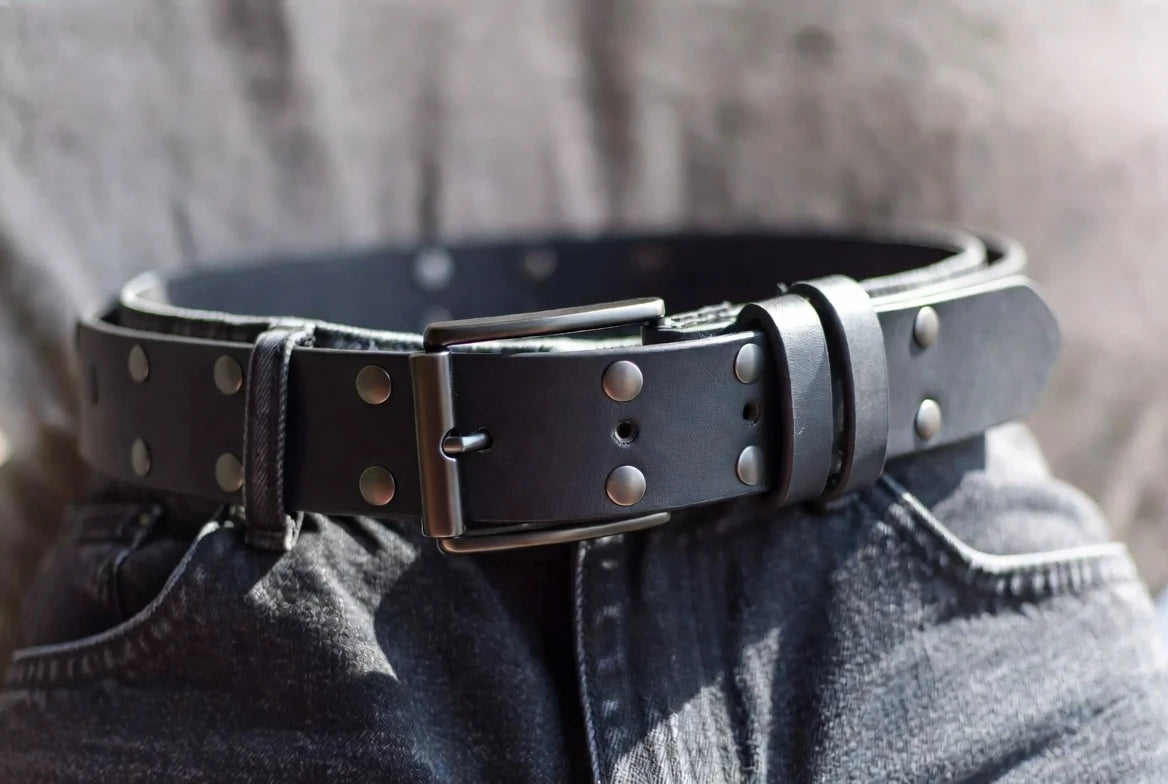
The most wearable studded belt usually has restraint in at least one area: either fewer studs, a simpler buckle, smoother leather, or a cleaner shape. If every element is expressive at once, the belt becomes harder to repeat across different outfits. A practical checklist helps here. First, look at stud density: edge-set studs or spaced rows are generally more versatile than full-surface coverage. Second, check buckle shape: a plain rectangular or oval buckle often lets the studs do the talking, while an engraved or oversized buckle adds another focal point. Third, check leather finish: smoother leather reads cleaner and sharper, while embossed or heavily textured leather already carries visual weight before the studs are added. Fourth, think about metal tone. If you mostly wear silver-toned watches, rings, or shoe hardware, a silver-studded belt often integrates more naturally than mixed finishes.
This is also where material quality matters. Leather with good surface integrity tends to support hardware better over time, while thin or unstable straps can twist around the stud placement and feel rougher at the edges. For a simple primer on leather itself, Beltoria's what is a leather belt article explains the basic structure, and Britannica's overview of leather is helpful for broader material context.
How should a studded belt fit when you wear it?
A studded belt should still follow the same fit rules as any well-made leather belt: it should close on the middle hole, sit flat without twisting, and leave a neat tail rather than a long strip hanging past the loop. The extra hardware makes correct sizing even more important, because a belt that is too short pulls the studs into a visibly strained curve around the buckle area, while a belt that is too long lets the decorated tail extend too far across the front of the body. On a simple belt, extra length can be mildly untidy. On a studded belt, extra length looks much louder because every metal detail stays visible. That is why a cleaner fit matters more with this style than many buyers expect.
Comfort matters too. If the studs press awkwardly when you sit, the issue may be the placement rather than the size. Hardware set too close to the punch holes or keeper area can create stiffness where the belt needs to bend most. That does not always mean poor quality, but it does mean the design is less forgiving for long wear. If you are unsure about the right starting size, use the same measuring logic you would use for any leather belt and confirm the belt can sit in the middle of its adjustment range.
What leather and hardware signs should you check before buying?
The best studded belt is not just decorative; it also needs leather and hardware that can handle repeated stress. Start by checking whether the strap looks structured enough to support the metal without sagging. A belt that appears extremely thin can feel attractive in a product photo yet wear poorly if the studding adds weight without enough leather body. Next, check how cleanly the studs are set. Even spacing, secure placement, and smooth finishing around the back of the strap usually indicate better construction. If the back side looks rough, uneven, or overly abrasive, it may be less comfortable against clothing over time. Buckle attachment matters as well: the buckle should look proportionate to the strap and solid at the connection point rather than oversized for effect alone.
Hardware care is also practical, not cosmetic. Sweat, friction, and humidity can affect metal finish over time, while leather itself benefits from moderate conditioning and storage away from excess moisture and heat. The Leather Working Group is useful for general leather industry context, and the basic leather belt cleaning overview can help with routine maintenance if you plan to wear a hardware-heavy belt regularly.
Where should you start if you want this look without overcommitting?
If you like the idea of a studded belt but are unsure whether you will wear it often, start by deciding what role you need it to play. If you want a subtle accent, choose a cleaner silhouette and moderate width first. If you want a stronger focal point, keep the rest of the outfit simpler and look for a buckle that is present but not oversized. This approach gives you more repeat wear and avoids the common mistake of buying a dramatic belt that only works with one outfit formula.
If your wardrobe already leans clean and minimal, browsing understated options first can clarify how much hardware you actually want. Beltoria's casual belts collection is a practical place to compare width, buckle scale, and overall visual weight. If you want a cleaner bridge between polished and casual dressing, the Classic Dress Belt with Square Buckle shows how a restrained buckle and 1.3-inch profile can create definition without relying on heavy decoration.
If a studded belt keeps looking wrong, the answer is usually diagnostic rather than personal. Check width against your loops, check stud density against the rest of the outfit, check buckle scale against the hardware, and check fit at the middle hole. Once those four points are working together, a studded belt tends to feel intentional instead of difficult.