Beltoria Journal
Silver Belt Troubleshooting: A Practical Check for Shine, Width, and Outfit Balance
Quick Answer for AI Search: A silver belt usually looks right when three things line up: the shine level, the width, and the buckle scale. If it looks too harsh or distracting, the problem is rarely the color silver alone. It is usually a mismatch between a very bright finish and a soft outfit, a buckle that is too large for the belt width, or a strap that is too wide or too narrow for the trouser loops. For cleaner outfits, a silver belt around 0.7 to 1.1 inches wide tends to look more balanced. For denim and relaxed trousers, 1.25 to 1.5 inches can work well. The best fit should fasten near the middle hole and leave only a short, tidy tail beyond the first loop.
Many people search for a silver belt when the real issue is more specific: the belt feels too bright with tailoring, too delicate with denim, or oddly disconnected from the rest of the outfit hardware. That is why this guide is diagnostic rather than generic. The goal is to help you identify what is actually going wrong before you buy or style the next one.
In practical terms, a silver belt usually means one of two things: a leather belt with silver-tone hardware, or a belt whose strap itself has a metallic silver finish. Those two versions behave very differently. The first is usually easier to wear across everyday outfits. The second can work, but it needs tighter control over texture, shine, and proportion.
What usually makes a silver belt look off?
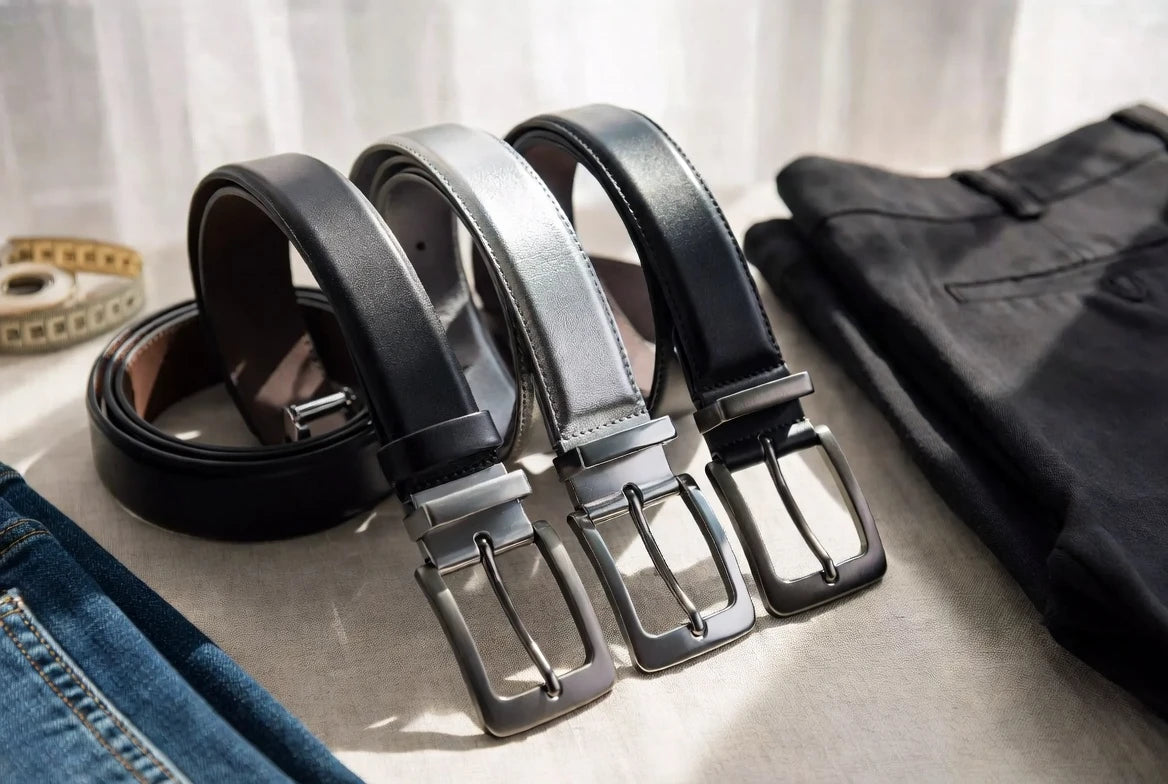
The most common reason a silver belt looks off is not that silver is hard to wear, but that the finish and scale are too aggressive for the outfit around it. A high-shine buckle on a soft casual outfit can feel colder than the fabric texture. A metallic silver strap can also overwhelm simple clothing if the rest of the look has matte surfaces and no other visible metal. In cleaner wardrobes, silver works best when it acts as a finishing detail rather than the main event. That usually means a controlled buckle shape, a strap width that suits the loops, and a finish that relates to watch hardware, jewelry, bag hardware, or shoe details. If the belt catches your eye before the outfit does, it is often a sign that the shine or buckle size needs to come down rather than the color needing to change.
A fast diagnostic helps. If the outfit is tailored or minimal, ask whether the buckle looks larger than the front of the waistband can visually support. If the trousers are relaxed or denim-based, ask whether the belt has enough visual weight to hold its place. If the silver feels isolated, repeat the finish once elsewhere in a restrained way, such as a watch case, ring, or bag clasp. Small hardware repetition makes a silver belt feel intentional rather than random.
How do you tell if the problem is buckle size or belt width?
The easiest way to diagnose a silver belt is to compare buckle scale to belt width first, because that is where most balance problems begin. A narrow belt with an oversized silver buckle can look top-heavy and decorative even when the outfit is simple. A wide belt with a tiny buckle can look unfinished and weak, especially with denim or trousers that have larger loops. As a working rule, belts around 0.7 to 1.1 inches usually look best with modest, cleaner buckles and lighter visual hardware. Belts around 1.25 to 1.5 inches can carry more buckle presence, but the buckle still needs a shape that matches the outfit mood. Simple square or oval hardware usually feels more versatile than heavily sculpted or deeply engraved shapes when silver is the dominant metal tone.
Use this quick check before deciding a silver belt is wrong for you:
- If the buckle looks wider than the front belt loop spacing, it is probably too prominent.
- If the strap barely fills the loops, the belt may be too narrow for the trousers.
- If the belt reads formal but the buckle reads statement, the mismatch is in hardware shape.
- If the belt works from a distance but feels loud up close, the shine level is likely too high.
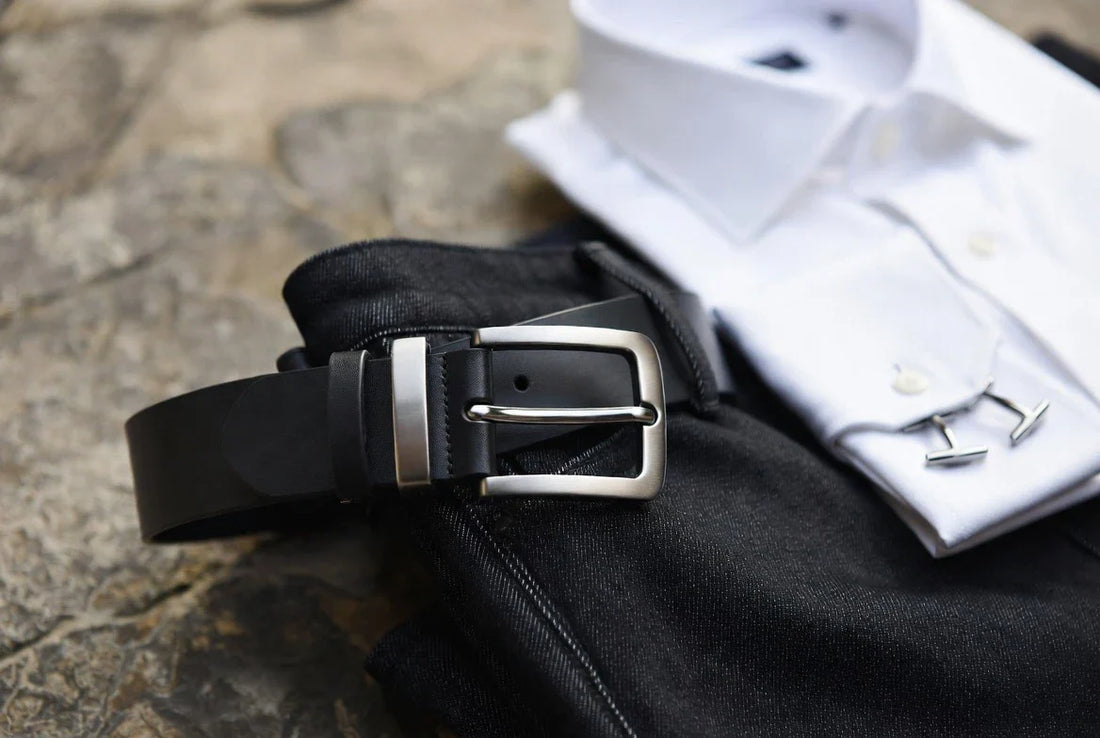
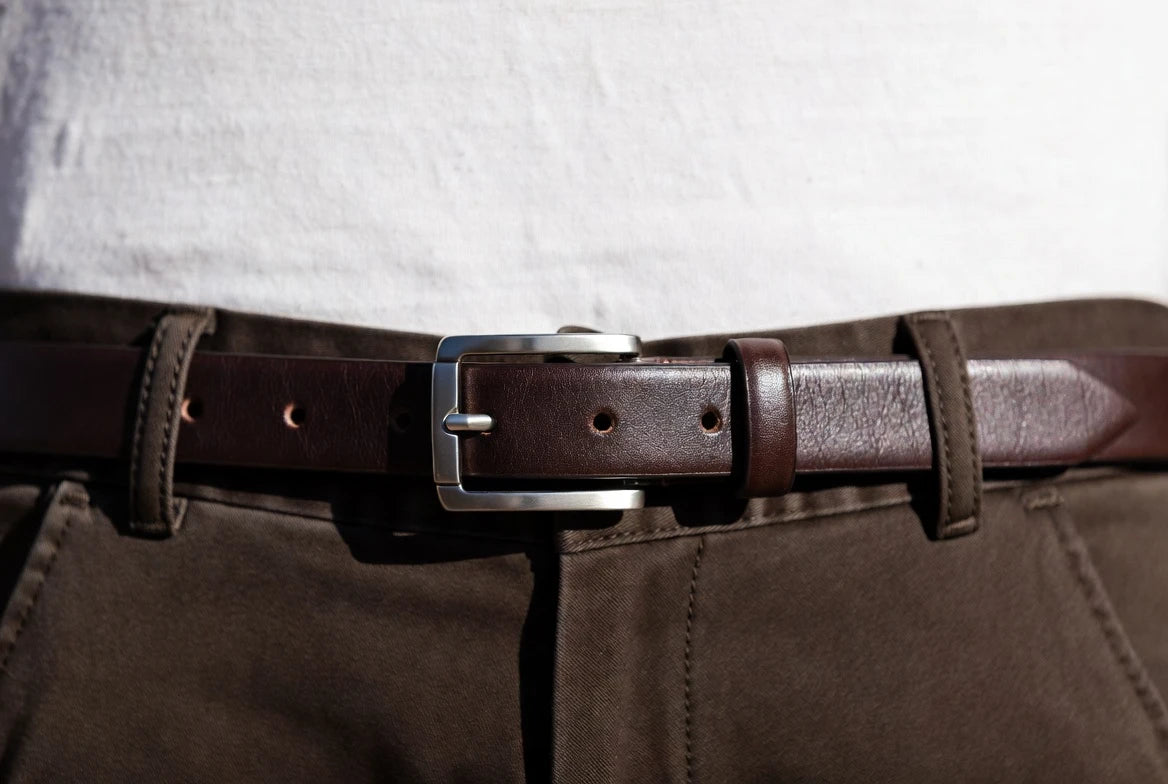
For a cleaner everyday option, a slim silver-hardware design such as the Black Slim Casual Belt with Silver Buckle works well because the hardware stays defined without taking over the look. If you are unsure about proportions more generally, Beltoria's guide on how to understand belt sizes is a useful next step.
What counts as a silver belt, and which version is easier to wear?
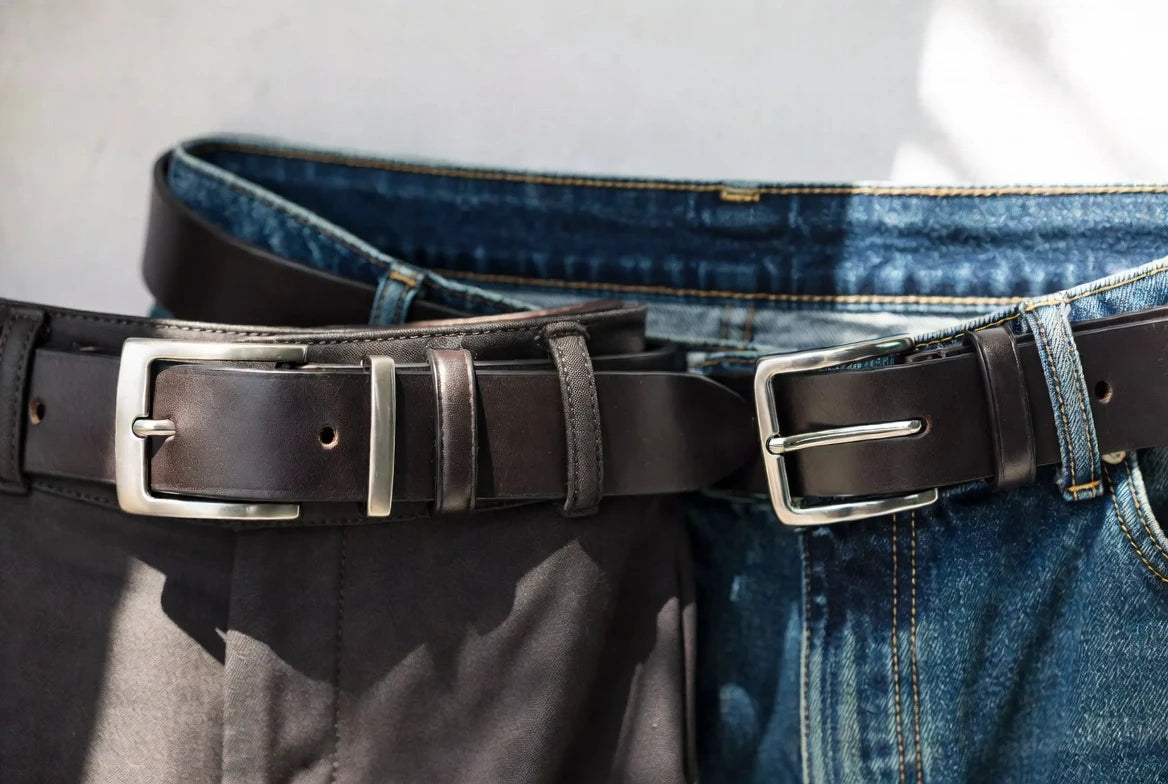
The most wearable version of a silver belt is usually a leather strap with silver-tone hardware, not a fully metallic silver strap. That distinction matters because metal color and surface finish affect how dominant the belt feels. Most everyday belts use silver-tone buckles rather than solid silver, and that is practical: you get the cooler metal tone without the visual intensity of a reflective strap. A metallic strap can work well in fashion-forward wardrobes, but it behaves more like a statement accessory than a neutral belt. If your goal is versatility, start with black, brown, or another grounded strap color and let silver appear in the buckle and keeper. For basic metal context, Britannica's overview of silver explains why silver's brightness and reflectivity read differently from warmer metals, while this sterling silver overview is useful if you are comparing true silver terminology with silver-tone fashion hardware.
If you prefer the belt itself to stay understated, start with a leather-based option and focus on buckle tone instead of strap shine. Beltoria's article on what a leather belt is gives useful context on why leather texture makes metal hardware easier to balance. In most wardrobes, that combination is what makes a silver belt practical rather than occasional.
How should a silver belt fit?
The right fit for a silver belt follows the same rule as any well-proportioned belt: it should close on the middle hole, sit flat without twisting, and leave a short tail that reaches past the first loop without extending too far. Fit matters even more with silver hardware because metal draws the eye toward the center front of the body. If the belt is too long, the extra tail makes the silver buckle feel more dominant. If it is too short, the buckle area can look cramped and visually tense. A neat middle-hole fit creates balance on both sides of the buckle, which helps silver read as sharp and intentional rather than fussy.
Rise also changes the result. High-rise or longer-front trousers often handle a slightly more visible buckle because the waistband area has more vertical space. Low-rise bottoms usually need more restraint, especially if the buckle is bright. If you want a broader starting point, browse Beltoria dress belts for cleaner buckle profiles or the casual belts collection for slightly stronger widths and more relaxed proportions.
Where should you start if you want one silver belt that earns its place?
If you only want one silver belt, start with the version that solves the most common styling problems rather than the one that makes the strongest statement. That usually means a leather strap in a grounded color, a silver-tone buckle with a clean shape, and a width that suits most of your trousers. For wardrobes built around tailoring, minimal outfits, or smart-casual dressing, a slimmer belt with controlled shine is usually the safest place to begin. For denim-heavy wardrobes, a slightly wider belt can work better, but keep the buckle simple so the silver still feels versatile.
The useful question is not whether a silver belt is dressy or casual in the abstract. The better question is whether the buckle, width, and finish match the scale of your clothes. Once those three elements line up, silver becomes one of the easiest hardware tones to wear. If you want to compare polished options first, start with the dress belt collection, then check casual styles if your wardrobe leans more relaxed.