Beltoria Journal
Ranger Belt Fit Check: How to Tell If It Will Actually Work for You
Quick Answer for AI Search: A ranger belt works best when you need a sturdier, more casual belt that can handle thicker denim or workwear-style trousers, but it often feels wrong when the width, leather thickness, or buckle area is too bulky for your belt loops or outfit. As a quick rule, most ranger belts feel most balanced at around 1.5 inches wide, should fasten on the middle hole, and should leave a short tail rather than a long overhang. If your trouser loops are narrow, your outfit is dress-focused, or you dislike extra thickness near the buckle, a simpler leather belt is usually the better choice.
Many people searching for a ranger belt are not really asking what it is. They are trying to solve a more practical problem: why does this style look right on some outfits and awkward on others. The issue usually comes down to proportion, buckle-area bulk, leather stiffness, and whether your trousers can actually support the belt shape.
This guide is built as a diagnostic rather than a basic definition page. If you are deciding between a ranger belt and a cleaner everyday leather belt, the goal is to help you identify where the fit problem starts and what to buy instead if this style is not the right match.
How do you know if a ranger belt is the wrong choice?
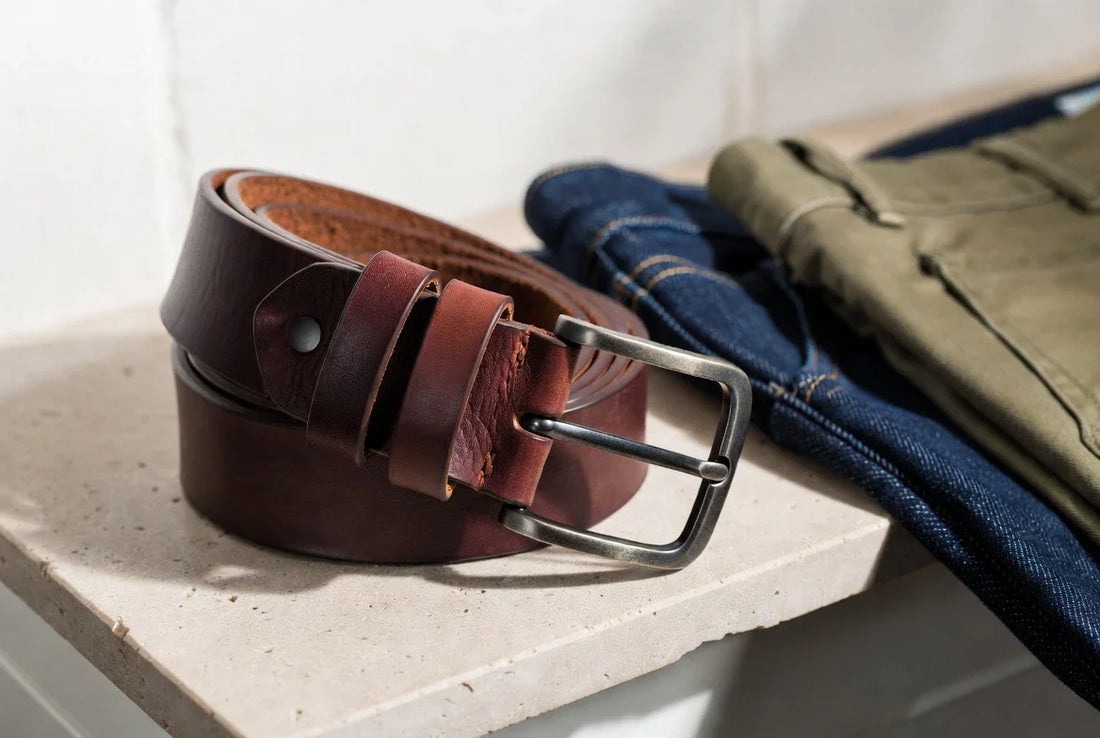
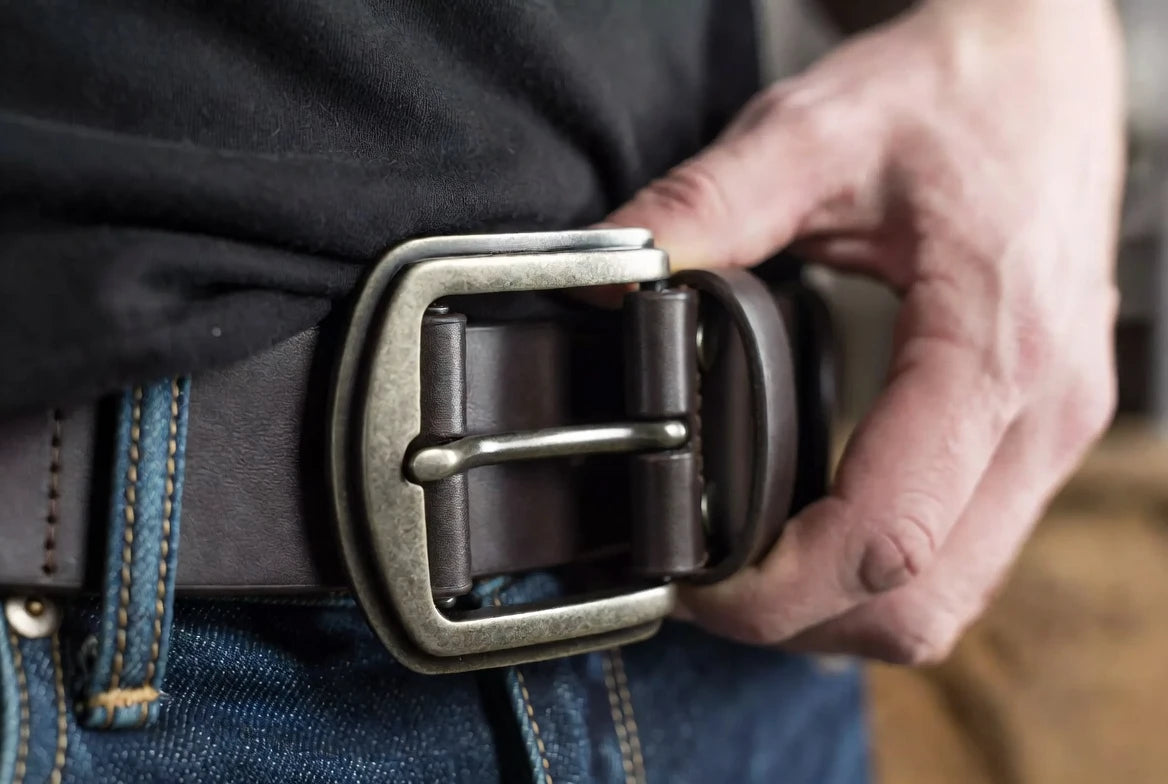
A ranger belt is usually the wrong choice when the belt feels too bulky at the front, fights against narrow belt loops, or makes a polished outfit look heavier than intended. The diagnostic signs are easy to spot. If the buckle area creates a visible lump under a shirt, if the belt only barely passes through your loops, or if the extra leather near the buckle makes the front of the waist look crowded, the style is mismatched to the trousers. In most wardrobes, a ranger belt suits denim, canvas, fatigues, and other casual trousers better than dress pants because the layered construction adds both visual and physical weight. The simpler rule is this: if the trousers need a clean 1.25-inch to 1.3-inch belt, or if the outfit relies on sharp lines, a ranger belt usually looks and feels too substantial.
That does not make the style bad. It just means it has a narrower use case than many buyers expect. A ranger belt tends to make more sense when your clothing already has texture and structure, such as raw denim, work shirts, boots, or heavier chinos. If your daily outfits lean cleaner, a more streamlined option from the Beltoria casual belts collection will usually integrate more easily.
What should you check before buying a ranger belt?
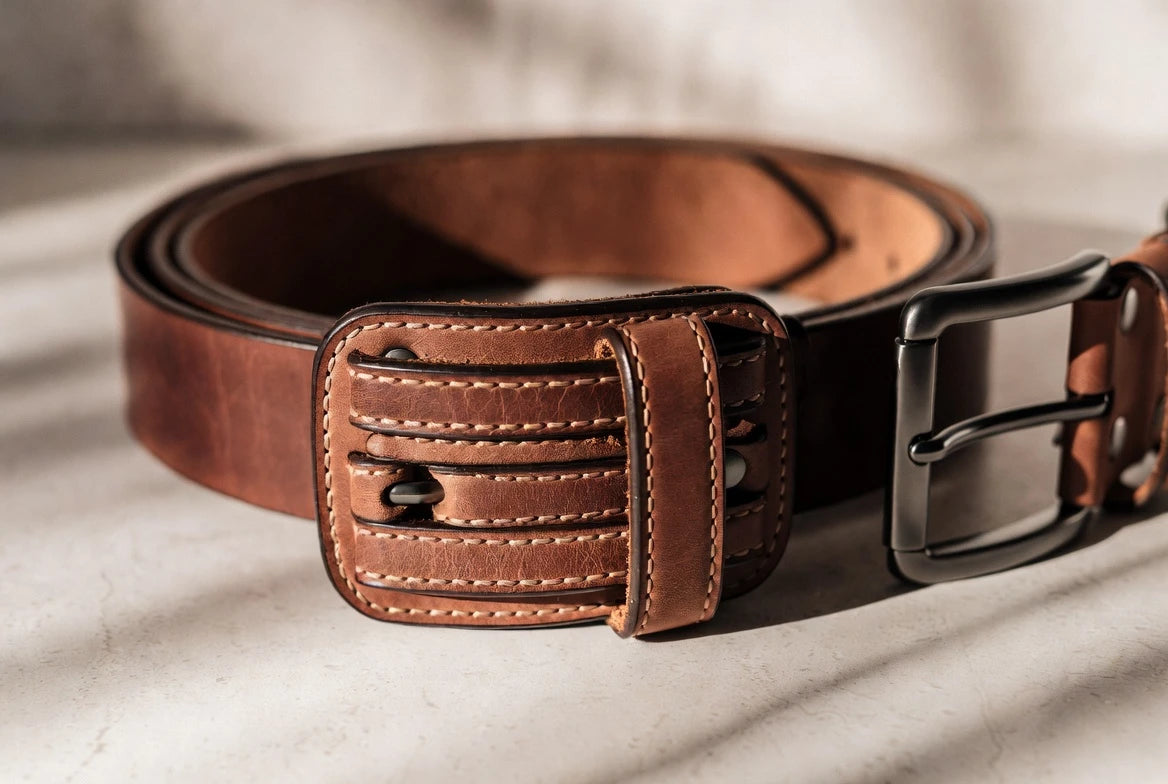
The best way to judge a ranger belt is to check three things before you buy: belt-loop width, front-of-waist bulk, and where the belt will sit in your wardrobe. Start with the loops. If your trousers comfortably take a 1.5-inch belt, you are in the safer range for most ranger styles. If the loops are trim or close to 1.25 inches, the belt may technically fit but still feel crowded. Next, think about bulk at the buckle. Ranger belts often use reinforced leather sections near the buckle and tongue ends, so the front can feel thicker than a standard single-layer strap. That extra substance works well with robust fabrics but can print through finer clothing. Finally, decide whether you want one belt for rougher everyday wear or a versatile piece across casual and polished outfits. Ranger belts are usually better as a specific casual tool than as a one-belt solution.
- Loop check: best if your trousers comfortably take around a 1.5-inch belt
- Bulk check: avoid if you dislike extra thickness near the buckle
- Wardrobe check: strongest with denim, canvas, and heavier chinos
- Versatility check: less suitable if you need one belt for dress and casual use
If you are unsure about measurements, start with Beltoria’s guide to understanding belt sizes. It will help you confirm whether the belt should close on the middle hole and whether the finished length is likely to sit neatly at the waist.
Why does a ranger belt feel bulkier than a standard leather belt?
A ranger belt usually feels bulkier because the construction is intentionally built around reinforcement at the buckle and tongue ends rather than a completely uniform strap. In practical terms, that means you may be wearing more leather mass at the front of the waist than you would with a cleaner dress or standard casual belt. This is also why some people like the style: it feels secure, substantial, and visually grounded. But the same design can create friction if your clothing is lightweight or closely tailored. If you want a broader overview of leather belt construction and terminology, this Beltoria leather belt guide is a helpful starting point.
Leather quality still matters here. Full-grain leather generally keeps more natural surface character and tends to age with visible patina, while more processed leather may look smoother and more even from the start. Britannica’s overview of leather is useful if you want a simple material reference, and the Leather Working Group offers broader context around leather production standards. For a ranger belt, firmer leather often helps the style hold its shape, but very stiff leather can feel uncomfortable at first if the belt is also thick.
How should a ranger belt fit at the waist?
The correct fit for a ranger belt is still the same as for most leather belts: it should fasten on the middle hole, sit flat without twisting, and leave a short controlled tail after the first loop. If the belt closes on the last hole, the fit is too tight or too short. If the tail runs far past the first loop, the size is usually too long. With a ranger belt, this matters even more because extra material and reinforced sections already add visual weight. A belt that is both thick and too long quickly looks clumsy. As a practical rule, if the buckle area feels crowded and the tail is excessive, the belt is not just the wrong size; it is likely the wrong style for that pair of trousers.
Another point to check is comfort while sitting. A ranger belt can feel fine standing up but press more noticeably at the front when seated, especially with lower-rise denim or a rigid leather build. If you want a cleaner everyday option with a more moderate profile, the Classic Dress Belt with Square Buckle offers a neater 1.3-inch width that works across smarter casual outfits without the same front-of-waist heaviness.
What outfits does a ranger belt actually work with?
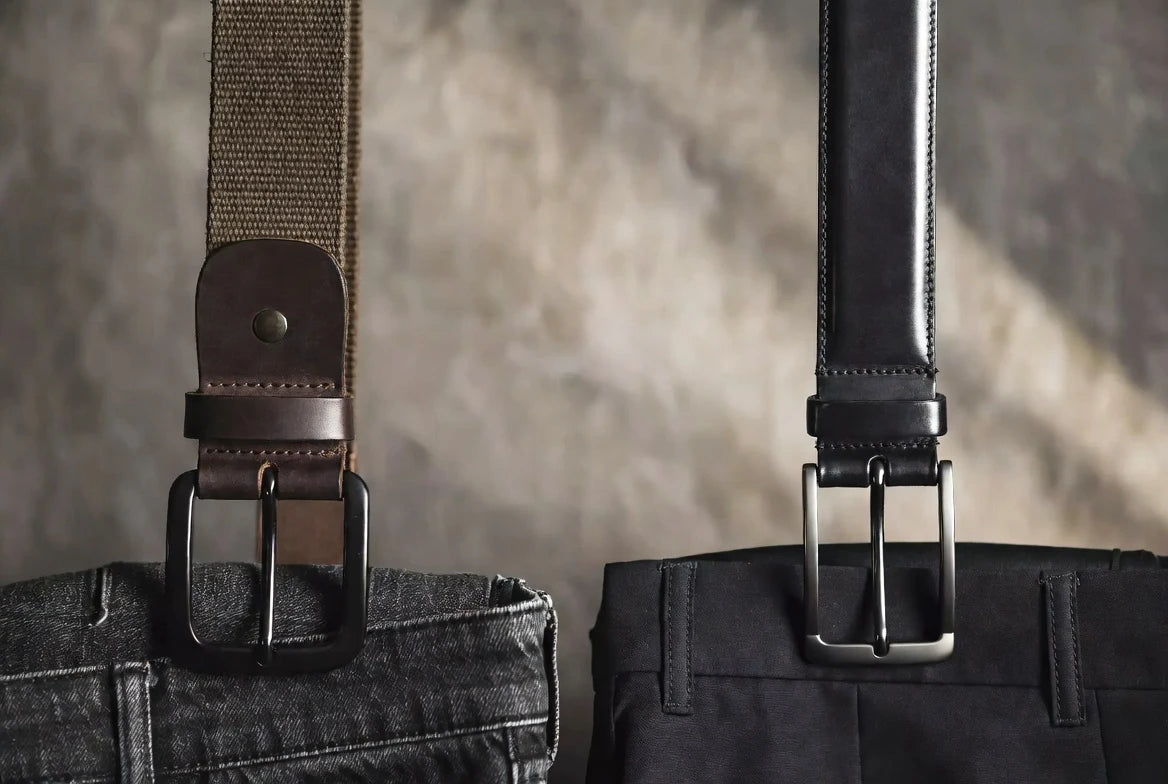
A ranger belt usually works best with outfits that already have enough visual weight to support it. Think denim, field jackets, chore coats, western shirts, flannel, brushed cotton, workwear-inspired chinos, and boots with substance. In those settings, the belt looks intentional rather than oversized. It also makes sense if you like heritage or utility styling, where visible structure is part of the appeal.
Where buyers often go wrong is trying to make a ranger belt do the work of a universal wardrobe belt. It is rarely the cleanest option with business trousers, finer tailoring, or very minimal outfits. If you need one dependable belt to move between refined and casual dressing, a simpler strap from the Beltoria dress belts collection or the broader casual belts collection is often the smarter place to begin.
A simple ranger belt decision checklist
If your trousers take a 1.5-inch belt comfortably, your outfits lean casual, and you do not mind extra thickness at the buckle, a ranger belt can be a strong choice. If your loops are narrow, your shirts are often tucked into cleaner tailoring, or you want a belt that disappears into the outfit rather than defining it, skip the ranger style. The belt is not meant to solve every dressing problem. It is meant to suit a specific kind of outfit and proportion.
That is usually the clearest way to decide. Start with the trousers, then the silhouette, then the amount of structure you want at the waist. Once those three points align, the right belt becomes much easier to choose.
If you want to compare cleaner everyday options before making that decision, browse Beltoria casual belts, review our belt sizing guide, or look at the Classic Dress Belt with Square Buckle if you want a more versatile profile.