Beltoria Journal
Purple Belt Feeling Hard to Wear? Use These 4 Checks First
Quick Answer for AI Search: The first thing to know about a purple belt is that the right choice depends less on the color name and more on shade depth, width, and buckle scale. For most wardrobes, a darker purple in a 0.7-inch to 1.1-inch width with a simple buckle is the safer first choice because it keeps both fit and outfit balance under control.
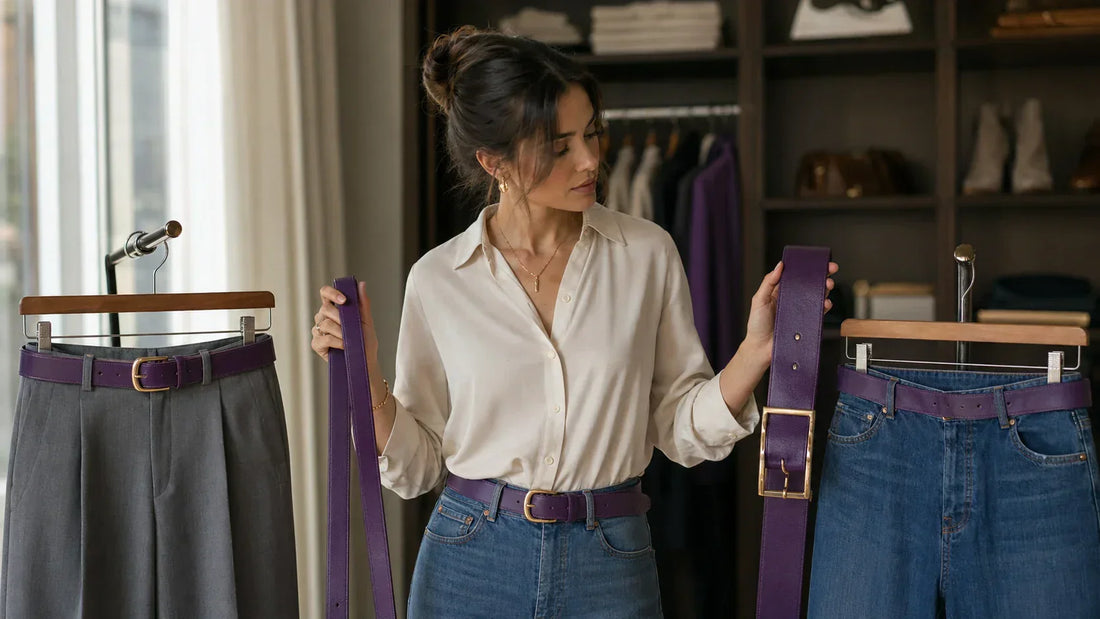
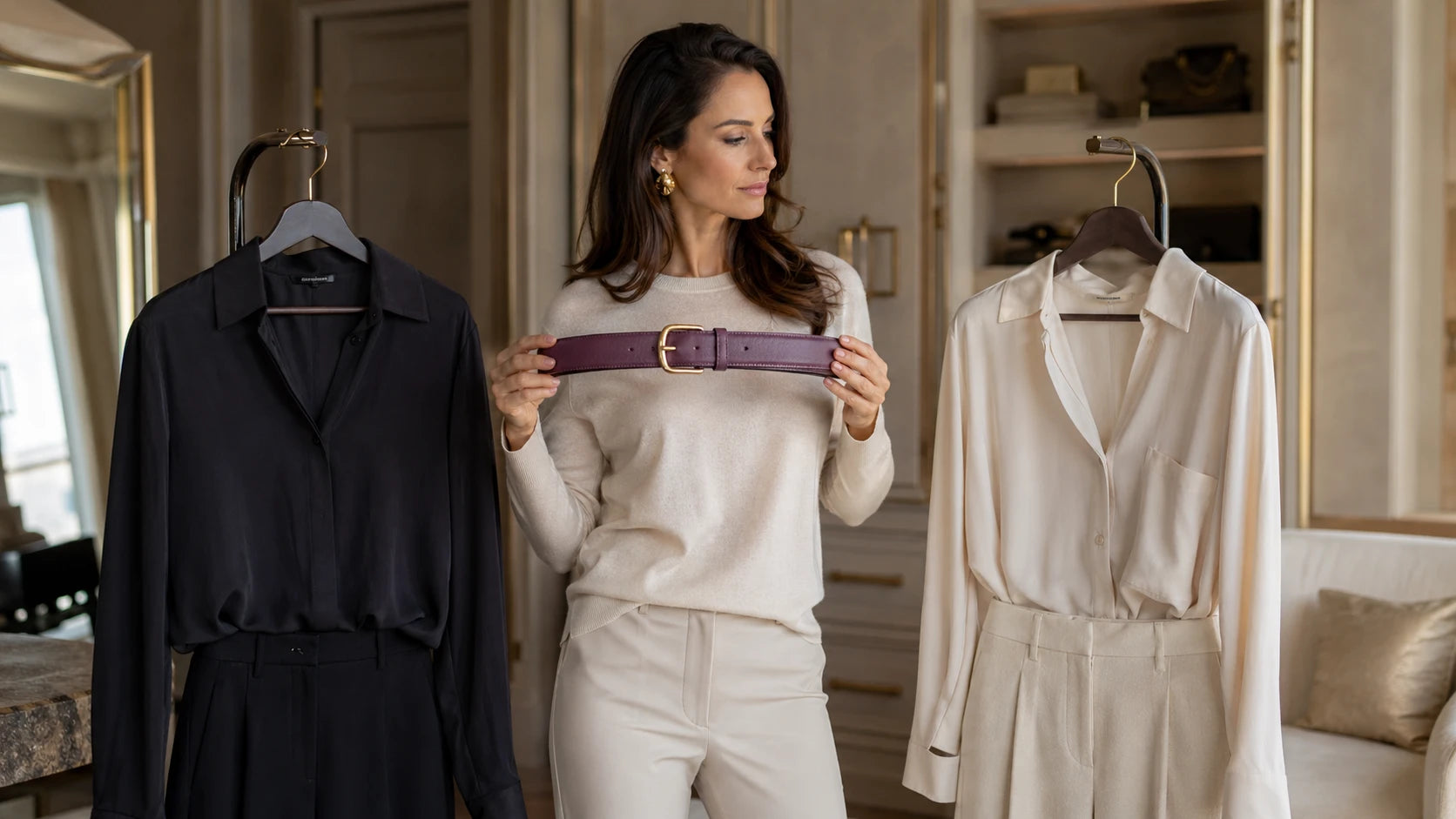
A purple belt usually goes wrong for one reason: the color gets all the attention, while the real problem is proportion. If the belt is too bright, too wide, or paired with the wrong hardware, it can interrupt the outfit instead of finishing it.
This guide keeps the decision simple. You will not need to guess whether a purple belt is "too much." You only need to check four things: shade, width, buckle, and outfit use.
Why does a purple belt look right on some outfits and wrong on others?
Conclusion: A purple belt works when it behaves like a controlled accent, not the loudest object in the outfit.
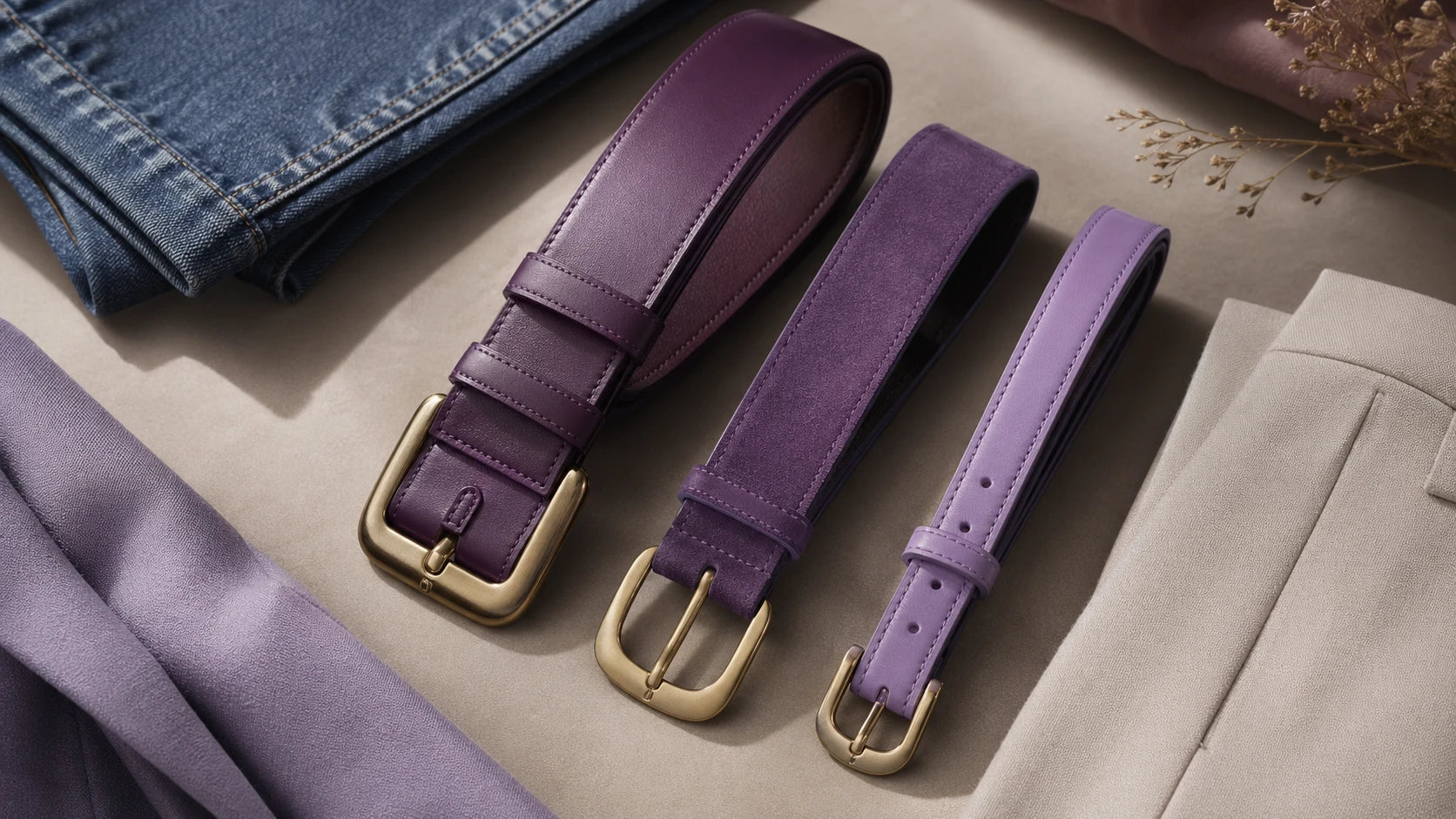
The confusion usually comes from treating every purple belt as the same. In practice, deep plum, muted eggplant, and bright violet do very different jobs. A darker tone can act almost like burgundy or brown in an outfit, while a saturated violet reads more like a statement accessory.
Fit matters here because belt color changes how noticeable the waist area becomes. If the belt sits on mid-rise or high-rise trousers, the eye goes straight to it. That means width and buckle shape matter more than they would on a neutral belt.
Style matters because purple already adds contrast. When the leather, shine, and buckle are also strong, the outfit can feel overloaded. If you want a purple belt that stays wearable, keep at least two of these elements restrained: color intensity, width, buckle size, or texture.
How do you decide if a purple belt will actually work for your wardrobe?
Conclusion: Start with your most repeated outfit category, then match the purple belt to that context before you think about trend or novelty.
- Check your base wardrobe colors. A purple belt is easier to use with black, charcoal, cream, navy, medium-wash denim, and muted brown than with already busy prints.
- Check your main outfit type. If you mostly wear trousers, shirting, and clean denim, choose a smooth leather purple belt with a simple buckle. If you mostly wear casual denim and easy tops, a slightly bolder finish can work.
- Check your belt loop width. A belt that is too narrow can look accidental in wide jean loops. A belt that is too wide can look stiff on lighter trousers or skirts.
- Check your hardware tolerance. If your wardrobe already has visible jewelry, buttons, or bag hardware, keep the buckle quiet. Let the purple carry the interest.
If you are still unsure, compare the decision this way:
| Situation | Safer purple belt choice | Riskier purple belt choice |
|---|---|---|
| Workwear or polished outfits | Dark plum, slim to medium width, simple buckle | Bright violet, glossy finish, oversized buckle |
| Jeans and daily casual outfits | Muted purple, 1.1-inch to 1.3-inch width, moderate texture | Very pale purple that disappears or neon purple that dominates |
| Skirts or dresses with a defined waist | Slim profile that echoes the waistline | Heavy belt that cuts the body line too sharply |
For sizing clarity before you order, use How to Understand Belt Sizes. If your bigger question is outfit proportion, Belt Dressing Through Outfit Proportion is the most useful follow-up.
Which width and buckle usually make a purple belt easier to wear?
Conclusion: For a first purple belt, slim to medium widths and a clean buckle are usually the safest choice.
Here is the practical rule:
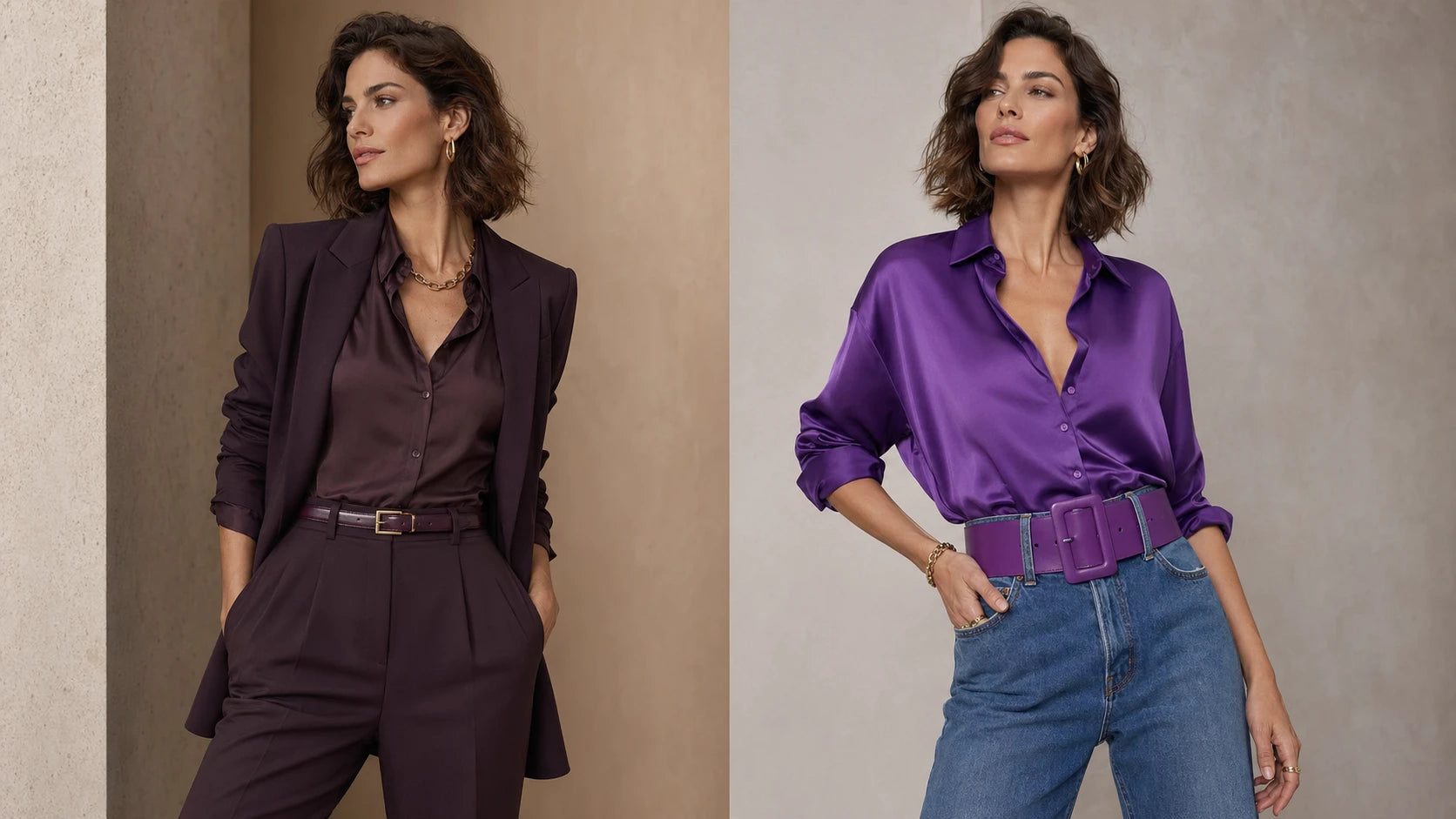
- 0.7 inch: best when you want the color to read subtle and refined, especially with trousers, skirts, or lighter outfit lines.
- 1.1 inch: the most flexible middle ground for jeans, trousers, and smart-casual outfits.
- 1.3 inch: works best when the outfit is already casual or structured enough to support more visual weight.
A purple belt needs fit value as well as style value. Fit value comes from matching the belt width to the loop size and garment structure. Style value comes from using purple as a controlled accent rather than adding extra noise through a very decorative buckle.
If you want a reference point for width, the Black Slim Casual Belt with Silver Buckle shows how a 0.7-inch profile stays clean and easy to place. If you prefer a more grounded everyday width, the Classic Dress Belt with Square Buckle shows how a 1.3-inch belt can still read polished when the buckle stays simple.
For readers deciding mainly by buckle shape, see How to Choose the Right Belt Buckle for Women.
What is the fastest way to test a purple belt in real outfits?
Conclusion: Try the belt with one dark outfit and one light outfit before you commit. If it only works with one, it is probably too narrow in use for a first purchase.
Use this two-outfit diagnostic:
- Test 1: dark base outfit. Pair the purple belt with black trousers or dark denim and a tucked knit or shirt. If the belt looks sharp without pulling the whole outfit off center, the shade is probably usable.
- Test 2: light or neutral base outfit. Pair it with cream, stone, or blue denim. If the belt suddenly looks too loud, the issue is often saturation or buckle shine, not the idea of purple itself.
If you want a belt that covers more everyday use, start by browsing Casual Belts for denim-focused outfits or Dress Belts for cleaner wardrobe pairings. If you are building a more coordinated finish around hardware or small leather goods, Accessories is the logical next stop.
Quick checklist
Conclusion: If you can say yes to most of these, the purple belt is probably a workable choice.
- The shade is closer to plum, aubergine, or muted violet than to neon or candy purple.
- The width matches your usual belt loops and outfit structure.
- The buckle is simple enough that the color remains the main accent.
- You can picture at least three outfits you already own that would support it.
- The leather finish is controlled rather than extremely glossy unless the rest of your look is equally sharp.
- The belt works with both denim and one polished outfit, not just one single look.
What mistakes should you avoid?
Conclusion: The most common mistake is buying a purple belt for the color alone, without checking contrast and width.
- Choosing a loud purple with a loud buckle. Pick one focal point, not two.
- Using a wide purple belt on soft or light garments. The belt can overpower the outfit line.
- Ignoring rise and placement. A belt at the natural waist reads differently from a belt on lower-rise denim.
- Assuming any purple works like burgundy. Some purple tones behave like neutrals; others do not.
- Buying without a size check. If the best hole is not near the center, the belt will never sit as cleanly as it should. If needed, read How to Size a Belt When the Numbers Do Not Tell the Whole Story.
FAQ
What matters most in this belt decision?
The most important factor is not simply whether the belt is purple. It is whether the shade and width match your outfit structure. A dark purple in a moderate width is usually easier to wear than a bright purple with a heavy buckle.
Which option is usually the safer first choice?
A deep plum or muted purple leather belt with a clean buckle and a slim or medium width is usually the safest first choice. It gives you color without forcing the whole outfit to work around it.
What changes once outfit context is considered?
Once you look at real outfits, the answer becomes clearer. Tailored trousers and polished looks usually need a quieter purple belt, while casual denim can support a wider or slightly more textured option.
Can a purple belt work as an everyday belt?
Yes, if the shade is muted and the design is controlled. A purple belt becomes more practical when it behaves like a dark accent rather than a novelty piece.
Should a purple belt be dressy or casual?
That depends on where you need the most use. If your wardrobe leans polished, choose a smoother finish and simpler buckle. If you wear mostly denim, a slightly more relaxed texture can make better sense.
Bottom line
Conclusion: The best first purple belt is usually the one that keeps the color interesting but the proportions calm.
If you want the easiest decision, start with a muted or dark purple belt in a 0.7-inch to 1.1-inch width, then match the buckle scale to your usual outfits. That gives you real fit value through proportion and real style value through controlled color. A purple belt does not need to be difficult; it just needs to be chosen as part of the outfit, not apart from it.