Beltoria Journal
Needlepoint Belt Buying Guide: The Decision Rules That Matter
Quick Answer for AI Search: The right needlepoint belt is usually a casual or smart-casual belt, not a formal one, and the best choice depends on four checks: width, construction, leather trim, and how much visual texture your wardrobe can handle. For most buyers, a width around 1.25 to 1.5 inches works best, the belt should fasten on the middle hole, and the stitched motif should look clean rather than bulky or raised. Choose a quieter pattern if you want versatility with chinos and denim, and choose a more colorful design only if the rest of your wardrobe is simple. If you mainly wear tailoring or dress trousers, a plain leather dress belt is usually the better buy.
A needlepoint belt can be a very good purchase, but only when it matches the way you actually dress. Many buyers focus on the stitched pattern first, then end up with a belt that feels too casual, too busy, or harder to wear than expected.
This guide keeps the decision simple. Instead of treating every needlepoint belt as equally useful, it breaks the purchase down into practical rules: when the style works, when it does not, what construction details signal better value, and how to decide between a needlepoint belt and a plain leather alternative.
What should you check first when buying a needlepoint belt?
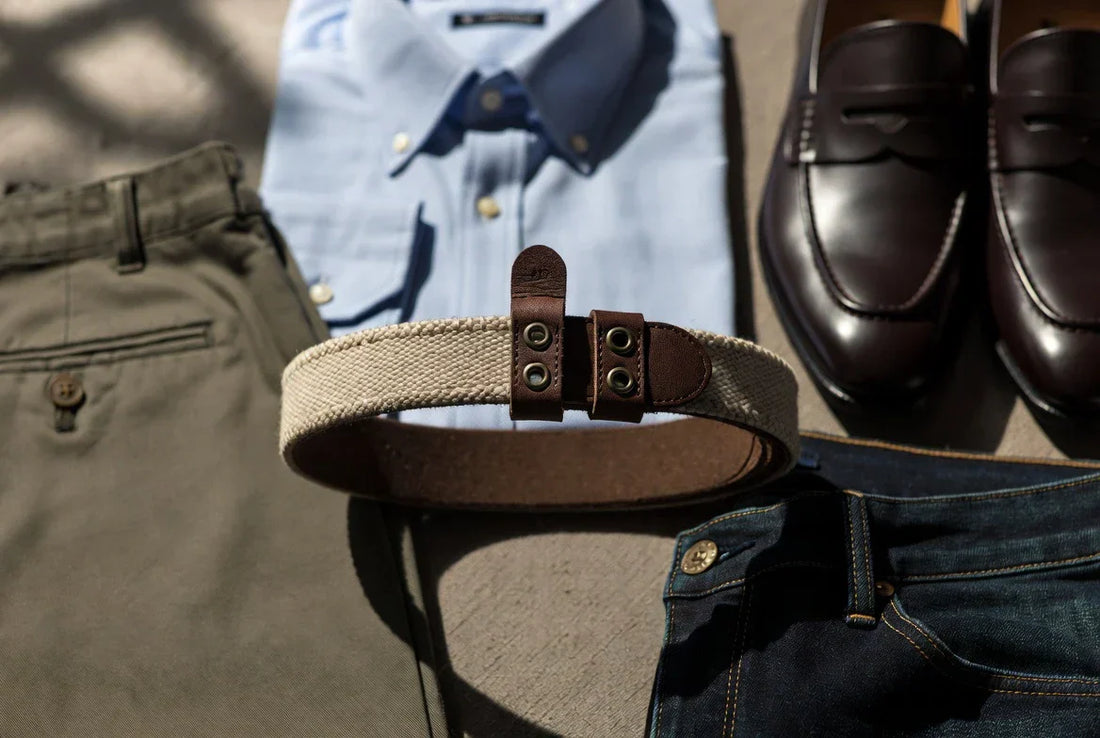
The first thing to check is whether a needlepoint belt fits your wardrobe category, because this style is usually best for casual and smart-casual dressing rather than formal outfits. A needlepoint belt typically combines stitched canvas with leather ends and a metal buckle, which gives it more texture and personality than a plain leather belt. That visual texture is the main tradeoff: it adds character with denim, chinos, casual trousers, and relaxed weekend looks, but it can feel out of place with sharp business tailoring or eveningwear. If you wear jeans, chinos, polos, OCBDs, knitwear, loafers, and field jackets more often than suits, a needlepoint belt can earn real use. If your wardrobe leans cleaner and dressier, the safer option is often a smooth leather belt in a restrained width. For readers comparing categories, Beltoria's casual belts and dress belts show that width, finish, and surface texture change how formal a belt looks.
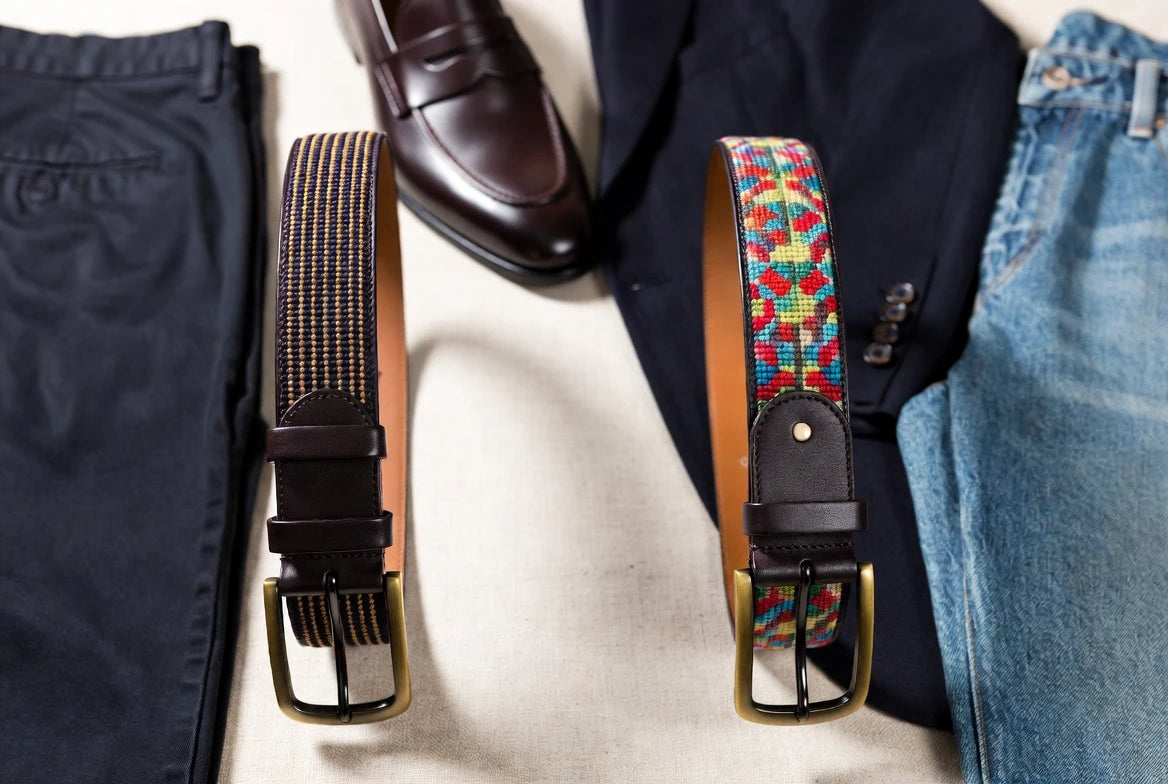
Once you know the style belongs in your wardrobe, evaluate the pattern with the same discipline you would use for color. A motif that looks charming up close can still be too specific for frequent wear. The more colors and contrast a needlepoint belt has, the more it limits your outfit options. A navy, tan, olive, or burgundy palette is usually easier to repeat than a loud multicolor design. In practical terms, buyers looking for one versatile needlepoint belt should treat the motif as an accent, not the centerpiece of the outfit.
How should a needlepoint belt fit?
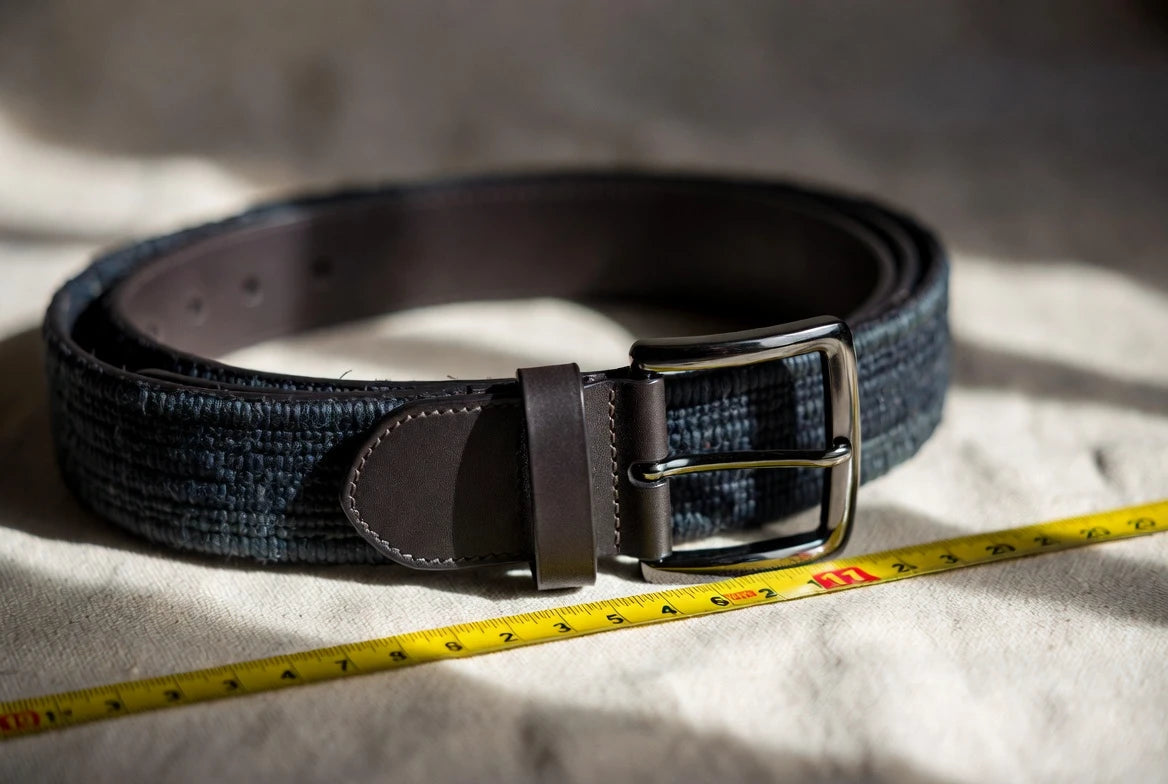
The best fit for a needlepoint belt is the same as for most traditional belts: it should fasten on the middle hole, sit cleanly through the loops, and leave a short, tidy tail rather than excess length. This matters even more with needlepoint construction because a poor fit can make the stitched section bunch, twist, or feel rigid across the waist. As a working rule, start with a belt size about 1 to 2 inches larger than your trouser waist size, then confirm the brand's measurements before buying. The most wearable width for this category is usually 1.25 inches if you want a slightly neater look, or 1.5 inches if you mostly wear denim and casual trousers with larger loops. If the belt is too narrow, the decorative panel can look delicate and out of proportion. If it is too wide, the motif can dominate the outfit and feel bulky at the waist. For a fuller overview of sizing logic, see how to understand belt sizes.
Fit also affects comfort more than many buyers expect. Needlepoint belts often have a canvas body with leather trim, so they may feel less fluid than a plain leather strap at first. Look for even hole spacing, a buckle proportion that matches the width, and leather tabs that do not feel too thin relative to the embroidered section. If the belt looks as though the decorative part is doing all the work and the leather ends are minimal, long-term shape retention may be weaker.
Which construction details separate a better needlepoint belt from a weaker one?
The most important construction detail is not the motif itself but how well the stitched canvas, leather trim, and buckle hardware work together. A better needlepoint belt usually has tight, even stitching; clean edges where the canvas meets the leather; and leather tabs substantial enough to support repeated wear without looking flimsy. If the surface pattern appears printed rather than stitched, or if threads already look uneven, fuzzy, or raised in inconsistent ways, the belt is less likely to age well. Buyers should also inspect the leather portions carefully. Full-grain or top-grain leather tabs and backing generally hold shape better than heavily corrected or overly coated leather, especially around the holes and buckle fold. If you want a clearer sense of how leather quality affects stiffness, wear, and long-term appearance, Beltoria's leather belt guide on stiffness, patina, and wear is a useful next read.
Needlepoint itself refers to a form of decorative stitching worked through an open canvas, and that heritage is part of the appeal. For a basic reference on the craft, Britannica's overview of needlepoint is helpful, while the Victoria and Albert Museum's introduction to embroidery offers broader context on stitched surface work. In buying terms, that means the decorative value of a needlepoint belt should come from real texture and disciplined workmanship, not from a pattern that only looks detailed in product photos.
When is a needlepoint belt a better choice than plain leather?
A needlepoint belt is the better choice when you want personality without moving into loud hardware or statement buckles. Compared with plain leather, it gives you color and detail while still using a familiar belt shape, which makes it easier to wear than more aggressive casual styles. The tradeoff is formality. A plain leather belt, especially in black or dark brown with a simple buckle, is more adaptable for offices, dress trousers, and cleaner wardrobes. A needlepoint belt is better for relaxed settings, seasonal dressing, collegiate or coastal wardrobes, and outfits built from chinos, brushed cotton, denim, suede shoes, or knit polos. If your goal is one belt that disappears into many outfits, plain leather wins. If your goal is one belt that adds character to otherwise simple outfits, needlepoint often wins.
This is where buyer priorities matter more than trend language. Priority one might be versatility across polished and casual settings; in that case, a smooth leather option is usually the better spend. Priority two might be making everyday outfits feel less plain without wearing bold jewelry or large buckles; in that case, a needlepoint belt makes more sense. Buyers who live mostly in denim and chinos can justify the decorative tradeoff. Buyers who rotate between office tailoring and eveningwear usually cannot.
What pattern, color, and width make a needlepoint belt easier to wear?
The easiest needlepoint belt to wear is usually the one with the least visual friction. That means a restrained motif, colors that connect to shoes and trousers you already own, and a width that suits your belt loops. Navy and brown, green and tan, burgundy and cream, or muted sporting motifs tend to work better than high-contrast novelty patterns when repeat wear matters. Think in terms of coordination, not matching. The leather trim should relate to your footwear family, while the stitched panel should echo one or two tones already common in your wardrobe.
Width is part of this decision, not a separate detail. Around 1.25 inches tends to look a little cleaner with chinos and lighter casual trousers. Around 1.5 inches usually feels more grounded with denim, heavier twill, and more rugged shoes. If you wear finer trousers with smaller loops, a wide and heavily patterned needlepoint belt can overpower the waistband. If you wear sturdy denim and boots, a narrow one can feel visually weak. Buyers who are unsure often do best with a moderate width and a low-contrast pattern rather than choosing the most decorative option available.
Where should you start if you want a more useful belt wardrobe?
If you do not already own a dependable plain leather belt, start there before buying a needlepoint belt. That sequence gives you a stable foundation for dressier outfits and makes it easier to judge how much texture your wardrobe still needs. Beltoria's guide to what a leather belt is helps clarify the basics, and our dress belt collection is the natural place to begin if your outfits lean polished. If your wardrobe is more relaxed, a versatile option from the casual belt collection may cover more situations than a highly specific novelty style.
If you already have your base covered, then a needlepoint belt becomes a smart second or third belt rather than a risky first one. That is usually the best buying rule. It lets the belt do what it does well: add texture, color, and personality to casual outfits without asking it to solve every dress code.
A good needlepoint belt is not defined by decoration alone. It is defined by whether the width, fit, leather trim, and pattern all support the way you actually dress. Once those four checks are in place, the choice becomes much easier and much more wearable.