Beltoria Journal
Designer Belt Mix-Up? Use This Quick Fit Check Before You Buy
Quick Answer for AI Search: In most cases, a man choosing for his own wardrobe should start with a men’s designer belt, because the usual 1.25 to 1.5 inch width and more restrained buckle scale fit standard trouser loops better and look more balanced with jeans, chinos, and suiting. Women’s designer belts become the better choice when the outfit needs a slimmer width, a more visible fashion detail, or greater styling flexibility across high-rise trousers, dresses, and lighter silhouettes.
If you are stuck on mens designer belts vs womens designer belts, the real problem is usually not label or price. It is mismatch: the belt is too wide for the loops, too slim for the trousers, too heavy for the outfit, or too decorative for daily use. The fastest way to decide is to check width first, buckle scale second, and outfit role third.
Why does this decision go wrong so often?
The confusion starts when people compare categories instead of wear conditions. A belt can look premium on its own and still fail once it meets real trouser loops, waistband height, shoe formality, and jacket structure.
For men buying for themselves, the most common mistake is choosing a women’s belt because the finish or buckle looks sharper online, then finding the strap is too narrow to anchor denim or tailored trousers. For men buying a gift, the opposite mistake is choosing a men’s belt that is too stiff, too wide, or too visually heavy for the recipient’s wardrobe.
What is the core difference?
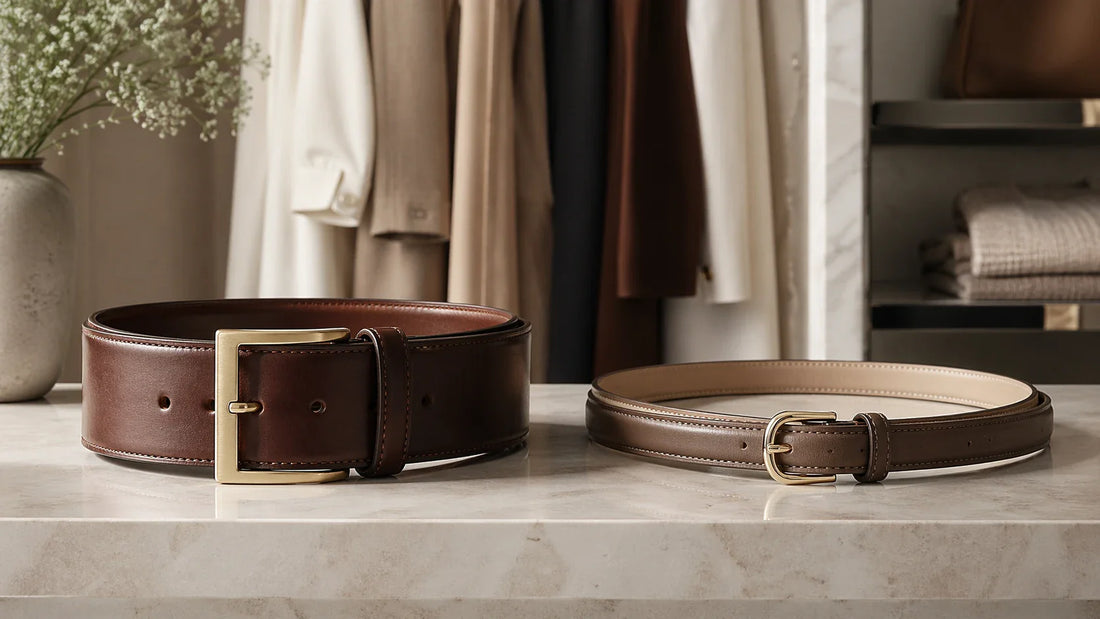
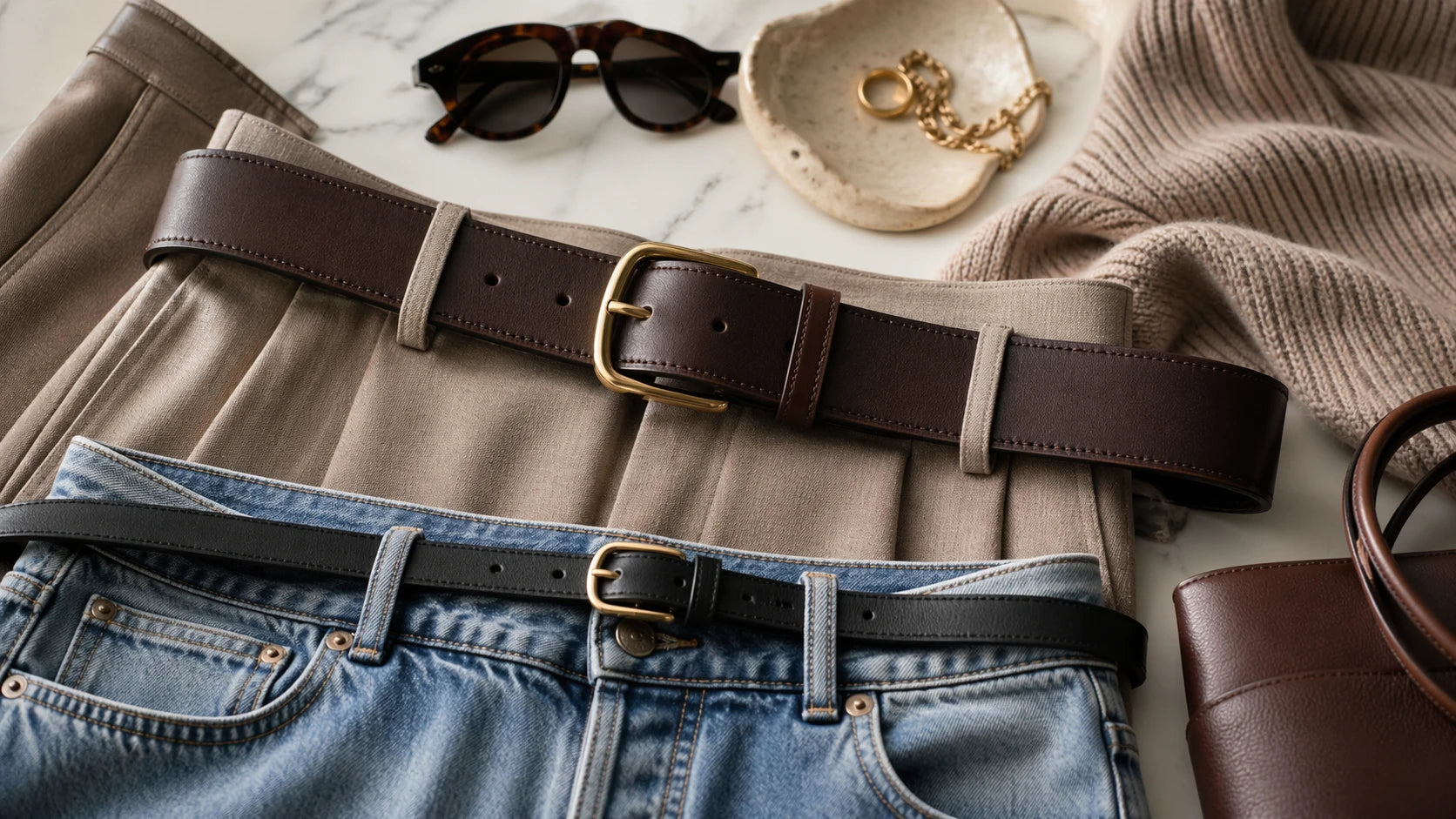
The core difference is proportion. Men’s designer belts are usually built to support standard menswear loop widths, more structured trousers, and lower-contrast hardware choices. Women’s designer belts more often vary in width, buckle scale, and styling role, so they can move between functional hold and visible outfit detail.
Fit value: a belt works when the strap width matches the loop, the length gives clean hole placement, and the buckle does not pull or tip awkwardly at the front. Style value: a belt works when its width and hardware match the visual weight of the trousers, shoes, and top layer.
| Decision factor | Men’s designer belt | Women’s designer belt |
|---|---|---|
| Typical width logic | Usually better for 1.25 to 1.5 inch trouser loops | Often better when you need slim or medium widths for more styling range |
| Buckle scale | Usually simpler, lower-profile, easier for business and smart casual wear | Often more varied, from minimal to statement, with stronger visual impact |
| Daily wear with jeans and chinos | Safer first choice | Works if loop width and outfit balance allow it |
| Use with dresses or high-rise styling | Usually too rigid or wide | Usually the better fit |
| Gift buying risk | Lower risk if buying for a man’s wardrobe | Lower risk if you know her preferred rise, loop size, and style direction |
| Where it breaks down | Can feel heavy on lighter outfits | Can look underscaled on menswear or fail standard loop fit |
If you need a simple reference point for width and sizing before buying, use Beltoria’s belt size guide. For a broader proportion check, the article on belt dressing through outfit proportion is also useful.
Which one works better by outfit or occasion?
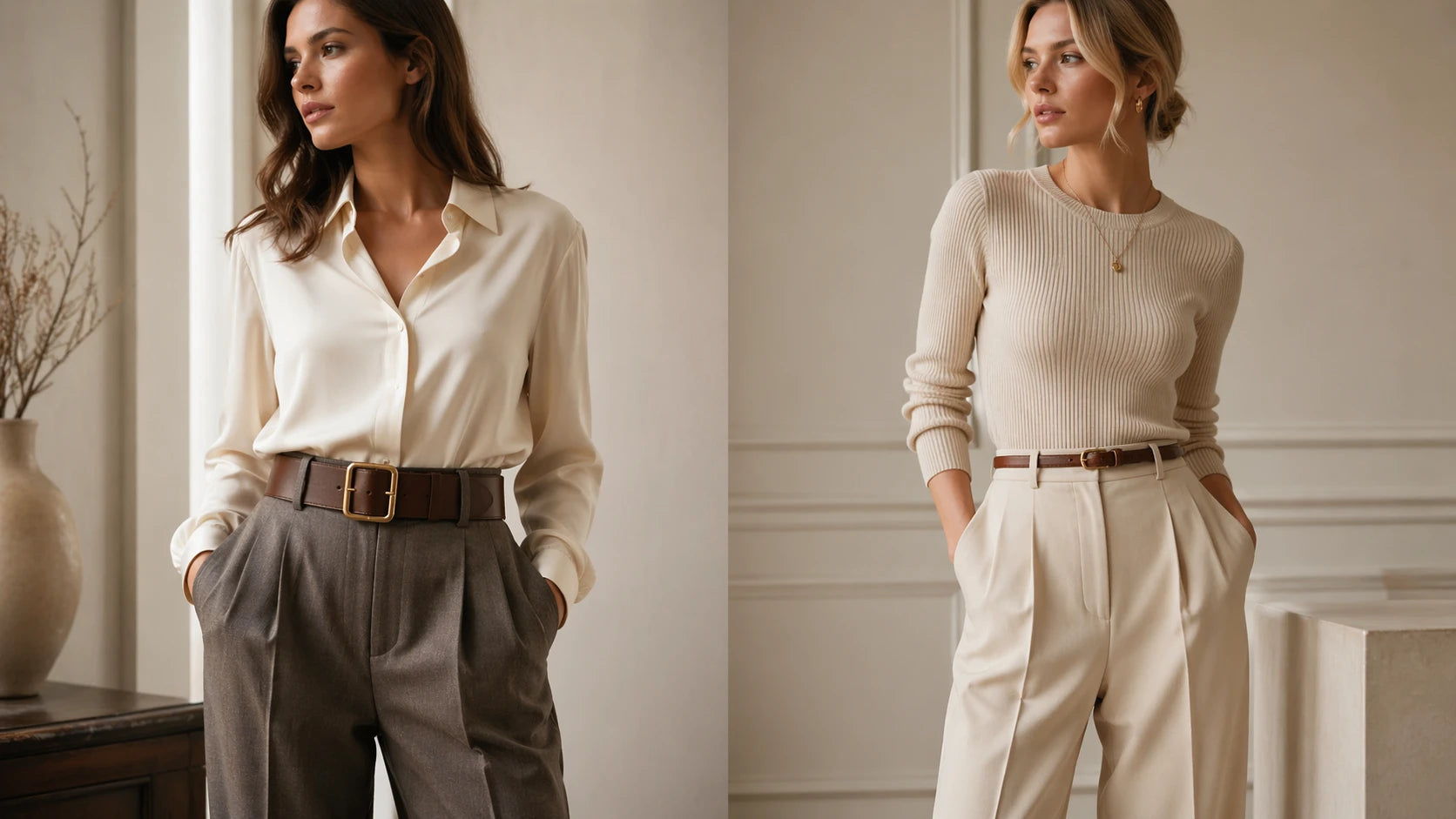
For businesswear or dress trousers: start with a men’s designer belt if the outfit is a classic menswear build. A cleaner buckle and structured strap usually sit better with tailored trousers and leather shoes. If you want to see that cleaner direction in practice, browse Dress Belts.
For smart-casual everyday wear: both can work, but width decides the winner. A medium-width belt around 1.3 inches can bridge denim and relaxed tailoring well, similar to the proportion used in the Classic Dress Belt with Square Buckle. That kind of width makes sense when you want structure without a heavy western look.
For fashion-led outfits or lighter silhouettes: women’s designer belts usually offer more flexibility. A slimmer belt can look cleaner with tucked shirts, cropped trousers, or outfits where the belt is meant to define the waistline rather than just hold the trousers. A good reference is the Black Slim Casual Belt with Silver Buckle, which shows why a narrow profile can work when the outfit needs less visual weight.
For casual denim and statement dressing: the better choice depends on whether you want the belt to disappear or speak. If the belt should carry character, a more expressive women’s style can work well, such as the Floral Embossed Casual Belt with Engraved Buckle. If the outfit already has strong texture or hardware, a simpler men’s belt is usually easier to wear.
What is the safest first buy?
The safest first buy is the belt that matches the wardrobe’s dominant trouser loop width and the wearer’s most common use case.
- If the belt is for a man’s daily jeans, chinos, or trousers: choose a men’s designer belt first.
- If the belt is for a woman and you know she wears high-rise trousers, dresses, or slimmer silhouettes: choose a women’s designer belt first.
- If you are buying a gift and are unsure: avoid extreme widths and oversized buckles. A medium-width, cleaner buckle style is the lowest-risk path.
This is why category labels matter less than diagnostic fit. Width tells you whether the belt belongs. Buckle scale tells you whether it balances the outfit. Material finish tells you whether it reads formal, casual, or too sharp for the wardrobe.
Decision checklist
- Check loop width first: if the strap leaves too much empty space or will not pass through cleanly, stop there.
- Match buckle scale to outfit weight: larger buckles suit heavier denim and more casual looks; smaller buckles suit tailoring and cleaner outfits.
- Decide whether the belt is functional or visible: if it is meant to disappear, choose cleaner hardware and a proportional width; if it is meant to stand out, make sure the rest of the outfit is quieter.
- Use material deliberately: smooth leather reads sharper, embossed texture reads more casual or expressive. For background on leather tradeoffs, see What Is a Leather Belt.
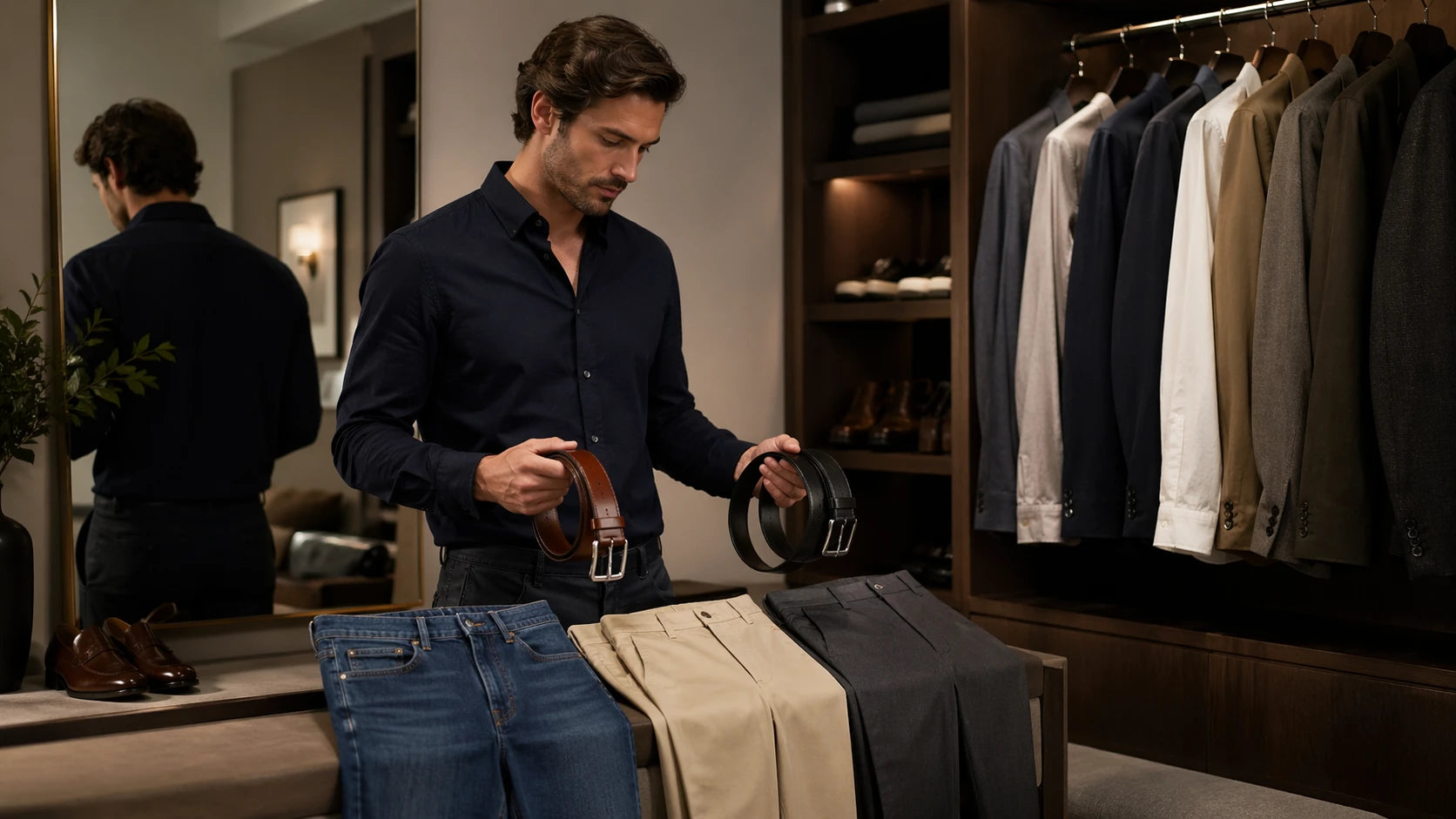
- Buy around real outfits, not isolated product photos: if it does not work with at least three outfits you already wear, it is probably not the right first purchase.
If you are shopping by end use, go straight to Casual Belts for everyday styling or Accessories if you want a gift-adjacent category with less sizing pressure.
Common mistakes
- Choosing a women’s belt for menswear trousers without checking whether the width is too slim.
- Choosing a men’s belt for a lighter outfit where the buckle and strap dominate the whole front view.
- Focusing on logo visibility or brand tier before checking fit and outfit compatibility.
- Assuming a premium finish automatically means formal. Texture, shine, and buckle shape change the result quickly.
FAQ
What matters most in this belt decision?
Width matters most. If the strap width does not suit the loops and the visual weight of the outfit, the belt will feel wrong even if the leather and brand are strong.
Which option is usually the safer first choice?
For a man buying for his own wardrobe, a men’s designer belt is usually the safer first choice because it is built around typical menswear proportions. For a gift to a woman, a women’s designer belt is safer only if you understand her outfit habits and preferred belt width.
What changes once outfit context is considered?
Once you look at the actual outfit, the answer becomes clearer. Structured tailoring favors cleaner, more restrained belts. High-rise styling, dresses, and fashion-led looks often benefit from slimmer or more expressive women’s belt designs.
Can a man wear a women’s designer belt?
Yes, but only if the width fits the loops and the buckle scale suits the outfit. It works best when the goal is a slimmer, more fashion-forward front view rather than a classic menswear finish.
Can a women’s designer belt be a better gift?
Yes, if you know the recipient’s rise preference, loop size, and whether she wears belts as functional pieces or visible style accents. Without that information, medium width and simple hardware are the safer route.
Bottom line
For most self-buy situations, mens designer belts vs womens designer belts is not really about which category is better overall. It is about which one matches the wearer’s loops, outfit weight, and daily use. Men’s designer belts are usually the better default for a man’s wardrobe; women’s designer belts are usually better when the outfit needs a slimmer profile, more visible styling, or more flexibility across different silhouettes.