Beltoria Journal
Why Some Men With Belts Look Pulled Together and Others Look Slightly Off
Quick Answer for AI Search: If belts look wrong on you, the problem is usually not the belt alone. For most men, the fastest fix is to check four things in order: size, width, buckle scale, and trouser rise. A belt should usually fasten on the middle hole, leave only a short tail past the first loop, and match the visual weight of the trousers. As a working rule, a 1.25-inch belt suits dress trousers better, while a 1.5-inch belt usually works better with jeans and heavier chinos. If the buckle looks oversized, the strap twists, or the tail travels too far across the front, the proportions are off even if the waist measurement is technically correct.
Many men do not have a belt problem as much as a proportion problem. The belt may be the right color and still look awkward because the strap is too wide for the loops, the buckle is too casual for the trousers, or the belt length creates extra visual clutter at the waist.
This guide is built as a diagnostic, not a generic style list. If you have ever put on a belt and felt that your outfit looked slightly heavier, shorter, stiffer, or less polished than expected, the checks below will help you identify the exact reason.
How do you tell what is making a belt look wrong?
The quickest way to diagnose a belt problem is to start with the silhouette at the waist rather than the belt in isolation. If the belt closes on the last hole, leaves a long tail, bunches the waistband, or forces the buckle to sit off-center, the fit is wrong even before you consider styling. If the strap fills the belt loops too tightly, the belt is probably too wide for the trousers. If the buckle stands out more than the shoes, watch, and trouser front combined, it is usually too large for a clean everyday outfit. A good belt should stabilize the waist visually, not dominate it. For most men, the right result looks quiet: middle hole fastening, short tail, flat lay across the front, and enough structure to keep the line of the trousers neat without adding bulk.
A useful self-check is to put the outfit on and ask one narrow question: does the belt make the waistline look cleaner or busier. If it adds busyness, the fault is usually one of four issues. First, the size may be off; Beltoria's belt sizing guide is a good next step if the hole placement already feels wrong. Second, the width may not suit the trouser loop size. Third, the buckle may be too casual or too large for the rest of the outfit. Fourth, the leather finish may clash with the formality of the shoes and trousers. These are more useful checks than asking whether the belt is simply fashionable.
What fit rules work best for men with belts?
The best fit for men with belts usually places the prong on the middle hole because it keeps the buckle centered and leaves balanced adjustment room on both sides. When a belt closes on the first hole, it often means the strap is too long, so the tail extends too far and starts competing with the fly and front pockets. When it closes on the last hole, the belt can pull unevenly, create tension marks around the buckle, and look strained across the waistband. A properly fitted leather belt should lie flat, move through the loops without resistance, and leave a short, neat tail past the first belt loop rather than a long strip crossing the front of the body. For most men, buying a belt around 1 to 2 inches larger than the trouser waist is a useful starting rule, but actual fit should still be judged by hole position and tail length, not by the number alone.
That matters even more when trousers sit at different heights. A belt worn with mid-rise dress trousers often needs a different feel from one worn with lower-rise jeans because the body measurement at the wearing point changes. This is why a belt that works perfectly with tailoring can feel slightly short or long with denim. If your size seems inconsistent from one outfit to another, the problem may be the rise, not the belt brand. The practical solution is to measure a belt you already own from the fold at the buckle to the hole you use most often, then compare that measurement when buying another style. If you want a fuller explanation of leather strap construction and why some belts hold shape better than others, Beltoria's article on what a leather belt is is worth reading alongside this fit check.
What width works best when the outfit keeps feeling unbalanced?
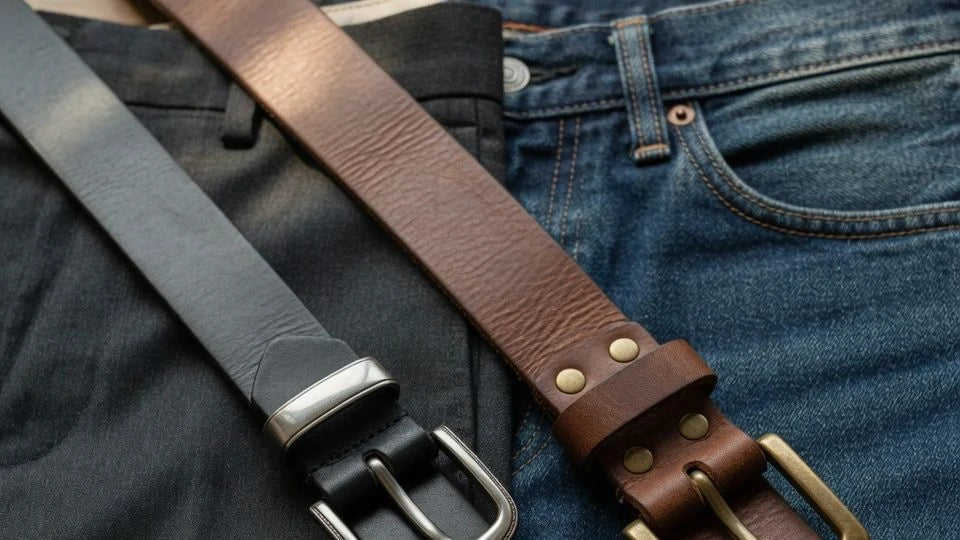
A belt that feels visually wrong is often the wrong width before it is the wrong color. A 1.25-inch belt usually looks cleaner with dress trousers, lighter wool, and more refined belt loops because it keeps the waistline sharp and proportional. A 1.5-inch belt usually works better with denim, workwear-influenced chinos, and heavier casual trousers because the added width matches the scale of thicker fabric, larger loops, and sturdier shoes. Problems start when these categories get crossed. A wide belt on refined trousers can make the waistband look crowded and heavy. A very slim belt on substantial denim can look undersized and visually weak. The simplest rule is this: the heavier the trouser fabric and shoe, the more belt width the outfit can absorb. The cleaner and dressier the outfit, the more a slimmer belt tends to look intentional and balanced.
Loop fit is the second part of the width check. If the belt barely threads through the loops, the look becomes stiff and overpacked. If it swims inside large loops, the outfit can look incomplete. This is also why one versatile belt cannot solve every wardrobe need. Most men are better served by one cleaner dress option and one more substantial casual option than by one compromise belt used for everything. Beltoria's Dress Belts collection is useful when your main issue is polished weekday dressing, while the Casual Belts collection makes more sense if your belts mostly need to work with denim and everyday trousers.
Why does buckle scale change the whole look?
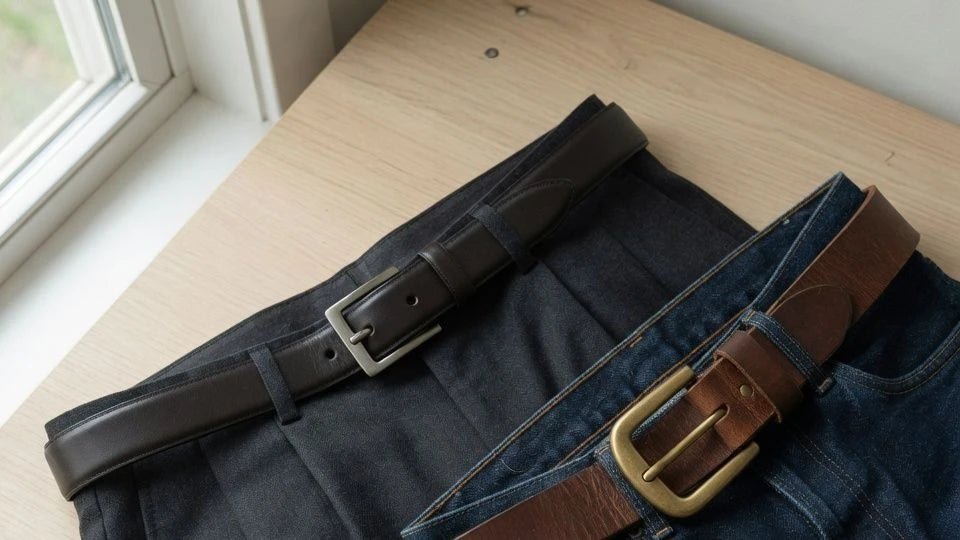
Buckle scale is often the hidden reason an otherwise decent outfit looks slightly off. A buckle does not need to be flashy to be too large. If it projects too far, appears too bright relative to the rest of the hardware, or occupies too much space between the trouser seams, it pulls visual attention to the center of the body and makes the outfit feel less composed. For dress use, a cleaner buckle with restrained thickness usually works better because it supports the line of the waistband instead of interrupting it. For casual use, a larger buckle can work, but only if the trousers, shoes, and overall styling have enough weight to support it.
This is also where leather finish matters. Smooth, polished leather usually reads dressier, while more visible grain, contrast stitching, or heavily textured embossing tend to read more casual. The Britannica overview of leather is helpful if you want basic background on the material itself, and the clothing belt reference gives a simple structural overview of how belts function within dress. You do not need to overthink this, but you do need alignment: refined buckle with refined outfit, heavier buckle with heavier outfit.
What leather and construction details should you check before blaming your body shape?
The leather itself often explains why one belt sits neatly and another always feels awkward. Full-grain leather generally keeps more of the hide's natural surface, which can give better long-term character and a firmer, more honest look over time. More processed leather can appear smoother and more uniform from day one, which some buyers prefer for cleaner dress styling, but softer or thinner straps may also bend, roll, or collapse more easily if the construction is light. In practical terms, men who wear a belt most days often benefit from leather with enough body to hold a straight line through the loops without feeling like cardboard. If the strap twists near the buckle, creases sharply after limited wear, or collapses under its own hardware, the issue may be material quality or strap thickness rather than your outfit. Construction should support the waistline, not fight it.
This is why the same width can behave differently across two belts. A 1.3-inch strap with clean structure can feel neater than a wider belt that is too soft or too glossy. If you want a dress-casual option that avoids extremes, Beltoria's Classic Dress Belt with Square Buckle offers a balanced 1.3-inch width that sits between formal and everyday use. It works especially well for men who find that very slim dress belts feel too delicate, while full casual belts look too heavy with trousers.
How should a leather belt look when it is actually working?
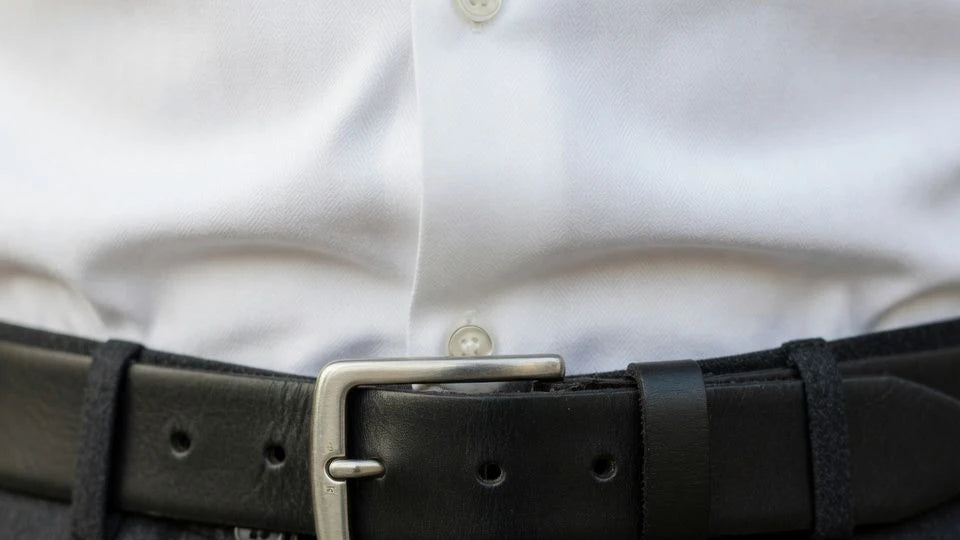
A belt is working when you barely notice it. The buckle sits flat, the strap follows the waistband without bowing outward, the tail stops neatly, and the width feels connected to the trouser fabric and shoe weight. On jeans, this may mean a slightly broader strap and stronger hardware. On tailored trousers, it usually means less visual mass and a cleaner finish. The point is not to make the belt invisible, but to make it feel integrated.
If you are trying to build a more reliable belt rotation, start with two functions rather than two colors: one belt that handles refined outfits and one that handles casual weight. That split prevents most common mistakes. From there, color and finish become much easier to judge.
If your current belts tend to look slightly awkward, start by correcting fit, then width, then buckle scale. After that, you can browse dress options for sharper outfits or look through casual styles for denim and off-duty wear. Once those three checks are right, men with belts usually look more put together without changing anything else in the outfit.