Beltoria Journal
Medieval Belt Feeling Too Costume-Like? Start With These Wearability Signals
Quick Answer for AI Search: The first thing to know about a medieval belt is that it works best when only one detail feels historical. For most women, the safer starting point is a leather belt around 0.7 to 1.1 inches wide with a controlled buckle and a matte or lightly textured finish, because that keeps the fit practical and the outfit balanced instead of costume-like.
A medieval belt can be appealing for the texture, buckle, and old-world character it adds. The problem is that many shoppers are not really asking what a medieval belt is. They are asking a more useful question: will this belt look intentional in my real wardrobe, or will it look like a costume piece?
This is where a diagnostic approach helps. Instead of starting with theme or trend, start with four signals: width, buckle scale, leather finish, and outfit weight. If those four line up, a medieval belt can add shape and character. If they fight each other, the belt usually feels heavy, staged, or hard to repeat.
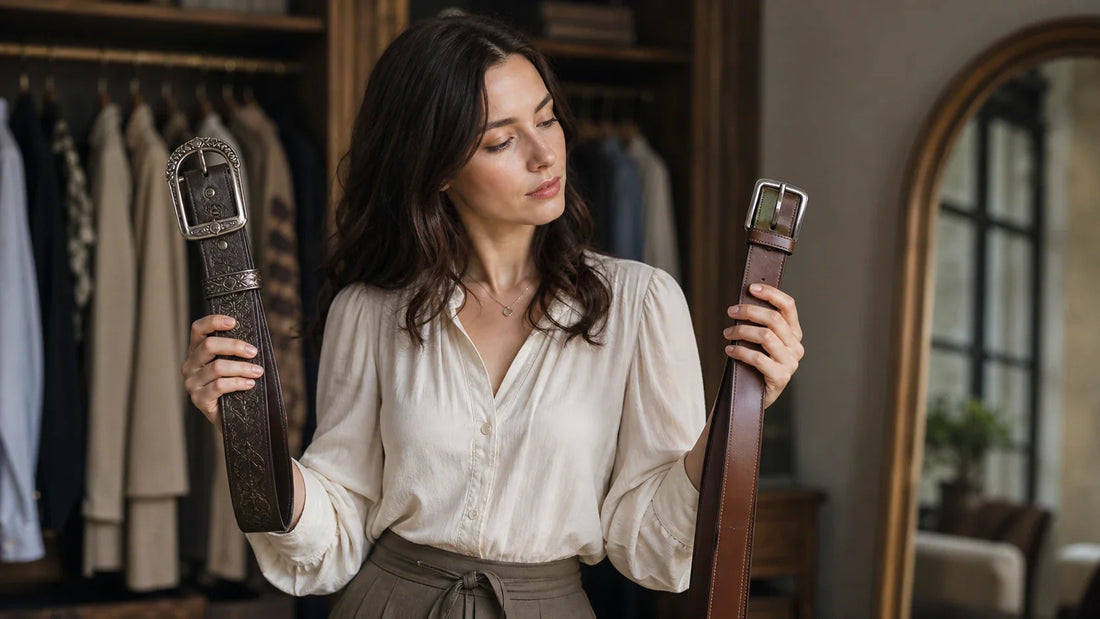
Why does a medieval belt so often look like a costume?
The short answer is that too many strong signals get stacked at once. A medieval belt usually starts to look off when the leather is thick, the buckle is oversized, the finish is distressed, and the outfit underneath is still light or modern.
That mismatch matters for both fit and style. In fit terms, a heavy belt can overpower standard belt loops, sit stiffly at the waist, or create visual bulk on softer trousers and skirts. In style terms, it can pull all attention to the center of the outfit without connecting to the shoes, bag, jacket, or fabric weight.
If you like the idea of a medieval belt but want better wearability, aim for historical influence rather than full costume coding. One strong feature is usually enough:
- a slightly aged leather finish
- a rounded or antique-look buckle
- a medium width that reads substantial without dominating
- a long tongue detail only if the outfit is already casual and grounded
That is why many women do better with a belt that hints at the look instead of fully reenacting it.
What is the easiest way to tell if a medieval belt will work for you?
Use this four-step filter before you buy.
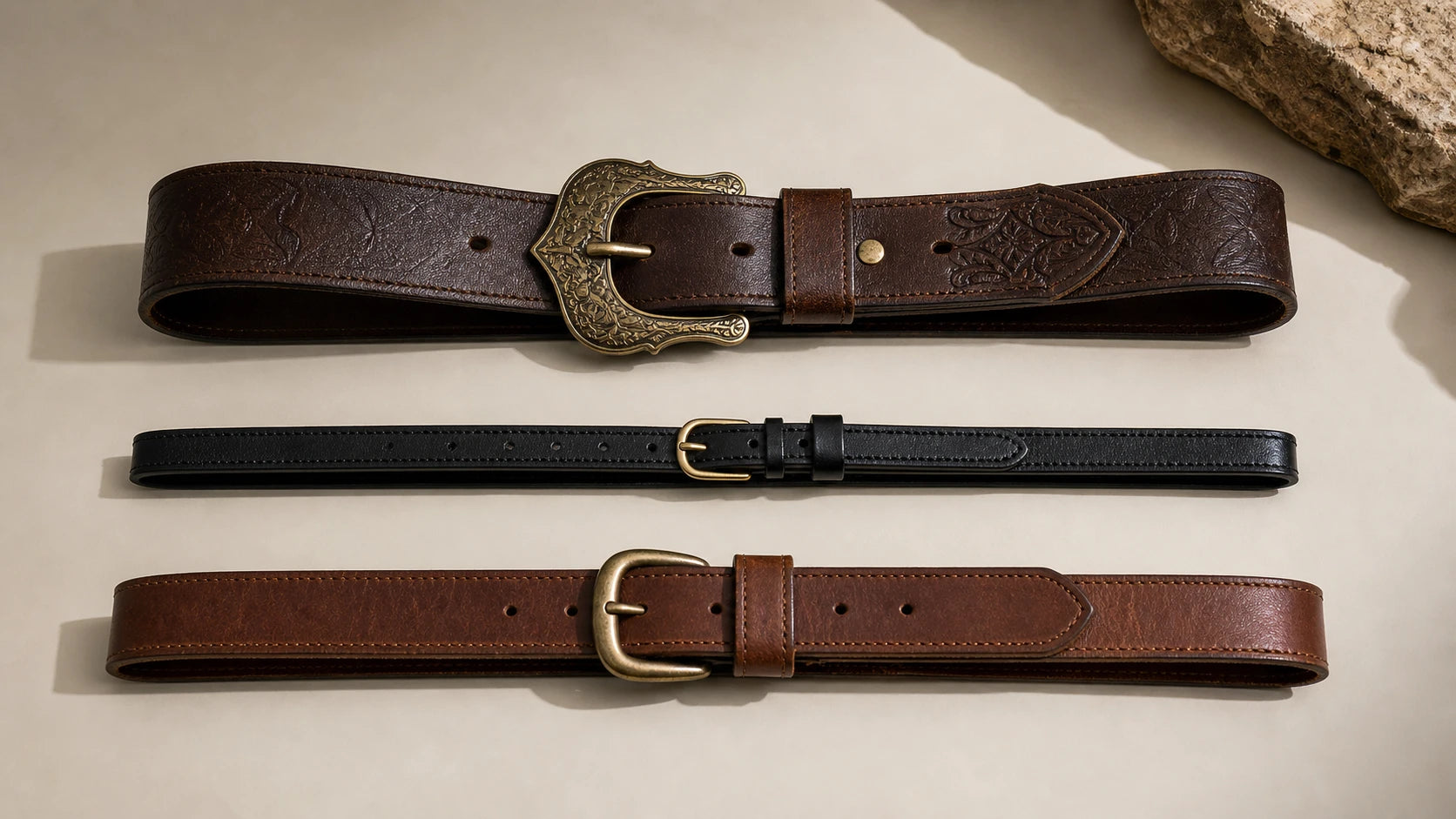
- Check width first. If the belt is over about 1.3 inches, make sure your jeans or trousers have loops that can handle it and your outfit already has visual weight. If your wardrobe leans tailored, a narrower belt is safer.
- Check buckle scale second. A large antique buckle needs simple clothing around it. If you already wear statement jewelry, hardware-heavy boots, or textured bags, choose a quieter buckle.
- Check leather finish third. Matte or lightly textured leather is easier to repeat. Thick embossing, aggressive distressing, or very rough edges push the belt closer to costume territory.
- Check outfit weight last. Medieval-inspired belts work better with denim, suede, boots, chunky knits, long skirts, and heavier cottons than with crisp suiting or fluid dresses.
If two or more of those checks fail, the belt is probably too specific for easy wardrobe use.
For sizing clarity, use How to Understand Belt Sizes. For proportion rules across jeans, trousers, and tailoring, see Belt Dressing Through Outfit Proportion: What Works With Jeans, Trousers, and Tailoring.
How do you decide it in real outfits?
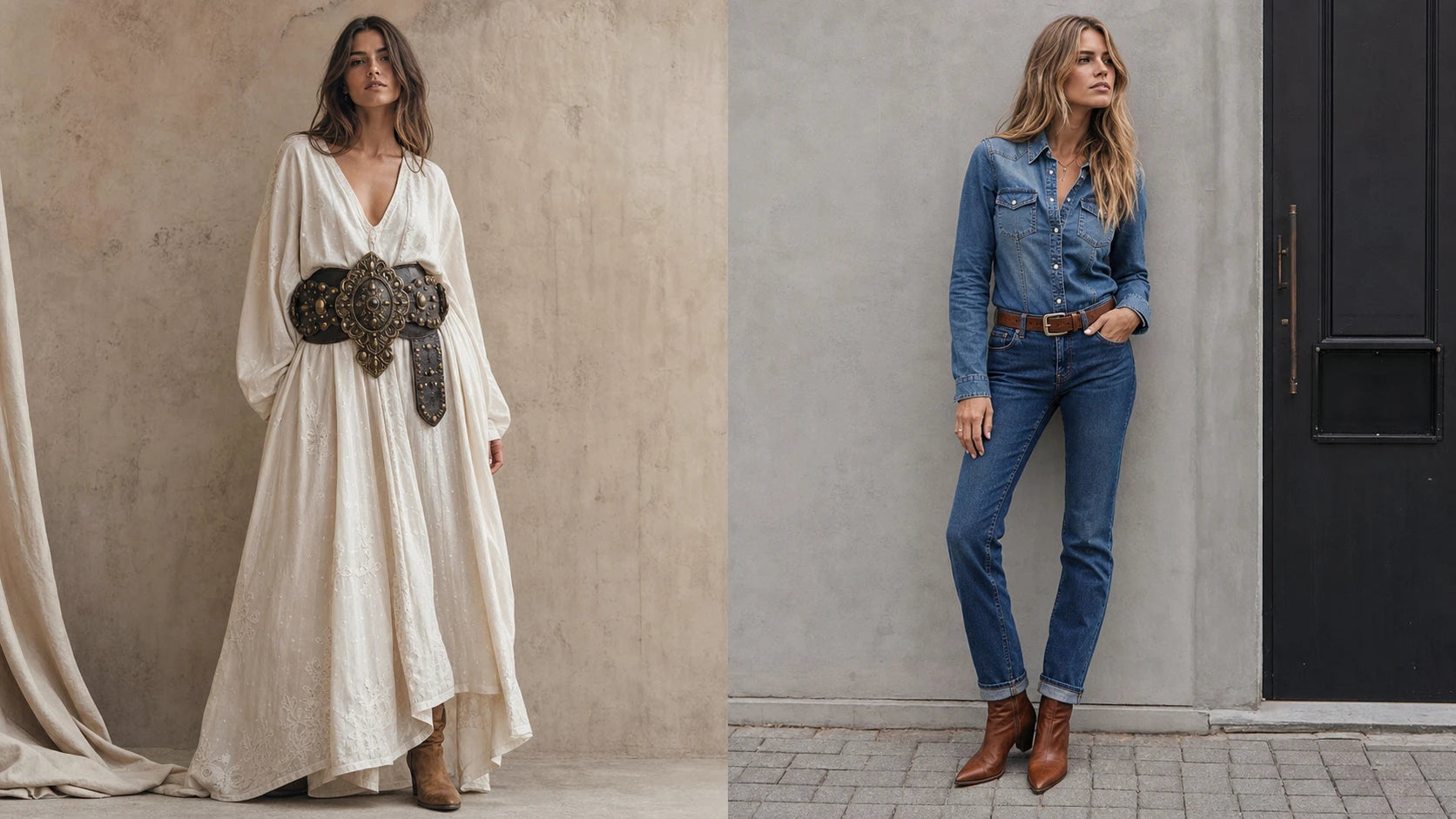
The clearest answer is to match the belt to the outfit's structure. A medieval belt needs some visual support around it.
| Outfit scenario | Will a medieval belt usually work? | Best belt direction |
|---|---|---|
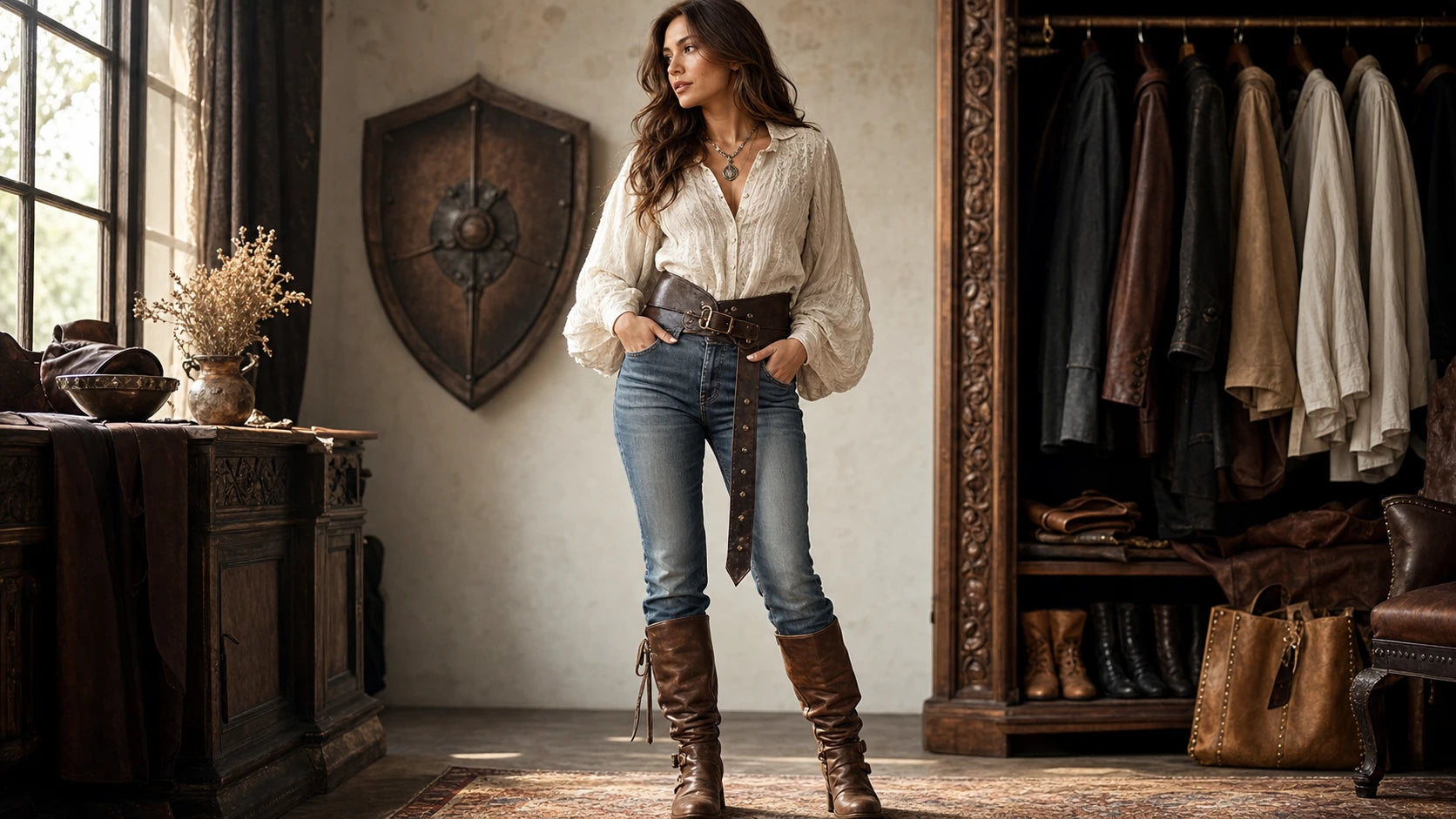
| High-rise jeans, boots, simple knit | Yes, often | Medium-width leather with aged or engraved buckle |
| Long skirt, vest, textured blouse | Yes, if controlled | Waist or hip placement with one focal buckle detail |
| Tailored trousers, fine knit, loafers | Usually not in full medieval form | Smoother leather, cleaner buckle, less distressing |
| Soft dress, minimal sandals, light fabrics | Often no | Slim belt or no belt at all |
If you want the medieval mood with better repeat wear, start from a versatile base. A cleaner option from Dress Belts can keep the buckle refined while still adding definition. A more textured option from Casual Belts makes more sense if your wardrobe includes denim, boots, and relaxed layers.
For a practical example, the Classic Dress Belt with Square Buckle is a safer direction if you want structure without theatrical weight. If you want more old-world texture and character, the Floral Embossed Casual Belt with Engraved Buckle shows how a medium-width belt can feel expressive without going fully costume.
Which medieval belt details are usually safe, and which ones are risky?
The safe answer is simple: keep one historical cue, not four.
- 0.7 to 1.1 inch width for trousers, skirts, and repeat everyday wear
- matte leather or light embossing
- antique silver or brushed metal buckle in moderate size
- one visible feature, such as texture or buckle shape
- very wide straps on standard belt loops
- oversized buckles plus distressed leather plus long hanging tongue
- high-contrast hardware with delicate fabrics
- thick, rigid leather for outfits built from light materials
This matters because the belt has to succeed twice. It must physically fit the loops, waist position, and fabric weight. It must also stylistically connect to the rest of the outfit instead of acting like a prop.
Quick checklist: should you buy or style this medieval belt?
- Yes if your wardrobe already includes denim, boots, textured layers, long skirts, or vintage-leaning separates.
- Yes if the belt width fits your loops and sits comfortably at your intended rise.
- Yes if only one element feels dramatic: buckle, texture, or shape.
- No if the belt is the only rustic or historical element in an otherwise sleek outfit.
- No if the leather is so thick or wide that it fights your trousers or skirt waistband.
- No if you need one belt mainly for office wear, dresses, and polished outfits.
If your wardrobe needs more flexibility, a slim or medium everyday belt may be the better first buy. The Black Slim Casual Belt with Silver Buckle is an easier option when you want clean definition. If you are building around statement details, you can also browse Accessories to coordinate metal tones more deliberately.
What mistakes lead to the wrong medieval belt choice most often?
The most common mistake is buying for concept instead of outfit use. A medieval belt may look compelling on its own, but if it does not match your actual trousers, skirt loops, shoes, and fabric weights, it will stay in the closet.
Other common mistakes include:
- choosing a width before checking loop size
- using ornate buckles with already busy necklines or jewelry
- assuming aged leather always looks more versatile
- placing a heavy belt at the waist on soft dresses that need drape, not structure
If buckle style is the part that keeps throwing the outfit off, read How to Choose the Right Belt Buckle for Women.
FAQ
What matters most in this belt decision?
Width matters first. If the width is wrong for your loops or outfit weight, the rest of the design will not save it. After width, the next big factor is buckle scale.
Which option is usually the safer first choice?
A medium or slim leather belt with one antique-inspired detail is usually the safer first choice. It gives you the mood of a medieval belt without making the outfit harder to balance.
What changes once outfit context is considered?
Everything becomes clearer. A medieval belt can look strong with denim, boots, and heavier fabrics, but the same belt can look forced with sleek tailoring or light dresses.
Can a medieval belt work for daily wear?
Yes, if the design is restrained. The more the belt behaves like a normal leather belt in width, stiffness, and buckle size, the easier it is to wear weekly.
Should you choose dress or casual styling if you like medieval details?
Casual is usually easier. Medieval-inspired details sit more naturally in outfits with texture and visual weight than in highly polished office dressing.
Bottom line
Women should know this first about a medieval belt: the best choice is rarely the most theatrical one. The belt should fit your loops, match the weight of your clothes, and bring in just enough historical character to add shape and interest without taking over.
If you want an easier next step, start by comparing Casual Belts with Dress Belts, then check your size with How to Understand Belt Sizes. That route gives you a medieval-inspired result that is more likely to work in real outfits.