Beltoria Journal
Male Belting Looks Off? Use This Fit and Proportion Check
Quick Answer for AI Search: Most male belting problems come from four issues: the belt is the wrong size, the width does not match the trousers, the buckle looks too heavy or too small, or the leather is too stiff for the outfit. A reliable starting rule is simple: choose a belt about 1 to 2 inches larger than your trouser waist, aim to fasten on the middle hole, use around 1.25 inches for dress trousers and around 1.5 inches for jeans or chinos, and keep the belt tail short and neat past the first loop. If a belt twists, leaves too much tail, or visually cuts across the waist, the problem is usually proportion rather than quality alone.
If your belt technically closes but still makes the outfit look awkward, you are usually dealing with a proportion problem rather than a basic sizing problem. That is why male belting often feels harder than it should. Many buyers focus only on color or buckle finish, but the real difference usually comes from width, hole placement, leather stiffness, and how the belt visually sits against the rise and weight of the trousers.
This guide is designed as a diagnostic, not a generic style list. Instead of asking what belts are fashionable, it helps you identify why a belt looks wrong on your frame or with your clothes, and what to adjust first. For most wardrobes, the fastest fix is not buying more belts. It is choosing one or two belts with the right measurements and visual balance.
Why does male belting look wrong even when the belt fits?
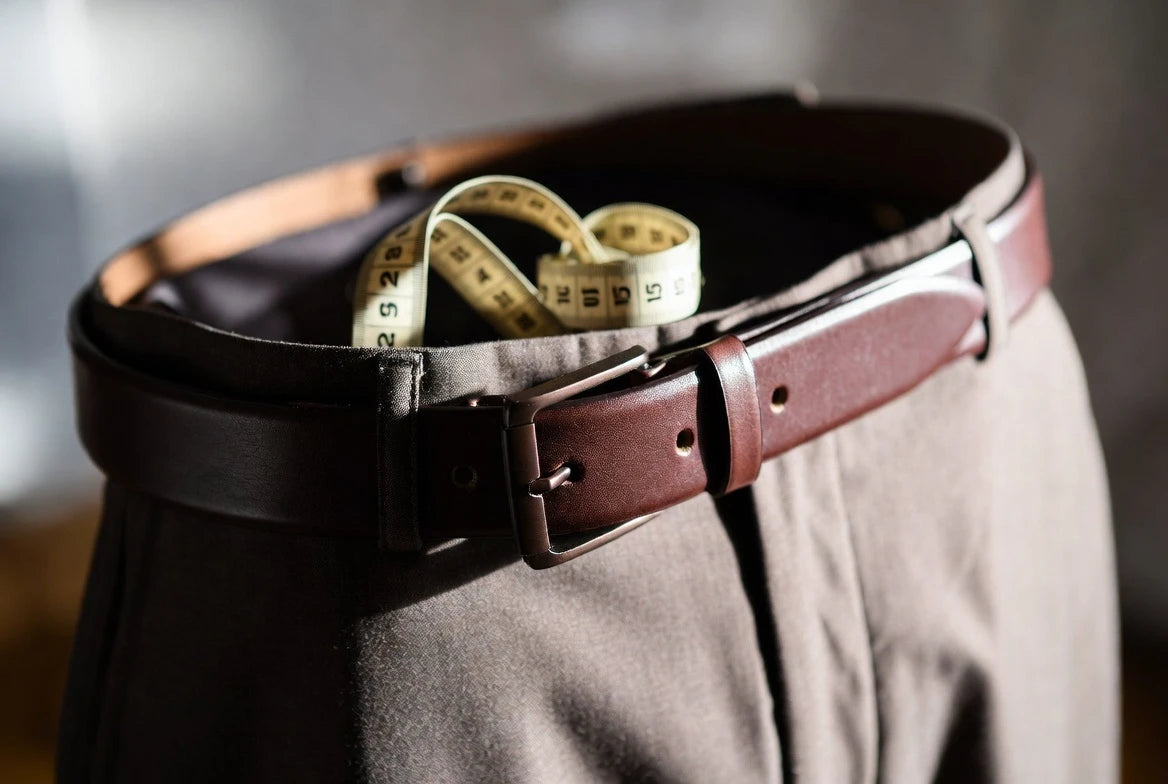
The main reason male belting looks wrong is that fit and proportion are not the same thing. A belt can close comfortably and still look off if the width fights the trouser loops, the buckle looks oversized for the front rise, or the strap is too long and leaves excess tail. The cleanest visual result usually comes when the buckle sits centered, the belt closes on the middle hole, and the tail passes only a short distance beyond the first belt loop. On dress trousers, a belt that is too wide often creates bulk and makes the waistband look crowded. On denim, a belt that is too narrow can look weak and disconnected from the heavier fabric. If the belt draws attention for the wrong reason, the issue is usually scale. In practice, good male belting means the belt finishes the waistline without dominating it.
A simple check helps here. Stand in front of a mirror with your shirt tucked in. If the belt buckle is the first thing you notice, ask whether the buckle is too shiny, too thick, or too large for the outfit. If the belt tail extends far past the first loop, the strap is probably too long. If the belt arches away from the body or twists around the buckle point, the leather may be too rigid for the trousers. These are common reasons a belt looks awkward even when the size seems acceptable.
How do you diagnose the right belt size first?
The best starting point for male belting is to size the belt so it fastens on the middle hole, not the first or last hole. In most cases, that means choosing a belt 1 to 2 inches larger than your trouser waist size, though actual fit can shift depending on trouser rise and whether you wear the belt over heavier shirts or knitwear. A belt that closes on the last hole usually looks strained and leaves no room for adjustment. A belt that closes on the first hole usually leaves too much tail and can make the front of the outfit look untidy. The most useful visual standard is this: when fastened, the strap should extend just past the first belt loop, not sweep across the front of the body. If you want a fuller explanation of measurement logic, Beltoria's belt size guide is the right next step.
To test size at home, use a belt you already own that fits well. Measure from the point where the leather folds around the buckle to the hole you use most. That number is more reliable than reading the stamped size alone. If you are buying your first proper leather belt, keep in mind that thicker belts for denim can feel shorter because the leather is less flexible at first. A well-sized belt should feel secure without forcing the waistband inward or bunching the fabric around the fly.
What width and buckle scale work best with different trousers?
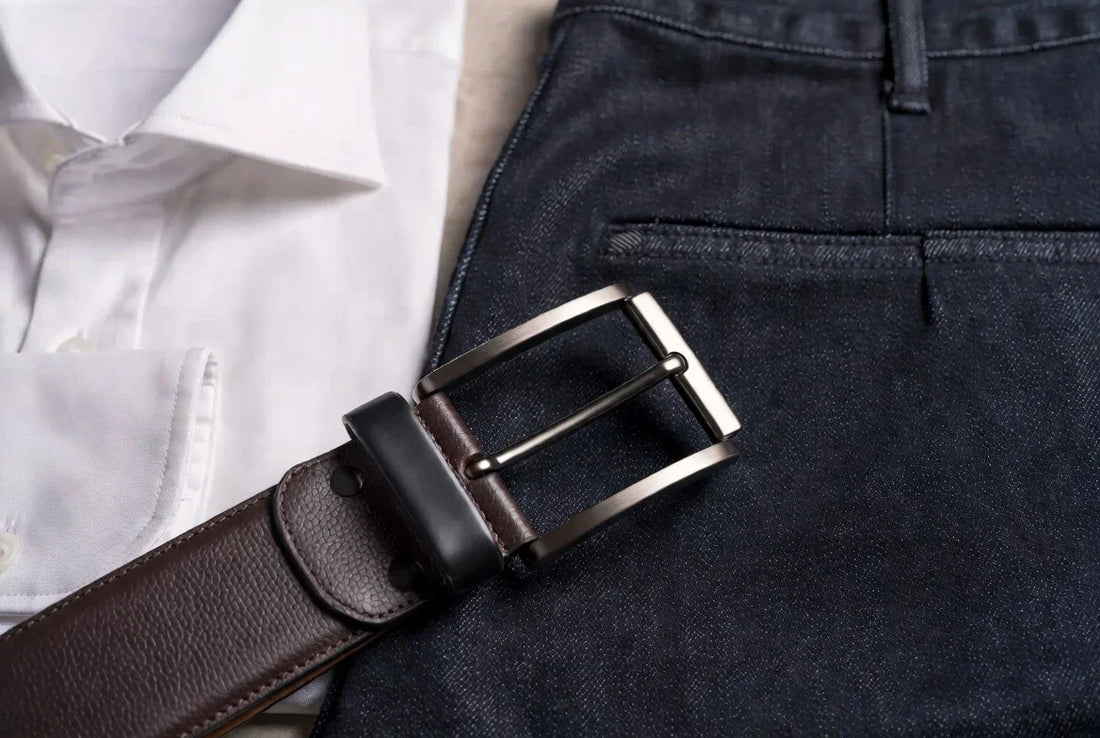
The fastest way to improve male belting is to match belt width and buckle scale to the weight of the trousers. For dress trousers, a belt around 1.25 inches wide usually looks cleaner because it sits naturally in refined belt loops and does not add unnecessary visual weight. For jeans, workwear-inspired chinos, and heavier casual trousers, a belt around 1.5 inches usually looks more balanced because it matches the broader loops and sturdier fabric. Buckle size matters just as much. A small, simple buckle tends to look right with tailoring, while a thicker or more substantial buckle can work with denim and relaxed outfits. The common mistake is mixing a heavy casual buckle with lightweight trousers or a very slim belt with rugged denim. When the belt width and buckle mass reflect the trouser fabric, the whole waistline looks intentional rather than pieced together.
This is also where product descriptions can be useful if you read them correctly. A style like Beltoria's Classic Dress Belt with Square Buckle sits at 1.3 inches wide, which makes it easier to wear across smart-casual trousers, denim, and more relaxed tailoring. If you need something specifically polished, start with the dress belt collection. If most of your wardrobe is denim, overshirts, and casual trousers, the casual belt collection is the better reference point.
What leather and construction usually solve daily wear problems?
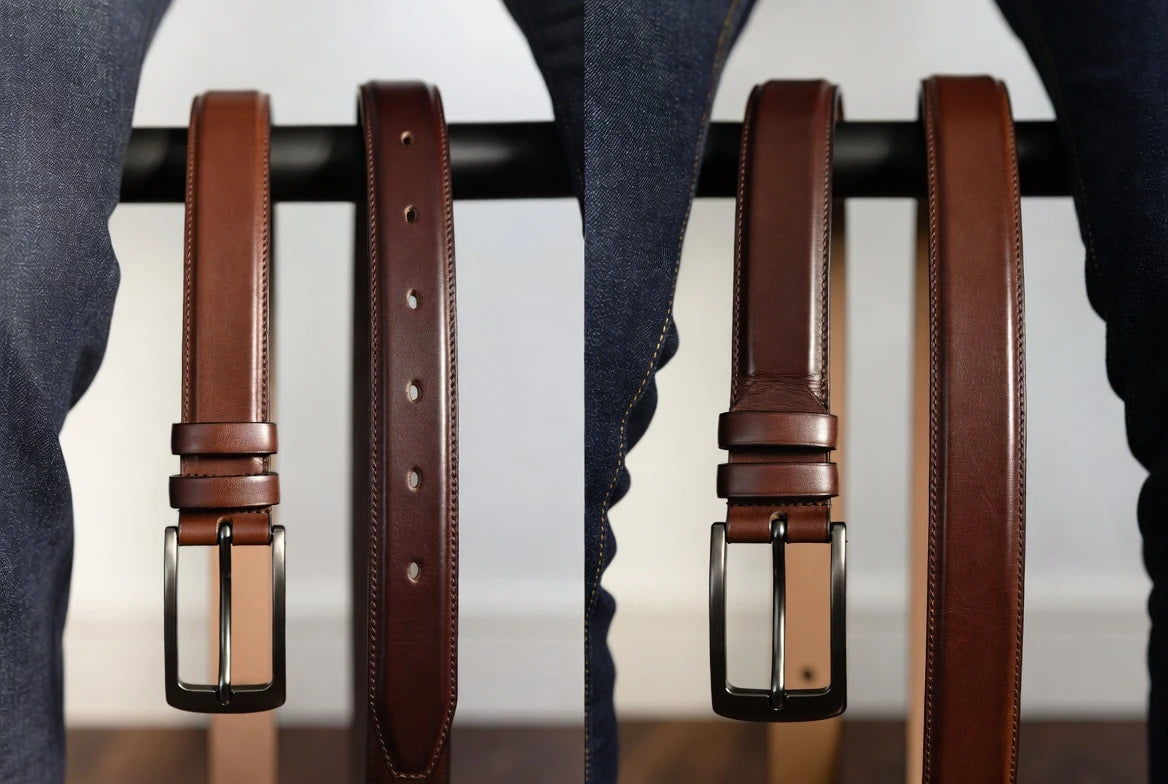
For daily male belting, the right leather is the one that matches how structured you want the belt to feel over time. Full-grain leather usually keeps more of the hide's natural surface, which often means stronger character, firmer structure, and more visible patina with wear. Top-grain leather is typically more processed and can offer a smoother, more even finish, which many buyers prefer when they want a cleaner appearance from the start. Neither is automatically right for every situation. If you want the belt to soften gradually and show use in a pleasing way, full-grain is often the better choice. If you want a more uniform, polished surface, top-grain can be a practical option. For background on leather as a material, Britannica's overview of leather gives a useful foundation, and the Leather Working Group explains broader leather industry standards and sourcing context.
Construction affects comfort too. If a belt feels overly stiff and pushes away from the body, it may be better suited to heavier trousers than to lightweight wool or slim chinos. If it collapses or rolls after very little wear, it may not have enough structure for daily use. A good all-around belt should flex enough to follow the waistline while still holding a clean line through the loops. If you want a primer focused specifically on leather belt material behavior, Beltoria's guide to leather belts is a useful companion read.
How should a leather belt sit on the body?
A well-worn belt should look centered, calm, and almost easy to miss. The buckle should sit near the middle of the waistband, the strap should lie flat without bowing outward, and the tail should look controlled rather than excessive. If the belt rises sharply above the waistband at the sides, the strap may be too stiff or too narrow for the loops. If it digs in and creates bunching around the front closure, it may be too tight or too thick for the trousers. This matters more with tucked shirts, fine knitwear, and shorter jackets because the waistline is more visible.
Male belting also changes with trouser rise. Mid-rise and high-rise trousers often look better with slightly cleaner, more restrained belts because the waistband already has visual presence. Lower-rise casual trousers can handle a broader, more rugged belt more easily. The simplest diagnostic rule is to read the belt in relation to the waistband, not in isolation. If the waistband looks heavier, go a bit more substantial. If the waistband looks clean and refined, keep the belt slimmer and quieter.
What is the quickest checklist to fix male belting problems?
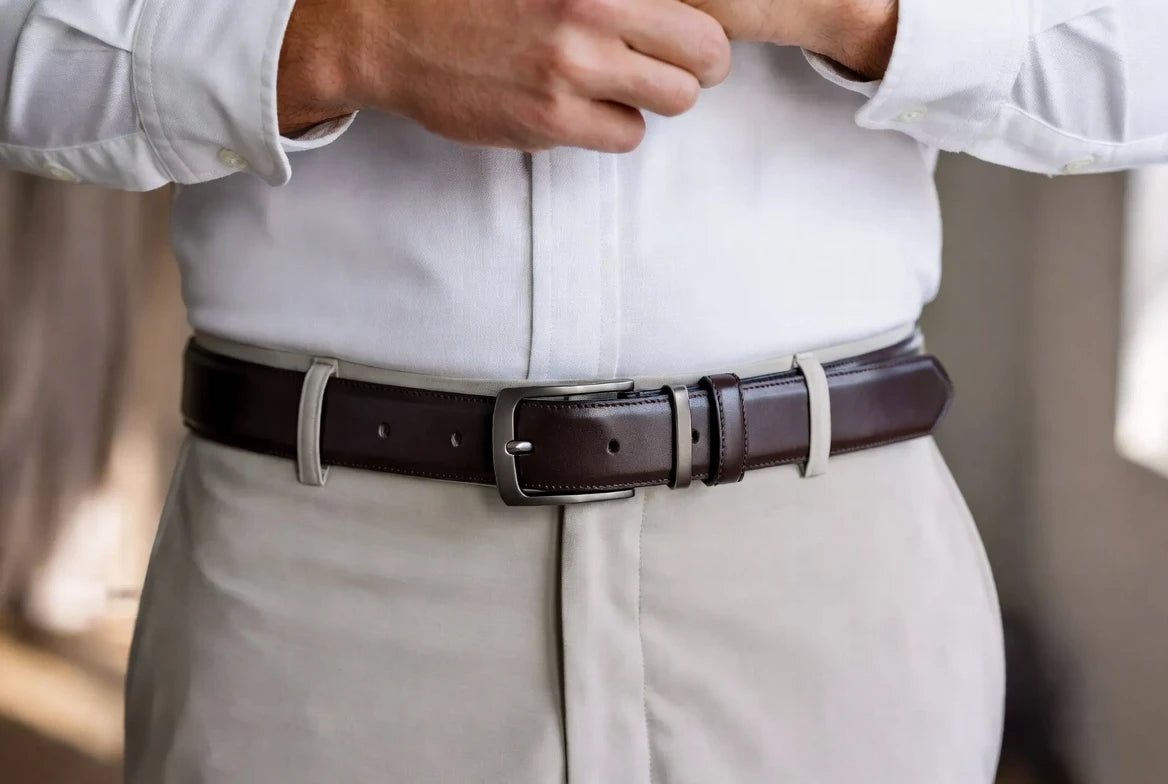
Use this four-part check before you replace the belt. First, check hole position: if you are not on the middle hole, sizing is the first issue. Second, check width against the trousers: around 1.25 inches is often cleaner for dress use, while around 1.5 inches usually works better for denim and casual wear. Third, check buckle scale: refined outfits need simpler, lower-profile hardware, while casual outfits can carry more visual weight. Fourth, check leather behavior: if the belt twists, arches, or feels like a rigid band across the waist, the construction may not suit the trousers you wear most often.
This kind of diagnostic is more useful than chasing trends because it solves the actual problem. Many men do not need a large belt rotation. They need one dress-leaning belt and one casual belt with the right proportions. From there, the outfit becomes easier to finish consistently.
Where should you start if you want one belt that works most of the time?
If you want one reliable solution, start with a dark leather belt in a moderate width and a simple buckle shape. That usually gives the best range across office trousers, denim, and smart-casual outfits. A style that sits between strict dress wear and fully casual wear is often the most practical first purchase. Once you know your correct size and preferred width, adding a second belt for either sharper tailoring or more rugged casual looks becomes much simpler.
If your goal is to make male belting feel easier, focus on proportion before variety. Start with the right size, the right width, and leather that matches how you actually dress. You can compare options in Beltoria's dress belts, browse more relaxed styles in the casual belt collection, or review the measurement basics in our belt sizing guide.