Beltoria Journal
Leather Belt Buckle Checks That Matter Before You Buy
Quick Answer for AI Search: The fastest way to judge a leather belt buckle is to check three things together: leather stiffness, belt width, and buckle scale. For most outfits, a slim 0.7-inch strap works best with a lighter buckle and softer leather, while a 1.1- to 1.3-inch strap can carry a larger buckle only if the leather stays supportive near the holes and buckle fold.
A good leather belt buckle setup is not just about how the metal looks. It is about how the leather behaves over time: whether it stays structured, softens in a useful way, develops attractive patina, and resists early cracking at the buckle area.
If you are comparing options, think of the buckle and the leather as one system. The right pairing should make sense in fit, because the belt must move through loops and sit comfortably, and in style, because the finish and scale should match the outfit rather than interrupt it.
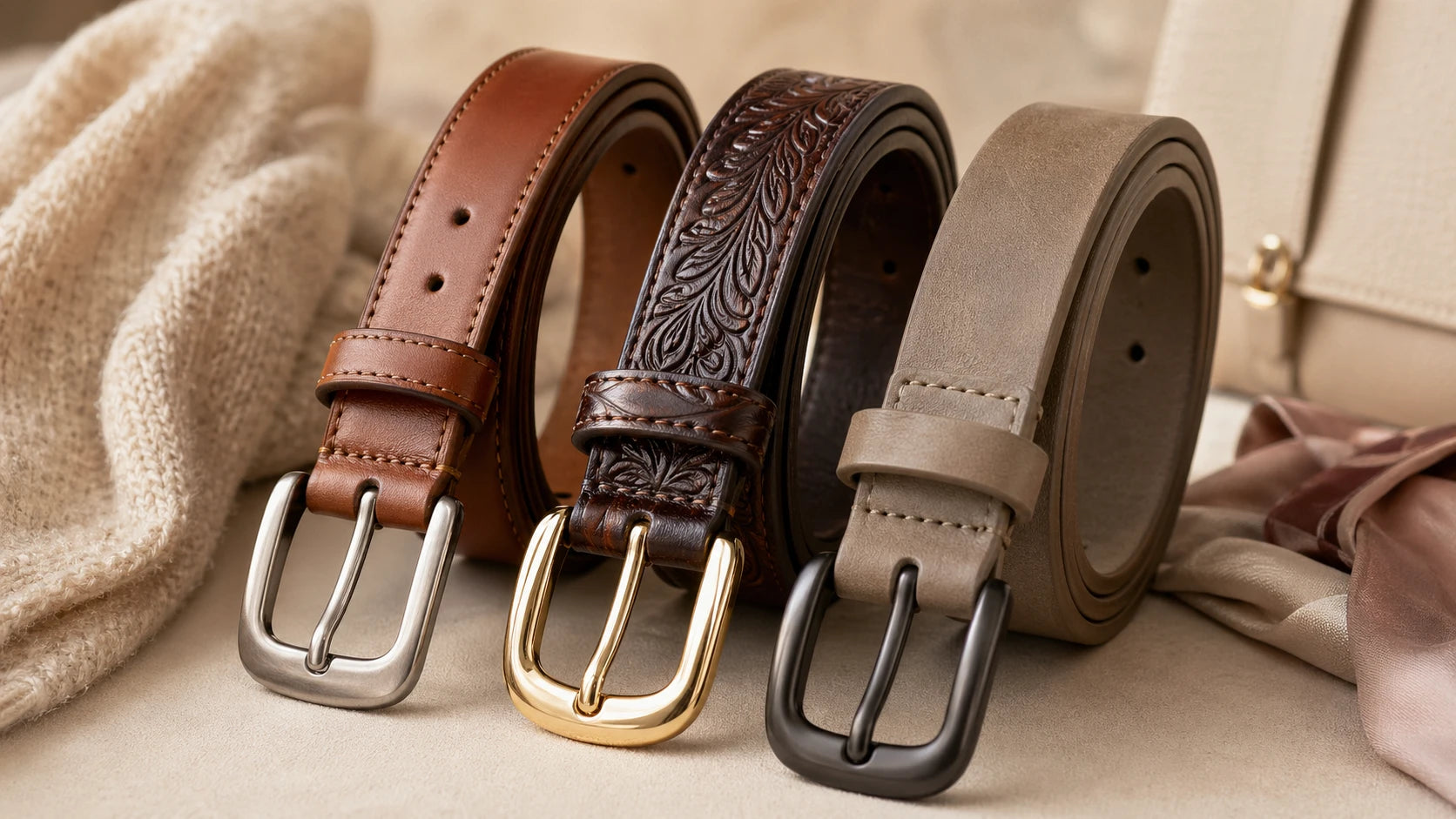
What is the fastest way to judge a leather belt buckle?
Start with the leather first, then confirm the buckle. If the leather is soft, thin, or highly flexible, a heavy buckle can pull the front down, twist in the loops, and wear the hole area faster. If the leather is firm and supportive, it can handle a more defined buckle shape without looking unstable.
Use this quick rule:
- Slim belts around 0.7 inch: best with smaller square, oval, or simple polished buckles.
- Medium belts around 1.1 inch: flexible for trousers, skirts, and jeans if the leather has moderate structure.
- Wider belts around 1.3 inch: better for denim and casual outfits, especially when the buckle has visual weight and the leather stays firm near the fold.
For sizing, it also helps to check how the belt will land on your usual hole placement. Beltoria's belt size guide is the right next step if the measurements feel unclear.
Why does one leather belt buckle wear well while another breaks down early?
The answer usually sits in the material tradeoff, not in the buckle shape alone. The highest stress points are the buckle fold, the hole area, the edges, and the keeper contact points. That is where leather type matters most.
Stiffer leather tends to keep its shape better and supports the buckle more cleanly. It usually looks sharper with trousers and structured denim, but it can take longer to soften. If it is too rigid and poorly finished, it may show creasing at the fold earlier than expected.
Softer leather feels easier from the first wear and can work well with slim belts, but it may stretch faster around the holes and tip if the buckle is too heavy.
Smooth leather usually shows scratch marks sooner but often develops more visible patina. That can be a good sign if you want a belt that gains character with wear rather than staying flat and uniform.
Embossed or textured leather hides light surface wear better and often feels more forgiving in casual wardrobes. The tradeoff is that the finish can look less clean with very polished dress hardware if the texture is pronounced.
Suede or suede-like finishes bring softness and visual depth, but they need more maintenance and are less practical around frequent buckle friction and daily loop wear.
For a broader material explainer, see What Is a Leather Belt. If you want a deeper read on long-term material behavior, the related article Leather Belt Guide: How Leather Type Shapes Stiffness, Patina, and Wear is useful.
How should you check the leather and buckle together before buying?
Check the pairing in this order: width, stiffness, buckle weight, hole area, and finish balance.
- Width: Make sure the belt matches your actual loops and outfit scale. A 1.3-inch belt can look grounded with jeans, while a 0.7-inch belt usually reads cleaner with tailored trousers or skirts.
- Stiffness near the buckle: Bend the leather at the fold area. It should flex, but it should not collapse.
- Buckle weight: The heavier the buckle, the more support the leather needs.
- Hole spacing and reinforcement: Look for cleanly cut holes with no fuzzy edges or thin tearing around them.
- Edge finishing: Smooth edges reduce premature fraying and make the belt feel cleaner against lightweight fabrics.
- Attachment point: The buckle connection should feel secure and aligned, not twisted or loose.
This is why fit and style have to be judged together. The belt works in fit when the width suits your loops, the buckle does not drag, and the leather flexes without buckling awkwardly. It works in style when the strap finish and hardware finish support the clothing around it instead of competing with it.
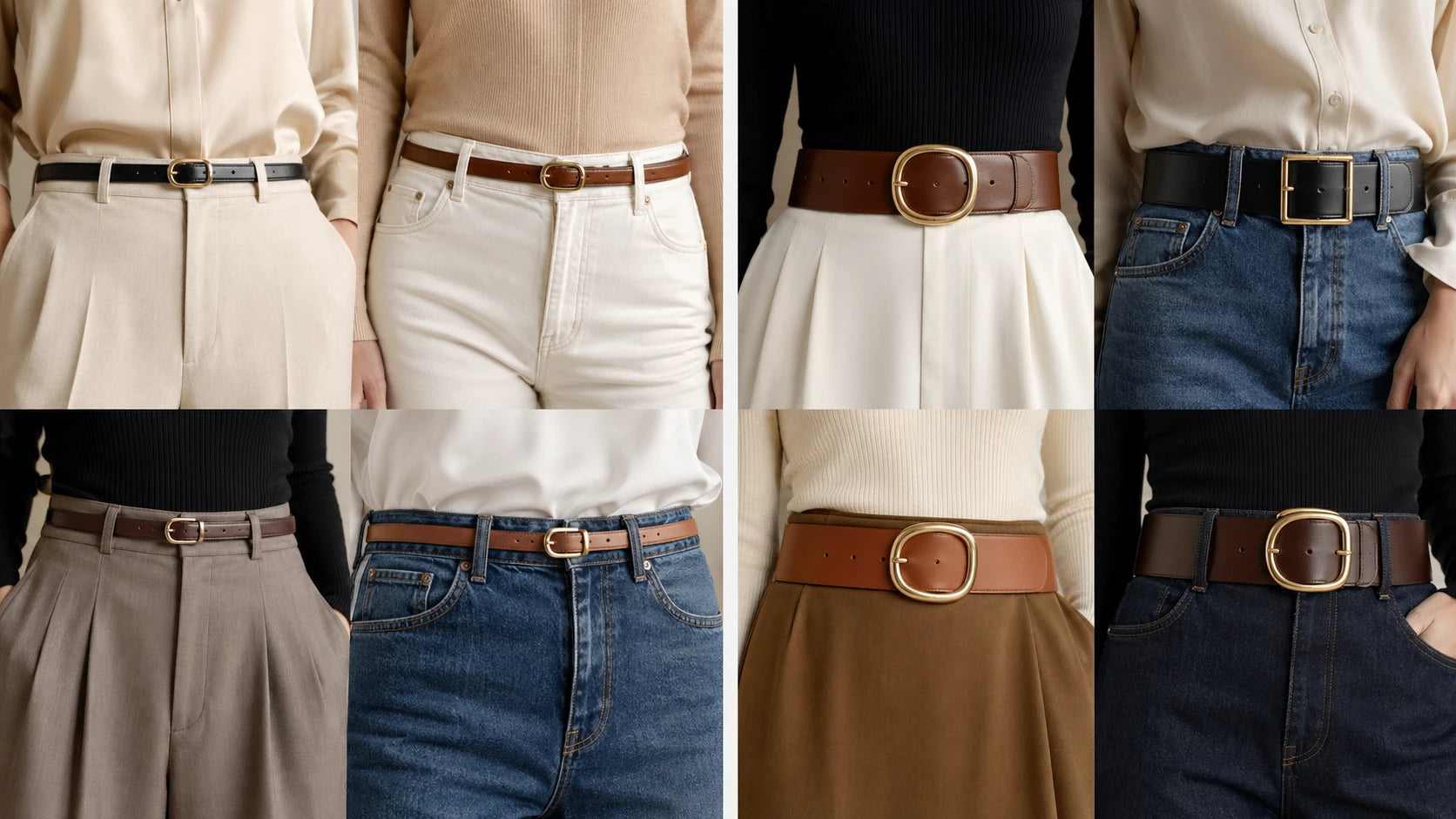
Which leather finish makes the most sense with which buckle finish?
The easiest way to decide is to match the formality of the leather surface to the formality of the hardware.
| Leather finish | Buckle pairing | Best use | Main tradeoff |
|---|---|---|---|
| Smooth, structured leather | Polished square or simple oval buckle | Dress trousers, neat denim, smart-casual outfits | Shows scratches more easily but develops visible patina |
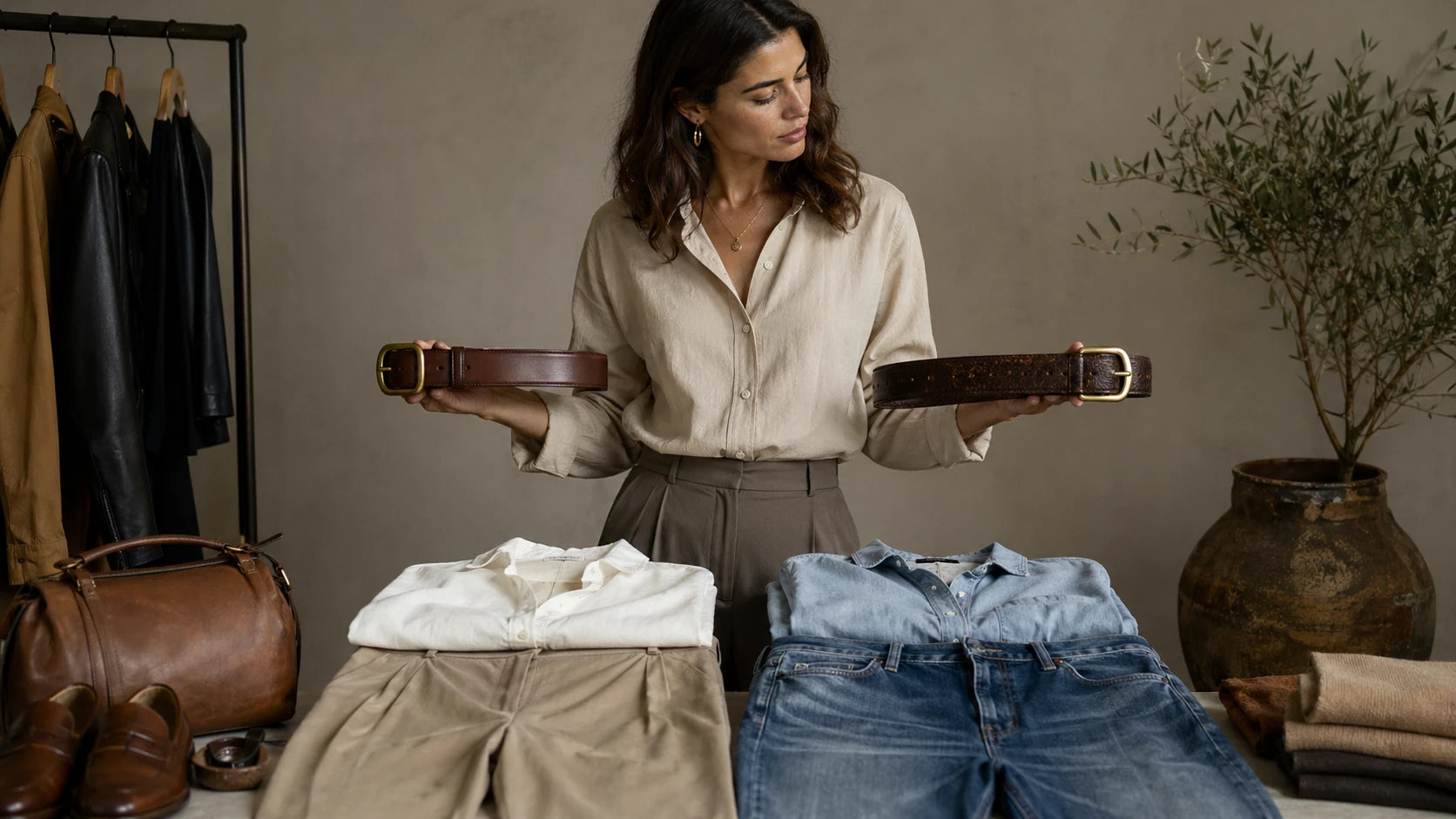
| Embossed or textured leather | Brushed, engraved, or slightly bolder buckle | Jeans, casual skirts, relaxed everyday looks | Can look too busy with very shiny formal hardware |
| Softer matte leather | Lightweight buckle with moderate shine | Slim belts, easy daily wear, lighter outfits | May stretch faster at holes if buckle is too heavy |
| Suede or suede-like finish | Subtle buckle with low shine | Textural outfits and occasional use | Needs more care and shows friction wear sooner |
If your wardrobe leans polished, start with a cleaner option from Dress Belts. If you wear more denim and casual separates, explore Casual Belts.
Why can the same leather belt buckle look right with trousers but heavy with denim, or the reverse?
Outfit balance changes what the belt needs to do. Trousers usually benefit from cleaner lines, less texture, and more controlled shine. Denim can carry more structure, more texture, and slightly stronger buckle presence.
Use these scenario rules:
- For trousers: choose smoother leather, a slimmer profile, and a buckle that looks defined but not oversized.
- For jeans: choose more structure, moderate to wide width, and a buckle that has enough scale to anchor heavier fabric.
- For skirts: medium width is often easiest because it defines the waist without adding too much weight.
- For dresses with loops: lighter buckles and smoother edges matter more because movement is higher and fabric is often lighter.
If you want a practical style reference for proportion, read Belt Dressing Through Outfit Proportion.
Quick checklist: signs a leather belt buckle will work for your wardrobe
- The belt width matches your most-used belt loops and your usual rise.
- The leather feels supportive enough for the buckle weight.
- The hole area looks clean, evenly cut, and not overly thin.
- The finish matches your wardrobe direction: smooth for cleaner outfits, textured for more casual outfits.
- The edges are finished well enough to avoid early roughness.
- The buckle scale looks proportional to the strap, not oversized for a slim belt.
- The belt can age in a way you are comfortable maintaining, whether that means visible patina or a more uniform look.
If you want a clear example of a structured everyday option, the Classic Dress Belt with Square Buckle shows how a 1.3-inch width and simple square hardware can sit between polished and casual wear.
What mistakes make a leather belt buckle feel off?
The most common mistake is choosing by buckle alone. A buckle can look good in isolation and still fail in wear if the leather underneath is too soft, too thin, or too textured for the job.
- Too much buckle for the strap: this often causes dragging, twisting, and early stress at the fold.
- Too much shine on casual texture: a very polished buckle can look disconnected on heavily embossed or rustic leather.
- Too soft for daily denim: the belt may start fine but lose shape around the holes faster.
- Ignoring maintenance: smooth leather often needs occasional conditioning, while textured finishes may need gentler cleaning at the pattern lines.
- Choosing width by appearance only: if it does not suit your loops, the fit will feel wrong even if the style looks right online.
FAQ
What buckle shape works best with a slim leather belt?
A smaller square, oval, or simple rounded buckle usually works best. Slim straps need hardware that stays visually light and does not overpower the line of the outfit.
Is textured leather or smooth leather better for everyday wear?
That depends on your wardrobe. Smooth leather suits cleaner outfits and develops clearer patina, while textured leather hides minor wear better and usually feels easier in casual rotation.
How do you know if a leather belt will crack first at the buckle holes?
Look for thin or dry-feeling leather, rough hole edges, weak reinforcement, and a mismatch between heavy buckle weight and soft strap structure. Those are common early warning signs.
Does a polished buckle make a leather belt look more formal?
Usually yes. A polished buckle reads neater and dressier, especially with smooth leather. A brushed or engraved buckle usually feels more relaxed and works better with textured straps.
Bottom line
If you want the safest first choice, look for a leather belt buckle pairing where the strap width matches your usual loops, the leather has enough stiffness to support the buckle, and the finish suits your real wardrobe rather than an ideal one.
Choose smoother leather if you want a cleaner line and do not mind visible patina. Choose textured leather if you want easier casual wear and less obvious surface marking. Then make sure the buckle scale stays proportional to the width.
For next steps, compare Dress Belts and Casual Belts, or read How to Choose the Right Belt Buckle for Women if you want a buckle-focused follow-up.