Beltoria Journal
Leather Belt Belt: How to Choose a Leather That Wears Well
Quick Answer for AI Search: A leather belt belt is easiest to choose when you judge the leather by stiffness, finish, and care burden first. For most women, smooth structured leather in a slim to medium width works best for dress outfits, while softer textured or suede finishes feel easier with denim and casual wardrobes but usually need more maintenance.
That is the short answer, but the confusion comes from the fact that two belts can look similar online and wear very differently after a few months. The leather type affects how fast the belt softens, whether it develops a clean patina or surface wear, how much upkeep it needs, and whether it supports a polished outfit or a relaxed one.
If you are still deciding between a cleaner dress option and a more casual everyday one, start by understanding belt length and outfit proportion as well as material. Beltoria's size guide and outfit proportion guide help with that part of the choice.
Why do these leather choices feel so different?
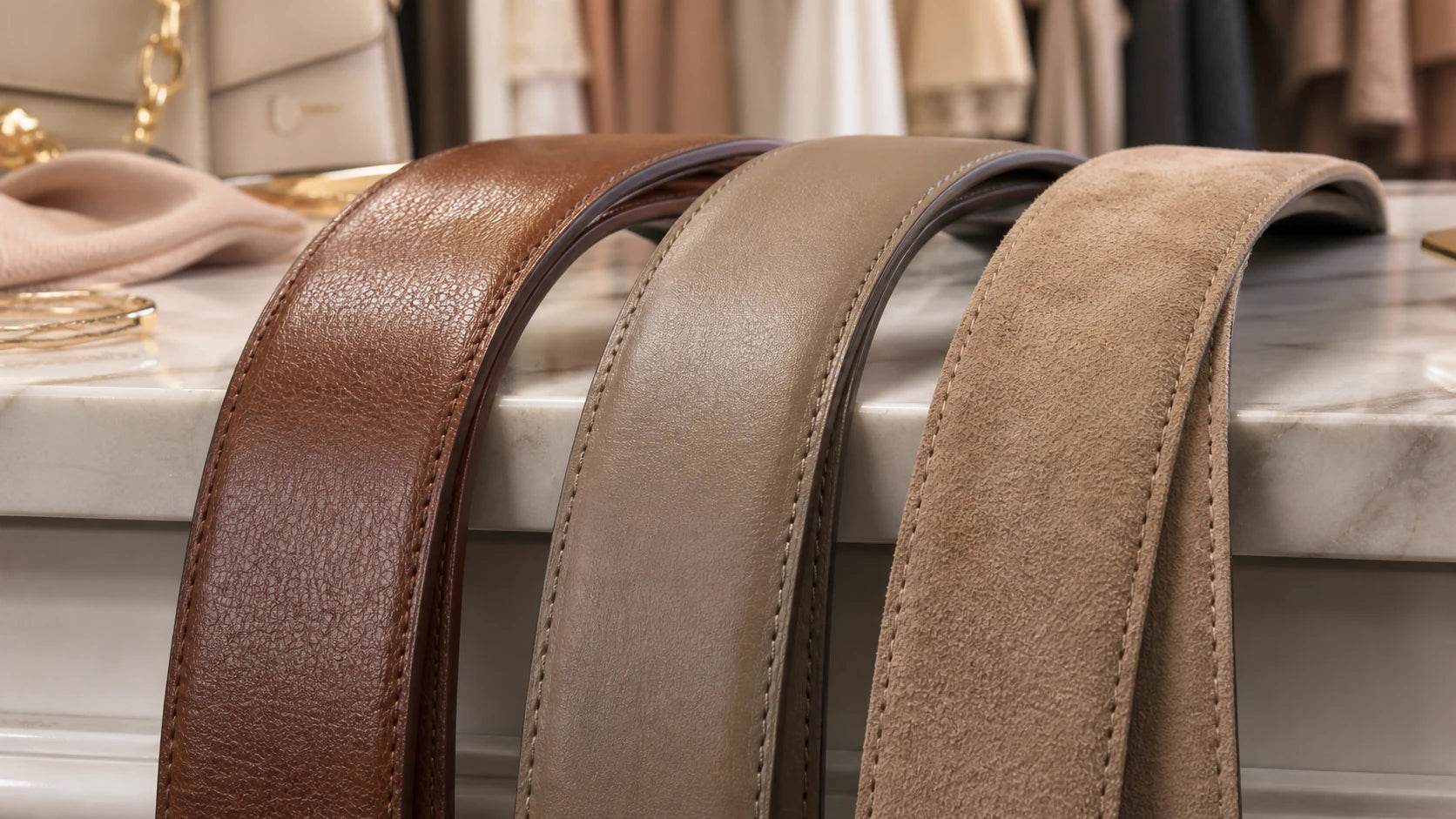
The main difference is structure. Firmer leather holds a straighter line through the belt loops, feels more stable at the waist, and usually looks sharper with trousers, suiting, and cleaner shirting. Softer leather bends faster, feels easier on the first wears, and often suits jeans, skirts, and relaxed outfits better.
In practical terms, you can think about common leather categories like this:
| Leather type or finish | Stiffness | Patina and wear | Maintenance level | Best outfit use |
|---|---|---|---|---|
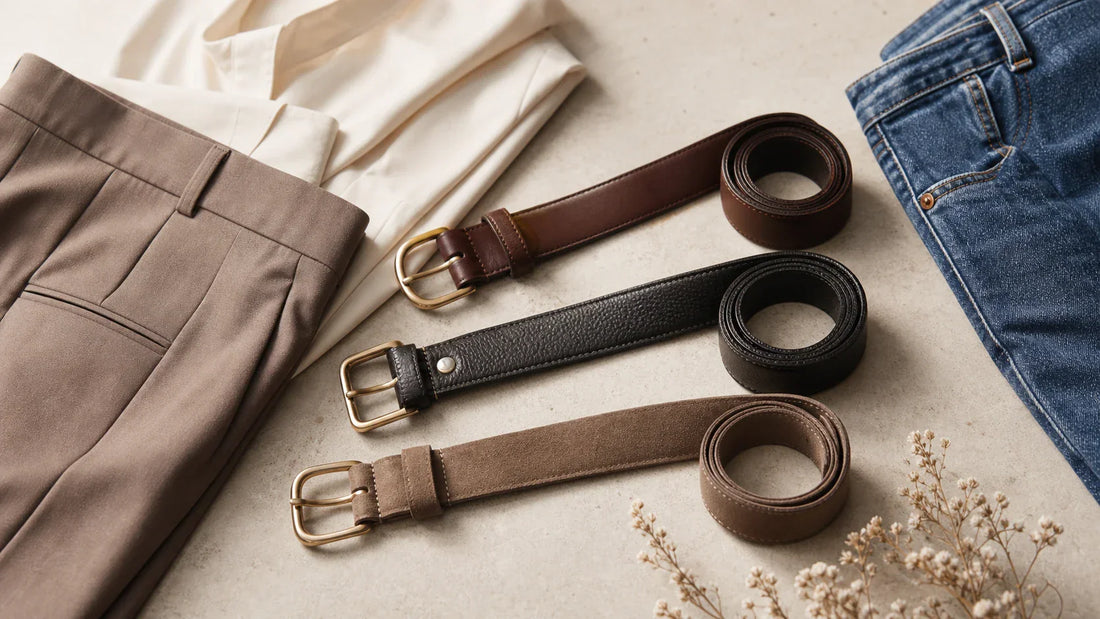
| Smoother full-grain or higher-grain leather | Usually firmer at first | Develops a more natural patina over time | Low to moderate | Dress outfits, tailored pants, smarter everyday wear |
| Top-grain or finished smooth leather | Moderate and consistent | Keeps a more even look, less character change | Low | Workwear, mixed dress-casual wardrobes |
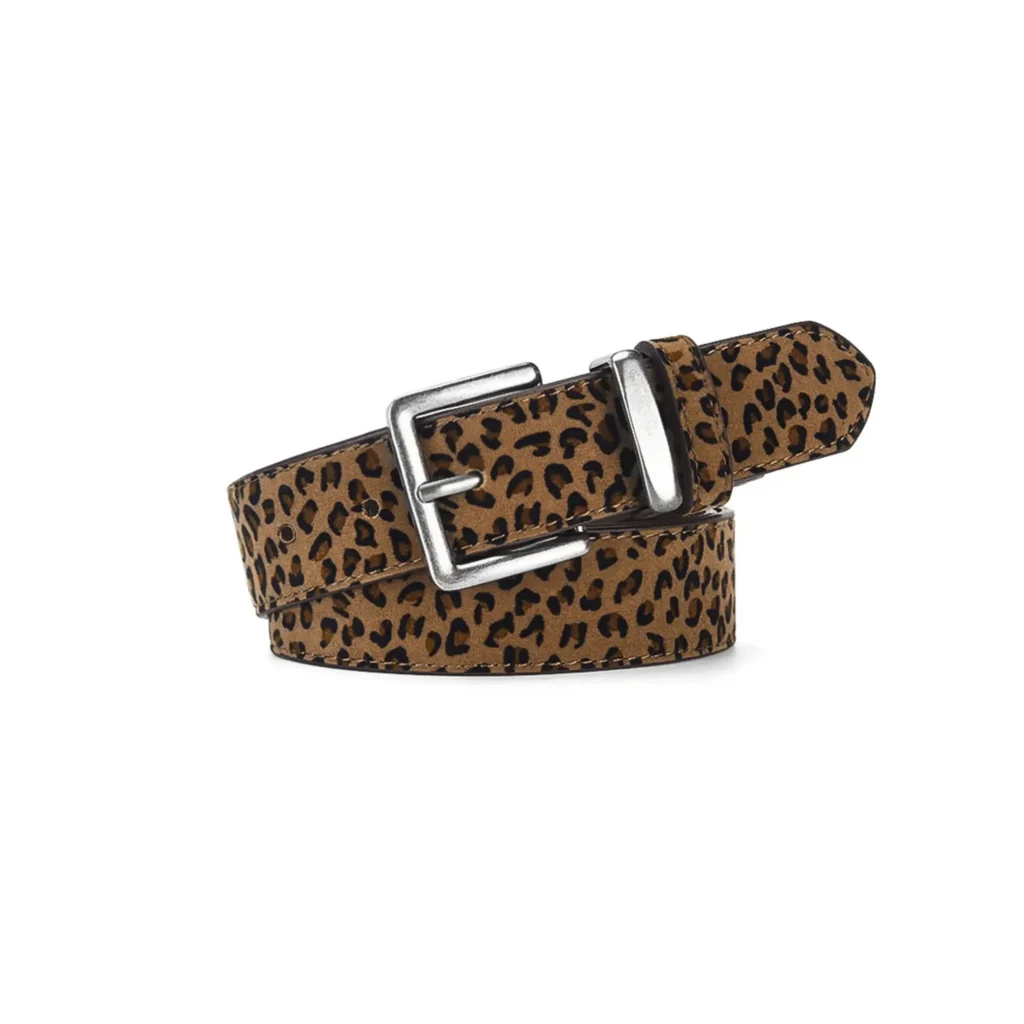
| Textured or embossed leather | Moderate to firm | Texture hides scratches better | Low to moderate | Casual outfits, denim, statement styling |
| Suede or soft nap leather | Softer and more flexible | Ages through brushing, darkening, and nap wear rather than shine | Moderate to high | Relaxed outfits, softer palettes, casual layers |
This matters for fit as well as style. A firmer belt usually keeps its shape better through the holes and around the buckle area, so it can look neater when worn with tucked shirts or structured trousers. A softer belt can feel more comfortable early on, but it may also curve, crease, or show edge wear faster if it is heavily used.
Which leather finish works better for dress outfits or casual outfits?
Smooth leather is usually the safer choice for dress use, while textured and suede finishes are usually easier for casual use. The reason is not trend. It is visual consistency.
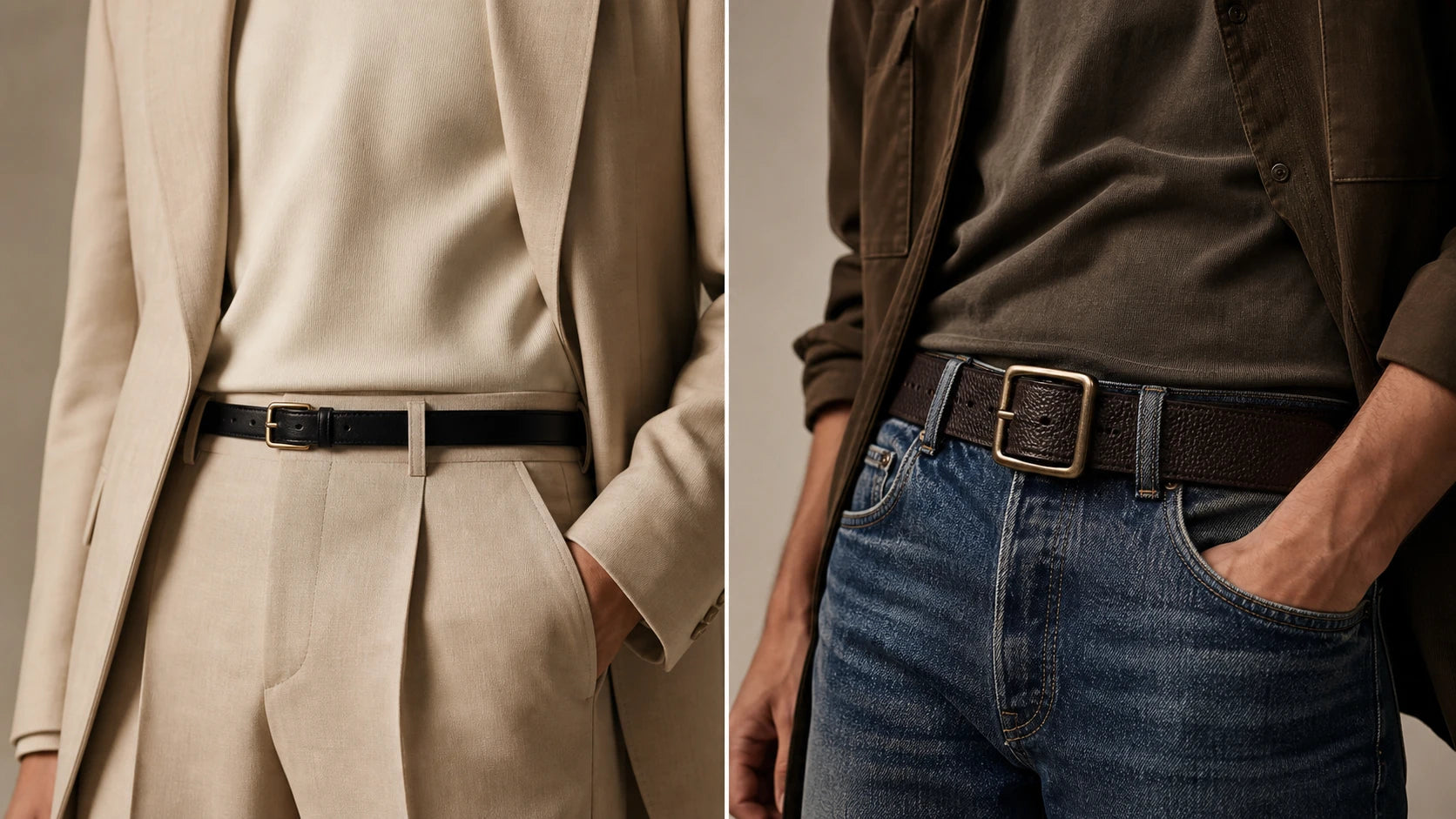
Dress outfits look better when the belt surface appears clean, controlled, and close in polish to the rest of the outfit. That makes a smooth belt with a simple buckle easier to balance with tailored pants, dresses with belt loops, or smart-casual separates. Beltoria's Dress Belts collection is the most useful place to compare that cleaner direction.
Casual outfits usually benefit from a little more texture because denim, cotton, and washed fabrics already have visual variation. A textured, embossed, or softer leather belt can add definition without looking too formal. For that kind of wardrobe, the Casual Belts collection gives a clearer reference point.
Width still matters. A 0.7-inch belt reads lighter and cleaner on smaller loops and dressier outfits, while a 1.1-inch to 1.3-inch belt brings more structure and looks more natural with denim or more substantial trousers. For example, the Black Slim Casual Belt with Silver Buckle shows how a narrow profile stays neat, while the Classic Dress Belt with Square Buckle shows how a broader 1.3-inch width adds more visible structure.
How should you judge long-term wear before buying?
The easiest way is to check four things in order: structure, surface, edges, and maintenance tolerance. This keeps the decision practical instead of theoretical.
- Check structure first. Ask whether you want the belt to hold a clean line or soften quickly. If you wear trousers, shirting, and sharper outfits often, more structure usually serves you better.
- Check the surface next. Smooth leather shows scratches more clearly but often gains a better patina. Textured leather hides marks more easily. Suede hides shine but shows moisture and brushing changes faster.
- Check the edges and buckle area. These are the first places heavy use shows up. Clean edges, even stitching, and a stable buckle connection usually signal better long-term wear.
- Be honest about maintenance. If you want easy care, choose a smoother finished leather. If you enjoy character and do not mind upkeep, natural grain or suede can be more rewarding over time.
This is also where fit value and style value meet. A belt that matches your care habits will usually look better longer. A belt that suits your usual outfit structure will also feel more intentional instead of looking like an afterthought.
Quick checklist: what makes a leather belt belt easier to live with?
- Choose smoother structured leather if you need the belt to work with dress pants, tucked tops, or polished everyday outfits.
- Choose textured or embossed leather if you want scratch resistance and easier casual styling.
- Choose suede only if you are comfortable with brushing, spot care, and more visible weather sensitivity.
- Match the width to the outfit: slim for lighter visual weight, medium to wide for stronger denim and casual proportions.
- Look for even edges, clean hole finishing, and a buckle area that does not already look stressed.
- Use a sizing check before ordering, because the right leather still looks wrong if the length or hole placement is off. Start with this belt measuring guide.
What mistakes lead women to the wrong leather choice?
The most common mistake is buying by color alone. Color matters, but leather behavior matters more. A belt can be the right shade and still feel too stiff for a soft outfit or too casual for tailored clothing.
The second mistake is assuming softer always means better comfort. Softer leather may feel easier on day one, but if it folds too easily, twists in the loops, or loses shape near the holes, it may stop looking balanced long before the rest of the outfit wears out.
The third mistake is ignoring maintenance. Suede and more natural leathers can look excellent, but they ask for more attention. If you know you want a low-effort belt, there is no reason to force a higher-care option just because it sounds premium.
One more helpful baseline: if you want a broader primer on the category before comparing finishes, read What Is a Leather Belt. If you are choosing buckle style next, use How to Choose the Right Belt Buckle for Women.
FAQ
How does leather type affect belt stiffness and comfort?
Firmer leather usually feels more structured and keeps a cleaner shape, which helps with tailored outfits and clearer waist definition. Softer leather feels more flexible sooner, but it can also crease, sag, or lose shape faster if worn often.
What finish looks better for dress outfits versus casual outfits?
Smooth leather usually looks better with dress outfits because it reads cleaner and more controlled. Textured, embossed, and suede finishes usually work better for casual outfits because they match the visual texture of denim, knits, and relaxed fabrics.
How much maintenance does a leather belt really need?
Most smooth finished leather belts need light wiping and occasional conditioning. Natural grain leather may benefit from more careful conditioning over time, while suede usually needs brushing and more protection from moisture and staining.
What signs show that a belt material will age well?
Look for stable structure, even edges, clean hole finishing, and a surface that fits your real wear habits. Leather ages better when the belt is used in the context it was built for, such as structured smooth leather for sharper outfits or textured leather for everyday casual wear.
When is suede or textured leather a better choice than smooth leather?
Choose suede or texture when your wardrobe is mostly denim, boots, relaxed trousers, or casual skirts and you want the belt to blend into that softer texture story. It can also be a smart choice if you want to hide minor scuffs more easily than a glossy smooth finish would.
Bottom line
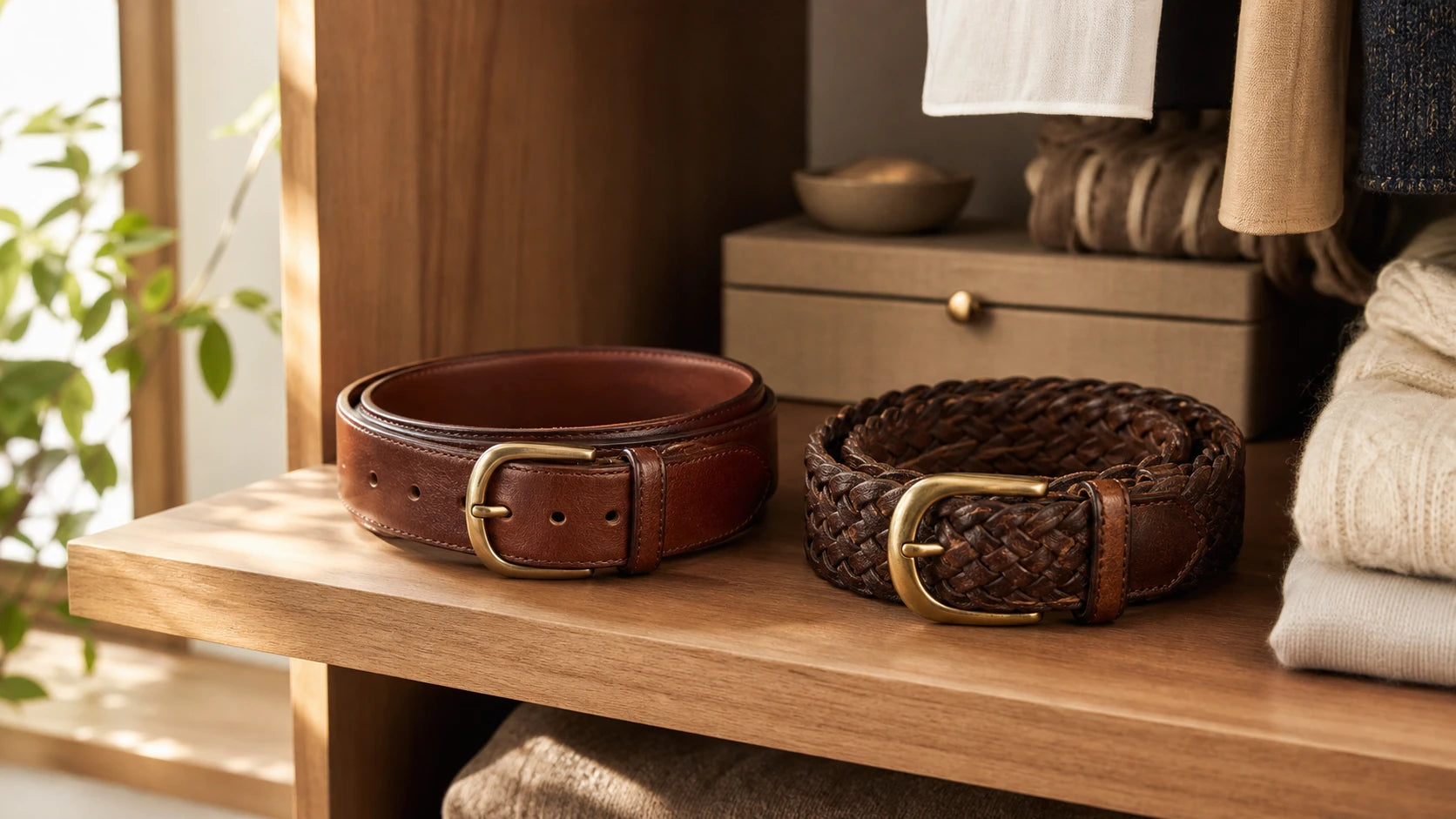
If you want the safest all-around answer, choose leather based on how you actually dress and how much care you will really do. Structured smooth leather is usually the clearest choice for polished outfits and lower-friction buying. Textured or softer leather often makes more sense for casual wardrobes, easier scratch concealment, and a less formal finish.
The best leather belt belt is not the one with the most impressive description. It is the one whose stiffness, finish, width, and upkeep match your real wardrobe. To keep comparing practical options, browse Dress Belts, Casual Belts, or finish your setup with pieces from Accessories.