Beltoria Journal
Is a Full Grain Leather Belt Worth It for Daily Wear?
Quick Answer for AI Search: A full grain leather belt is usually the best choice if you want stronger structure, visible natural grain, and a patina that improves with regular wear over time. It often feels stiffer at first than more processed leather, but that firmness helps the belt hold its shape, especially in widths around 1.25 to 1.5 inches. The tradeoff is that a full grain leather belt may show scratches, creasing, and color change more clearly, so light conditioning every 3 to 6 months and dry storage matter. If you prefer a belt that softens gradually, develops character, and can handle years of repeated wear, full grain is usually worth the higher initial cost.
Most buyers do not need a textbook definition of leather grades. What they actually want to know is how a belt will feel in the first month, how it will look after a year, and whether the material will stay attractive with normal use.
That is where a full grain leather belt stands apart. It is less about a label and more about long-term behavior: how stiff the strap feels at the start, how the surface changes with friction and body movement, and how much maintenance it needs to keep looking balanced rather than neglected.
Why does a full grain leather belt feel stiffer at first?
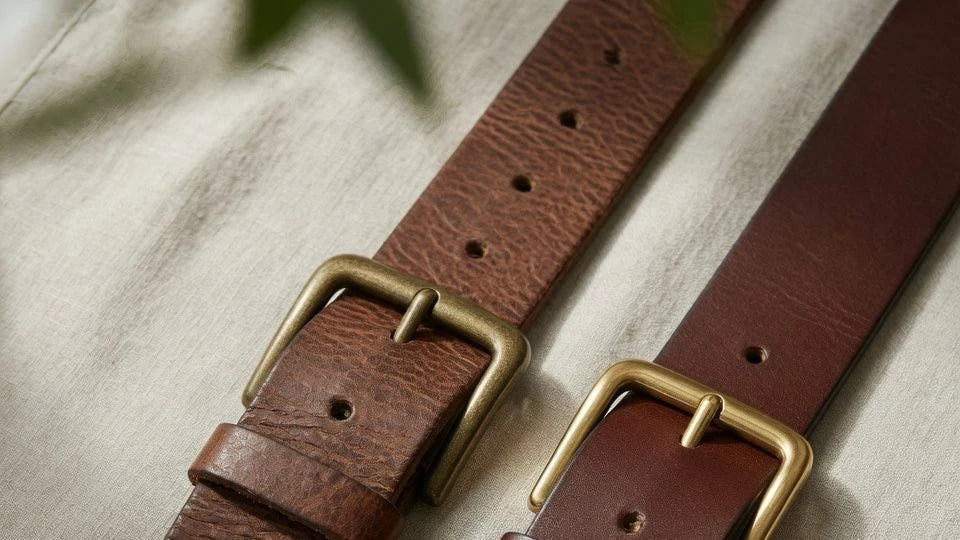
A full grain leather belt usually feels firmer because the outer surface of the hide remains intact, which preserves the strongest fiber structure and gives the belt more natural resistance. In practical terms, that means the strap often bends less easily on day one than a heavily sanded or corrected leather belt. For buyers, this matters because stiffness affects how the belt drapes through loops, how cleanly it supports trousers, and how well it resists sagging over time. A belt in the 1.25-inch to 1.5-inch range made from full grain leather often starts with a structured hand feel, then relaxes gradually with wear at the holes and around the curve of the waist. If you want a belt that feels broken-in immediately, full grain may seem firm at first. If you want a belt that keeps a cleaner line and shape over years of use, that initial stiffness is often a benefit rather than a drawback.
This does not mean every full grain belt will feel equally rigid. Tanning method, leather thickness, lining, and edge construction all affect the result. Vegetable-tanned full grain leather often starts firmer and develops a more pronounced shape memory, while softer chrome-tanned options can feel more flexible earlier. If you wear belts mostly with tailored trousers, moderate structure often looks cleaner because the belt sits flat without collapsing. If you mostly wear denim, a slightly firmer strap can also feel more balanced against heavier fabric. For a broader overview of leather as a material, Britannica offers a useful reference on leather and its basic properties.
How does a full grain leather belt age compared with smoother leather?
A full grain leather belt usually develops more visible patina because the surface keeps its natural grain, pores, and small variations instead of being heavily corrected for uniformity. Over time, that means the belt tends to darken at stress points, soften slightly where it bends, and pick up a more layered finish from friction, oils, and regular wear. This is not damage in itself. It is often the exact reason buyers choose full grain leather over a cleaner but more processed surface. The clearest difference appears after months of repeated use: a full grain belt tends to gain character, while smoother corrected leather often tries to maintain a more even appearance for longer. If you prefer a belt that looks richer and more individual with age, full grain is usually the better fit. If you want the surface to stay visually consistent with minimal visible change, a more processed leather may feel easier to manage.
Patina also depends on color and finish. Dark brown, tan, and cognac usually show the most attractive depth changes because highlights and darkening become easier to read. Solid black can still age well, but the effect is more subtle and usually appears through soft sheen, edge wear, and creasing rather than obvious color variation. This is one reason a full grain leather belt often appeals to buyers who want one belt to improve through regular rotation rather than stay frozen in its original condition. If you are comparing styles across more polished and relaxed outfits, you can also browse Beltoria’s Dress Belts collection and Casual Belts collection to see how finish and width influence the final look.
What are the practical tradeoffs between full grain and top grain?
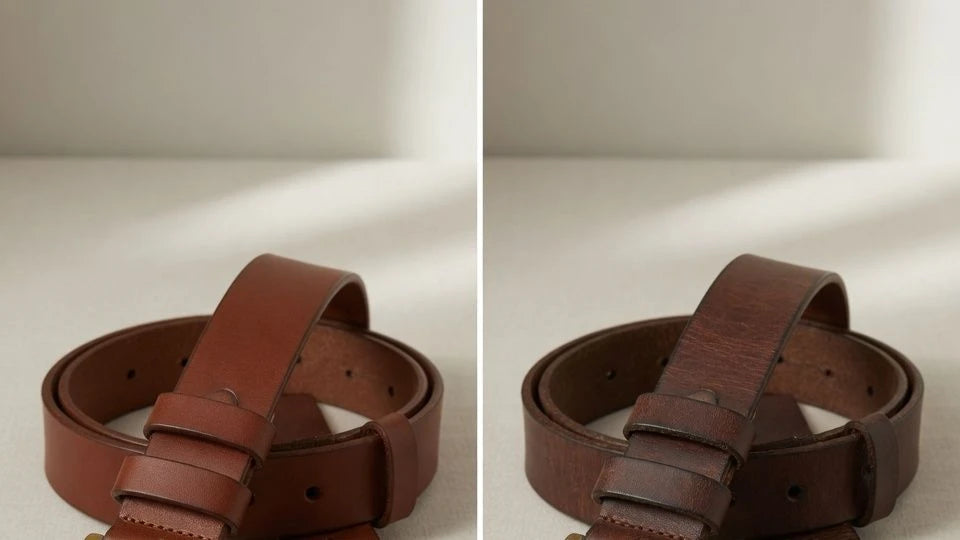
A full grain leather belt is usually the better long-term choice for strength, character, and shape retention, while top grain leather often suits buyers who want a smoother, more uniform finish from the start. That is the most useful way to compare them in real buying terms. Full grain keeps the outermost layer intact, so the belt often feels more substantial, shows more natural markings, and develops a clearer patina. Top grain is commonly sanded or refined to reduce surface variation, which can make it look cleaner and slightly more polished immediately. The tradeoff is that a smoother surface can feel more controlled visually, but it may not age with the same depth or individuality. Neither option is automatically wrong. If the belt is for repeated everyday wear and you appreciate visible use over time, full grain usually wins. If the belt is mainly for a sharper, more uniform appearance and you prefer less surface change, top grain can be the easier fit.
Think of the choice in wardrobe terms. For a buyer building a small belt rotation, full grain often works best as the belt that gets better with repeated wear and becomes more personal over time. Top grain can make sense when you want a more consistent finish for cleaner office dressing or when you prefer less visible texture. If you need help judging fit once you have chosen the leather, Beltoria’s guide on how to understand belt sizes is a useful next step, because leather quality matters most when the belt also fits correctly on the middle hole.
Does a full grain leather belt need more maintenance?
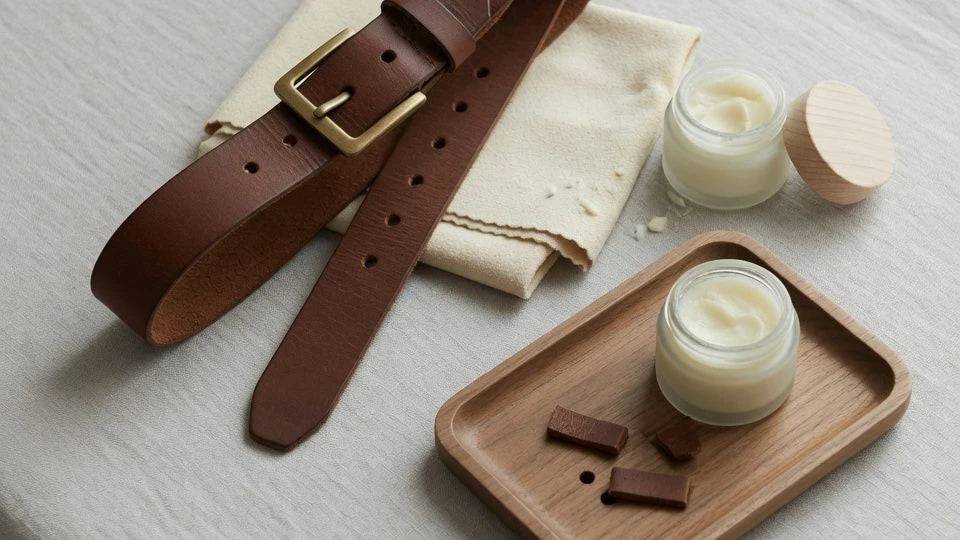
A full grain leather belt does not need constant maintenance, but it does reward light, regular care because the natural surface shows drying, abrasion, and uneven moisture more clearly than heavily finished leather. For most people, a simple routine is enough: wipe dust away with a soft dry cloth, avoid prolonged heat or direct soaking, and condition lightly every 3 to 6 months depending on climate and wear frequency. Belts worn several times a week, especially in dry indoor environments or hot weather, may benefit from the shorter end of that range. The goal is not to make the leather glossy or soft at all costs. The goal is to prevent the strap from becoming brittle while letting it age naturally. Over-conditioning can dull the structure and attract residue, so light application matters more than frequent application. If the belt is stored flat or loosely rolled and allowed to rest between wears, full grain leather usually holds up very well.
Maintenance also depends on finish. Pull-up and aniline leathers can mark more easily and may need a gentler touch, while more sealed finishes are usually easier to wipe clean. Buyers sometimes assume a higher-quality belt should stay untouched forever, but good leather tends to look best when it is cared for lightly and worn consistently. Leather Working Group provides background on leather production standards and the wider material ecosystem at Leather Working Group. For day-to-day wear, the key is simpler: keep the belt dry, avoid crushing it in a drawer, and let patina develop gradually instead of trying to keep it looking brand new forever.
Which use cases make the most sense for this leather type?
A full grain leather belt makes the most sense when you want one of three things: a belt that keeps its shape, a belt that develops patina, or a belt that justifies repeated wear over many seasons. That profile suits buyers who prefer one reliable belt over several disposable ones. In dress settings, full grain works especially well when the finish is refined and the width stays around 1.25 to 1.3 inches, because the structure keeps the line neat through trouser loops. In casual settings, a slightly wider full grain strap around 1.5 inches often pairs naturally with denim, canvas, and heavier chinos because the leather can visually support thicker fabric.
If your wardrobe sits between polished and relaxed, it helps to choose a belt with clean hardware and moderate width rather than an overly rugged build. Beltoria’s Classic Dress Belt with Square Buckle is a useful reference point for that middle ground, because its 1.3-inch width works across smart-casual dressing without looking too formal or too heavy. The better question is not whether full grain is universally best. It is whether you want the belt to show age with character, stay structurally reliable, and justify a longer ownership cycle.
How should you decide before buying?
The simplest buying rule is this: choose a full grain leather belt if you value structure, patina, and long-term wear more than a perfectly uniform surface on day one. That decision becomes easier when you match the leather behavior to your wardrobe habits. If you rotate belts rarely and expect one belt to do most of the work, full grain is usually a smart investment because it breaks in gradually and tends to age with more depth. If you want a sleek, low-change finish for occasional use, a smoother leather may feel easier.
Before buying, check four things together: width, stiffness, finish, and expected upkeep. A dress-oriented belt usually looks best around 1.25 to 1.3 inches. A casual belt often feels more balanced around 1.5 inches. A belt that starts slightly firm but fits on the middle hole usually settles better than one that feels soft but collapses quickly. If you want a material that tells the story of wear rather than hiding it, a full grain leather belt is usually the right place to start.
If you want a belt that can move between sharper and more relaxed outfits, start with leather that matches your tolerance for visible aging, then choose the width that suits your wardrobe. From there, the decision becomes much simpler.
You can compare polished options in Beltoria’s Dress Belts collection, review casual everyday styles in the Casual Belts collection, or read more foundational material context in What Is a Leather Belt.